
Kilimanjaro vs Mount Fuji: Which Should You Hike?
Choose Kilimanjaro if you want a multi-day, high-altitude expedition through rainforest, moorland and plateau with a guide and crew handling camp; choose Mount Fuji if you want a shorter, non-technical climb with mountain huts and a sunrise summit, but only during the official summer season.
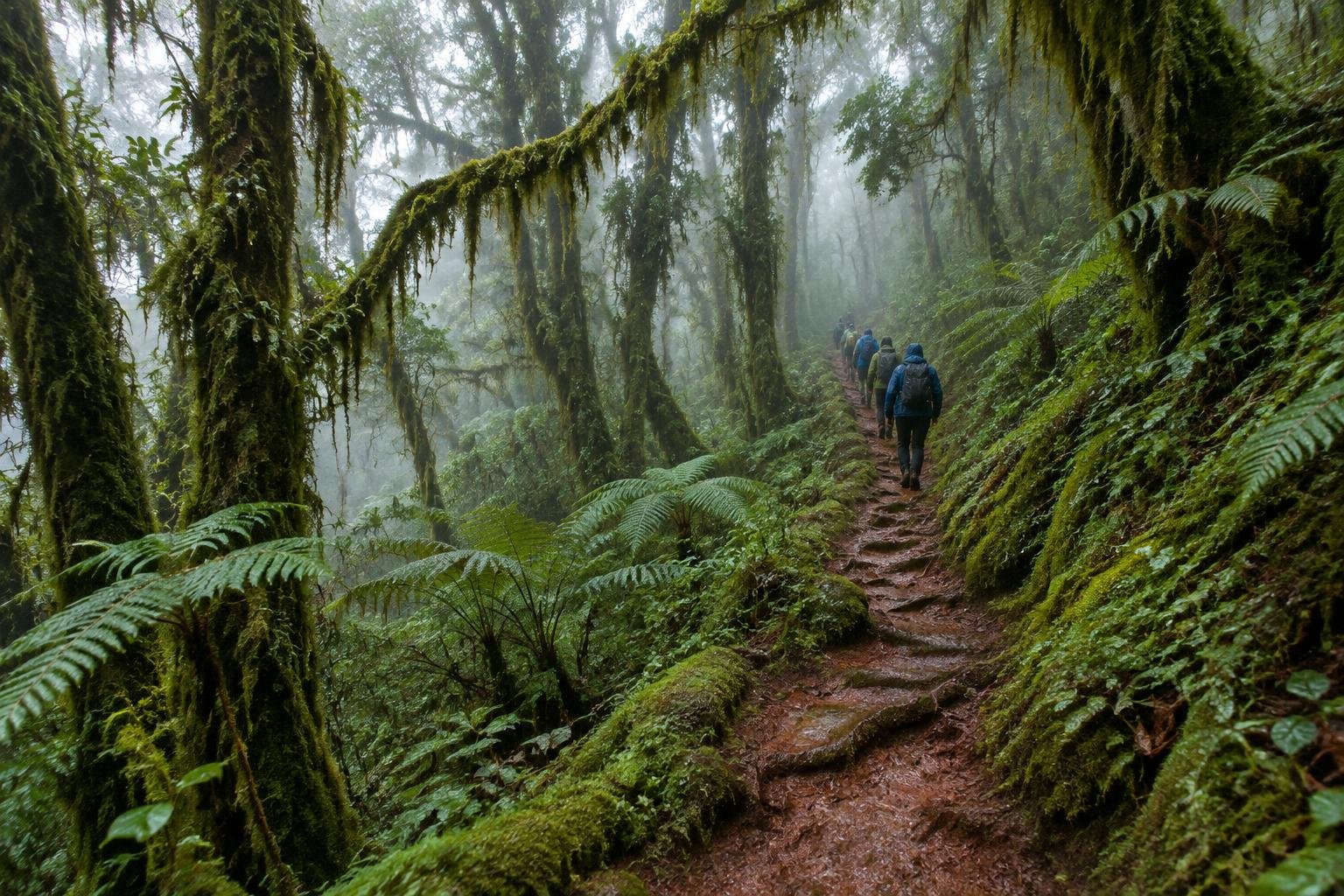
Kilimanjaro and Mount Fuji at a glance
Kilimanjaro's Machame Route is a guided point-to-point trek in Tanzania that ends at Uhuru Peak, 5,895 m. Mount Fuji's Yoshida Trail is an out-and-back climb in Japan from the 5th Station to a 3,776 m summit. Hikers weigh them because both are famous, strenuous, non-technical summit climbs where altitude and cold matter.
| Kilimanjaro | Mount Fuji | |
|---|---|---|
| Place | Kilimanjaro · Tanzania | Chūbu · Japan |
| Distance | ~62 km / 37 mi total, Machame Gate to Mweka Gate (ascent and descent use different trail sections, so overall it is point-to-point), typically hiked over 6-7 days | ~14 km / 8.7 mi round trip — about 6.8 km one-way ascent from the Fuji Subaru Line 5th Station to the summit, with a separate (roughly similar-length) descent trail |
| Elevation gain | Net gain of ~4,095 m (13,435 ft) from Machame Gate (~1,800 m) to Uhuru Peak (5,895 m); cumulative trail ascent including undulations is commonly cited around 4,900-5,200 m (16,000-17,000 ft) by trekking operators. Max altitude 5,895 m (Uhuru Peak). | ~1,450 m (4,760 ft) gain from the 5th Station (~2,305 m) to the 3,776 m summit |
| Difficulty | Strenuous / high-altitude | Strenuous but non-technical; only open during the official climbing season (early July to September 10) |
| Route type | point-to-point | out-and-back from the 5th Station (check the official site for descent-route arrangements) |
| Official season | January–March and June–October | Official season runs from early July to September 10 (the 2026 season ended on September 10) |
| Managed by | Tanzania National Parks (TANAPA) | Yamanashi Prefecture / national park |
Effort and difficulty
Kilimanjaro is the bigger commitment by a wide margin: about 62 km / 37 mi point-to-point, typically over 6-7 days, with a net gain of roughly 4,095 m (13,435 ft) and a rated difficulty of strenuous / high-altitude. Fuji is about 14 km / 8.7 mi round trip with roughly 1,450 m (4,760 ft) of gain, strenuous but non-technical. Kilimanjaro's effort is cumulative and altitude-driven, with the Barranco Wall scramble along the way. Fuji's is compressed into a short, steep climb, a long gravel descent and often a night with little sleep.
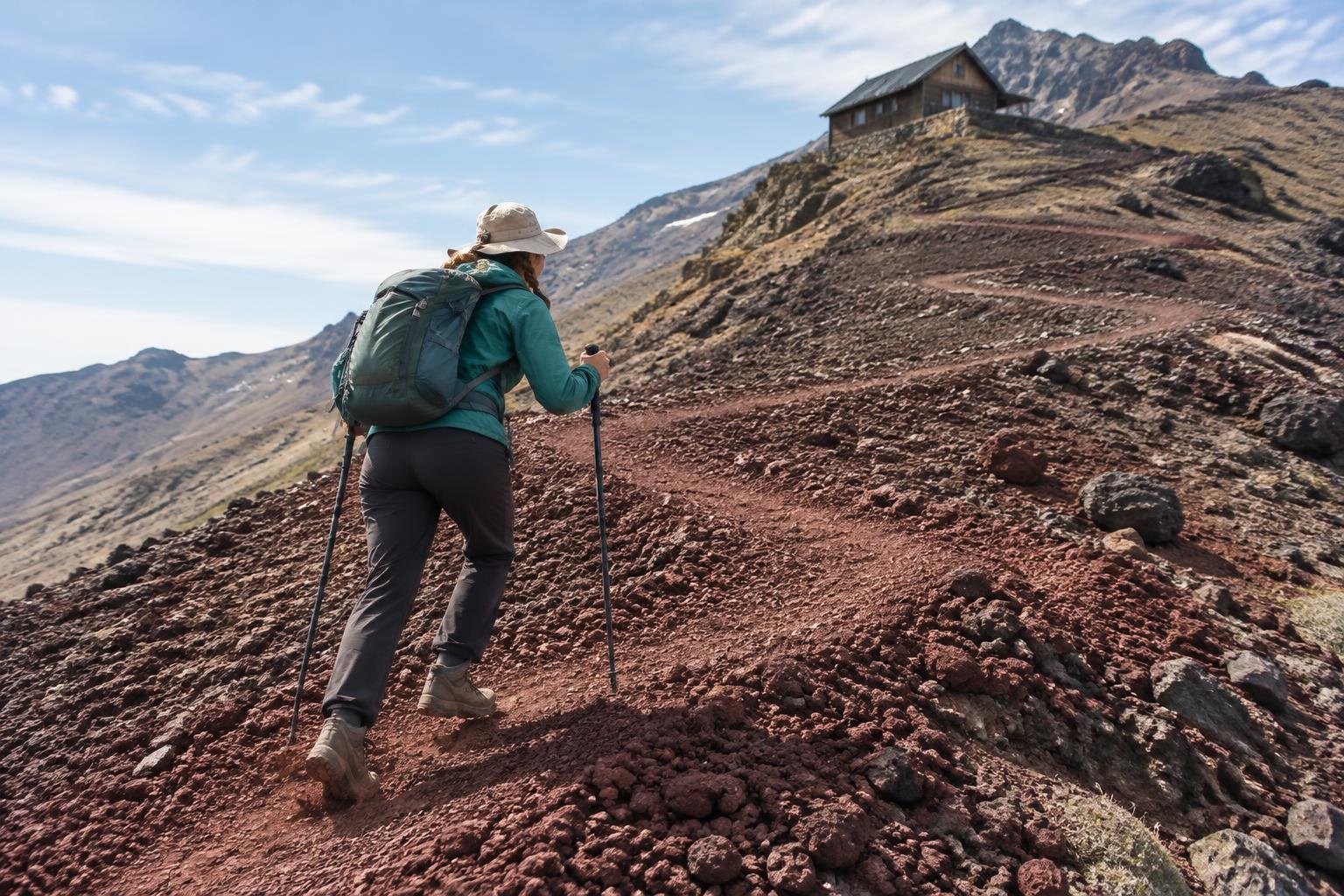
Season, permits and booking
Kilimanjaro's official best season is January-March and June-October. All climbs must be booked through a licensed operator with a guide and crew, and park fees are built into the trip. Expect rain low down and cold higher up. Fuji is open only during the official climbing season, early July to September 10, when huts and facilities operate. The Yoshida Trail has a trail-access reservation/fee system and daily limits, and climbers without a hut reservation are not allowed on the trail between roughly 2 PM and 3 AM. Confirm current rules with each managing authority before you book.
Which one is right for you?
Choose Kilimanjaro if…
Pick Kilimanjaro if you want a true expedition and can commit about a week. It suits hikers who like changing scenery, from rainforest to moorland to open plateau, and who want the support of a crew that has camp standing on arrival. Choose a longer itinerary, since the extra night adds acclimatization time. It rewards patience and steady pacing over speed, and you should be comfortable with cold, rain and sustained altitude.
How to hike Kilimanjaro — Machame RouteChoose Mount Fuji if…
Pick Mount Fuji if you have limited time and want a strenuous but non-technical climb you can plan around a single overnight in a hut. It suits hikers who are comfortable with a short night, a headlamp finish and a sunrise at the crater rim, and who can travel in the official season. Expect crowds near the top and a long, loose-gravel descent that is hard on the legs.
How to hike Mount Fuji — Yoshida TrailWhat the two have in common
Both are strenuous, non-technical summit climbs on volcanic mountains, and both are managed through official systems with rules you must check before going. Altitude and cold are real on each, even though neither requires technical climbing skills. Both also use different sections of trail for the descent than for the ascent, and both reward steady pacing and sensible acclimatization rather than a fast start.
How your choice changes what you pack
Kilimanjaro means packing for several days and several climates: rain protection for the forest, warm layers for the high mountain, and enough capacity for multi-day clothing, with a crew handling camp. Fuji calls for a lighter pack built around one night in a hut, a headlamp, warm layers for the summit and sturdy footwear for loose gravel. Water and food planning differ with the length of each trip.
Common questions
Which is harder, Kilimanjaro or Mount Fuji?
Kilimanjaro is the harder undertaking overall. It is far longer, with a net gain of about 4,095 m (13,435 ft) versus roughly 1,450 m (4,760 ft) on Fuji, and it reaches 5,895 m. Fuji is still strenuous, especially with little sleep and a punishing descent.
Which is better for a first big mountain?
Fuji is more approachable for a first summit because it is shorter and non-technical, with huts along the route. Kilimanjaro suits hikers ready for a multi-day, high-altitude trip with a guided crew. Both are strenuous, so build fitness before either.
Do I need a guide or permit for each?
On Kilimanjaro, all climbs must be booked through a licensed operator with a guide and crew, with park fees included. On Fuji's Yoshida Trail, check the current trail-access reservation/fee system and daily limits. Rules change, so confirm with the managing authority.
When can I climb each one?
Kilimanjaro's official best season is January-March and June-October. Fuji's official climbing season runs from early July to September 10, and climbing outside it is described as dangerous because huts and facilities are closed. Check each official source for current dates.
Sources
- Tanzania National Parks (TANAPA) — tanzaniaparks.go.tz (Kilimanjaro visitor guide): official information for Kilimanjaro.
- Yamanashi Prefecture / national park — fujisan-climb.jp: official information for Mount Fuji.
Conditions, permits and access rules change without notice — confirm current information with each managing authority before you go. See our editorial policy.