
Best Time to Hike Grand Canyon — Bright Angel Trail
The best time to hike Grand Canyon — Bright Angel Trail is March to May and September to November, which the National Park Service recommends because summer inner-canyon heat is dangerous. These shoulder seasons pair milder relative warmth with lower rainfall and moderate daylight hours.
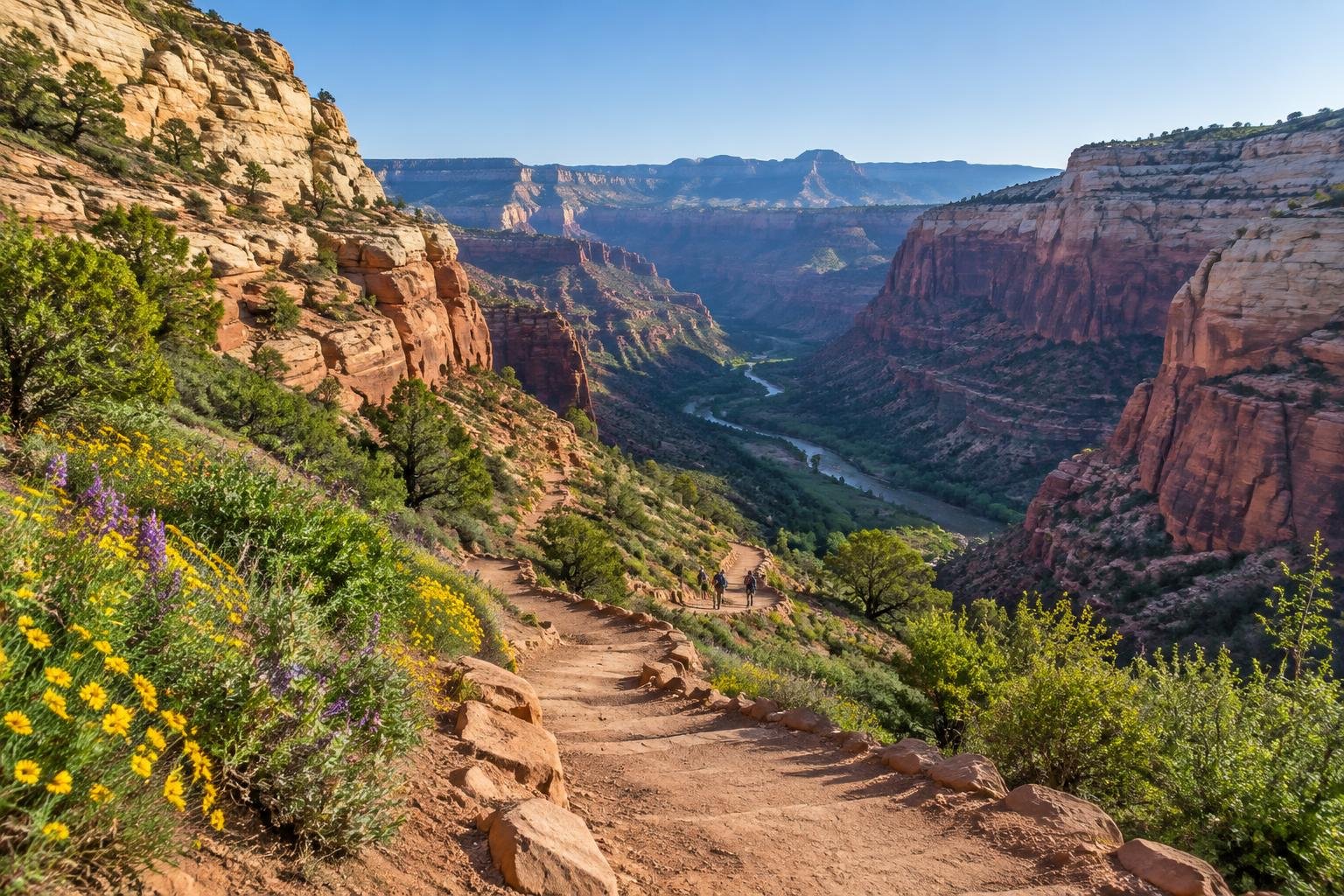
Month-by-month climate for Grand Canyon — Bright Angel Trail
| Month | Relative warmth | Rain | Daylight |
|---|---|---|---|
| Jan | Coldest | 31 mm | 9.8 h |
| Feb | Coldest | 24 mm | 10.7 h |
| Mar | Cool | 28 mm | 11.7 h |
| Apr | Cool | 11 mm | 12.9 h |
| May | Mild | 12 mm | 13.9 h |
| Jun | Warmest | 7 mm | 14.4 h |
| Jul | Warmest | 52 mm | 14.2 h |
| Aug | Warmest | 51 mm | 13.4 h |
| Sep | Warm | 29 mm | 12.2 h |
| Oct | Mild | 26 mm | 11.1 h |
| Nov | Cool | 19 mm | 10 h |
| Dec | Coldest | 28 mm | 9.6 h |
Modelled regional averages for 2010–2023 (rainfall) and calculated daylight hours; they describe the wider area, not a reading taken on the trail. “Relative warmth” compares each month with the warmest and coldest months of this place’s own year. It is not a temperature, and the high parts of a route are colder than the region around them.
Rainfall peaks in July and August at about 52 and 51 mm, then drops to 29 mm in September and 26 mm in October. April and May are the driest of the recommended spring months at 11 and 12 mm, while June is driest overall at 7 mm. Daylight swings from 9.6 hours in December to 14.4 hours in June. Relative to this place's own year, January, February and December are the coldest months, while June, July and August are the warmest, which fits the official warning about summer heat.
Grand Canyon — Bright Angel Trail season by season
Spring · March to May
Spring is one of the two windows the park service recommends. March is relatively cool with about 28 mm of rain, while April and May are far drier at roughly 11 and 12 mm. Daylight grows from 11.7 hours in March to 13.9 hours in May, giving you room for an unhurried day. May is mild relative to the year, so it begins edging toward the warmest months. Check the managing authority for current water and lodging status before committing to dates.
Summer · June to August
June through August are the warmest months of this place's year, and the official season guidance warns that summer inner-canyon heat is dangerous. June is very dry at about 7 mm, but July and August bring the wettest conditions of the year at roughly 52 and 51 mm. Daylight is longest in June at 14.4 hours. Because this window falls outside the recommended seasons, anyone considering it should consult the National Park Service about current conditions and restrictions first.
Autumn · September to November
Autumn is the second recommended window. September is still warm relative to the year, with about 29 mm of rain, while October turns mild at 26 mm and November cool at 19 mm. Daylight shortens from 12.2 hours in September to 10.0 hours in November, so earlier starts matter more as the season progresses. This window typically offers a calmer balance of warmth and rainfall, but confirm details with the managing authority before you go.
Winter · December to February
December, January and February are the coldest months of this place's year, with daylight at its shortest, between 9.6 and 10.7 hours. Rainfall is modest, at about 28 mm in December, 31 mm in January and 24 mm in February. Winter is outside the two recommended seasons in the official guidance, so conditions and requirements may differ from the shoulder seasons. Check with the National Park Service for current trail conditions, water availability and any restrictions.
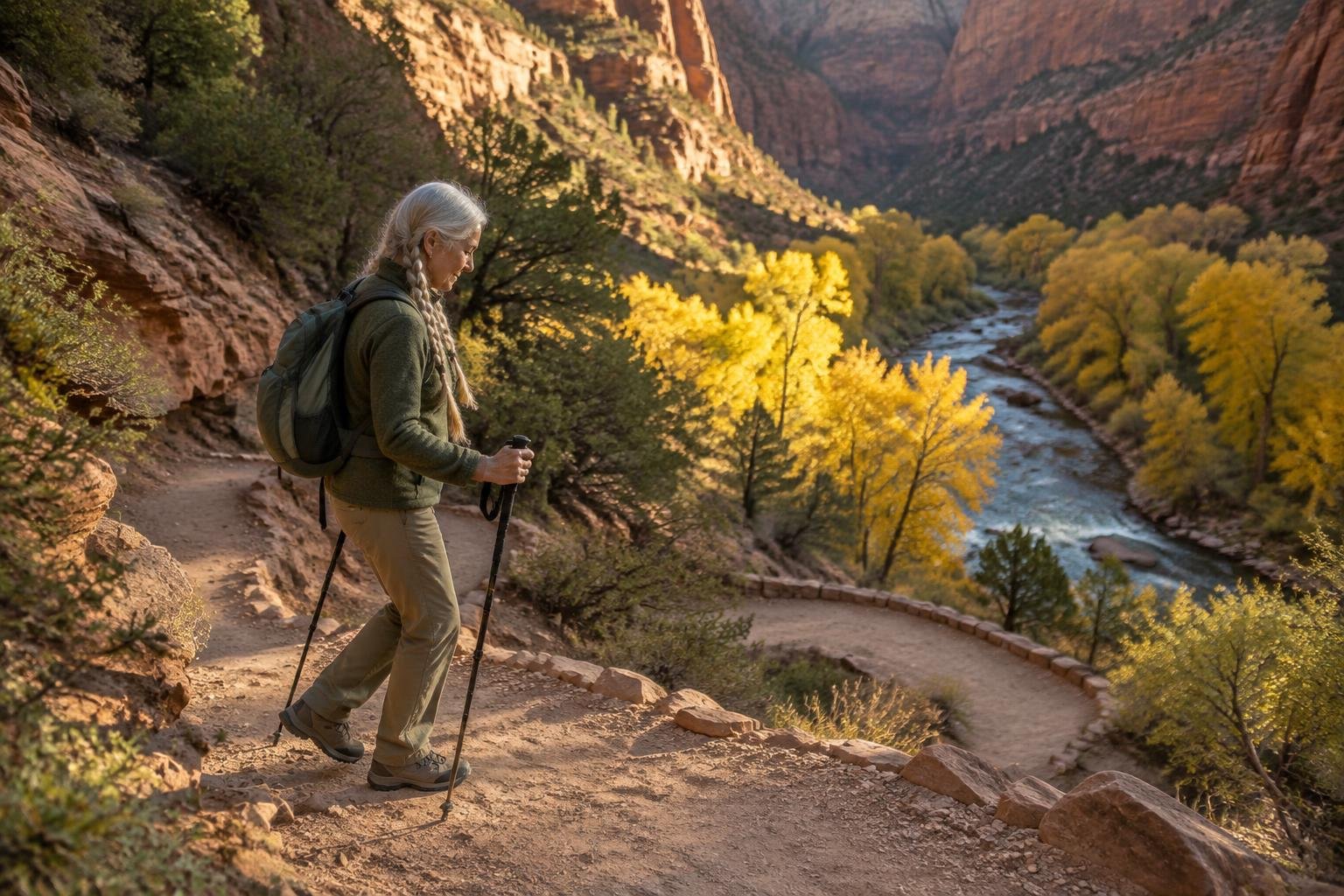
Official season guidance
U.S. National Park Service: March–May and September–November — summer inner-canyon heat is dangerous
As of September 2026 the park reports that overnight lodging is suspended (Stage 4 water restrictions, dry camping only) — check the NPS Grand Canyon site for current status before planning any lodging or water stops. Any overnight below the rim needs a Grand Canyon backcountry permit; corridor campgrounds are in high demand and released on a rolling monthly schedule. Phantom Ranch beds are separate, by lottery, and may be affected by the current lodging suspension.
Check current dates on nps.gov/grcaWhat to pack for the season
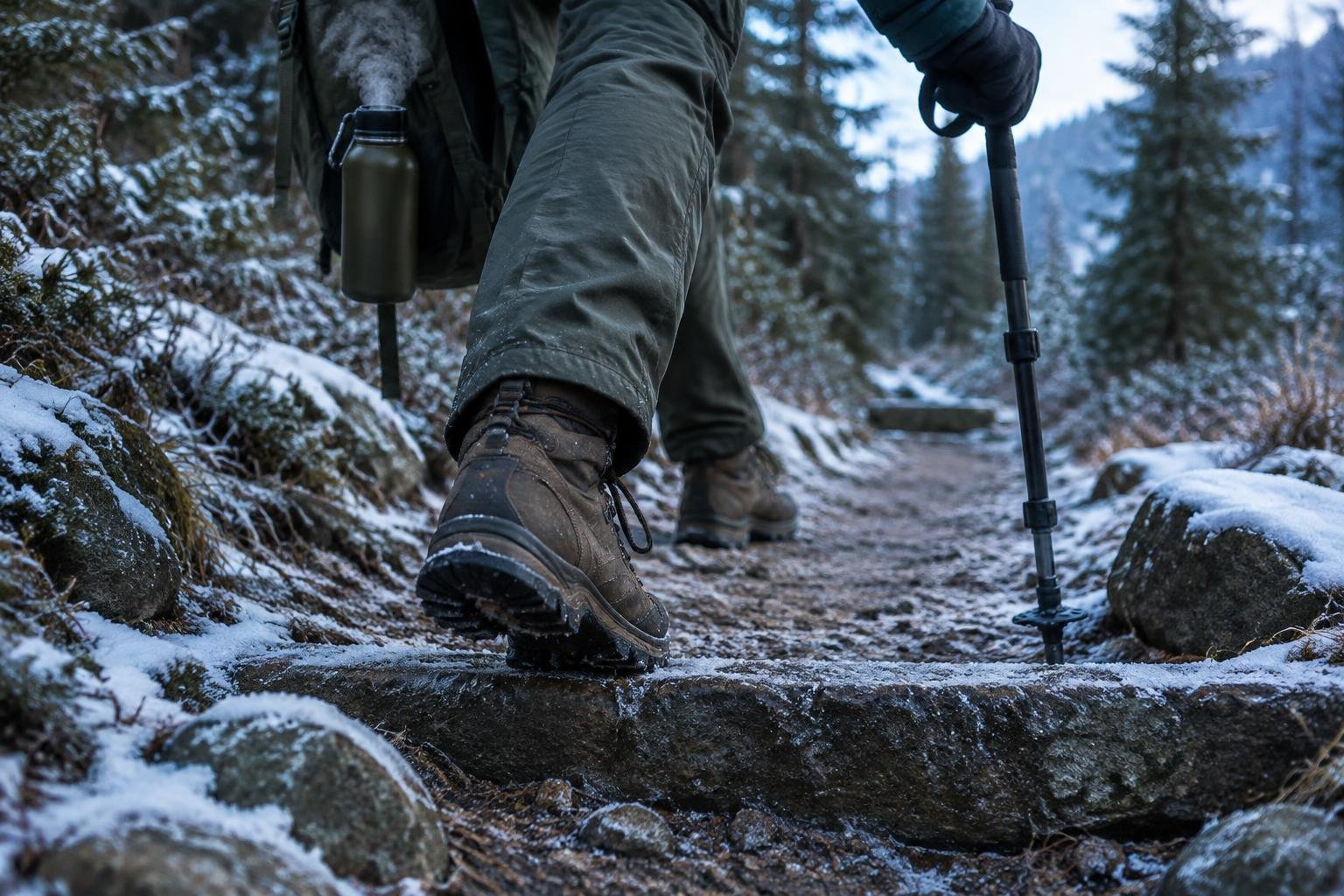
Packing should follow the season. In spring and autumn, plan for layers that handle cool mornings and milder midday conditions, plus sun protection and a rain layer for wetter months. Short days in late autumn and winter mean carrying a headlamp. In the warmest months, sun and heat management become central, so confirm current guidance from the managing authority.
For layering, rain cover and weather planning, see hiking in rain, heat and cold.
Timing mistakes to avoid
A common mistake is treating one month as reliable instead of reading the whole season. The park service flags summer inner-canyon heat as dangerous, and the modelled data shows July and August as the wettest months, so summer brings both heat and rain. Another is planning overnight logistics without checking the current lodging suspension, water restrictions and backcountry permit requirements. Daylight also shrinks quickly into November and winter, so late starts can shorten your usable time.
Common questions
What months does the park service recommend for Bright Angel Trail?
The official season guidance recommends March to May and September to November. It specifically warns that summer inner-canyon heat is dangerous. These shoulder seasons are generally the practical windows, but always confirm current conditions with the National Park Service before planning.
Is summer a bad time to hike Bright Angel Trail?
The official guidance describes summer inner-canyon heat as dangerous, and June to August are the warmest months of this place's year. July and August are also the wettest months in the modelled data. Check with the National Park Service for current conditions and advice.
How much daylight can I expect across the year?
Daylight ranges from about 9.6 hours in December to 14.4 hours in June. In the recommended seasons it runs roughly 11.7 to 13.9 hours in spring and 12.2 down to 10.0 hours in autumn, so shorter autumn days call for earlier starts.
Do I need to check anything before planning an overnight trip?
Yes. Any overnight below the rim needs a Grand Canyon backcountry permit, and the park reports lodging is currently suspended with dry camping only under Stage 4 water restrictions. Check the NPS Grand Canyon site for current status before planning.
Sources
- U.S. National Park Service — nps.gov/grca: official season and permit guidance.
- NASA POWER (Prediction Of Worldwide Energy Resources): monthly temperature and rainfall averages, 2010–2023, from MERRA-2 reanalysis. Daylight hours are calculated from latitude.
Conditions, closures and permit rules change without notice — confirm current information with the managing authority before you go. See our editorial policy and affiliate disclosure.