
Tongariro Alpine Crossing vs Roys Peak: Which Should You Hike?
Choose Tongariro Alpine Crossing if you want a one-way volcanic traverse with changing terrain and are happy to organize a shuttle; choose Roys Peak if you prefer a single out-and-back climb on a wide farm road with no transport logistics. Both are rated strenuous, so pick by terrain and planning style.
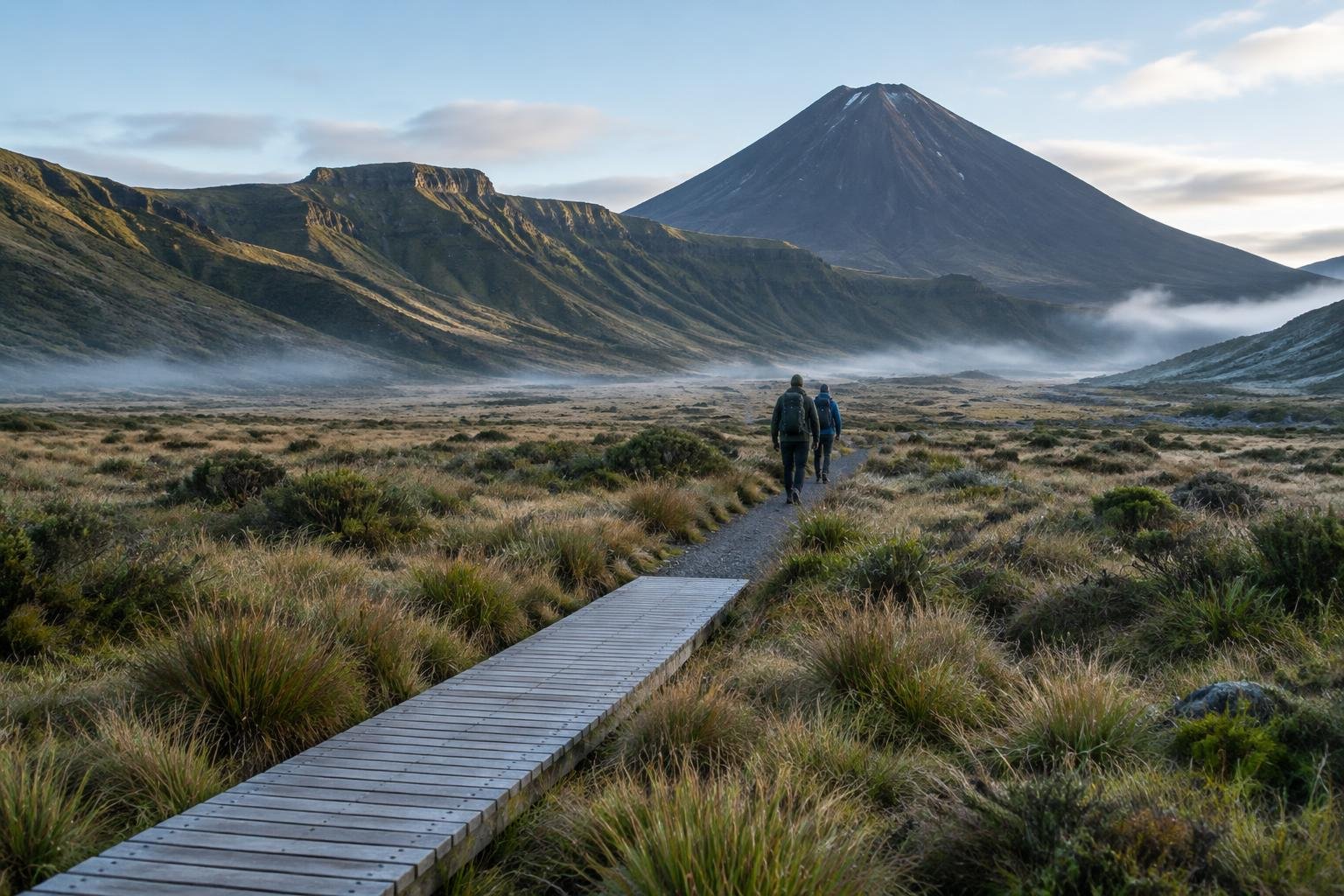
Tongariro Alpine Crossing and Roys Peak at a glance
Tongariro Alpine Crossing is a 20.2 km one-way traverse past active volcanoes on New Zealand's North Island. Roys Peak is a 16 km out-and-back climb across working farmland in Otago on the South Island. Hikers often weigh them because both are big, strenuous New Zealand day hikes with famous views, but they ask very different things of you.
| Tongariro Alpine Crossing | Roys Peak | |
|---|---|---|
| Place | Central Plateau · North Island, New Zealand | Otago · South Island, New Zealand |
| Distance | 20.2 km, one-way, Mangatepōpō to Ketetahi | 16 km return |
| Elevation gain | +765 m gain / -1,125 m loss (starts 1,120 m, climbs to Red Crater at 1,886 m — the highest point — then descends to ~760 m at Ketetahi) | ~1,200-1,300 m (DOC states 'over 1,200 m'; trail-data sites commonly cite ~1,228 m) |
| Difficulty | Strenuous (DOC and official sources describe it as a demanding full-day tramp; 6-9 hours) | Strenuous (DOC: 'high fitness needed' — sustained uphill switchbacks, no technical climbing) |
| Route type | point-to-point | out-and-back |
| Official season | November to April; winter needs alpine skills and gear | Spring to autumn; the track closes for lambing (about Oct–Nov) |
| Managed by | Department of Conservation (DOC) | Department of Conservation & landowners |
Effort and difficulty
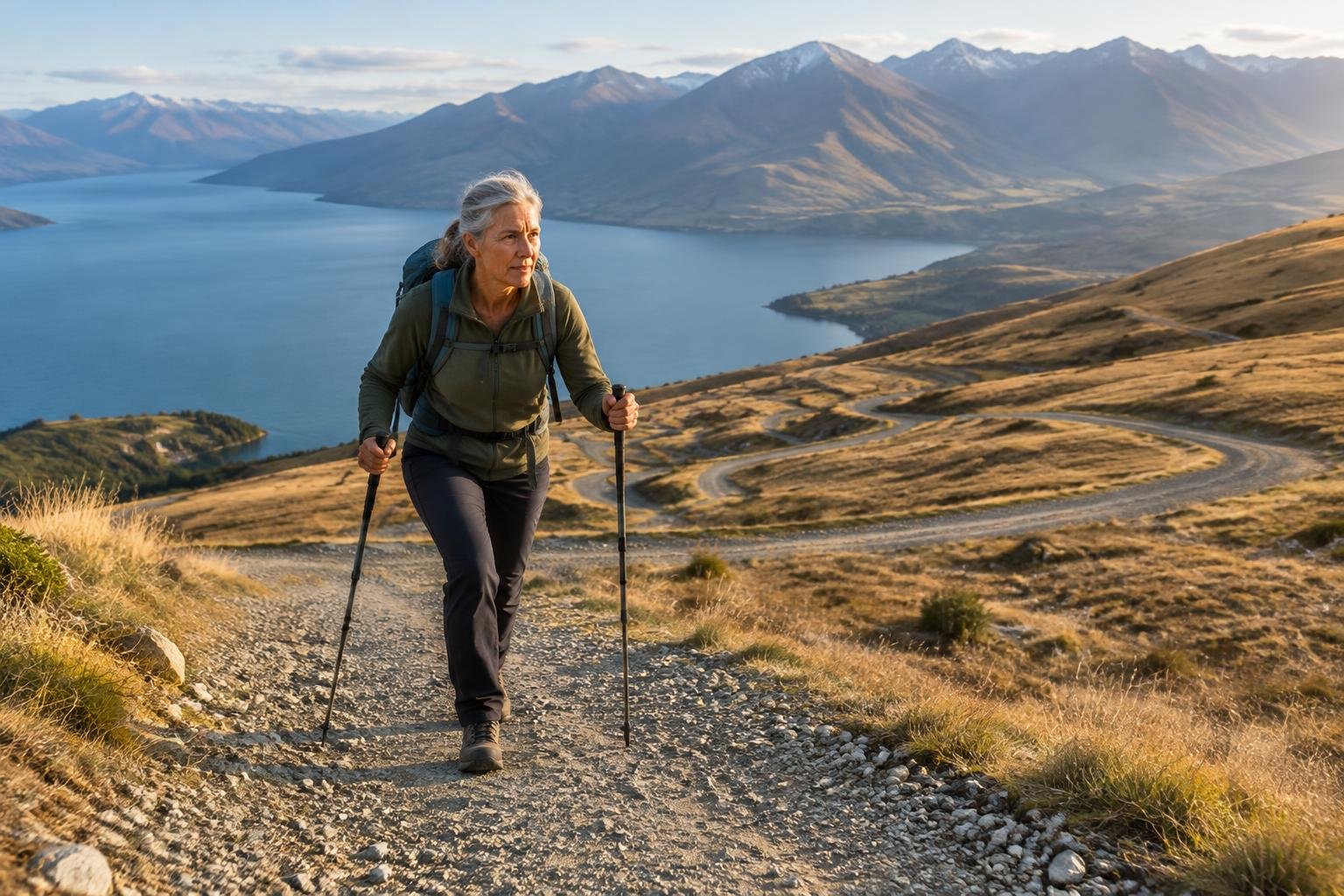
Both are rated strenuous, but the effort comes in different forms. The Crossing covers 20.2 km one-way, climbing +765 m to Red Crater at 1,886 m and then losing 1,125 m, with DOC describing a demanding full day of 6-9 hours. Roys Peak is 16 km return with over 1,200 m of gain, described by DOC as needing high fitness. The Crossing is the longer day with varied terrain, including a loose scree descent. Roys Peak is shorter but climbs continuously, with no flat ground and no shade.
Season, permits and booking
The official best season for the Crossing is November to April, and winter needs alpine skills and gear. Roys Peak is best from spring to autumn, and the track closes for lambing, roughly October to November. Neither needs a permit, but the Crossing's logistics are heavier: DOC recommends booking, shuttle transport must be planned, and fire damage and a rāhui affect part of the route as noted on this page. Always confirm current rules and closures with each managing authority before you go.
Which one is right for you?
Choose Tongariro Alpine Crossing if…
Pick the Crossing if you want a point-to-point route with varied terrain, from boardwalk to volcanic rock, scree and forest, and you are comfortable committing to a full day of 6-9 hours. It suits hikers who can handle fast-changing alpine weather, carry layers and are ready to turn back. You must also be willing to book shuttle transport, since the route does not return to its start.
How to hike Tongariro Alpine CrossingChoose Roys Peak if…
Pick Roys Peak if you would rather have one steady gradient on firm gravel and packed dirt, with no scrambling or route-finding, and a simple out-and-back day. It suits hikers with strong fitness who can plan around sun and heat, since there is no shade or water on the climb. The main decision is your start time, and continuing past the famous spur to the true high point adds more climbing.
How to hike Roys PeakWhat the two have in common
Both are strenuous day hikes in New Zealand managed in part by the Department of Conservation, and neither needs a permit. Both reward an early start, and both make the descent a long part of the day. Each is built around open, exposed ground where weather and sun matter more than technical difficulty, so water, layers and sun protection matter on either trail.
How your choice changes what you pack
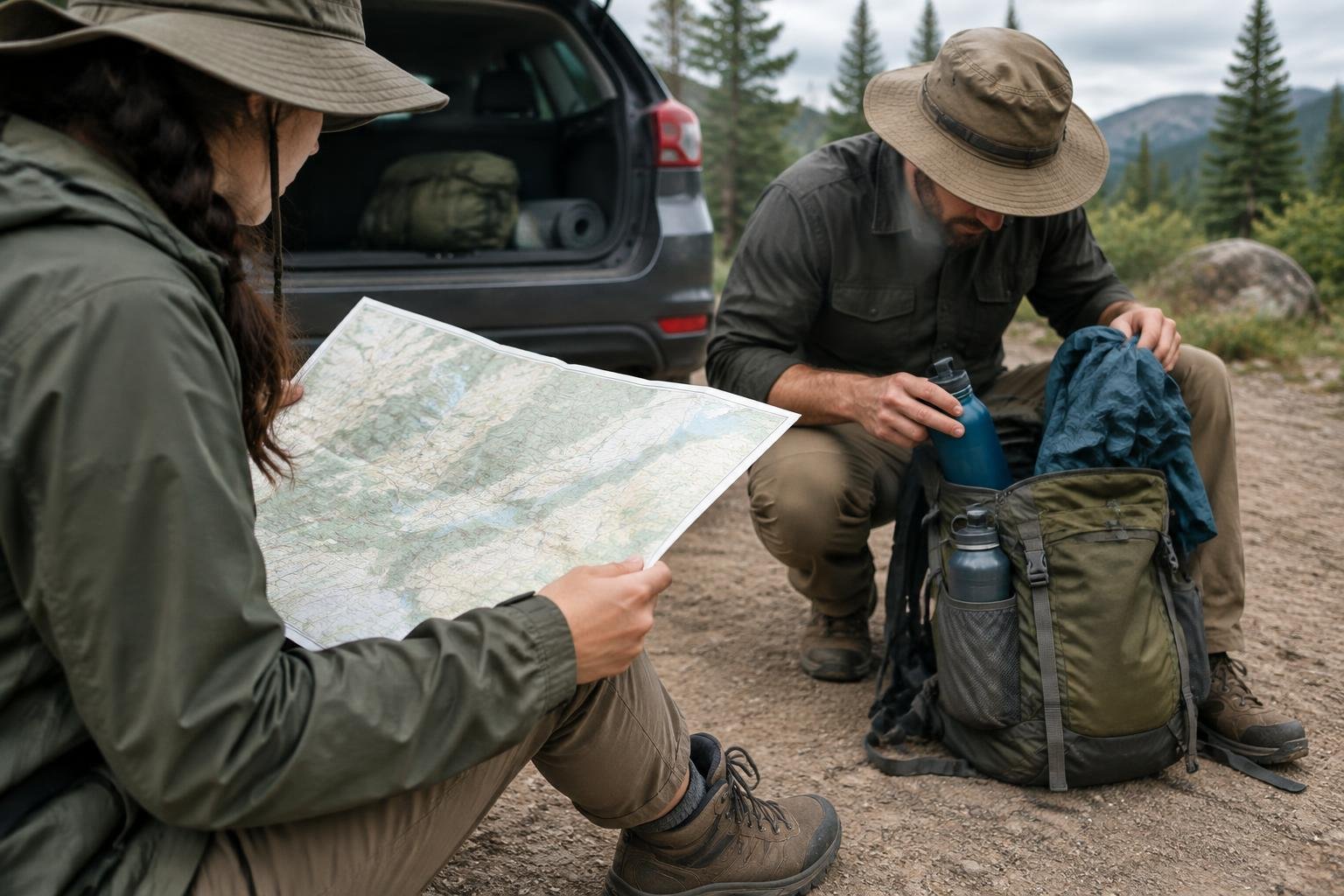
The Crossing's alpine, volcanic setting means planning for fast weather changes: warm and windproof layers, sturdy footwear for loose scree, and a pack sized for a full day with a shuttle schedule. Roys Peak asks for less layering but more water capacity and sun protection, since there is no shade or water on the climb. Headlamps are useful on either trail for pre-dawn starts.
Common questions
Which is harder, Tongariro Alpine Crossing or Roys Peak?
Both are rated strenuous. The Crossing is longer at 20.2 km and takes 6-9 hours, with a loose scree descent and alpine weather. Roys Peak is 16 km return but climbs over 1,200 m continuously, with no shade. Which feels harder depends on whether distance or sustained climbing wears you down more.
Which is better for a first-time strenuous hiker?
Neither is a gentle introduction. Roys Peak has simpler logistics and firm farm-road footing with no route-finding, though DOC says high fitness is needed. The Crossing adds shuttle planning and alpine conditions. Build up your fitness first and check official guidance for either route.
Do I need a permit or booking for either hike?
Neither requires a permit. For the Crossing, DOC recommends booking, which is free but required for shuttle and guided services, and you must arrange transport. Roys Peak crosses working farmland and closes for lambing, roughly October to November. Confirm current details with each managing authority.
When is the best time to hike each trail?
The Crossing's official best season is November to April, with winter requiring alpine skills and gear. Roys Peak is best from spring to autumn, except for its lambing closure, roughly October to November. Weather and closures can change, so check the managing authority's current guidance before you travel.
Sources
- Department of Conservation (DOC) — doc.govt.nz (Tongariro Alpine Crossing track page): official information for Tongariro Alpine Crossing.
- Department of Conservation & landowners — doc.govt.nz (Roys Peak Track page): official information for Roys Peak.
Conditions, permits and access rules change without notice — confirm current information with each managing authority before you go. See our editorial policy.