
Abel Tasman Coast Track vs Milford Track: Which Should You Hike?
Choose the Abel Tasman Coast Track if you want a flexible coastal walk with beaches, huts or campsites, and the option to shorten the trip by water taxi. Choose the Milford Track if you want a fixed four-day rainforest and alpine crossing with a demanding pass day.
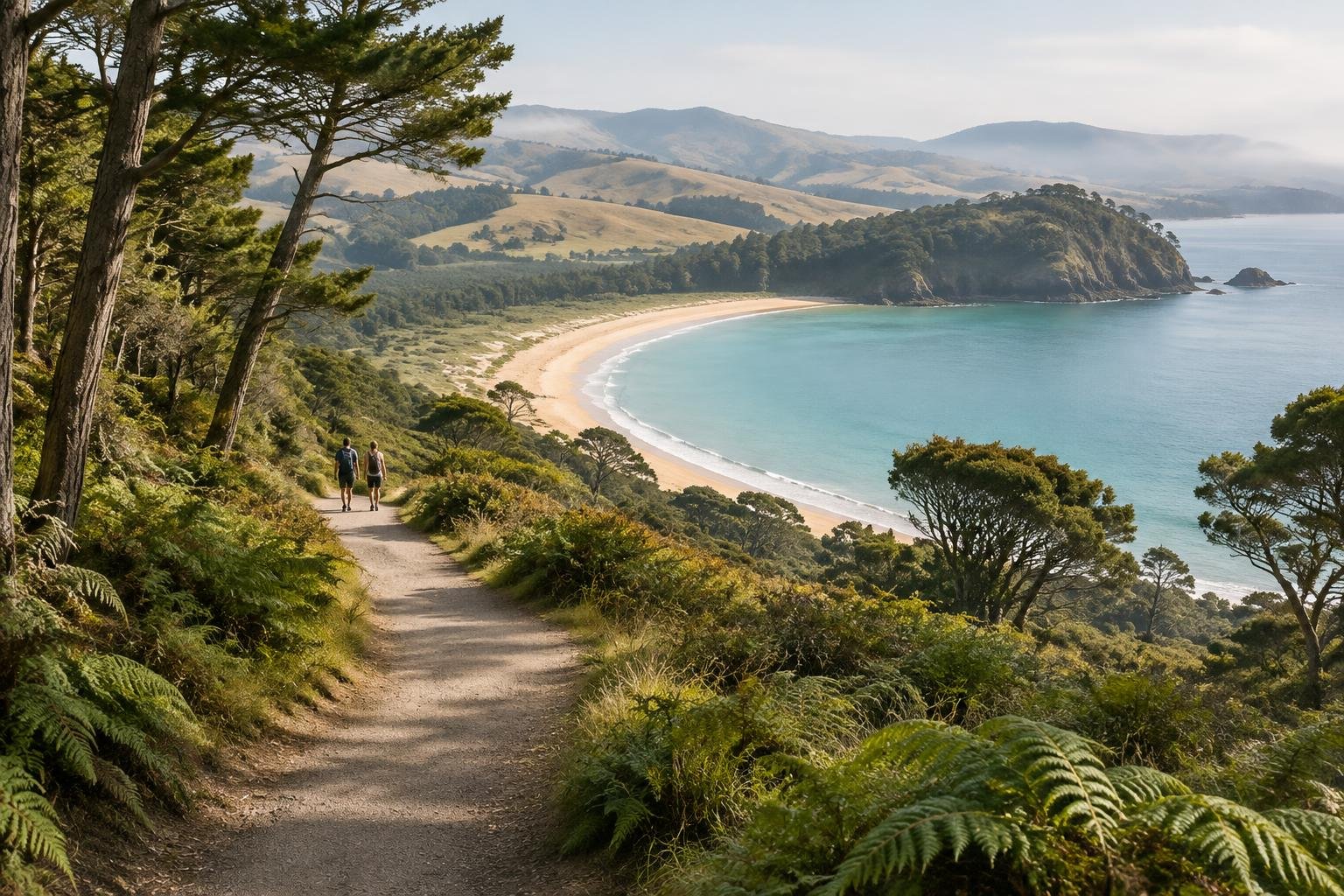
Abel Tasman Coast Track and Milford Track at a glance
The Abel Tasman Coast Track is a 60 km one-way route from Mārahau to Wainui, walked in 3-5 days. The Milford Track is a 53.5 km (33.2 mi) one-direction thru-hike through Fiordland. Both are DOC Great Walks on New Zealand's South Island, and both need advance planning, which is why people often weigh them against each other.
| Abel Tasman Coast Track | Milford Track | |
|---|---|---|
| Place | Nelson · South Island, New Zealand | Fiordland · South Island, New Zealand |
| Distance | 60 km one-way, Mārahau to Wainui (walked in 3-5 days) | 53.5 km / 33.2 mi, point-to-point (one direction only) |
| Elevation gain | No official elevation-gain figure is published (DOC does not give one) | High point Mackinnon Pass ~1,154 m (3,786 ft) above sea level from near-sea-level trailheads; total cumulative ascent over the 4-day track is commonly cited around 1,700 m (5,600 ft) for the whole route |
| Difficulty | Easy to moderate (Great Walk grade — well-formed coastal track; DOC notes some sections are steep, rough, or muddy) | Moderate to strenuous (DOC Great Walk grade; the Mackinnon Pass crossing on day 3 is the hard day) |
| Route type | point-to-point | thru-hike |
| Official season | October to April, though it walks year-round | 1 November to 30 April (Great Walk season; 2026/27 dates on the DOC page); outside it, off-season conditions apply |
| Managed by | Department of Conservation (DOC) | Department of Conservation (DOC) |
Effort and difficulty
Abel Tasman is graded easy to moderate, with a benched, well-formed track, though DOC notes some steep, rough or muddy sections. No official elevation-gain figure is published. The Milford Track is graded moderate to strenuous, with a high point at Mackinnon Pass of about 1,154 m (3,786 ft) and roughly 1,700 m (5,600 ft) of total ascent commonly cited. Day 3 is the hard day. Milford is the bigger physical commitment, while Abel Tasman's challenge is sand walking and tide timing.

Season, permits and booking
Abel Tasman's official best season is October to April, though it walks year-round, and huts and campsites must be booked in advance all year. Some estuary crossings are tidal, so check tide tables. Milford's Great Walk season runs 1 November to 30 April, with fixed-date, fixed-direction hut bookings and no camping allowed. Off-season conditions are more serious, with no rangers at the huts. Always confirm current rules with DOC before booking.
Which one is right for you?
Choose Abel Tasman Coast Track if…
Pick Abel Tasman if you are newer to multi-day walking, want a gentler grade, or like the idea of adjusting your trip. Water taxis let you walk part of the route or trim a day. It suits hikers who enjoy forest-and-beach rhythm and can plan around the tides. A short first day helps with transport connections.
How to hike Abel Tasman Coast TrackChoose Milford Track if…
Pick Milford if you are comfortable with a strenuous day and want the alpine crossing as the centerpiece. It suits walkers who like a set structure: four days, fixed huts at Clinton, Mintaro and Dumpling, one direction. You should be ready for exposed weather on the pass and a long descent on rock steps, plus a deadline on the final day for the boat.
How to hike Milford Track — FiordlandWhat the two have in common
Both are point-to-point routes managed by DOC as Great Walks, on well-built benched tracks with swing bridges, boardwalk or formed surfaces. Both are on New Zealand's South Island, require advance booking in the main season, and lock in much of your itinerary at the reservation stage. Both end with transport logistics, by water taxi or boat, that shape how you plan your final day.
How your choice changes what you pack
The choice changes what you pack for. Milford calls for serious weather layers because the pass is exposed alpine ground, and you will carry for hut stays only since camping is not allowed. Abel Tasman may mean lighter layers but extra attention to water, footwear for sand and mud, and whether you stay in huts or campsites, which affects shelter and cooking gear.

Common questions
Which is harder, Abel Tasman or the Milford Track?
The Milford Track is harder. DOC grades it moderate to strenuous, with the Mackinnon Pass crossing on day 3 as the demanding day. Abel Tasman is graded easy to moderate, though sand walking, steep or muddy sections and tidal crossings can still tire people out.
Which is better for first-time multi-day hikers?
Abel Tasman is generally the gentler choice given its grade, and water taxis let you shorten the trip. Milford can still suit a well-prepared first-timer, but the strenuous pass day and exposed weather mean you should be confident in your fitness and planning.
Can I camp on both tracks?
Abel Tasman has huts and beachside campsites, both of which must be booked in advance. Milford does not allow camping on the track during the facts provided here, so you stay in the fixed huts. Check DOC for current accommodation rules before planning.
Do I need to book ahead for each one?
Yes in the main seasons. Abel Tasman huts and campsites must be booked year-round and fill quickly in summer. Milford requires advance hut bookings for a fixed date and direction during the Great Walk season. Outside that season, bookings are not required but conditions are more serious. Confirm details with DOC.
Sources
- Department of Conservation (DOC) — doc.govt.nz: official information for Abel Tasman Coast Track.
- Department of Conservation (DOC) — doc.govt.nz: official information for Milford Track.
Conditions, permits and access rules change without notice — confirm current information with each managing authority before you go. See our editorial policy.