

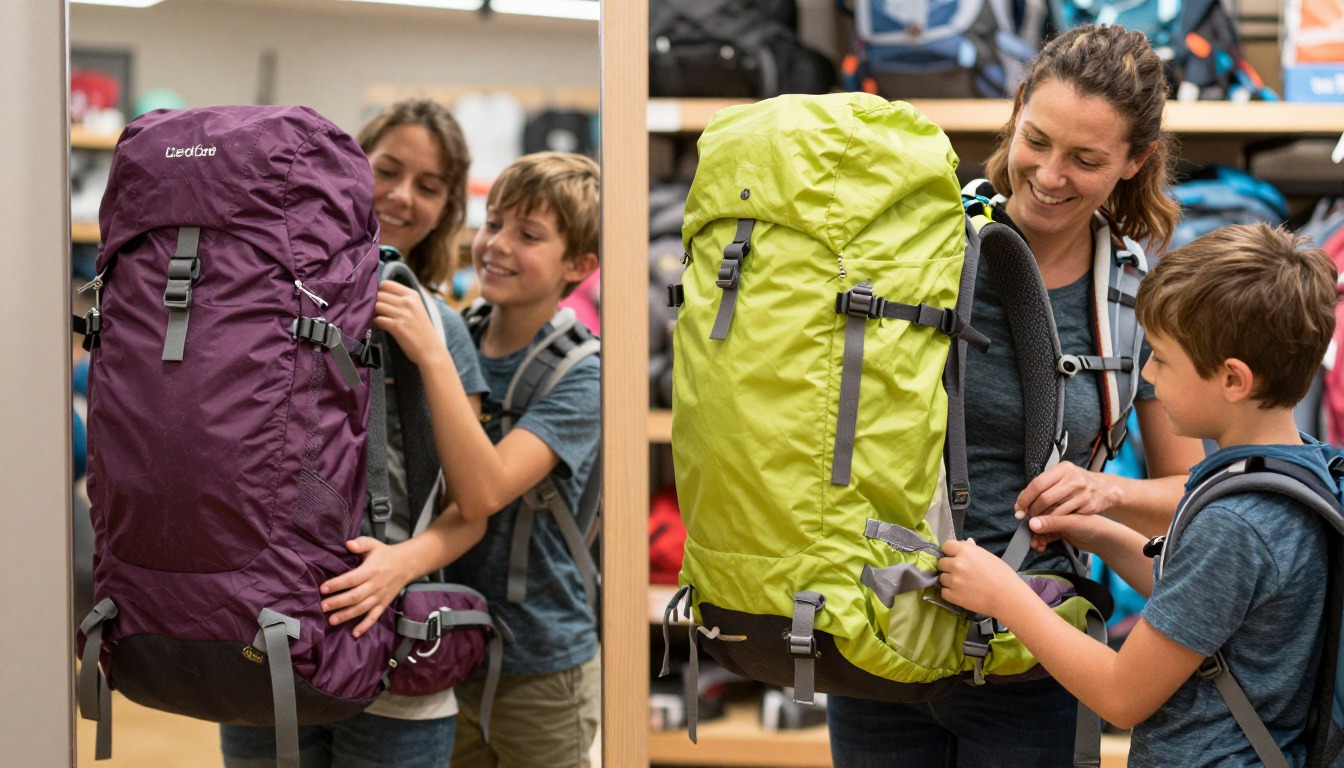


Adjusting a hiking backpack by season means changing how much volume rides in the main compartment and how much gear rides externally, not switching to an entirely different pack for every trip. The same pack often works year-round if a hiker understands what season-specific gear it needs to carry and where that gear goes.
How do you adjust a backpack for winter backpacking?
Adjusting a backpack for winter backpacking means planning for 10 to 20 liters more volume than the same trip in summer, plus external attachment points for an ice axe, crampons, or snowshoes that summer trips don't carry. Winter sleeping bags and insulated layers are bulkier per degree of warmth than three-season gear, and that bulk has to go somewhere.
Compression straps become more important in winter, since they let a hiker cinch a partially full pack down tight when carrying less food later in a trip, or expand it back out when a food resupply or extra layer goes in. External attachment points matter just as much as internal volume: an ice axe loop and crampon patch keep sharp hardware off gear stored inside the main compartment, where it can tear a sleeping bag's shell fabric.
What changes when you switch a pack from summer to winter for the same trail?
Switching a pack from summer to winter on the same trail mainly changes total carried weight and where bulky insulation rides, not the trail distance or the base gear list itself. A summer version of a route might run 25 pounds total; the same route in winter, with a warmer bag, insulated layers, and possibly snow gear, can run 35 to 40 pounds or more.
That weight increase makes hipbelt fit and load transfer more important in winter than in summer, since a properly fitted hipbelt carries roughly 80% of total pack weight regardless of season — but the consequence of a poor fit is more painful under a heavier winter load. A pack with a well-padded, correctly sized hipbelt handles this swing better than one chosen mainly for its liter capacity.
How much extra volume does winter gear actually need?
Winter gear typically adds 10 to 20 liters of needed volume over the same trip's summer packing list, mostly from a warmer sleeping bag, insulated layers, and any snow-travel equipment like snowshoes or traction devices. A summer overnight that fits in 35 liters often needs 45 to 55 liters for the same route in winter conditions.
- A winter-rated sleeping bag typically packs larger than a three-season bag rated for milder temperatures
- An insulated jacket and extra base layers add bulk that a summer trip skips entirely
- Snow-travel gear — traction devices, sometimes snowshoes — needs either internal space or a dedicated external carry system
- Fuel needs often rise slightly in winter, since melting snow for water uses more fuel than filtering from a stream
Can one backpack realistically work across every season?
One backpack can realistically work across every season if it sits in a mid-to-large capacity range, roughly 55 to 65 liters, with external attachment points and functional compression straps, since it can be cinched down for a light summer trip and opened up for a bulkier winter load. A pack sized tightly for summer minimalism often can't stretch to fit winter's added bulk.
The trade-off is carrying a larger, sometimes heavier pack on summer trips than strictly necessary. Hikers who backpack in every season and want a single pack are usually better served choosing a capacity based on their heaviest expected load — typically the winter trip — and using compression straps to manage it the rest of the year, rather than sizing for summer and hoping winter gear fits.