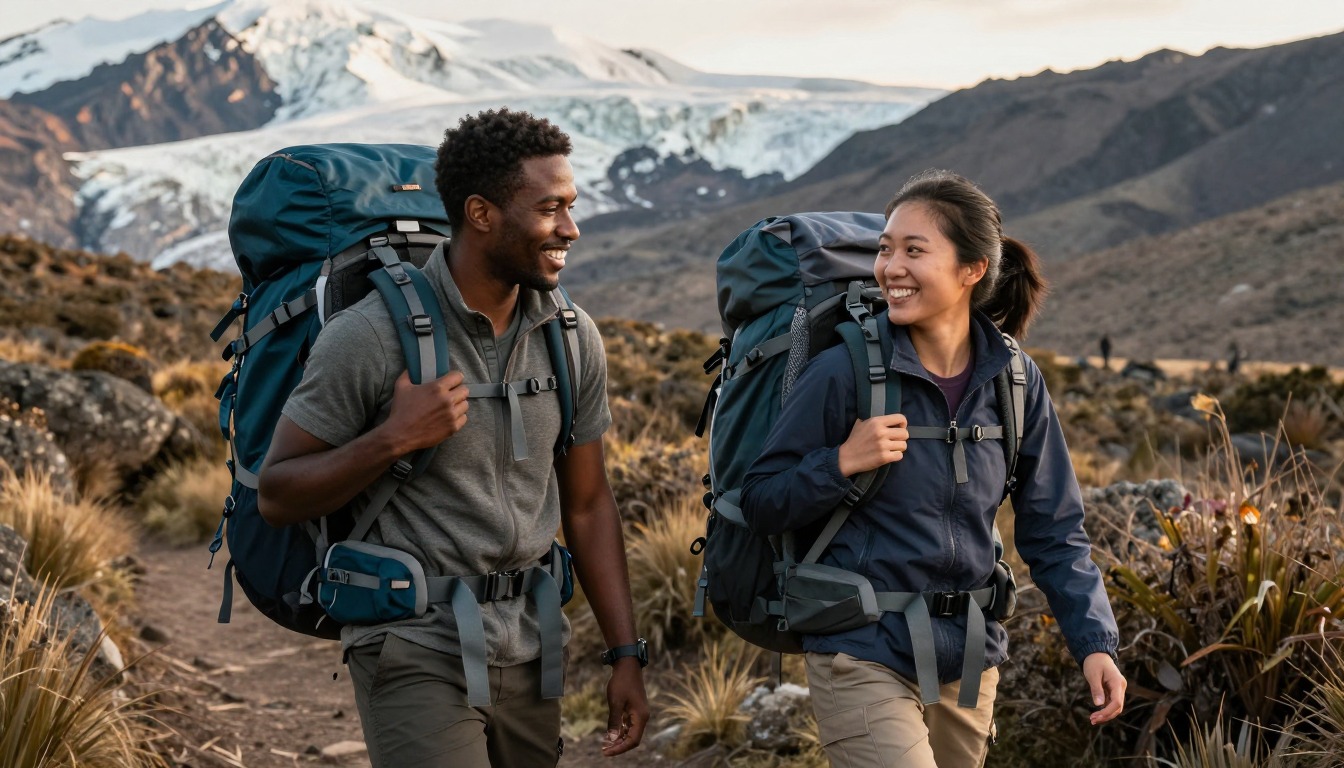
The best backpack for climbing Kilimanjaro is a 25 to 35 liter daypack paired with a soft duffel for the porters, because every commercial Kilimanjaro route is portered. You carry only what you need between camps; the porters carry your tent, sleep system, and main kit.
Your daypack
The daypack must hold 2 to 3 liters of water, sun protection, rain gear, and the layers you add as you climb from rainforest to arctic summit conditions. A hydration reservoir plus an insulated hose helps on summit night, when bite valves can freeze. A 30-liter pack with a hipbelt, a rain cover, and pole attachment covers a standard climb.
The porter duffel and weight limit
Kilimanjaro National Park and operators enforce a porter weight limit — commonly around 15 kg (33 lb) for your duffel including the bag itself. A rugged 70 to 90 liter soft duffel is the right container; it must be soft-sided so it balances on a porter's head or shoulders. Weigh your packed duffel at home so you are not repacking at the gate.
Summit-night essentials stay on your back
On summit night, keep water, snacks, spare batteries (cold drains them fast), and your down layers in the daypack you carry. Torso-fit the daypack in advance so the load rides on your hips through the long, cold ascent.
Frequently Asked Questions
A 25 to 35 liter daypack is right for Kilimanjaro. Porters carry your main kit in a weight-capped duffel, so your daypack only needs the day's water, layers, sun and rain protection, and summit-night essentials like snacks and spare batteries.