
Best 35l Hiking Backpack
Best 35l Hiking Backpack, ranked from aggregated owner ratings and reviews, not first-hand testing. Real pros, cons, and who each pick is best for.

Affiliate disclosure: this page contains affiliate links. Purchases made through them may earn us a commission at no extra cost to you. See our affiliate disclosure.
In plain English
A 35-liter pack is a good size for one or two warm nights outside if your gear is fairly light and compact. It is a bit bigger than a school backpack but much smaller than the large packs people use for a week in the mountains.
How much weight feels comfortable depends on your body and on how well the pack spreads that weight. A good pack uses a stiff back and a padded hip strap to move weight off your shoulders, much like a shopping cart takes the strain off your arms.
Cold weather changes everything. Warm sleeping gear and extra jackets are puffy and take up room, so a pack that is roomy in summer can be stuffed full in fall. The fabric numbers you see on labels, like 210D, describe how heavy the threads are. Bigger numbers usually mean tougher and heavier cloth.
Our Top 3 Picks
Quick Comparison
| Shell | Extras | Buy | ||||
|---|---|---|---|---|---|---|
| 1 | SKYSPER Hiking Backpack for Men WomenTop Overall Pick | 35 L | 32 oz | 600D nylon | Rain cover | View |
| 2 | MIYCOO Ultralight Packable BackpackBest Value | 35 L | 13 oz | — | — | View |
| 3 | Hiking Backpack for Women MenBest for Women | 30–35 L | 2.4 lb | 210D ripstop nylon | Rain cover | View |
| 4 | Maelstrom 40L Hiking BackpackBest Ultralight | 40 L | 2.2 lb | 210D ripstop nylon | Rain cover | View |
| 5 | 35L Lightweight Hiking Backpack for Women Men Waterproof Camping BackpacBest Support | 35 L | — | 210D nylon | Rain cover | View |
What should you look for in a 35L hiking backpack?
Look for a suspension system rated to carry the loaded weight you actually plan to hike with, a hip belt that transfers load off the shoulders, and enough external attachment points to lash a sleeping pad or wet gear without opening the main compartment. A 35L pack sits right at the point where frame quality starts to matter more than raw capacity.
How much weight can a 35L pack carry comfortably?
Most 35L packs carry loaded weights of 20-30 pounds comfortably, depending on frame and hip belt quality. Packs with a single aluminum stay or perimeter frame handle the upper end of that range better than frameless designs, which are better suited to loads under 20 pounds.
What frame types are common at 35L?
Three frame approaches show up most often in this capacity range:
- Frameless or roll-top ultralight packs minimize weight for hikers running very light gear lists and loads under 20 pounds.
- Single-stay internal-frame packs add a lightweight aluminum stay for load transfer while staying close to frameless pack weights, the most common choice at 35L.
- Full suspended-mesh frame packs carry the most weight comfortably but add several ounces over minimalist designs, favoring comfort over ounce-counting.
Is a 35L pack better for warm or cold trips?
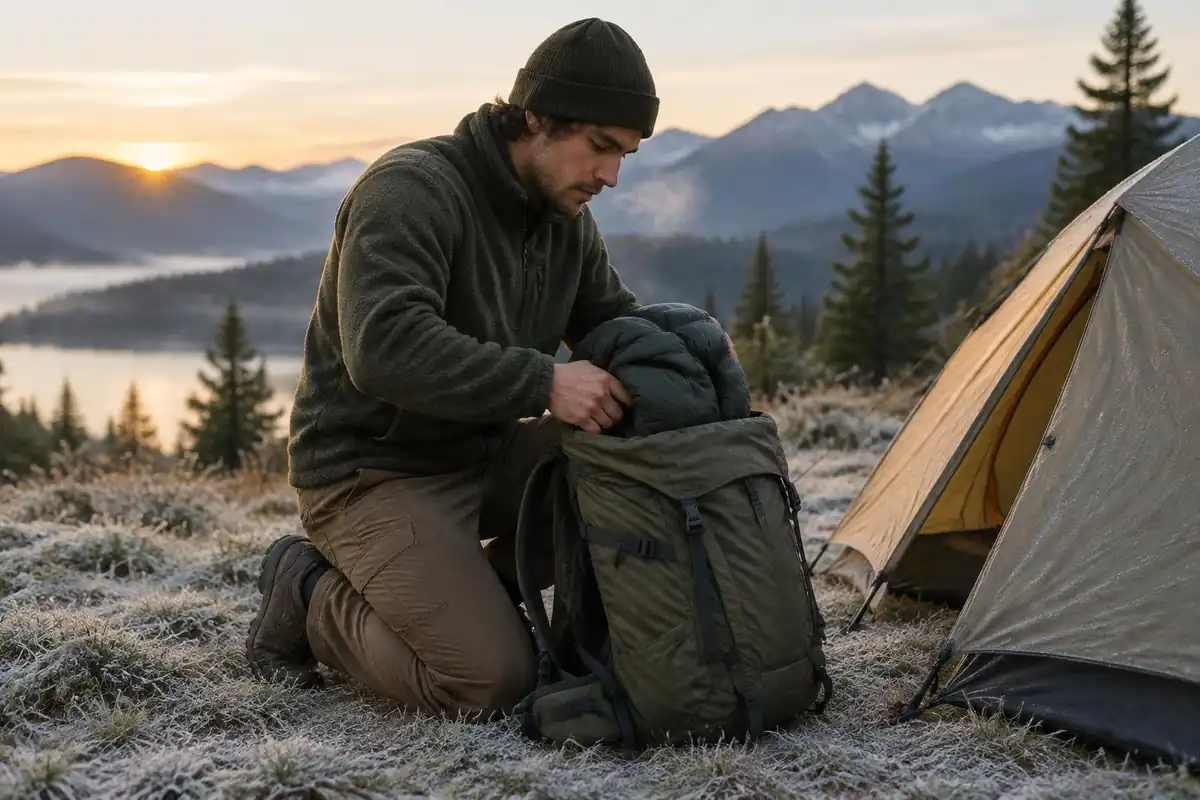
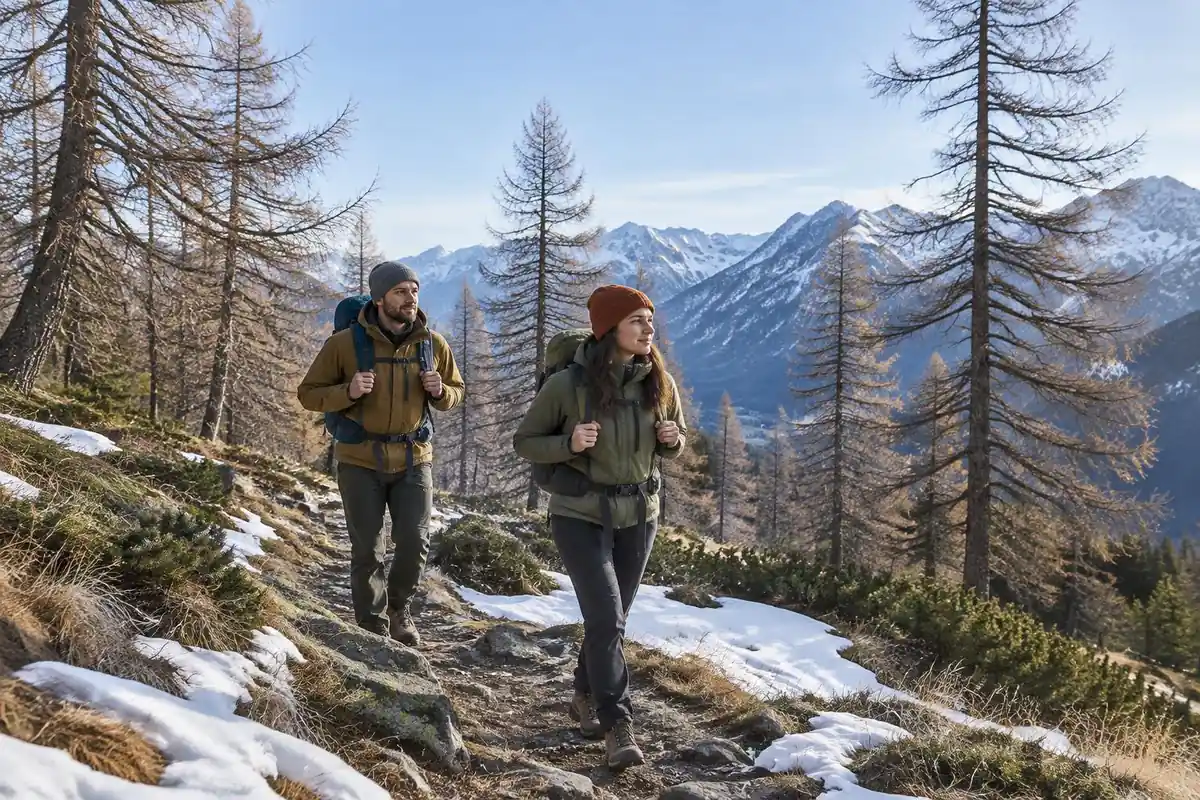
A 35L pack suits warm-weather trips better than cold-weather ones, since a three-season quilt, minimal layers, and a canister stove all pack down small enough to leave room for food and water. Cold-weather gear, including an insulated jacket, warmer sleeping bag, and extra fuel, fills a 35L pack fast and often forces difficult choices about what to leave behind.
How does fabric choice affect a 35L pack?
Lighter-weight fabrics, including thinner-denier nylon or dyneema composite fabric (DCF), cut pack weight but trade off some abrasion resistance compared to heavier, higher-denier nylon or polyester builds. Hikers who regularly bushwhack, scramble over rock, or hike in dense brush generally get more durability from a heavier-denier fabric, while trail-focused hikers can prioritize the weight savings of a lighter build.
Who should size up from 35L?
Hikers planning trips beyond two nights, carrying camera or climbing gear, or hiking regularly in cold weather typically need more volume than a 35L pack offers. A pack in the 45-55L range gives more comfortable margin for that kind of gear list without forcing hard compression trade-offs on every trip.
What trade-offs come with a 35L pack versus a larger one?
A 35L pack keeps weight and bulk down for trips it's sized for, but it leaves little margin for gear additions, bad-weather layers, or a slightly longer trip than planned. Hikers who value flexibility across a range of trip lengths sometimes choose a slightly larger pack and rely on compression straps to keep it manageable on shorter trips instead.
How does torso fit affect a 35L pack's real capacity?
A pack with a torso length that doesn't match the wearer wastes usable volume adjusting straps to compensate, and it shifts weight away from the hips regardless of how good the hip belt padding is. Checking torso fit before capacity is the single change that most improves how a 35L pack actually carries on the trail, especially once loaded weight climbs past 20 pounds.
Should you prioritize capacity or suspension quality first?
Suspension quality matters more than an extra liter or two of capacity once loaded weight passes 20 pounds, since a well-built hip belt and frame determine whether that weight feels manageable over miles. Two 35L packs can carry very differently even with identical volume, so comparing suspension design is a better first filter than comparing liter counts alone.
Full Ranking, Reviewed

Best for 35L Backpacks for Hiking
- 35 L capacity
- 600D nylon shell
- 32 oz empty
- Rain cover included
- Water Resistant & More Sturdy
- Routes a hydration bladder and hose without fuss
- Packs an integrated rain cover to keep gear dry
- Water-resistant shell handles showers, but a liner or cover is wise for all-day rain.
Verdict: This 35 L hiking pack pairs room for a bladder with a bundled rain cover, making it our overall pick for 35L Backpacks for Hiking.

Best for 35L Backpacks for Hiking
- 35 L capacity
- 13 oz empty
- Waterproof & Durability
- Low carry weight pays off on big-mileage days
- Folds down small when you do not need the space
- Check the size and colour options on the live listing, as availability shifts.
Verdict: This 35 L hiking pack offers a packable build, making it well worth a look for 35L Backpacks for Hiking.

Best for 35L Backpacks for Hiking
- 30–35 L capacity
- 210D ripstop nylon shell
- 2.4 lb empty
- Rain cover included
- Breathable mesh back keeps air moving against your spine
- Includes a rain cover for sudden downpours
- Ripstop fabric shrugs off scrapes and snags on the trail
- Check the size and colour options on the live listing, as availability shifts.
Verdict: MIVENTO’s 30–35 L hiking pack pairs a breathable back with a bundled rain cover, making it an easy shortlist pick for 35L Backpacks for Hiking.

Best for 35L Backpacks for Hiking
- 40 L capacity
- 210D ripstop nylon shell
- 2.2 lb empty
- Rain cover included
- Ergonomic and Comfortable Design
- Includes a rain cover for sudden downpours
- Ripstop fabric shrugs off scrapes and snags on the trail
- The 40 L size is a versatile in-betweener rather than a specialist at either end.
Verdict: This 40 L hiking pack pairs a bundled rain cover with a tough ripstop shell, making it an easy shortlist pick for 35L Backpacks for Hiking.

Best for 35L Backpacks for Hiking
- 35 L capacity
- 210D nylon shell
- Rain cover included
- Ideal Capacity
- Ventilated back panel cuts sweat on long climbs
- Includes a rain cover for sudden downpours
- Check the size and colour options on the live listing, as availability shifts.
Verdict: MIVENTO’s 35 L hiking pack pairs a breathable back with a bundled rain cover, making it an easy shortlist pick for 35L Backpacks for Hiking.
Is 20–30 pounds a sensible load for you?
Many hikers check load against body weight. The common "20% of body weight" guideline has no primary research behind it; treat it as a hiking-community rule of thumb. What published sources say varies widely. Deuter states people can carry a maximum of 20–25% of their body weight.1 A 2026 study of long-distance hikers cites literature suggesting 10–15%, and found foot pressure rose clearly once packs went above about 10% of body weight.2 In practice, Appalachian Trail backpackers in one study carried packs averaging 25% of body weight for men and 27.9% for women.3
For a 150-pound hiker, 30 pounds is 20% of body weight and 20 pounds is about 13%. The page's 20–30 pound range therefore spans what several sources would call moderate and what others would call the upper edge. If you sit at the lighter end of body weight, the heavier end of that range deserves a framed pack.
Why cold trips outgrow 35 liters
Insulation is the first squeeze. Big Agnes suggests a sleeping pad R-value (a measure of how well it blocks ground cold) of 4 to 4.8 for spring through fall, and 5 or higher for sleeping on snow or frozen ground.4 Layering adds more: a base, middle and outer layer, as outdoor programs teach,5 with wool or synthetics instead of cotton because cotton stays wet a long time.6
Stoves add another. MSR notes that canister pressure falls as temperatures drop,7 and that liquid-fuel stoves generally perform best in the cold, while canister stoves are almost always lighter and more compact.8 A cold-weather cook kit can take noticeably more room than a summer one, which is one reason the page points cold-weather hikers toward bigger packs.
Reading fabric labels on a 35L pack
Denier is the weight in grams of 9,000 meters of yarn, and a higher number means a heavier yarn.9 It is a useful shorthand, but a light, tightly woven high-tenacity yarn can outlast a heavier, looser one, so compare weave and reinforcement at the base as well as the number.
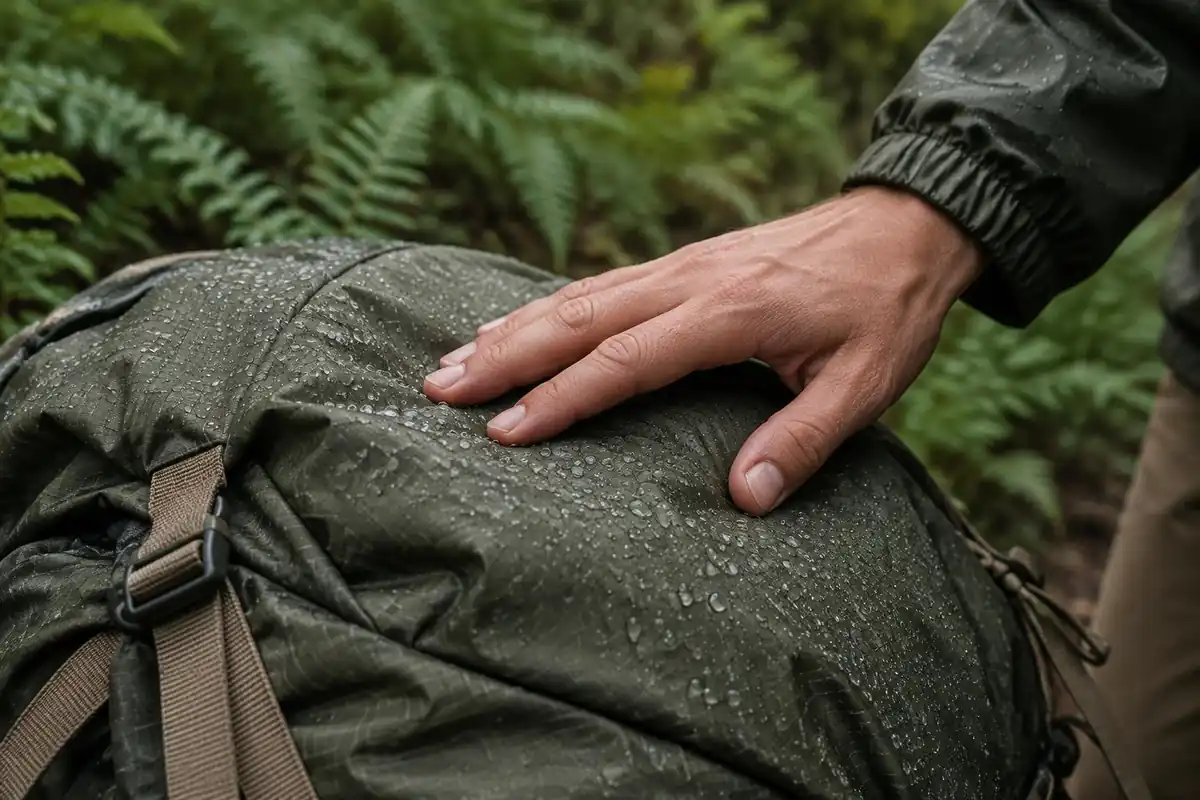
Waterproofing is another label trap. Most pack fabrics have a waterproof inner coating, yet water can still seep through seams and zippers,10 and Deuter notes sustained downpours can get in the same way even when the fabric itself is waterproof.11 Dry bags inside the pack are the reliable fix.
Frequently Asked Questions
Is a 35L backpack good for a 3-day hike?
A 35L backpack can work for a 3-day hike with a genuinely lightweight gear list and warm weather, but it leaves little margin for extra food, layers, or bad weather. Most hikers find 40-45L more comfortable for a standard 3-day trip with typical three-season gear.
What's the difference between a 30L and 35L backpack?
The difference between a 30L and 35L backpack is usually about 5 liters of main-compartment volume, often the difference between fitting a compressed one-night kit versus having enough room for a two-night trip or slightly bulkier three-season gear.
Related Buying Guides
Planning a hiking trip? Compare hotels, lodges and guesthouses.
Book on Booking.com Book on AgodaAffiliate links: we may earn a commission at no extra cost to you.