
Best Time to Hike Cares Gorge — Picos de Europa
The best time to hike Cares Gorge is spring to fall, according to the official season guidance. Within that window, May and June bring mild-to-warm conditions and long daylight, while September pairs warm weather with lower rainfall. Summer can be hot and busy, so plan accordingly.
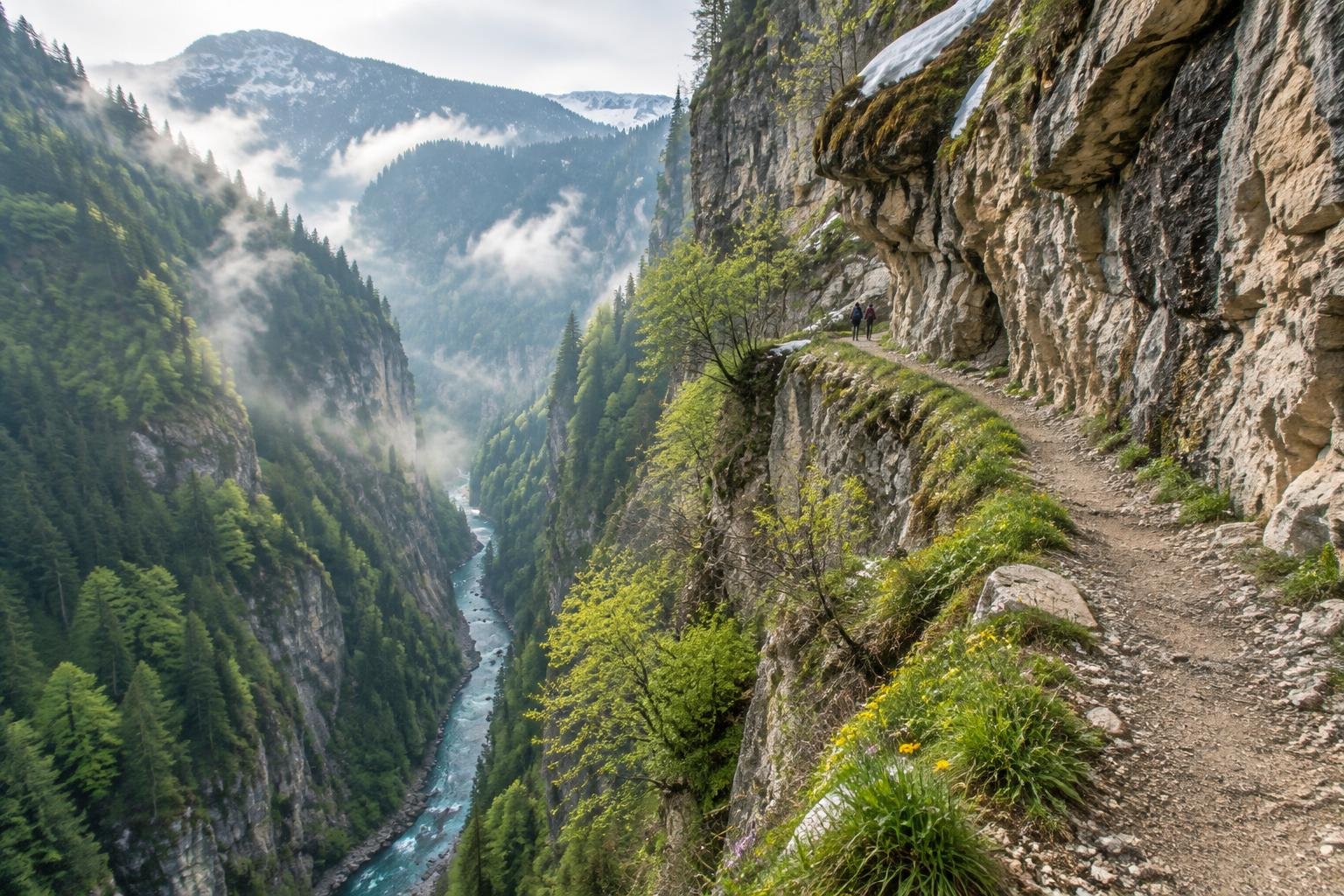
Month-by-month climate for Cares Gorge — Picos de Europa
| Month | Relative warmth | Rain | Daylight |
|---|---|---|---|
| Jan | Coldest | 152 mm | 9.1 h |
| Feb | Coldest | 114 mm | 10.3 h |
| Mar | Coldest | 92 mm | 11.6 h |
| Apr | Cool | 79 mm | 13.2 h |
| May | Mild | 61 mm | 14.5 h |
| Jun | Warm | 72 mm | 15.2 h |
| Jul | Warmest | 33 mm | 14.9 h |
| Aug | Warmest | 37 mm | 13.8 h |
| Sep | Warmest | 57 mm | 12.3 h |
| Oct | Warm | 97 mm | 10.8 h |
| Nov | Cool | 162 mm | 9.5 h |
| Dec | Coldest | 135 mm | 8.8 h |
Modelled regional averages for 2010–2023 (rainfall) and calculated daylight hours; they describe the wider area, not a reading taken on the trail. “Relative warmth” compares each month with the warmest and coldest months of this place’s own year. It is not a temperature, and the high parts of a route are colder than the region around them.
The modelled averages show a clear wet-dry rhythm. January is the wettest month at about 152 mm, and November is close behind at 162 mm, while July and August are the driest at roughly 33 and 37 mm. Daylight swings from about 8.8 hours in December to 15.2 hours in June. Relative to this place's own year, July through September are the warmest months, and December through March are the coldest. These are regional averages, not trail measurements.
Cares Gorge — Picos de Europa season by season
Spring · April to May
April is a cool month at this place, with typical rainfall of about 79 mm, easing to around 61 mm in May as conditions turn mild. Daylight stretches from roughly 13.2 to 14.5 hours, giving plenty of time for a long one-way day on the gorge path. The official season guidance includes spring, and this window tends to avoid the summer crowds. Because this is a cliff-carved ledge, keep back from the edge, carry water and sun protection, and check conditions with the managing authority before you set out.
Summer · June to August
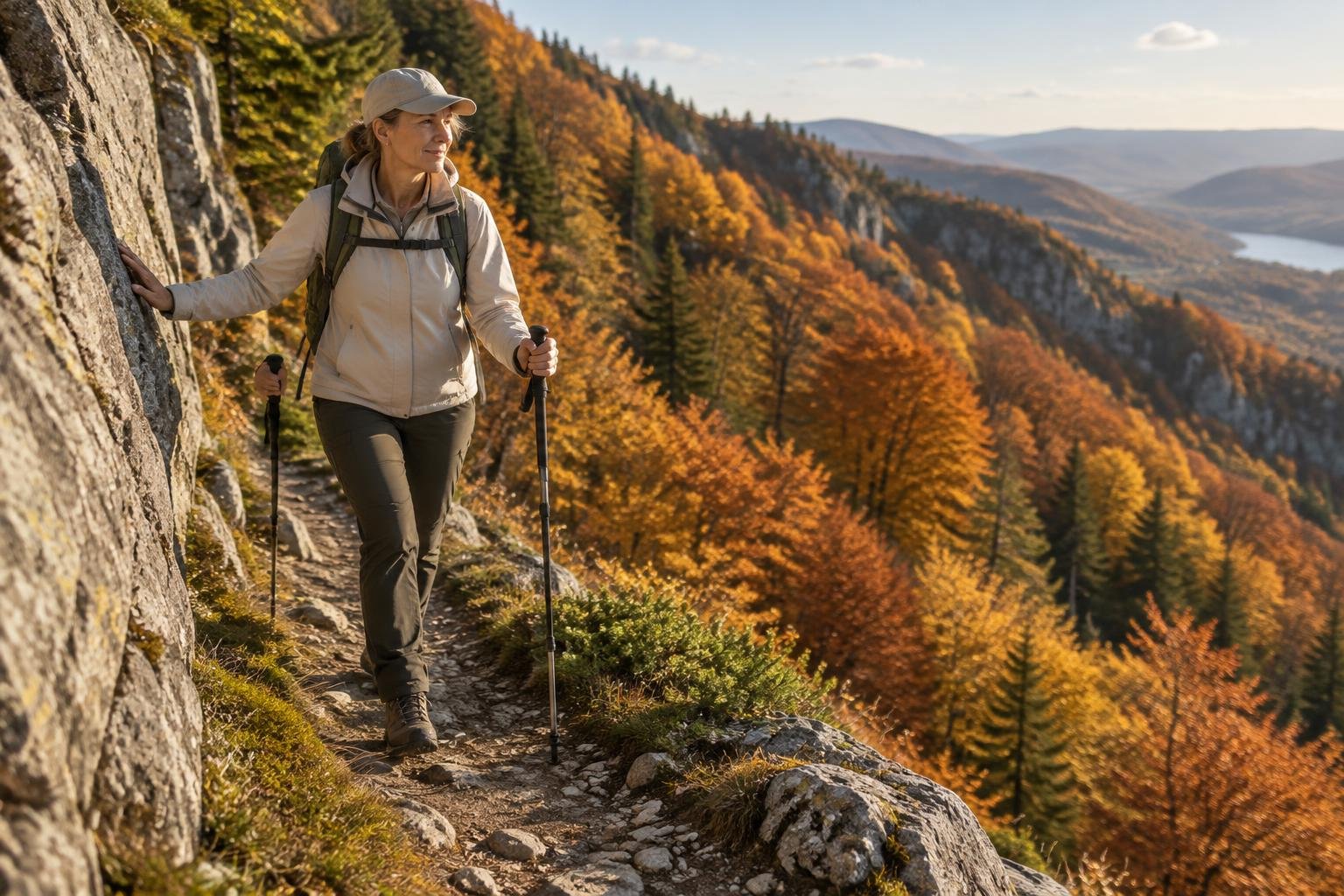
June, July and August bring the longest days, from about 13.8 to 15.2 hours of daylight, and some of the warmest conditions of the year. July and August are also the driest months on average, at roughly 33 and 37 mm. The official season guidance warns that summer can be hot and busy, and the permits and rules text notes many day walkers on the path. Start early, carry plenty of water and sun protection, and expect to share the ledge with other hikers. Mind the exposed sections throughout.
Early fall · September to October
September is among the warmest months relative to this place's own year, yet rainfall averages only about 57 mm and daylight is still around 12.3 hours, a useful balance for hiking. By October the average rises to about 97 mm and daylight drops to roughly 10.8 hours, so build in an earlier start and a margin before dusk. The official season guidance includes fall, and early fall can feel calmer than midsummer. Confirm current conditions with the managing authority, as they can change.
Late fall and winter · November to March
This is the coldest and wettest stretch of the modelled year at this place. November averages about 162 mm of rain, January about 152 mm, and December has the shortest days at roughly 8.8 hours of daylight. The official season guidance names spring to fall rather than winter, so treat these months with caution. Rain on an exposed cliff ledge and short daylight both raise the stakes. If you are considering this window, check the managing authority's guidance and current conditions before planning.
Official season guidance
Spanish National Parks Network (MITECO): Spring to fall; it can be hot and busy in summer
No permit is needed. The path is a spectacular ledge cut into the cliffs high above the river — mostly level but exposed in places, so follow the park’s visiting rules and recommendations, keep back from the edge, carry water and sun protection, and mind the many day walkers in summer.
Check current dates on miteco.gob.es (Picos de Europa visitor guide)What to pack for the season
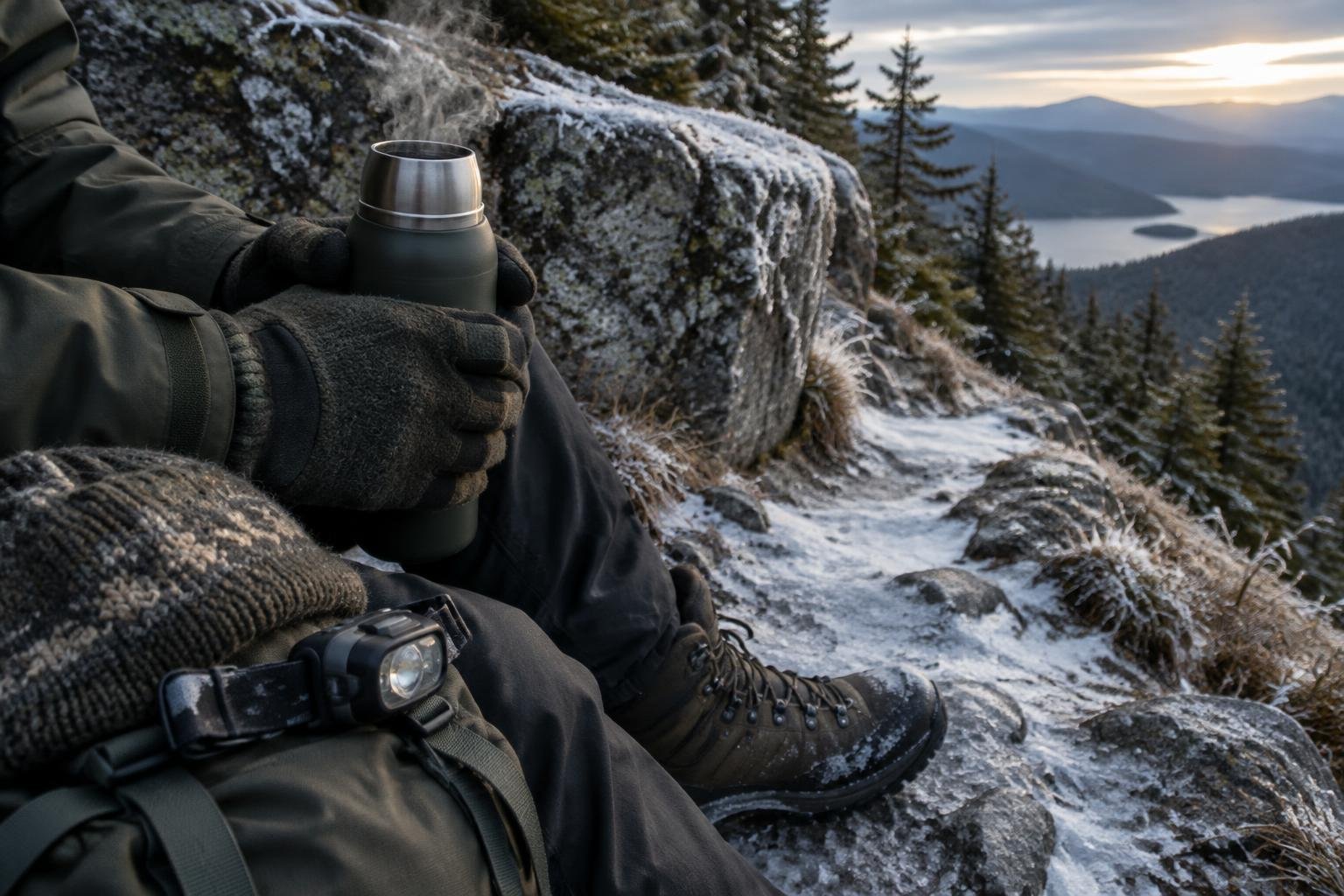
Let the season guide your pack. In the wetter, cooler months, bring layers and reliable rain cover, and carry a headlamp because daylight is short. In summer, prioritize water capacity, sun protection and a hat for exposed stretches. In every season, pack for a long one-way day and a changeable day on a cliffside path.
For layering, rain cover and weather planning, see hiking in rain, heat and cold.
Timing mistakes to avoid
A common mistake is choosing by a single month rather than the whole pattern. Summer is drier on average but, per the official season guidance, can be hot and busy, and the rules text notes many day walkers. Another is ignoring daylight: a one-way day on this route runs much tighter in October and November than in June. Finally, don't assume the rainfall averages describe the cliff path itself. They are regional figures, so confirm current conditions and any park recommendations with the managing authority before you go.
Common questions
Is summer a good time to hike the Cares Gorge?
Summer is within the official spring-to-fall window and has the longest daylight, about 15 hours in June. It is also the driest period on average, but the official guidance says it can be hot and busy. Start early, carry water and sun protection, and expect many day walkers on the path.
Which months are driest for the Cares Gorge?
Modelled regional averages show July and August as the driest months, at roughly 33 and 37 mm of rain. September follows at about 57 mm. These are typical figures, not trail measurements, so conditions on any given day can differ from the average.
Is the Cares Gorge hikeable in winter?
The official season guidance names spring to fall, not winter. Modelled averages show December through March as the coldest months here, with high rainfall and as little as about 8.8 hours of daylight in December. If you are considering winter, confirm conditions with the managing authority first.
Do I need a permit, and does it depend on the season?
The official rules text says no permit is needed. The path is exposed in places, so follow the park's visiting rules and recommendations, keep back from the edge, and carry water and sun protection. Because summer is busy, expect crowds on the ledge, and check with the managing authority for any current changes.
Sources
- Spanish National Parks Network (MITECO) — miteco.gob.es (Picos de Europa visitor guide): official season and permit guidance.
- NASA POWER (Prediction Of Worldwide Energy Resources): monthly temperature and rainfall averages, 2010–2023, from MERRA-2 reanalysis. Daylight hours are calculated from latitude.
Conditions, closures and permit rules change without notice — confirm current information with the managing authority before you go. See our editorial policy and affiliate disclosure.