




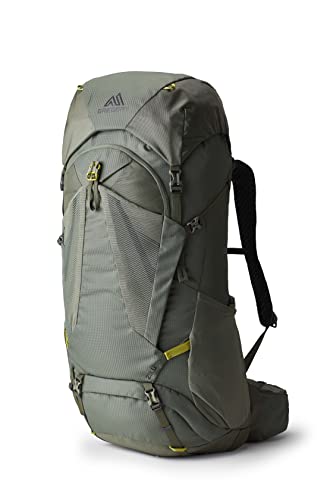
What is the Gregory Paragon designed for?
The Gregory Paragon is designed for long-distance and thru-hikers who want Gregory's adjustable-fit suspension in a lighter package than the Baltoro or Zulu, trimming pack weight through lighter fabrics and a pared-back frame while keeping the same core fit philosophy. It spans roughly 48 to 68 liters across its sizes, with the women's-specific version sold as the Maven, covering everything from a lean multi-day setup up to a longer resupply carry.
Positioned below Baltoro and Zulu in overall structure, the Paragon is Gregory's answer to hikers who want a lower base pack weight without giving up an adjustable, hip-focused suspension entirely, which distinguishes it from true ultralight packs that drop the frame or hipbelt padding almost completely. That middle-ground positioning is the main reason it appeals to distance hikers moving away from a heavier pack but not ready to give up a structured hipbelt altogether. Within Gregory's own lineup, the Paragon effectively sits between the fully padded Baltoro and the simplest ultralight packs other brands offer, giving hikers a lighter-weight option without leaving the fit system that drew them to Gregory in the first place.
How does the Paragon fit and carry weight?
The Paragon keeps Gregory's adjustable or size-specific torso length and multi-size hipbelt approach, so fit is dialed in the same way as on the heavier Baltoro: torso length set first, then a hipbelt sized to hip circumference and centered over the iliac crest once loaded. The difference from the Baltoro is in how much structure and padding back that fit system, not in the sizing method itself, so a hiker moving between the two lines doesn't need to relearn how to fit the pack.
Because the frame and hipbelt padding are lighter than on the Baltoro, the Paragon generally carries a moderate load well but isn't intended for the heaviest expedition-style packing lists; hikers running consistently heavy loads are better served by Gregory's more structured lines. For a typical thru-hiking resupply cycle, where pack weight is usually lighter than on a fully self-supported expedition trip, that lighter build is generally an advantage rather than a limitation. Shoulder straps and back-panel foam are also trimmed down relative to the Baltoro, which shaves ounces but means the Paragon rewards a hiker who keeps their overall pack weight closer to the lighter end of the pack's rated range.
What are the Paragon's key features?
- Lighter-weight build than Baltoro or Zulu while keeping an adjustable suspension
- Top-loading main compartment with an extension collar
- External attachment points for trekking poles and a sleeping pad
- Adjustable torso length paired with a swappable hipbelt size
- Streamlined pocket layout compared to Gregory's heavier-duty lines, reflecting the focus on weight savings
- Hydration-sleeve compatibility inside the main compartment
Who should consider the Paragon?
The Paragon suits long-distance and thru-hikers who want to shave pack weight without moving to a frameless or minimally padded ultralight pack, and who still value Gregory's dial-in torso and hipbelt fit system over a generic, non-adjustable design. It also suits hikers upgrading from a basic entry-level pack who want a noticeably lighter carry than Gregory's heavier-duty lines without sacrificing hip-focused load transfer entirely.
Hikers who need to carry consistently heavy loads, or who prioritize maximum ventilation over minimum weight, are usually better matched to the Baltoro or Zulu lines instead. Anyone torn between the Paragon and a true ultralight, frameless pack should weigh how much they value a structured hipbelt against how many additional ounces they're willing to trim, since that trade-off, not raw capacity, is really what separates the two categories of pack.