





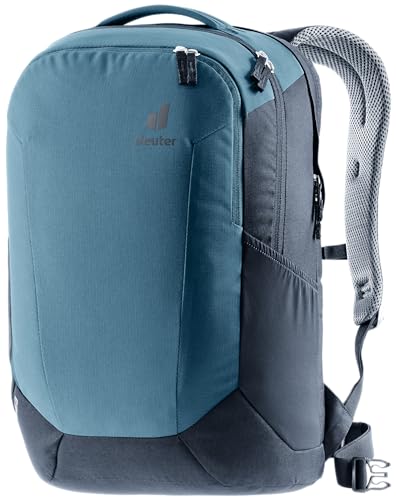

The Deuter Aircontact Lite is a framed backpacking pack built on Deuter's Aircontact back system, positioned as a lighter-weight version of the standard Aircontact line for multi-day hiking trips. It keeps the close-to-back, load-stabilizing design of Aircontact while trimming weight compared to Deuter's heavier-duty Aircontact models, making it a common recommendation for hikers who want a traditional framed carry without the bulk of an expedition-oriented pack.
What is the Aircontact Lite built for?
The Aircontact Lite is built for multi-day backpacking trips where a hiker wants a stable, framed carry without the added weight of Deuter's more heavy-duty Aircontact packs. It targets hikers moving moderate-to-heavy loads over multi-day trips rather than fast, minimal-load hiking, sitting between an ultralight frameless pack and a full-size expedition hauler.
The pack uses an internal frame paired with the Aircontact back panel, which sits closer to the hiker's back than Deuter's ventilated Aircomfort designs. This closer contact keeps the load's center of gravity nearer the hiker's own, which generally improves stability on uneven terrain compared to a pack that stands the load further off the back. Like other Aircontact packs, it typically offers an adjustable back length, letting a single pack size fit a range of torso lengths rather than requiring a fixed harness size, and it comes in a men's/unisex build alongside an SL (Slim Line) version cut for shorter torsos and narrower frames. The hipbelt on Aircontact-family packs is generally structured and padded, built to transfer load to the hips on longer carries rather than the softer, less structured belts found on smaller daypacks.
How does it compare within Deuter's own lineup?
Compared to Deuter's Futura line, the Aircontact Lite favors carry stability over ventilation, since its back panel sits directly against the body instead of standing off on a tensioned mesh frame. Compared to Deuter's heaviest-duty Aircontact packs, it trims weight and bulk, generally by simplifying some of the frame or feature set, while keeping the same core back-system philosophy.
This makes the Aircontact Lite a middle option for hikers who've decided they want Aircontact's framed stability but don't need the maximum load capacity of Deuter's largest expedition-style packs. Features common to this class of pack include compression straps for cinching down a partial load, a hydration-reservoir sleeve with a hose port, and external attachment loops for gear like trekking poles or an ice axe.
Who should consider the Aircontact Lite?
A hiker planning multi-day trips who wants Deuter's framed, load-stable Aircontact carry without the brand's heaviest-duty options should consider the Aircontact Lite. It suits backpackers prioritizing carry stability over maximum back ventilation, particularly on routes with variable terrain where a load that shifts less makes for surer footing.
Hikers who run hot or hike primarily in warm climates may prefer Deuter's Aircomfort-based packs, such as the Futura line, since the Aircontact back sits closer to the body and ventilates less than a suspended mesh panel. Buyers should confirm current volume options, exact weight, and pricing directly with Deuter or an authorized retailer, since these details can change between model years and this review does not rely on specific current figures.
What should you check before buying the Aircontact Lite?
Before buying, check the back-length range against your own measurement, confirm whether the men's/unisex or SL fit matches your torso and shoulder width, and think honestly about how much weight you typically carry on a multi-day trip. A pack chosen for its stability features only pays off if the load actually needs that stability; a hiker who mostly carries light loads may find the extra frame structure unnecessary weight.
It's also worth trying the pack on loaded with gear close to what you'd actually carry, not empty, since a hipbelt and shoulder-strap system that feels fine unloaded can feel very different under 25 or more pounds. Comparing the loaded feel of the Aircontact Lite against a similarly framed pack from another brand, such as an Osprey Atmos AG or Gregory Baltoro, is a reasonable way to judge whether Deuter's specific harness geometry suits your body before committing.