
Best Deuter Backpack
Best Deuter Backpack, ranked from aggregated owner ratings and reviews, not first-hand testing. Real pros, cons, and who each pick is best for.

Affiliate disclosure: this page contains affiliate links. Purchases made through them may earn us a commission at no extra cost to you. See our affiliate disclosure.
In plain English
Deuter is a German backpack maker that has been around since 1898. Its hiking packs mostly come with one of two back styles. One style holds the pack away from your back on stretched mesh, so air can flow and you sweat less. The other presses padded foam against your back, which keeps a heavy load steady.
Before worrying about the back style, get the size right. Deuter calls torso length back length. It is the distance from the bump at the base of your neck to the top of your hip bones. Deuter makes shorter, regular and longer fits, and many packs also have a slider to fine-tune the length.
Think of it like choosing a bike frame. The right size comes first, then you choose the features that suit where you ride.
Our Top 3 Picks
Quick Comparison
| Shell | Extras | Buy | ||||
|---|---|---|---|---|---|---|
| 1 | Deuter Speed Lite 21L Hiking Lightweight Backpack - BlackTop Overall Pick | 21 L | 17 oz | — | Hydration | View |
| 2 | Deuter AC Lite 24L Hiking & Daypack Backpack with Steel Frame & SuperiorBest Value | 24 L | 2.0 lb | 600D polyester | Rain cover | View |
| 3 | Deuter Futura 32L BackpackBest Hydration Pack | 32 L | — | — | Rain cover | View |
| 4 | Deuter Unisex Aircontact Lite 50 + 10 LBest for Multi-Day | 50–60 L | 16 oz | 140D ripstop fabric | Vented back | View |
| 5 | Deuter Unisex Giga BackpackBest Ultralight | — | 18 oz | — | Vented back | View |
Choosing a deuter/" class="hbh-inline-link">Deuter backpack starts with back-length fit, then narrows by which of Deuter's two back-system families suits your typical load and climate.
What should you look for in a Deuter backpack?
Look first at back-length fit and adjustability, since Deuter builds several models with tool-free back-length adjustment that lets one pack size fit a range of torso lengths. After fit, look at which back system the pack uses: Aircontact for a closer, more load-stable carry, or Aircomfort for a ventilated mesh panel that stands off the back.

Back length, not pack volume, is the first fit measurement to get right. Measure from the C7 vertebra at the base of the neck down to the top of the iliac crests, then match that number against the specific model's back-length range rather than assuming a size label alone guarantees fit. Deuter's SL (Slim Line) versions use a shorter back panel and narrower harness built around a shorter torso and narrower frame, and are worth checking for hikers who don't fit the standard men's/unisex geometry well. Beyond fit, check the hipbelt padding and structure, since a well-padded, contoured hipbelt does most of the work of transferring weight off the shoulders on longer carries.
Aircontact vs Aircomfort: which should you choose?
Choose Aircontact if you're carrying moderate-to-heavy loads on multi-day trips and want the load held close and stable; choose an Aircomfort-based pack like the Futura if you prioritize back ventilation and typically carry lighter loads on day hikes or warm-weather trips.

The table below summarizes the trade-off.
| Back system | Carry feel | Best for |
|---|---|---|
| Aircontact | Close to back, stable | Heavier multi-day loads |
| Aircomfort (Futura and similar) | Ventilated, stands off back | Day hikes, warm-weather trips, lighter loads |
Neither system is universally better; the right pick depends on whether you'd rather manage sweat and heat or manage load sway on technical terrain. Hikers who split time between both conditions sometimes end up owning one pack from each family rather than expecting a single pack to do both jobs equally well.
How much should a Deuter backpack carry?
Match pack volume to trip length: smaller daypacks suit single-day outings, mid-size packs in the Futura and similar lines suit overnight-to-multi-day trips, and larger Aircontact packs suit longer multi-day backpacking trips with heavier gear loads. Exact liter volumes vary by model and model year, so confirm current options directly with Deuter or an authorized retailer.
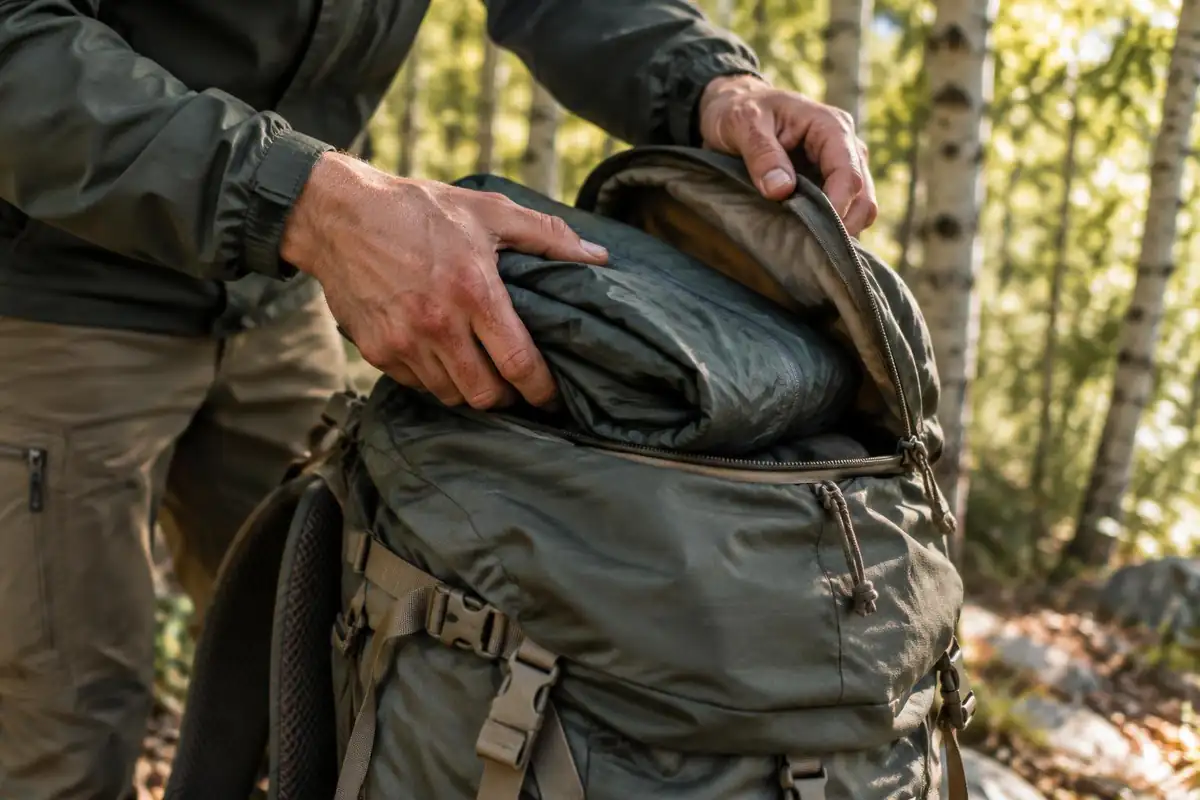
Beyond volume, consider how much you'll actually carry versus how much room you want for margin. A pack that's oversized for its typical load rides less stably than one sized closer to what you'll actually pack, regardless of brand, and an oversized pack also tempts hikers to bring more gear than they need.
How does Deuter compare to other hiking-backpack brands?
Deuter distinguishes itself with adjustable back-length sizing and its Aircontact/Aircomfort back-system split, while brands like Osprey and Gregory are more widely stocked through US retailers; warranty terms differ by brand, and Deuter gives a voluntary two-year manufacturer warranty plus a lifetime repair service for incidental damage where repair is possible. Buyers weighing Deuter against those alternatives should compare fit-adjustment options, back-system feel, and locally available warranty support rather than assuming one brand is universally better, and should try packs on with a comparable load before committing whenever possible.
Full Ranking, Reviewed

Best for Deuter backpacks
- 21 L capacity
- 17 oz empty
- Hydration-ready
- Designed for comfort
- Routes a hydration bladder and hose without fuss
- Padded hip belt shifts load onto your hips, not your shoulders
- Colours and exact capacity options change often on Amazon — confirm the current variant on the listing before buying.
Verdict: This 21 L daypack pairs room for a bladder with real hip-belt support, making it our overall pick for Deuter Backpacks.

Best for Deuter backpacks
- 24 L capacity
- 600D polyester shell
- 2.0 lb empty
- Rain cover included
- Use case
- Set up to carry a reservoir for hands-free sipping
- Airflow channels help your back stay cooler under load
- Check the size and colour options on the live listing, as availability shifts.
Verdict: This 24 L hiking pack pairs a breathable back with room for a bladder, making it well worth a look for Deuter Backpacks.

Best for Deuter backpacks
- 32 L capacity
- Rain cover included
- Designed for multi-day hikes
- Hydration sleeve keeps water within easy reach
- Breathable mesh back keeps air moving against your spine
- Colours and exact capacity options change often on Amazon — confirm the current variant on the listing before buying.
Verdict: This 32 L hiking pack pairs a breathable back with room for a bladder, making it well worth a look for Deuter Backpacks.

Best for Deuter backpacks
- 50–60 L capacity
- 140D ripstop fabric shell
- 16 oz empty
- Ventilated back panel
- Use case
- Breathable mesh back keeps air moving against your spine
- Tunable harness helps you find a comfortable carry
- That 50–60 L volume is overkill for quick hikes and better suited to multi-night trips.
Verdict: This 50–60 L backpacking pack pairs a breathable back with a tough ripstop shell, making it well worth a look for Deuter Backpacks.
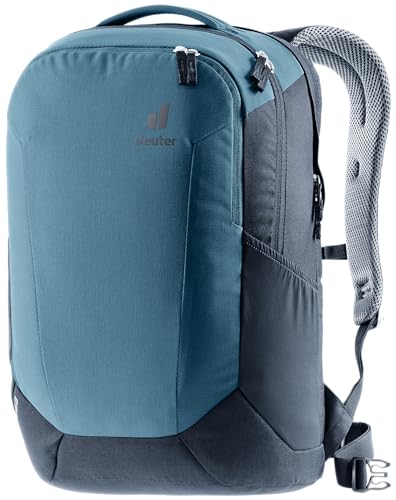
Best for Deuter backpacks
- 18 oz empty
- Ventilated back panel
- Back Ventilation
- Breathable mesh back keeps air moving against your spine
- Padded hip belt shifts load onto your hips, not your shoulders
- Colours and exact capacity options change often on Amazon — confirm the current variant on the listing before buying.
Verdict: This hiking pack pairs a breathable back with real hip-belt support, making it well worth a look for Deuter Backpacks.
Aircontact and Aircomfort: what Deuter actually says
The page contrasts a framed Aircontact line with a ventilated Aircomfort line. Both are framed. Deuter describes Aircomfort as a ventilated system with a gap between the mesh and your back, and says it uses a lightweight, flexible spring steel frame.1 Deuter says it introduced this suspended-mesh system in 1984.2 Aircontact, by contrast, is contact-style padding with ventilation channels and 3D mesh.1
The real difference is where the load sits, not whether there is a frame. Aircomfort holds the pack off your back for airflow; Aircontact keeps it against you. Deuter states Aircontact distributes weight evenly, and its Aircontact Core packs use the VariClick system for five-stage back-length adjustment.3 Research on load carriage supports the page's advice for heavy loads: keeping the load's center of mass close to your body gives the lowest energy cost.4
SL, regular and EL: Deuter's fit bands
Deuter defines back length as the distance from the seventh cervical vertebra to the upper edge of the iliac crest.5 Its SL fit targets back lengths of about 42 cm for body heights of roughly 160 to 175 cm, while the regular fit targets about 46 cm and the EL fit about 50 cm.5 Deuter also says even adjustable packs should be chosen in the correct back length,5 because an adjuster fine-tunes a size; it does not replace one.
Deuter says its SL packs use a shorter back panel matched to the average female torso length, plus narrower S-shaped straps and conically shaped hip fins.5 That is Deuter's design choice, not a rule for every brand. Gregory sizes packs identically regardless of gender.6 Anyone with a short back or narrow shoulders can try an SL pack.
Comparing warranties honestly
Some guides say Osprey and Gregory typically offer longer or more consumer-friendly warranty terms in the US. The terms do differ, in different ways. Deuter gives a voluntary two-year warranty from purchase, offers a lifetime repair service for incidental damage where repair is possible, and repairs defects outside warranty for a share of the cost that Deuter subsidizes.7 Gregory guarantees against defects for as long as you own the pack, excluding normal wear and tear.8 Osprey states it will repair or replace a bag for any damage, regardless of when it was made.9 Deuter's shorter defect warranty comes with a long repair offer, so compare what you are likely to need.
Child carriers are a different purchase
Deuter also sells Kid Comfort child carriers, which are a different purchase from the hiking packs in this roundup. A child carrier should be chosen by child-safety rules, not by ventilation. The CPSC says frame child carriers are intended for children who can sit upright unassisted and weigh 16 to 50 pounds.10 Deuter says a child is usually ready at around 8 to 9 months, once they sit up independently with good head control, and that its carriers have a maximum load of 22 kg including cargo.11
In May 2025, about 5,080 Deuter Kid Comfort carriers were recalled because kickstand hinges can crack or break, posing a fall hazard.12 If you are considering one, new or secondhand, check the CPSC recall notice against the exact model before buying.
Frequently Asked Questions
Is Deuter a good hiking-backpack brand?
Deuter is a well-established German hiking-backpack brand known for its Aircontact and Aircomfort back systems and adjustable-length sizing. Whether it's the right choice depends on fit, since back-length adjustability and the framed-versus-ventilated back-system split matter more than brand name alone.
Related Buying Guides
Planning a hiking trip? Compare hotels, lodges and guesthouses.
Book on Booking.com Book on AgodaAffiliate links: we may earn a commission at no extra cost to you.