



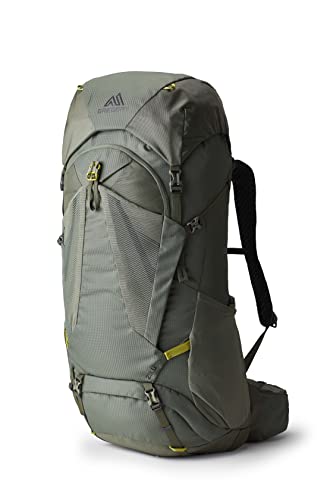
What is the Gregory Katmai designed for?
The Gregory Katmai, with its women's-specific counterpart the Kalmia, is designed to bring Gregory's adjustable torso-and-hipbelt fit system to a more accessible price point than the Baltoro or Zulu lines, aimed at multi-day hikers who want Gregory's core fit philosophy without paying for the brand's higher-end materials and padding. It's typically offered around 65 liters, sized for standard multi-day backpacking trips rather than the shorter or longer extremes covered by Gregory's other lines.
That value positioning means the Katmai simplifies some of the padding, back-panel construction, and pocket organization found on Baltoro or Zulu, while keeping the parts of Gregory's design that matter most for fit: an adjustable or size-specific torso length and a hipbelt sized to the hiker. For a hiker comparing Gregory packs mainly on price, the Katmai is generally the entry point into the brand's multi-day backpacking lineup, positioned as the accessible counterpart to the more premium Baltoro, Deva, Zulu, and Jade packs.
How does the Katmai fit and carry weight?
The Katmai uses the same fit approach found across Gregory's multi-day line: torso length set to the hiker's measurement, then a hipbelt sized to hip circumference so the load rides on the hips once centered over the iliac crest. The construction backing that fit system is simpler than on Baltoro or Zulu, with less padding density and a more basic back-panel design, which is the main way Gregory keeps this pack's price down without dropping the adjustable-fit approach that defines the brand.
For moderate multi-day loads, that simpler build still delivers Gregory's core advantage over a generic, non-adjustable pack: a hipbelt and torso length matched to the individual hiker rather than a single average fit. Where the Katmai gives something up compared to Baltoro is mainly in padding density and long-term durability under the very heaviest loads, not in the underlying sizing logic, so the fit process itself, measuring torso length and matching hipbelt size, works the same way regardless of which Gregory line is chosen.
What are the Katmai's key features?
- Adjustable torso length paired with a hipbelt sized to the hiker
- Top-loading main compartment with an extension collar
- External attachment points for trekking poles and a sleeping pad
- Simplified back-panel and pocket construction compared to Baltoro or Zulu
- Hydration-sleeve compatibility inside the main compartment
- A more accessible price point within Gregory's overall backpacking lineup
- The same torso-length and hipbelt-sizing fit process used across every other Gregory multi-day pack, so skills learned on this pack carry over directly
Who should consider the Katmai?
The Katmai suits hikers who want Gregory's adjustable fit system for multi-day trips but don't need the heavier-duty padding of the Baltoro or the ventilated back panel of the Zulu, and who are prioritizing value within the Gregory lineup over top-tier materials. It's also a reasonable first Gregory pack for someone new to multi-day backpacking who wants to try the brand's fit philosophy before investing in a higher-end line, since it teaches the same torso-measurement and hipbelt-sizing habits a hiker will use on any future Gregory pack.
Hikers who regularly carry heavy loads, or who run hot and want maximum ventilation, are generally better matched to Gregory's higher-end lines instead. As with any Gregory pack, confirming torso and hipbelt fit before a long trip matters more than which specific line is chosen, and that fit process costs nothing extra regardless of where a pack sits in the brand's price range, which is worth remembering before assuming a pricier Gregory pack is automatically the better choice.