

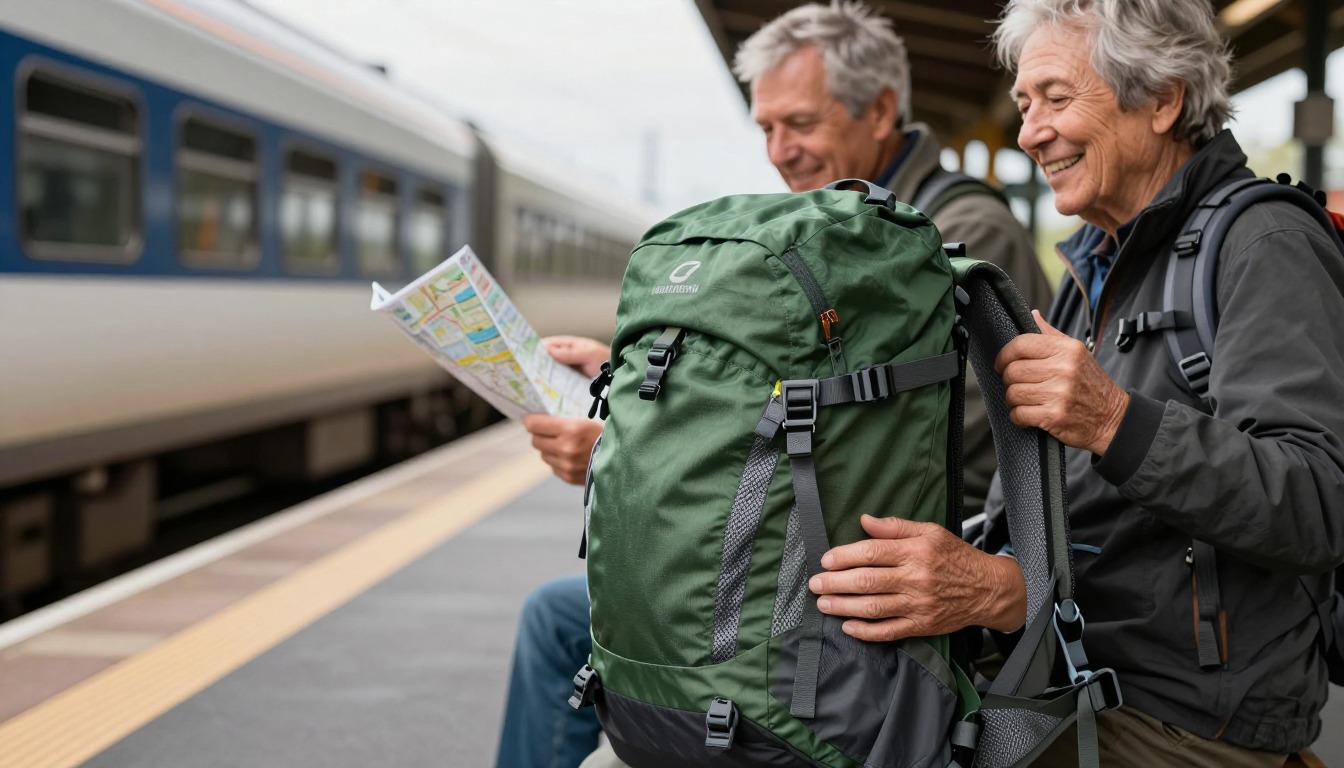


Hikers choosing between a hydration reservoir and water bottles for a daypack under 25 liters should match the setup to trip length and climate: reservoirs suit longer, hotter hikes where frequent sipping matters, while bottles suit shorter hikes where exact water use is easy to track and refill at a car or trailhead.
Hydration reservoir or water bottles: which is better for day hikes?
A hydration reservoir (bladder) sits in a dedicated sleeve against the back panel and feeds water through a drink tube clipped to a shoulder strap, letting a hiker sip without stopping or removing the pack. Water bottles sit in side or front pockets, are easier to fill from a stream or filter, and let a hiker see exactly how much water remains at a glance.
Reservoirs typically hold 1.5 to 3 liters and compress to fit odd spaces inside a pack, which helps on daypacks under 25 liters where every liter of internal volume competes with layers and food. Bottles are simpler to clean, don't add a hose that can freeze in cold weather, and swap out instantly if one is empty or contaminated.
How much water capacity do hydration daypacks add?
Most daypacks built around a reservoir add a dedicated internal sleeve plus one or two exterior mesh pockets for a spare bottle, giving a combined carry of 2 to 4 liters total. That range covers a half-day to full-day hike in moderate conditions; hot-weather or high-output hikes may need a refill plan or a water filter regardless of reservoir size.
- Reservoir sleeve: a padded internal pocket sized for a 1.5–3L bladder
- Drink-tube port: a reinforced exit hole near the top of the pack body
- Hose routing: a clip or loop on one shoulder strap to hold the bite valve
- Insulated tube sleeve: an optional cover that slows freezing in cold weather
When do bottle-only daypacks make more sense?
Bottle-only daypacks make sense on shorter hikes, hikes with reliable water sources for refilling, and for hikers who prefer to track intake precisely rather than sip continuously. They also weigh less empty, since there's no reservoir or tube system to add bulk, and side-pocket bottles are faster to access one-handed while walking.
A daypack doesn't have to choose exclusively — most models under 25 liters include both a reservoir sleeve and side-mesh bottle pockets, so the hiker decides per trip. Filling a reservoir from a stream also generally takes longer and is harder to do without spilling than filling a wide-mouth bottle, which matters on trips that rely on natural water sources rather than a full carry from the trailhead.
Care and maintenance differences
Reservoirs need more upkeep than bottles: the bladder, tube and bite valve should be rinsed and air-dried after every trip, since a damp, sealed reservoir left in a pack is a common spot for mold and off-tastes to develop. Wide-mouth bottles are easier to scrub by hand and dry faster because there's no narrow tube to flush. Cold-weather hikers should also note that a reservoir's exposed drink tube can freeze below roughly 20–25°F unless it's insulated or blown clear after each sip, while a bottle carried upside-down in a pocket resists freezing at the cap longer.
- Reservoirs: rinse and air-dry the bladder and tube after each trip; check the bite valve for mold periodically
- Bottles: wash with warm water and a bottle brush; wide-mouth styles dry fastest
- Cold weather: insulate or blow the tube clear after drinking to prevent it freezing shut
- Weight: a full 2L reservoir and sleeve typically weighs a few ounces more than two 1L bottles carrying the same volume, mainly from the sleeve and tube hardware
Which setup suits which hiker?
A hiker doing back-to-back long, hot-weather days benefits most from a reservoir, since sipping small amounts continuously helps maintain hydration better than stopping to unscrew a bottle. A hiker on shorter, cooler hikes, or one who wants to see remaining water at a glance to ration it on a longer-than-planned route, is often better served sticking with bottles. Many experienced day hikers settle on a hybrid: a reservoir for the bulk of their water plus one bottle as backup and for adding electrolyte mix, which a shared drink tube can't easily accommodate.