

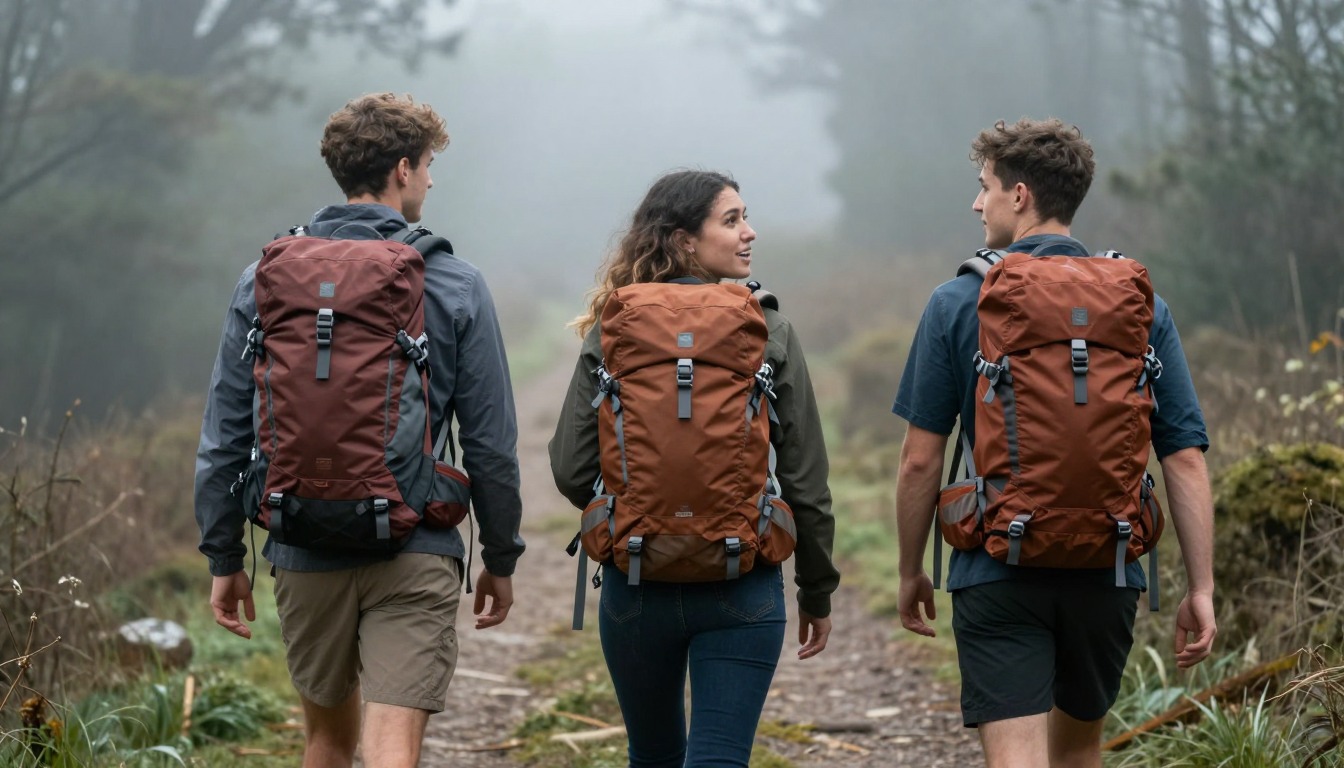


A packable daypack is a minimalist pack designed to compress or fold into its own pocket, stuff sack or hip pocket, making it small enough to carry as backup gear inside a larger bag, suitcase or car console.
What makes a daypack packable?
A daypack qualifies as packable when it folds flat or stuffs into an integrated pocket and weighs a fraction of a standard daypack, typically 4 to 10 ounces versus 1 to 2 pounds for a framed model. Packable daypacks skip internal frames, heavy padding and multiple compartments, relying on a single main pocket and thin foam or mesh shoulder straps to keep weight down.
Fabric choice drives most of the weight savings. Packable models commonly use 30D to 70D ripstop nylon, versus the 210D to 420D nylon or heavier found on standard framed daypacks, trading some abrasion resistance for a much lower pack weight. Ultralight versions built for minimal base weights sometimes use DCF (Dyneema Composite Fabric) for its strength-to-weight ratio, though DCF adds cost and doesn't breathe or stretch like woven nylon.
How small does a packable daypack fold?
Most packable daypacks compress to roughly the size of a large water bottle or a grapefruit, small enough to fit in a jacket pocket, a suitcase side pocket, or the front pocket of a larger backpacking pack. That folded size makes them common as a backup summit pack for multi-day trips, a travel daypack for flights and errands, or emergency spare capacity when a planned hike turns into an unplanned overnight.
- Compressed size: roughly a softball to a grapefruit, depending on capacity
- Uncompressed capacity: typically 15 to 25 liters when unfolded
- Closure style: roll-top, drawstring, or a simple zippered main pocket
- Structure: little to no frame, foam back panel, or hipbelt padding
Packable daypacks vs standard framed daypacks
Packable daypacks trade comfort and load capacity for weight and packed size — they carry loads best kept under 10 to 15 pounds, since there's no frame or structured hipbelt to transfer weight off the shoulders. A standard framed daypack in the same liter range carries heavier loads more comfortably over a full day but can't stuff down small enough to serve as backup gear.
Ultralight hikers already trimming their base weight often carry a packable daypack as their only day pack, accepting the shoulder-only load transfer in exchange for the weight saved elsewhere in the kit. Day hikers who want one pack for both trailhead use and air travel also gravitate toward packable models, since the same pack that carries the ten essentials on a hike folds down for a carry-on bag on a flight.
Common uses for a packable daypack
- Backup summit pack: stuffed inside a multi-day backpacking pack for a lightweight push to a peak or viewpoint from a base camp
- Travel daypack: folded into a suitcase or carry-on for sightseeing days on a trip that isn't primarily a hiking trip
- Emergency spare capacity: carried empty as insurance for an unplanned overnight or a longer detour than planned
- Grocery or errand bag: used off-trail as a lightweight everyday carry once a hike is over
Durability trade-offs to expect
Lighter fabric means a packable daypack abrades and punctures more easily than a standard daypack, so it's a poor choice for bushwhacking, scrambling near rock, or regularly setting the pack down on gravel and dropping it on granite. Seams on ultralight packs are also typically single-stitched rather than reinforced, and zippers tend to be lighter-gauge, both trade-offs made to save weight. None of that makes a packable daypack fragile for its intended use — carrying light loads on maintained trail — but it does mean treating it more carefully than a burlier framed pack.
Choosing between packable and standard for a specific trip
The honest way to decide is by load and terrain rather than brand claims: a packable daypack is the right call when the load stays light and the trail is maintained, and a standard framed daypack is the right call once the load climbs past roughly 15 pounds or the terrain involves scrambling, bushwhacking, or repeated abrasion against rock and brush. Hikers who own both often default to the packable option for casual hikes and reserve the framed daypack for longer or rougher days.