

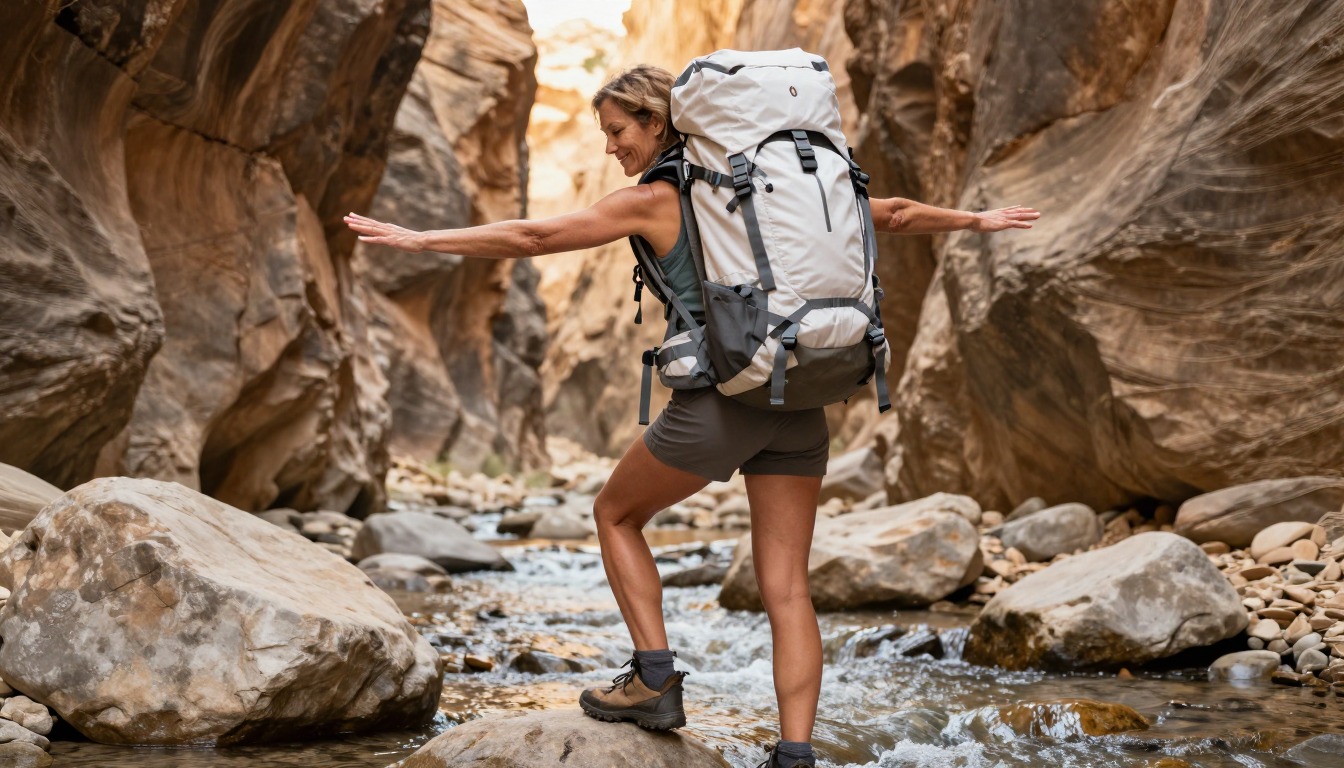


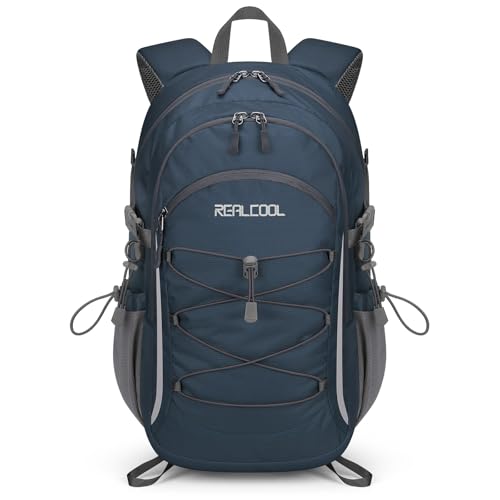
A 20-liter backpack sits in the middle of the daypack capacity range and covers the majority of three-season day hikes without feeling overstuffed or oversized. It's large enough for a hydration reservoir or two bottles, a packable rain shell, a first-aid kit, and typical snacks and lunch for a group of one or two.
When 20L works well
- A half-day to full-day hike in spring, summer or fall
- Trails with moderate elevation gain and no technical sections
- A single hiker or a pair splitting shared gear like a first-aid kit
When 20L runs short
A 20-liter pack runs short on cold-weather hikes that need a heavier insulated jacket, gloves and extra layers, since bulky insulation eats volume fast compared to lightweight summer layers. It also gets tight for hikers carrying a DSLR camera with lenses, kids' extra clothing and snacks, or gear for a longer, more remote route where self-sufficiency matters more. In those cases, stepping up to a 22–25 liter daypack, or into the 25–35L pack band used for big day hikes, gives more working room without a major weight penalty.
Signs a 20L pack is too small
A 20-liter pack is undersized if the main compartment won't zip without compressing gear, if a rain shell and insulated layer can't both fit alongside the ten essentials, or if a hiker regularly lashes gear to the outside because nothing else fits inside. Constantly using external compression straps to strap on a jacket or sleeping pad is a reliable sign to size up rather than force everything into 20 liters.
Load weight matters as much as volume
Even when 20 liters fits the gear list by volume, the load-carrying features matter separately from capacity. Most 20-liter daypacks are built with light frames or none at all, so keeping total pack weight near the 20%-of-bodyweight guideline stays important regardless of how much room is left inside. A 20-liter frameless pack stuffed to its limit with dense items like water and a camera can feel heavier on the shoulders than the same weight in a larger, framed pack with a structured hipbelt.
Bottom line
For the majority of three-season day hikes with typical gear, 20 liters is a genuinely sufficient, not just adequate, size — it isn't a compromise pick. The cases where it falls short are specific and predictable: cold-weather bulk, camera or kid gear, and multi-person shared supplies. Hikers who fall into one of those categories are better served sizing up from the start rather than discovering the shortfall on the trail.