
Hydration Compatibility: Complete Guide
Comprehensive technical analysis of sizing, materials, installation requirements, and manufacturer standards for hydration compatibility.

Recommended Products
See the full ranking →
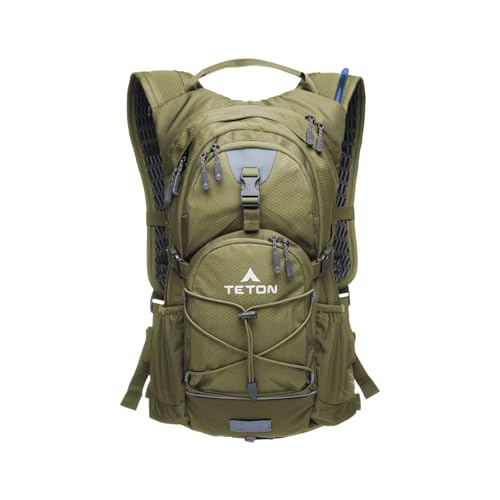

Hydration features on a hiking backpack — a padded reservoir sleeve, a reinforced hose port, and side or hipbelt bottle pockets — determine how easily a hiker can drink water without stopping. A pack with the wrong hydration setup either can't hold water where it's needed or adds bulk without a clear plan. Choosing the right setup starts with weighing reservoir carry against bottle carry, then sizing total water capacity to the hike.
A hydration reservoir lets a hiker sip through a hose without breaking stride, which suits continuous movement on exposed or technical terrain. Water bottles in side or hipbelt pockets are faster to refill, easier to monitor by sight, and lighter when empty. Most hiking backpacks fit both, so the right choice depends on trip pace and how often water sources appear.
On trail, a reservoir's biggest advantage is that hands stay free and pace doesn't need to break, which matters on scrambles, stream crossings, or exposed ridgelines. The tradeoff: refilling means unpacking the main compartment, squeezing air out through the wide-mouth cap, and repacking — slower than dipping a bottle into a stream or a filter's output.
Bottles solve the opposite problem. A hiker sees exactly how much water is left, swaps an empty bottle for a full one in seconds, and cleans a rigid bottle more easily than a bladder's hose and bite valve. Side-mesh pockets angled toward the front allow one-handed access without removing the pack, which is why many day-hiking and thru-hiking backpacks build in two or three bottle pockets even alongside a reservoir sleeve.
The table below compares the two systems directly.
| Attribute | Hydration Reservoir | Water Bottles |
|---|---|---|
| Access while moving | Hands-free via hose and bite valve | Requires stopping or one-handed reach |
| Refill speed | Slow — needs unpacking and repacking | Fast — dip, fill, or swap in seconds |
| Visual monitoring | Can't see remaining volume | Fill level visible at a glance |
| Typical single-unit capacity | 1.5–3 liters | 0.5–1 liter per bottle |
| Cold-weather risk | Hose and bite valve can freeze | No freeze risk in the bottle body |
| Cleaning | Wide mouth and hose need regular scrubbing | Rinses and dries quickly |
A hydration sleeve is a padded internal pocket, usually built against the back panel or frame sheet, sized to hold a soft-sided water reservoir upright and centered against the wearer's back. It typically includes a hanging loop near the top of the pocket and a reinforced port where the drink tube exits the pack body.
Placement matters: a reservoir flat against the frame sheet keeps weight close to the spine, helping balance rather than pulling the pack backward. Most sleeves sit in one of two positions — behind the main compartment, accessible only by opening the pack fully, or in a dedicated rear pocket that unzips independently for refilling without disturbing packed gear.
The hanging loop at the top keeps a full reservoir from sagging as water is used, which would otherwise shift the pack's center of gravity lower with every mile. The exit port is a reinforced grommet or slit near the top of the pack body, close to one or both shoulder straps, sized just wide enough for the hose without letting in rain or dust.
Sleeve capacity generally tops out around 3 liters, matching the largest common reservoir size, though ultralight packs sometimes skip a dedicated sleeve and rely on the main compartment instead.
Most day hikers need roughly 0.5 to 1 liter of water per hour of moderate hiking, more in heat, at altitude, or on steep climbs, which works out to about 2 to 4 liters for a half-day to full-day hike. Multi-day hikers typically plan around known water sources rather than carrying a full trip's supply.
Water needs scale with effort, temperature, and elevation gain more than with distance alone. A flat, shaded 3-mile hike in cool weather needs far less water than the same distance with 2,000 feet of climbing in direct sun.
- Cool, easy terrain: roughly 0.5 liter per hour
- Moderate effort, warm weather: roughly 0.75–1 liter per hour
- Hot, exposed, or steep terrain: 1 liter or more per hour, plus electrolytes
- High altitude: increased intake regardless of temperature, due to faster fluid loss through respiration
The drink tube runs from the reservoir sleeve, exits through a dedicated port near the top of the pack, and clips to a loop or magnetic dock on a shoulder strap so the bite valve stays within easy reach. Many packs route the port on both shoulders, letting left- or right-handed hikers choose a side.
A well-routed hose stays close to the body rather than dangling loose, since a swinging hose catches on branches and hipbelt buckles. Shoulder-strap hardware ranges from a simple elastic loop to a magnetic clip that snaps the bite valve into place and releases with a light tug — magnetic docks are now common on mid-range and premium packs because they hold the valve securely without a hiker needing to look down.
Bite valves generally fall into two types: a push-to-open valve that flows when bitten and self-seals when released, and a lever or slide valve that locks shut to prevent drips in transport. Lever-lock valves suit anyone packing a reservoir alongside electronics or a sleeping bag, since a stuck-open push valve can leak under pack compression.
In freezing conditions, an exposed hose and bite valve can ice shut within an hour or two, even if the reservoir stays liquid inside an insulated pack. Winter hikers often add an insulated tube sleeve or blow air back into the hose after each sip to clear the line, and some route the valve inside a jacket collar to use body heat against freezing.
Go Deeper
Detailed companion guides for hydration compatibility.
Best Hydration Backpacks For Hiking
Buyer's guide: best hydration backpack for hiking.
Hydration Reservoir vs Water Bottles
Compare hydration bladders and water bottles on hiking backpacks: hands-free access, refill speed, added weight, and which setup fits your trail.
Attachment & Compression Systems
Related features, frames & materials guide.
Frame Types
Related features, frames & materials guide.