




Where's the best place to store a hiking backpack?
The best place to store a hiking backpack is a cool, dark, low-humidity spot with stable temperature, such as a bedroom closet, a spare-room shelf, or a climate-controlled storage room. These conditions protect fabric coatings, webbing, and foam far better than a location prone to heat spikes, dampness, or direct sunlight.
Attics run hot in summer, which accelerates the breakdown of fabric coatings and adhesives over repeated seasons. Garages and car trunks combine heat with humidity swings and UV exposure through windows or skylights. Basements often run damp year-round, which is exactly the moisture mold needs to take hold. A closet inside the conditioned part of a home avoids all three problems at once.
Should compression and hipbelt straps stay buckled in storage?
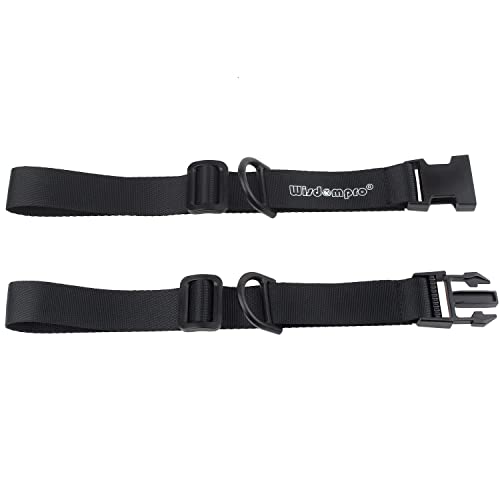
Compression, sternum, load-lifter, and hipbelt straps should all be loosened, not left cinched, when a hiking backpack goes into storage. Leaving straps tight compresses the same foam and fabric for months at a stretch, which is the storage habit most likely to leave lasting damage.
A pack stored with every strap loosened sits closer to its natural shape. The back panel and hipbelt foam keep their loft instead of taking a set, and the fabric doesn't hold a crease at the same fold line every day. Buckling the straps loosely — clipped but not tightened — is fine and keeps them from dangling or tangling; the goal is releasing tension, not unclipping everything.
Does a hiking backpack need a special storage bag?
A hiking backpack doesn't need a special storage bag; a large breathable cotton or mesh bag, or simply leaving the pack uncovered on a shelf, works as well as any dedicated product. What matters more than the bag itself is that the pack is bone dry before it goes in and that airflow isn't sealed off.
An airtight plastic tote is the one container worth avoiding unless the pack is completely dry, since any residual moisture gets trapped against the fabric instead of evaporating. A breathable option — an old pillowcase, a large stuff sack left unzipped, or a mesh laundry bag — keeps dust off without creating a sealed, humid environment.
How long can a hiking backpack sit in storage before it needs attention?
A clean, dry hiking backpack can sit in storage for months, or even a full off-season, without attention as long as it's kept loose in a cool, low-humidity spot. Nothing about correct storage has a hard time limit; the risk comes from what the pack does or doesn't have going into storage, not how long it sits there.
A pack put away damp or dirty can develop mold within weeks in a warm, humid space, while a pack that went in clean and dry can sit through an entire winter with no issue. That's why the pre-storage checklist — wash, dry fully, empty pockets, loosen straps — matters more than the storage duration itself. A pre-season check before the first trip out, covering zippers, buckles, stitching, and water resistance, is worth doing regardless of how long the pack sat.
What causes a musty smell in a stored hiking backpack?
A musty smell in a stored hiking backpack almost always comes from residual moisture combined with organic residue — sweat, dirt, or food crumbs — that let mold or mildew take hold while the pack sat unused. The smell is a reliable signal that the pack went into storage before it was fully dry or fully clean.
The fix starts with a full wash using mild soap and, for stubborn odor or visible mold, a diluted white-vinegar rinse, followed by a complete air-dry in a well-ventilated spot away from direct sun. Bleach is worth avoiding, since it can strip fabric coatings and weaken stitching over repeated use. Once the pack is clean and completely dry, storing it loosely in a low-humidity space keeps the smell from coming back.