




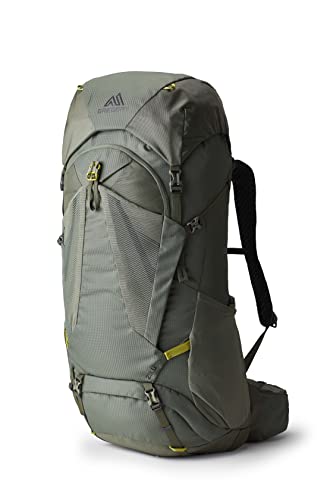
What is the Gregory Zulu 65 designed for?
The Gregory Zulu 65 is designed for multi-day hikers who want a well-ventilated carry more than maximum load-hauling padding, using a trampoline-style mesh back panel that holds the pack body off the back to let air move through the gap. It belongs to Gregory's Zulu/Jade family, the ventilated counterpart to the heavier-duty Baltoro/Deva line, spanning roughly 30 to 65 liters depending on the specific size chosen within the family, which means the family covers everything from an overnight pack up to the 65-liter size reviewed here.
That ventilated design is the defining difference from the Baltoro: instead of a padded back panel sitting flush against the body, the Zulu suspends the pack slightly away from the back on a tensioned mesh, similar in concept to ventilated back panels used on daypacks but scaled up and reinforced to support a loaded multi-day pack. The trade-off is a small amount of load stability compared to a fully padded, structured back panel, in exchange for meaningfully less heat and sweat build-up on a warm or humid trail.
How does the Zulu 65 fit and carry weight?
The Zulu 65 uses the same core fit approach as other Gregory multi-day packs: an adjustable or size-specific torso length combined with a hipbelt available in more than one size, so frame length and hip circumference can each be dialed in rather than forcing a compromise. As with any Gregory suspension pack, the hipbelt should sit centered over the iliac crest once loaded, since that's what determines whether the load rides on the hips or drags on the shoulders and lower back.
Because the ventilated mesh back panel holds the pack slightly away from the body, weight can feel marginally further from the hiker's center of gravity than on a fully padded pack like the Baltoro, which is why Gregory generally positions the Zulu for moderate to moderately heavy loads rather than the very heaviest expedition-style packing lists. For most three-season backpacking trips within the pack's rated range, that distinction is minor in practice and the airflow benefit outweighs the small stability trade-off.
What are the Zulu 65's key features?
The Zulu 65 carries a similar overall feature set to the Baltoro, adapted around its ventilated back panel:
- Trampoline-style mesh back panel for airflow between pack and back
- Top-loading main compartment, often with a front-panel access option depending on the specific version
- External attachment points for trekking poles and a sleeping pad
- Adjustable torso length paired with a swappable hipbelt size
- Hydration-sleeve compatibility inside the main compartment
- Exterior pockets sized for quick-access items like a map, snacks, or a water filter
Who should consider the Zulu 65?
The Zulu 65 suits multi-day hikers in warm or humid climates, or anyone who runs hot on the trail and finds a fully padded back panel uncomfortable over a long day, while still wanting Gregory's adjustable-fit suspension system rather than a simpler, non-adjustable pack. It's also a reasonable middle-ground choice for hikers who aren't sure yet whether they'll consistently carry heavier loads and want a pack that handles moderate weight comfortably in a range of conditions.
Hikers whose pack weight consistently runs heavy, or who hike primarily in cold conditions where a bit less airflow isn't a downside, are often better matched to the more structured Baltoro instead. As with any Gregory comparison, trying both back-panel styles loaded, if possible, is the most reliable way to confirm which trade-off suits a given hiker's build and typical trip conditions, since the difference is felt most clearly under a real pack weight rather than an empty demo model on a store shelf.