
Best Backpack For Long Torso
Best Backpack For Long Torso, ranked from aggregated owner ratings and reviews, not first-hand testing. Real pros, cons, and who each pick is best for.
Affiliate disclosure: this page contains affiliate links. Purchases made through them may earn us a commission at no extra cost to you. See our affiliate disclosure.
In plain English
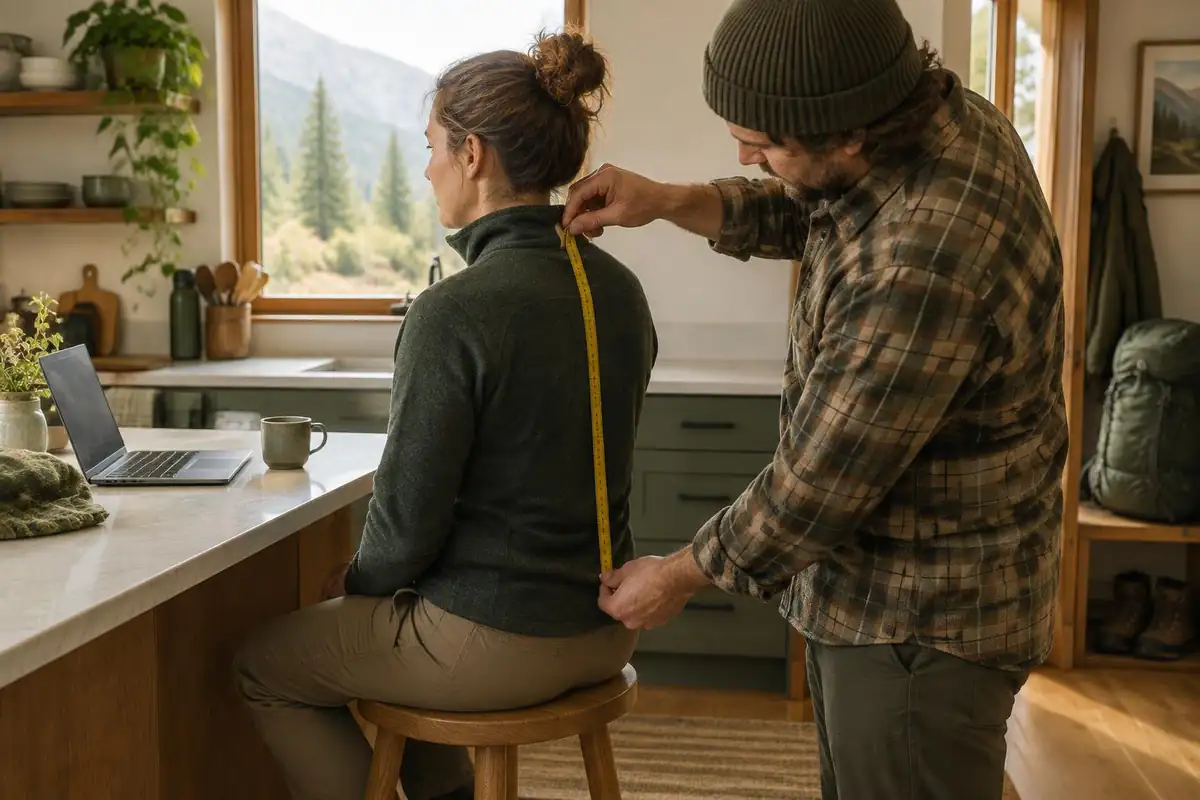
A long torso means the part of your back from your neck to your hips is longer than average. It is about body shape, not height. Some tall people have average torsos and long legs, and some average-height people have long torsos.
For a pack, torso length decides where the hip strap lands. If the pack's back is too short, the hip strap rides up onto your belly, and your shoulders end up carrying the weight. It feels like wearing a jacket with sleeves that stop at your forearms.
The fix is simple: measure your torso, then shop only packs whose size range covers your number. Check the hip strap size too, because a long back and a narrow or wide waist can go together.
Our Top 3 Picks
Quick Comparison
| Shell | Extras | Buy | ||||
|---|---|---|---|---|---|---|
| 1 | Osprey Atmos AG 65L Men's Backpacking BackpackTop Overall Pick | 65 L | 4.8 lb | — | Rain cover | View |
| 2 | MOUNTAINTOP 70L Internal Frame BackpackBest Value | 70 L | 4.4 lb | Nylon | Hydration | View |
| 3 | MOUNTAINTOP 50L Internal Frame Hiking BackpackBest for Women | 50 L | 3.2 lb | Nylon | Rain cover | View |
| 4 | Ubon 60L Lightweight Camping Backpack Internal Frame Backpacks BlueBest Ultralight | 50–60 L | 18 oz | 600D nylon | Hydration | View |
| 5 | Kelty Coyote 60-105 Liter Internal Frame Backpack - HikingBest Hydration Pack | 85–105 L | 4.0 lb | — | Hydration | View |
How is a "long torso" defined for backpack sizing?
A long torso is generally one measuring 19.5 inches or more from the C7 vertebra to the iliac crest, the range most backpack manufacturers label Large. The exact cutoff shifts by half an inch or so between brands, so a hiker near that boundary should check the specific size chart for a pack rather than relying on a single industry-wide number.
What pack categories offer long-torso sizing?
Long-torso sizing appears across most backpack categories, though availability narrows as capacity shrinks:
- Multi-day and expedition packs (45L and above) most commonly offer a full range of sizes, including Large, since their frames are built to carry heavier loads and justify size-specific tooling.
- Daypacks and lightweight overnight packs (under 35L) offer size options less consistently; many use a single adjustable harness instead of separate size bands.
- Ultralight packs built by cottage manufacturers frequently size by exact torso measurement rather than a Small/Medium/Large system, which works in a long-torso hiker's favor.
Should you choose a stock Large or a custom frame?
A stock Large size fits most hikers whose torso measures up to roughly 21 to 22 inches, since that's the upper end most mainstream brands build for. Hikers measuring beyond that, or landing in the gap between a Large and an unavailable Extra-Large, are better served by a cottage manufacturer building to an exact measurement rather than stretching a stock size to fit.
How does load capacity change with a long-torso frame?
A longer frame generally supports a higher comfortable load range than the same pack's shorter-torso sizing, since more suspension length and hip belt surface area distribute weight more effectively. This matters most on expedition-length trips where total pack weight climbs; a correctly sized long-torso frame carries a heavier load more comfortably than a shorter frame stretched past its intended range.
What should you check before buying online versus in person?
Buying a long-torso pack online without trying it on first works best when the torso measurement has already been confirmed and the specific model's size chart checked against that number. In-person fitting adds the advantage of loading the pack with weight and walking around before committing, which catches fit issues a size chart alone can miss.
Either way, confirm these three points before finalizing a purchase:
What trade-offs come with a longer frame?
A longer frame generally adds weight over a shorter version of the same pack, since it uses more aluminum stay length, foam padding, and fabric. Hikers weighing this trade-off should prioritize correct torso fit over shaving ounces, since a poorly fit long frame carries worse than a slightly heavier, correctly sized one, even before comparing capacity or features.
Full Ranking, Reviewed

Best for Long-Torso backpacks
- 65 L capacity
- 4.8 lb empty
- Rain cover included
- Floating top lid with lash points
- Packs an integrated rain cover to keep gear dry
- At 65 L it is more pack — and more weight — than a day hiker needs; it earns its keep on overnight and multi-day loads.
- Empty weight (4.8 lb) runs above ultralight rivals.
Verdict: This 65 L backpacking pack offers a bundled rain cover, making it our overall pick for Long-Torso Backpacks.

Best for Long-Torso backpacks
- 70 L capacity
- Nylon shell
- 4.4 lb empty
- Hydration-ready
- Internal frame
- Hydration sleeve keeps water within easy reach
- Breathable mesh back keeps air moving against your spine
- That 70 L volume is overkill for quick hikes and better suited to multi-night trips.
Verdict: This 70 L backpacking pack pairs a breathable back with room for a bladder, making it an easy shortlist pick for Long-Torso Backpacks.
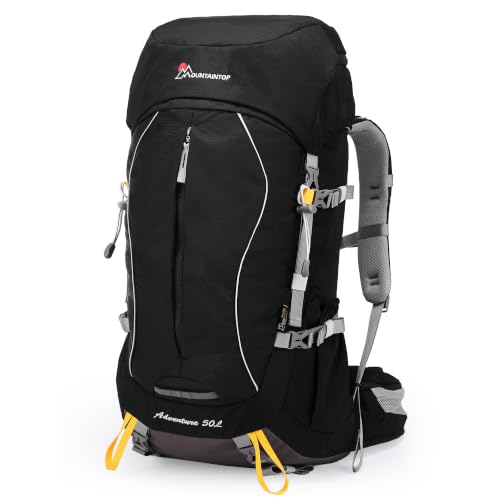
Best for Long-Torso backpacks
- 50 L capacity
- Nylon shell
- 3.2 lb empty
- Rain cover included
- Breathable mesh back keeps air moving against your spine
- Packs an integrated rain cover to keep gear dry
- Adjustable torso dials the fit to your back length
- At 50 L it is more pack — and more weight — than a day hiker needs; it earns its keep on overnight and multi-day loads.
Verdict: This 50 L backpacking pack pairs a breathable back with a bundled rain cover, making it well worth a look for Long-Torso Backpacks.

Best for Long-Torso backpacks
- 50–60 L capacity
- 600D nylon shell
- 18 oz empty
- Hydration-ready
- Excellent Quality
- Hydration sleeve keeps water within easy reach
- Airflow channels help your back stay cooler under load
- That 50–60 L volume is overkill for quick hikes and better suited to multi-night trips.
Verdict: This 50–60 L backpacking pack pairs a breathable back with room for a bladder, making it a strong option for Long-Torso Backpacks.

Best for Long-Torso backpacks
- 85–105 L capacity
- 4.0 lb empty
- Hydration-ready
- Plenty of Pockets
- Hydration sleeve keeps water within easy reach
- Airflow channels help your back stay cooler under load
- That 85–105 L volume is overkill for quick hikes and better suited to multi-night trips.
Verdict: This 85–105 L backpacking pack pairs a breathable back with room for a bladder, making it well worth a look for Long-Torso Backpacks.
Buying on a size boundary
The page notes that the long-torso cutoff shifts by about half an inch between brands. Published charts bear that out. Granite Gear's sizes run 15–18, 18–21 and 21–24 inches,1 while Deuter targets back lengths of about 46 cm for its regular fit and about 50 cm for its EL fit.2 A hiker measuring 21 inches sits on a Granite Gear boundary but well inside Deuter's longest fit.
When you are between sizes, the makers do not all say the same thing, but Mystery Ranch's advice is useful: size down so the waist belt can tighten securely on the hips.3 Deuter adds that even adjustable packs should be chosen in the correct back length.2 Gender labels do not change the math at Gregory, which sizes packs identically regardless of gender, so a medium is the same torso size in men's, women's and unisex packs.4
Does a longer frame carry more?
The page suggests a longer frame generally supports a higher comfortable load because of more suspension length and belt surface. None of the sources cited here measure that directly, so treat it as a reasonable idea rather than a tested fact. What the evidence does support is the role of the frame and belt in general. REI notes that frameless packs save weight but are much less comfortable under heavy loads,5 and a lab study found the hip region tolerates pack pressure significantly better than the shoulders.6
The practical rule for a long-torso hiker is to read the stated load rating for the exact size you plan to buy, not the model in general, and to keep the load close to your body. A military review found that keeping the load's center of mass as close as possible to the body's gives the lowest energy cost.7 A frame that is too short cannot do that, because the belt and lifters no longer hold the pack where it should sit.
The hip belt is a separate fit
The page lists hip belt size as its own check, and that is right. Granite Gear says belt size is based on the circumference at the hip crest, roughly your regular pant waist size.1 ULA sizes men's belts at pant waist plus 2 inches, and for women adds 5 inches to the smallest waist measurement for curvier builds or 3 inches for straighter ones.8 Mystery Ranch measures just above the top of the hip bones instead.3
Once the pack is on, Osprey says a correctly sized belt leaves a 3 to 6 inch gap between the hip-pad tips when tightened.9 If the pads touch, the belt cannot tighten further as it settles; if the gap is much wider, the padding sits off the hip bones. Long-torso hikers should do this check on the long frame size itself, since changing the frame changes where the belt lands.
Frequently Asked Questions
What torso length is considered long for a backpack?
A torso length of about 19.5 inches or more is generally considered long, corresponding to the Large size on most backpack size charts. Exact cutoffs vary by half an inch or so between brands, so checking the specific pack's size chart matters near that boundary.
Are long-torso backpacks heavier than standard sizes?
Yes, generally. A Large or long-torso frame uses more stay length, padding, and fabric than a Medium or Small version of the same pack, adding a small amount of empty weight. This is a normal trade-off for correct fit rather than a flaw in the pack.
Related Buying Guides
Planning a hiking trip? Compare hotels, lodges and guesthouses.
Book on Booking.com Book on AgodaAffiliate links: we may earn a commission at no extra cost to you.