
Best Backpack For Narrow Shoulders
Best Backpack For Narrow Shoulders, ranked from aggregated owner ratings and reviews, not first-hand testing. Real pros, cons, and who each pick is best for.

Affiliate disclosure: this page contains affiliate links. Purchases made through them may earn us a commission at no extra cost to you. See our affiliate disclosure.
In plain English
Shoulder straps work best when they run straight down over the top of your shoulders, like the straps of a well-fitting apron. If your shoulders are narrow and the straps are spaced for a broader person, they slide outward toward your arms or rub the outer edge of the shoulder. That gets sore quickly, even if the pack is the right length for your back.
Two things fix most of this. First, look for straps that are set closer together at the top and curve inward across the chest. Second, make sure the pack has a padded hip belt, the wide strap that buckles around your hips, so most of the weight rests there instead of on your shoulders.
Always try a pack with some weight inside. Swing your arms, reach for a water bottle and walk around. If the straps stay put and nothing digs in at the neck or the outer shoulder, the fit is working.
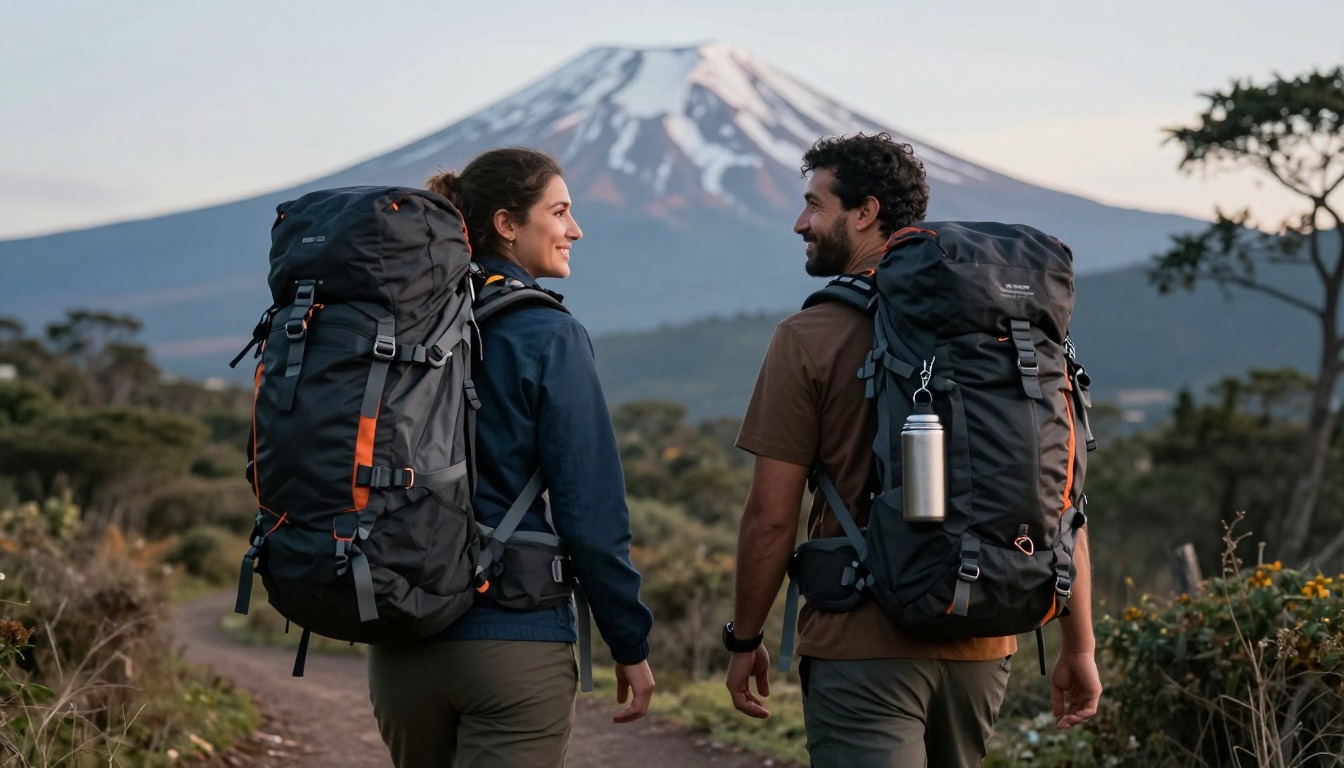
Our Top 3 Picks
Quick Comparison
| Shell | Extras | Buy | ||||
|---|---|---|---|---|---|---|
| 1 | Osprey Tempest Velocity 20L Women's Hiking BackpackTop Overall Pick | 20 L | 30 oz | — | Hip belt | View |
| 2 | Deuter Speed Lite 21L Hiking Lightweight BackpackBest Value | 21 L | 17 oz | — | Hydration | View |
| 3 | Deuter AC Lite 22L SL Hiking & Daypack Backpack with Narrow FitBest Ultralight | 22 L | 32 oz | — | Rain cover | View |
Choosing a hiking backpack for narrow shoulders starts with harness width and strap shape, since a standard-width harness can dig into the outer shoulder or slide outward even when the torso length itself fits correctly.
What makes a backpack fit narrow shoulders?
A backpack fits narrow shoulders when the harness base — the point where the shoulder straps attach to the pack body — sits close enough together that the straps run down the shoulder rather than out toward the arm. Straps that are too wide-set for a narrow frame tend to slip outward under load or press into the outer edge of the shoulder, causing discomfort well before the hipbelt takes on its share of the weight. Narrow-shoulder fit is a separate issue from torso length, though the two often overlap on smaller frames, so a short-torso pack doesn't automatically solve a narrow-shoulder fit problem.

Which harness features matter most for narrow shoulders?
The features that matter most are harness width at the attachment point, strap taper (how much the strap narrows as it crosses the chest), and load-lifter straps that angle correctly from the shoulder to the top of the frame rather than pulling outward.
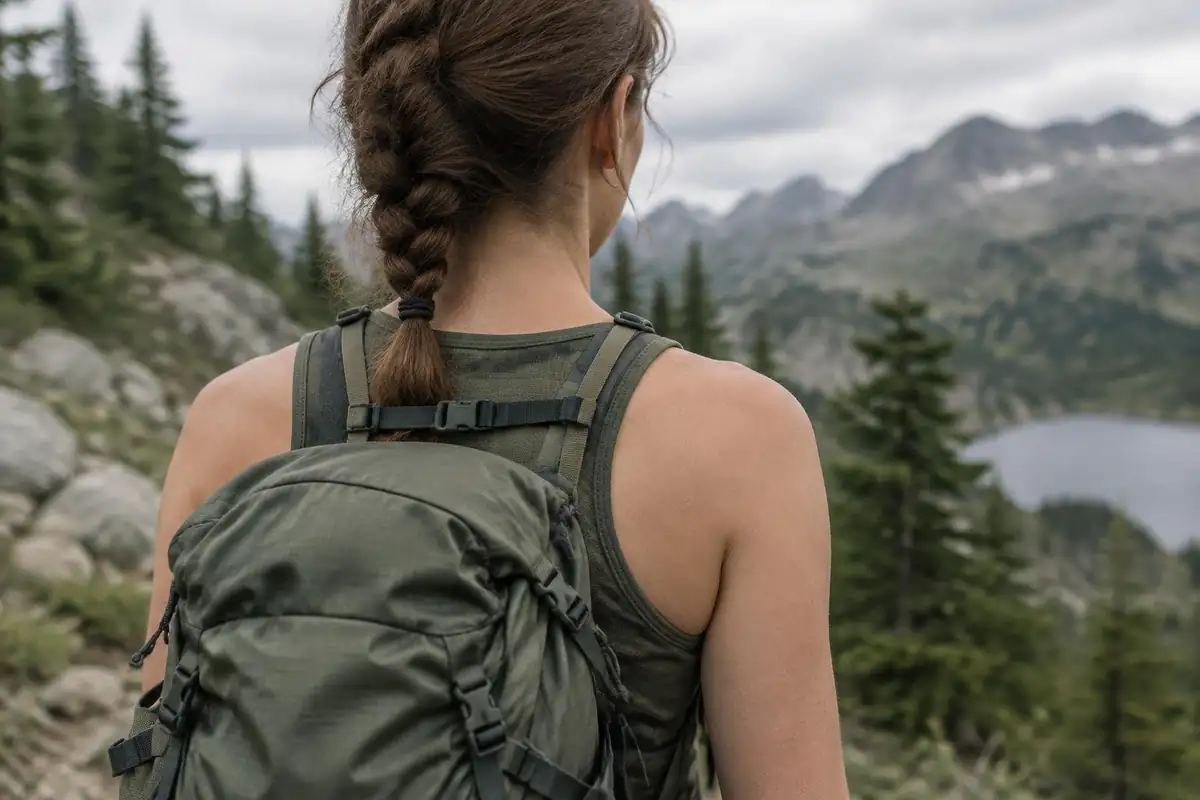
- Harness width: narrower attachment spacing keeps straps riding on the shoulder instead of the arm.
- Strap taper: straps that narrow toward the chest reduce pressure on the collarbone and reduce chafing near the neck.
- Load-lifter angle: straps should run from the shoulder to the pack at roughly a 45-degree angle; a flatter angle on a narrow frame usually means the size is wrong.
- Sternum strap adjustability: a sternum strap with a wide vertical adjustment range lets a narrow-framed hiker position it comfortably across the chest.
Do narrow shoulders always mean a short torso?
No. Narrow shoulders and short torso length are independent measurements — a hiker can have a long torso with narrow shoulders, or a short torso with average shoulder width. Women's-specific packs commonly combine a shorter torso range with narrower harness spacing, which is why they suit many, but not all, narrow-shouldered hikers regardless of gender. Hikers with narrow shoulders and an average or long torso should look specifically for narrow harness width or strap taper rather than defaulting to a shorter-frame pack, since sizing down the frame won't correct shoulder-width fit on its own.
How do I test shoulder fit before buying?
Test shoulder fit by loading the pack, tightening the shoulder straps until the hipbelt takes most of the weight, then checking whether the straps sit flat against the shoulder without gapping on the outside edge or pressing into the neck on the inside edge. Move your arms through a normal hiking range of motion — raising trekking poles, reaching for a water bottle — to confirm the straps don't shift outward or dig in during movement. If a pack's standard harness doesn't fit, check whether the brand offers a narrower or women's-specific harness option before ruling the pack out entirely, since some manufacturers sell the same frame with interchangeable harness widths.

Full Ranking, Reviewed

Best for Backpacks for Narrow Shoulders
- 20 L capacity
- 30 oz empty
- Padded hip belt
- Category-Leading Fit & Comfort
- Adjustable torso dials the fit to your back length
- Padded hip belt shifts load onto your hips, not your shoulders
- The 20 L capacity is snug for anything beyond a half-day on the trail.
Verdict: This 20 L daypack pairs real hip-belt support with an adjustable fit, making it our overall pick for Backpacks for Narrow Shoulders.

Best for Backpacks for Narrow Shoulders
- 21 L capacity
- 17 oz empty
- Hydration-ready
- Designed for comfort
- Routes a hydration bladder and hose without fuss
- Padded hip belt shifts load onto your hips, not your shoulders
- Colours and exact capacity options change often on Amazon — confirm the current variant on the listing before buying.
Verdict: This 21 L daypack pairs room for a bladder with real hip-belt support, making it a strong option for Backpacks for Narrow Shoulders.

Best for Backpacks for Narrow Shoulders
- 22 L capacity
- 32 oz empty
- Rain cover included
- Use case
- Hydration sleeve keeps water within easy reach
- Airflow channels help your back stay cooler under load
- Colours and exact capacity options change often on Amazon — confirm the current variant on the listing before buying.
Verdict: This 22 L daypack pairs a breathable back with room for a bladder, making it an easy shortlist pick for Backpacks for Narrow Shoulders.
Strap shape matters as much as strap spacing
Shoulder straps come in different curves, and the curve changes where pressure lands. ULA says S-shaped straps suit standard or sloping shoulders, while J-straps suit flat or square shoulders,1 and it offers both options on its Circuit.2 Hikers with narrow, sloping shoulders often find that an S-curve keeps the strap from drifting outward, because it bends in toward the chest instead of running straight down past the armpit.
Deuter builds the same idea into its women's line: it says its SL packs use narrower S-shaped shoulder straps and conically shaped hip fins.3 That makes SL and other women's harnesses worth trying for anyone with narrow shoulders, whatever their gender. But do not assume a women's pack is automatically the answer. Gregory, for example, sizes packs identically regardless of gender, so a medium is the same torso size in men's, women's and unisex versions.4 Judge the harness in front of you, not the label.
Load lifters and sternum straps: the numbers vary by brand
The page gives roughly 45 degrees as the target load-lifter angle. That matches Big Agnes, which says load lifters should align at a 45-degree angle.5 Other brands give a wider window: Deuter says stabilizer straps work best between 30 and 45 degrees,6 and Alpkit puts the optimum at 25 to 45 degrees from horizontal.7 So a slightly flatter angle is not automatically a sizing failure. A very flat angle, or lifters that pull the straps outward off your shoulders, is the stronger warning sign.
Gossamer Gear notes that straps set too high pinch the neck, while straps set too low reduce the weight that reaches the hip belt.8 For the sternum strap, Big Agnes says it should sit below the collarbone and lie flat with moderate tension,5 while Alpkit says about an inch below the collarbone.7 Deuter adds that sternum height should be set only after the back length is correct.6 On a narrow frame, a snug sternum strap is often what stops wide-set straps from sliding off, so an adjustable-height strap is worth checking for.
Why a hip belt helps narrow shoulders most
A lab study of load carriage found the hip region tolerates pack pressure significantly better than the shoulders, and that static strap force was a significant predictor of discomfort; the authors recommend shifting load from the shoulders to the hips wherever possible.9 A military review reached a similar practical conclusion, saying hip belts should be used whenever possible because they reduce shoulder pressure.10 If your straps are a marginal fit, moving weight to the hips is the easiest way to make them tolerable.
How much the hips actually take is disputed. Big Agnes aims for about 80% of the weight on the hips11 and Alpkit says 60 to 80%,7 but US Army doctrine says that with a frame and hip belt about 30% sits on the hips and lower back and 70% on the shoulders.12 Either way, the shoulders still carry something. That is why small daypacks, purse-style packs and slings without a hip belt are best kept light for narrow-shouldered hikers: every ounce goes through the straps. Deuter also warns against over-tightening shoulder straps, because the waist belt should carry the main load.6
Frequently Asked Questions
What causes a backpack to fit narrow shoulders poorly?
A harness attachment point set too wide for the hiker's shoulder width is the main cause, letting straps ride out toward the arm instead of along the shoulder. This is a separate fit issue from torso length, though both can affect the same hiker.
Do women's packs always fit narrow shoulders better?
Not always, but many women's-specific packs pair narrower harness spacing with a shorter torso range, which suits a lot of narrow-shouldered hikers. Fit still depends on the individual pack's harness width, so trying the pack on loaded remains the most reliable check.
Related Buying Guides
Planning a hiking trip? Compare hotels, lodges and guesthouses.
Book on Booking.com Book on AgodaAffiliate links: we may earn a commission at no extra cost to you.