
Best Backpack For Petite Women
Best Backpack For Petite Women, ranked from aggregated owner ratings and reviews, not first-hand testing. Real pros, cons, and who each pick is best for.
Affiliate disclosure: this page contains affiliate links. Purchases made through them may earn us a commission at no extra cost to you. See our affiliate disclosure.
In plain English
Petite, for a backpack, means a short torso. Your torso length is the distance down your back from the bony bump at the base of your neck to the top of your hip bones. You can be short with a long torso, or taller with a short one, so a tape measure tells you more than your height does.
When a pack is too long for you, the padded hip strap slides down onto your thighs and can't hold any weight. Your shoulders end up doing all the work, like carrying groceries with the bags hanging from your fingers instead of resting on your hip.
The fix is a pack whose size range reaches your number, or one that adjusts short enough. Then try it on with some weight inside. It should feel like the pack sits on your hips and simply leans gently on your shoulders.
Our Top 3 Picks
Quick Comparison
| Shell | Extras | Buy | ||||
|---|---|---|---|---|---|---|
| 1 | Osprey Tempest 11L Women's Lightweight Hiking BackpackTop Overall Pick | 11 L | 2.1 lb | — | Hydration | View |
| 2 | Osprey Tempest Velocity 20L Women's Hiking BackpackBest Value | 20 L | 30 oz | — | Hip belt | View |
| 3 | Deuter Women’s Speed Lite Pro 17L SL Mountain Hiking BackpackBest Ultralight | 17 L | 22 oz | — | Hydration | View |
| 4 | SKYSPER Small Hiking Backpack - 15L Travel Daypack Lightweight Bag WaterBest Hydration Pack | 15 L | — | — | Hydration | View |
| 5 | BECOJADDE 15L Small Hiking Backpack for Men Women Foldable PackableBest Compact Pack | 15 L | — | — | — | View |
A pack that's merely labeled "women's" doesn't guarantee a petite fit — the shortest size in a women's-specific range can still overreach a genuinely short torso.
What torso length counts as petite for a hiking backpack?
A torso length under about 16 inches counts as petite for hiking-backpack sizing, and torso lengths under 14 inches typically fall outside most adult women's-specific size charts entirely. At that point, an extra-small size, an adjustable-suspension pack set to its shortest length, or comparing packs built for petite and short-torso hikers specifically becomes the better path than settling for the smallest standard women's option.
What goes wrong when a petite hiker uses a standard-sized pack?
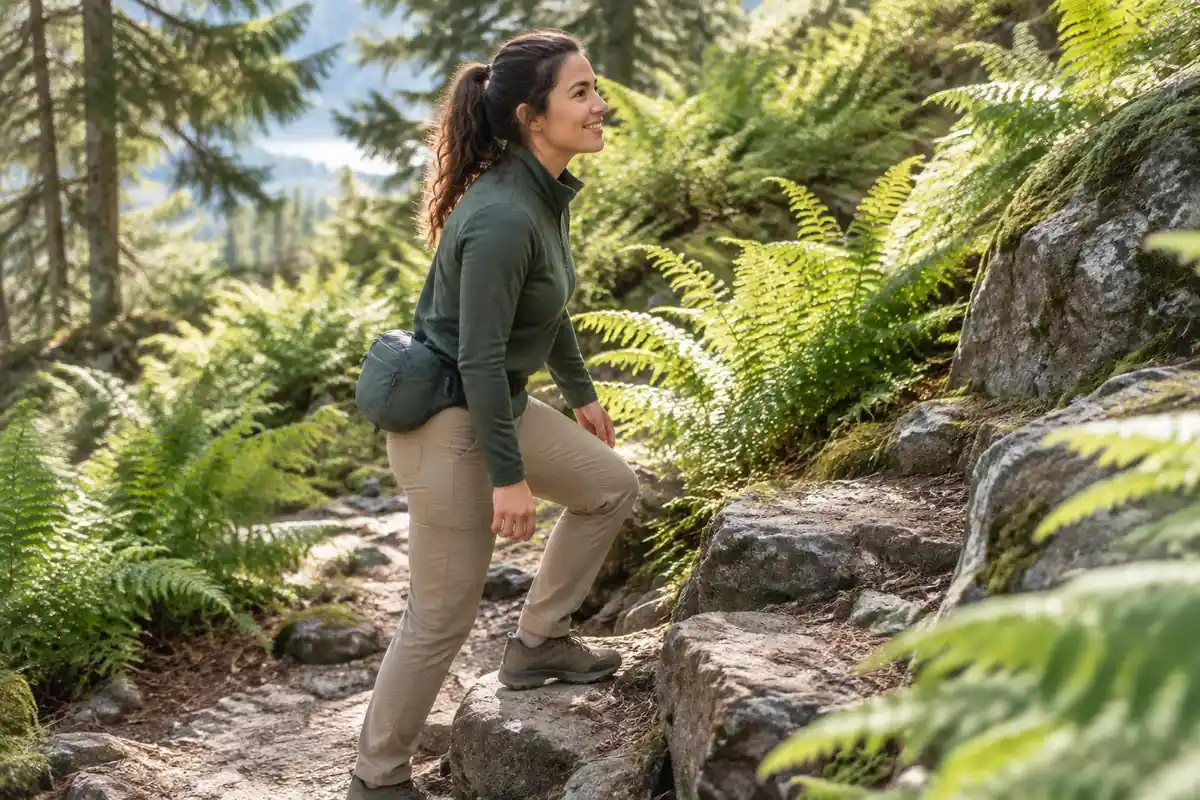
An oversized pack on a petite hiker pushes the hipbelt below the hip bones onto the upper thighs, moves the shoulder straps' anchor point too high, and leaves load lifters unable to reach their correct 45-degree angle. The result shifts weight onto the shoulders instead of the hips, even though the hipbelt itself may be padded and structured correctly.
Which pack features should petite women prioritize?
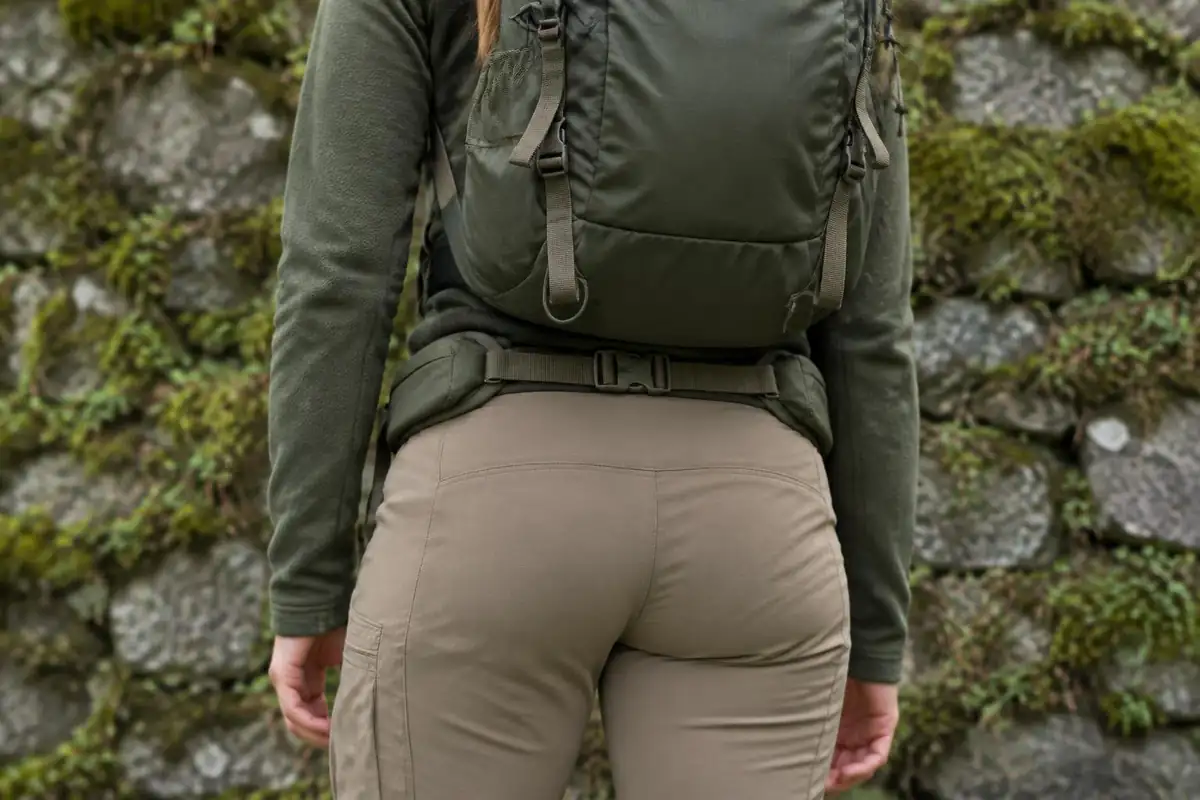
Petite women should prioritize an extra-small torso option or a suspension adjustable down to roughly 14–15 inches, a shorter hipbelt-wing length, and a sternum strap with a low enough adjustment range to sit across the chest rather than the collarbone.
- Torso range: extra-small or adjustable down to 14–15 inches
- Hipbelt wing length: shorter, so the belt doesn't overlap past the hip bones
- Sternum-strap range: low enough on the shoulder strap to sit mid-chest, not near the collarbone
- Overall pack height: shorter pack body relative to capacity, so it doesn't crowd a short neck-to-hip distance
Are there brands known for shorter torso ranges?
Several brands build extra-small sizes or low-end adjustable ranges specifically for shorter torsos, including Osprey's XS women's sizing on packs like the Aura AG and Kyte, Gregory's XS options on the Jade and Amber, and Deuter's SL (Slim Line) versions built on a shorter, narrower frame throughout the size run. Trying a pack on loaded remains the most reliable confirmation, since size charts vary by half an inch or more between brands.
What if no adult pack fits short enough?
If even an extra-small adult pack still overreaches a very short torso, compare youth or kids' hiking backpacks built on a shorter frame, since some youth models carry enough capacity and load rating for a petite adult on shorter trips. This isn't a compromise — it's matching frame geometry to body size, the same principle that drives every other sizing decision covered here.
Does petite sizing change which capacity to buy?
Capacity guidance doesn't change for petite hikers — a half-day hike still calls for roughly 15–20 liters and a multi-day trip still calls for 55 liters or more, regardless of torso length. What changes is how that volume gets built: a petite-sized pack at a given liter count is typically taller relative to its width than the equivalent standard size, or uses a shorter main compartment paired with a deeper hipbelt-to-shoulder distance, so the same capacity fits a shorter frame without crowding the neck or hips.
How should a petite hiker handle load weight?
The 20%-of-bodyweight load rule of thumb applies the same way to petite hikers as to anyone else, but it matters more in practice, since a lighter hiker's 20% figure is a smaller number of pounds and even a modest fit mismatch eats into the margin faster. A petite hiker packing close to that limit should prioritize a correctly sized hipbelt over any other single feature, since a hipbelt that can't reach the hip bones forces the shoulders to carry weight the frame was designed to route elsewhere.
Full Ranking, Reviewed

Best for Backpacks for Petite Women
- 11 L capacity
- 2.1 lb empty
- Hydration-ready
- Lightweight & versatile design
- Routes a hydration bladder and hose without fuss
- Breathable mesh back keeps air moving against your spine
- At 11 L it is best kept to shorter outings — it fills up once you add layers, lunch and water for a full day.
Verdict: This 11 L hydration pack pairs a breathable back with room for a bladder, making it a strong choice for Backpacks for Petite Women.

Best for Backpacks for Petite Women
- 20 L capacity
- 30 oz empty
- Padded hip belt
- Category-Leading Fit & Comfort
- Tunable harness helps you find a comfortable carry
- Supportive hip belt takes weight off the shoulders
- At 20 L it is best kept to shorter outings — it fills up once you add layers, lunch and water for a full day.
Verdict: This 20 L daypack pairs real hip-belt support with an adjustable fit, making it a strong option for Backpacks for Petite Women.

Best for Backpacks for Petite Women
- 17 L capacity
- 22 oz empty
- Hydration-ready
- Ultra-lightweight women’s hiking backpack
- Set up to carry a reservoir for hands-free sipping
- Airflow channels help your back stay cooler under load
- The 17 L capacity is snug for anything beyond a half-day on the trail.
Verdict: This 17 L hydration pack pairs a breathable back with room for a bladder, making it well worth a look for Backpacks for Petite Women.

Best for Backpacks for Petite Women
- 15 L capacity
- Hydration-ready
- Convenient and Functional
- Routes a hydration bladder and hose without fuss
- Airflow channels help your back stay cooler under load
- The 15 L capacity is snug for anything beyond a half-day on the trail.
- Water-resistant shell handles showers, but a liner or cover is wise for all-day rain.
Verdict: This 15 L hydration pack pairs a breathable back with room for a bladder, making it well worth a look for Backpacks for Petite Women.
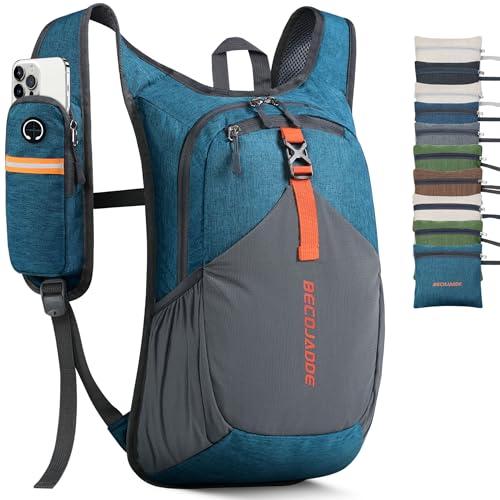
Best for Backpacks for Petite Women
- 15 L capacity
- Unique Strap Design
- Low carry weight pays off on big-mileage days
- Folds down small when you do not need the space
- At 15 L it is best kept to shorter outings — it fills up once you add layers, lunch and water for a full day.
Verdict: This 15 L daypack offers a packable build, making it an easy shortlist pick for Backpacks for Petite Women.
Reading size charts with a short torso
Size charts are not standardized, so a brand's 'small' can mean different numbers. Granite Gear, one of the few brands whose chart is in our sources, offers Short (15 to 18 inches), Regular (18 to 21) and Long (21 to 24) torso sizes.1 Deuter's SL fit targets back lengths of about 42 cm, a little over 16.5 inches, for body heights of roughly 160 to 175 cm.2 The page's thresholds of 16 and 14 inches are useful rough markers, but check each brand's own chart rather than a general rule.
Measure carefully, because a short torso leaves less margin for error. Gregory describes finding the C7 vertebra by tilting your head forward and feeling for the bump where neck meets shoulders, and the iliac crest by sliding your hands up to the top ridge of your hip bones.3 Hyperlite stresses that height is not a reliable proxy and torso length should be measured.4 Gregory also sizes packs identically regardless of gender, so its women's XS and unisex XS mean the same torso number.3
Mystery Ranch recommends sizing down when you are between sizes so the waist belt can tighten securely on the hips.5 Deuter adds that even adjustable packs should be chosen in the correct back length.2
Getting the belt and straps to land in the right places
A small waist creates its own problem: the belt can run out of adjustment. Osprey says a correctly sized hipbelt leaves a 3 to 6 inch gap between the pad tips when tightened.6 If the pads nearly meet or overlap, the belt is too big. ULA sizes women's belts from the smallest waist measurement plus 5 inches for curvier builds or plus 3 inches for straighter ones.7
Gossamer Gear notes that shoulder straps set too high pinch the neck, while straps set too low reduce weight transfer to the hip belt.8 For load lifters, brands give a range: Big Agnes says 45 degrees,9 Deuter 30 to 45,10 and Alpkit 25 to 45 degrees from horizontal.11 A petite hiker whose lifters sit a little flatter than 45 degrees may still be inside a normal range. For the sternum strap, Alpkit suggests about an inch below the collarbone.11
The 20% figure is a rule of thumb, and lighter bodies feel it sooner
The page applies the 20%-of-bodyweight guideline. That figure is a hiking-community rule of thumb with no primary research source. Deuter, a manufacturer, gives a maximum of 20 to 25%,12 while a study of long-distance hikers found packs heavier than about 10% of body weight produced a clear, load-dependent rise in foot pressure, and noted the literature has suggested 10 to 15% as a ceiling.13
Gear weight does not shrink with the hiker. Walking energy rises by about 7.6 watts for each extra kilogram carried,14 and a liter of water weighs about 1 kilogram no matter who carries it.15 For a 110-pound hiker, a shared tent or an extra liter of water is a bigger share of body weight than for a heavier partner, which is a good reason to split group gear by weight rather than evenly by item.
Frequently Asked Questions
Can a petite woman just tighten the straps on a regular-sized pack instead of buying an XS?
Tightening compensates for looseness but can't fix a hipbelt anchored too high or a shoulder-strap attachment point built for a longer torso; those are frame-geometry problems, not adjustment problems. An XS or an adjustable-down suspension addresses the actual mismatch instead of masking it.
Do petite-sized packs hold less gear than standard sizes?
Not necessarily by liter — many brands keep the stated capacity similar across their size run and instead shorten the pack body's height and narrow the frame width. Some petite or XS sizes do run a few liters smaller than the largest size in a range, so checking the specific size's liter figure, not just the model name, matters.
Related Buying Guides
Planning a hiking trip? Compare hotels, lodges and guesthouses.
Book on Booking.com Book on AgodaAffiliate links: we may earn a commission at no extra cost to you.