
Best Backpack For Tall Guys
Best Backpack For Tall Guys, ranked from aggregated owner ratings and reviews, not first-hand testing. Real pros, cons, and who each pick is best for.
Affiliate disclosure: this page contains affiliate links. Purchases made through them may earn us a commission at no extra cost to you. See our affiliate disclosure.
In plain English
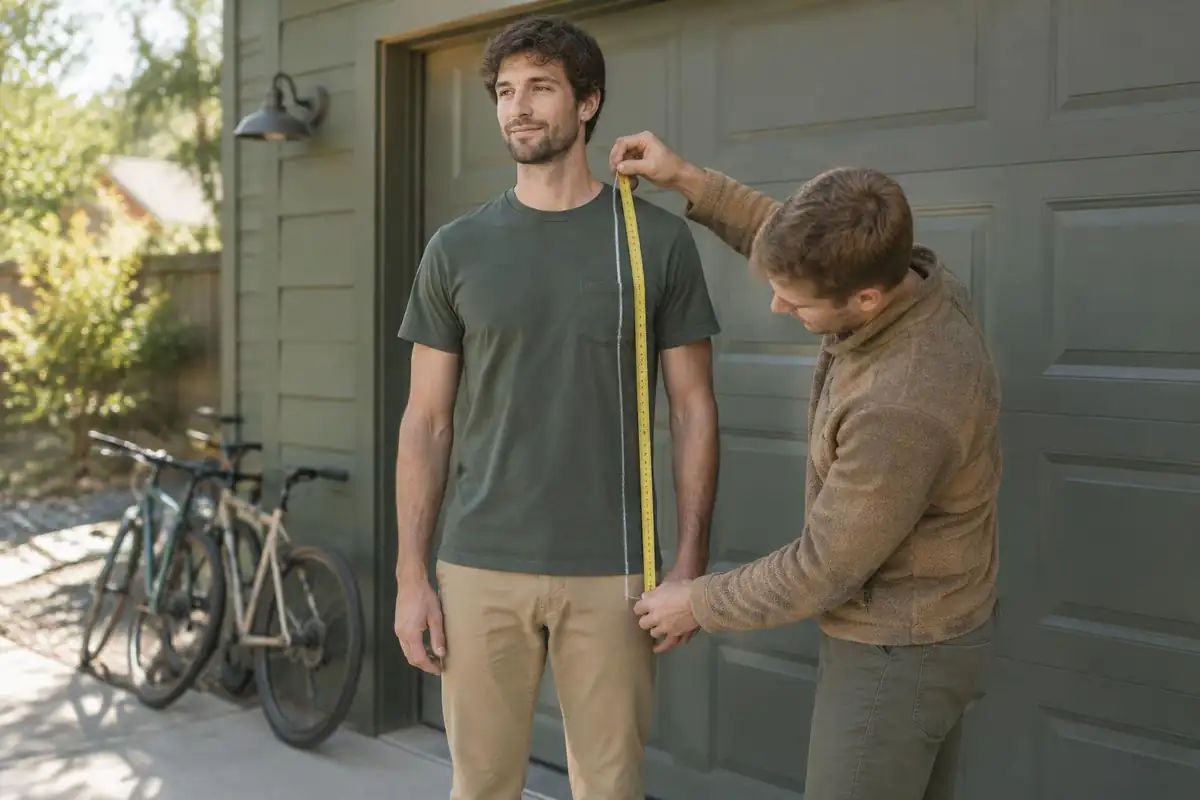
Being tall does not automatically mean you need a tall backpack. What matters is your torso length: the distance down your spine from the bony bump at the base of your neck to the top of your hip bones. Some tall people have long legs and an average torso. Others have a long back and need a bigger size.
When a pack is too short for your back, the hip strap rides up onto your belly and the shoulder straps pull down on your shoulders. It feels like wearing a child's backpack. The weight ends up on your shoulders instead of your hips, which gets uncomfortable fast.
So measure first. Then check two things on the size chart: whether the torso size reaches your number, and whether the hip strap fits your waist. They are separate measurements, and tall hikers often need to match them one at a time.
Our Top 3 Picks
Quick Comparison
| Shell | Extras | Buy | ||||
|---|---|---|---|---|---|---|
| 1 | Osprey Atmos AG 65L Men's Backpacking BackpackTop Overall Pick | 65 L | 4.8 lb | — | Rain cover | View |
| 2 | Osprey Rook 65L Men's Backpacking BackpackBest Value | 65 L | 3.7 lb | — | Rain cover | View |
| 3 | Gregory Baltoro 75L Backpacking PackBest Hydration Pack | 75 L | 5.0 lb | — | Hydration | View |
| 4 | Kelty Coyote 60-105 Liter Internal Frame BackpackBest for Multi-Day | 65 L | 4.0 lb | — | Vented back | View |
| 5 | Teton 55L Scout Internal Frame Backpack for HikingBest for Women | 55 L | 4.1 lb | — | Rain cover | View |
| 6 | Osprey Aether 65L Men's Backpacking BackpackAlso Great | 65 L | 5.0 lb | — | Rain cover | View |
Choosing a backpack for a tall build starts with confirming your torso length reaches beyond a standard Large size, then checking hipbelt length, strap length, and sleeping-pad or torso-extension straps that also scale with height.
What torso length counts as tall for a hiking backpack?
A torso length above roughly 20 to 21 inches, measured from the C7 vertebra at the base of the neck to a line between the top of the iliac crests, puts a hiker at or beyond the top of most standard Large size ranges. Height alone isn't a reliable stand-in for this — a 6'3" hiker with a proportionally shorter torso and long legs can still fit a standard Large, while a 5'11" hiker with a long torso and shorter legs may need an extended size.
What features matter most for a tall-guy fit?
Beyond torso length, a tall-guy fit depends on hipbelt length, shoulder-strap length, and the length of external straps like sleeping-pad or trekking-pole attachments, which are all cut to match a standard torso range and can run short on a taller frame even when the main harness fits. A pack with a genuinely adjustable torso — sliding the shoulder-strap yoke up or down a track on the frame — gives more room to fine-tune than a pack offered only in fixed S/M/L harnesses, since fixed sizes jump in roughly 2-inch increments and a hiker between sizes has to pick a direction.
- Torso adjustment range: how far the yoke slides, and whether it reaches past 21–22 inches
- Hipbelt length: separate from torso length — a tall, narrow-waisted hiker still needs the belt to reach without running out of webbing
- Strap length: shoulder straps and sternum strap should have enough range left after cinching, not sit at the end of their adjustment
- External strap reach: sleeping-pad and pole straps sized for a standard torso can come up short on a taller pack body
Which brands offer tall or extended sizing?
Several backpacking brands offer a genuine Large or Extra Large harness size, rather than only S/M, on their higher-volume packs — Gregory's Baltoro and Osprey's Atmos AG both extend into a Large that covers longer torsos than their own Medium, and both use frames rated for the higher loads a taller hiker's larger gear volume often brings. Some packs use adjustable rather than fixed torso sizing, such as the REI Co-op Traverse's continuous torso adjustment, letting a hiker dial in torso length within a single pack rather than guessing between two fixed sizes. Osprey's Fit-on-the-Fly is an adjustable hipbelt, not a torso adjustment; Osprey sizes packs by torso length.
Can an adjustable-torso pack replace a tall-specific size?
An adjustable-torso pack can often replace the need for a dedicated tall size, as long as its adjustment range actually reaches your measured torso length — check the stated maximum on the size chart rather than assuming "adjustable" means unlimited. Hikers whose torso length exceeds even the top of a brand's adjustable range are better served by a brand offering a true fixed Large or XL harness, since pushing an adjustable system past its intended range strains the track and reduces frame rigidity.
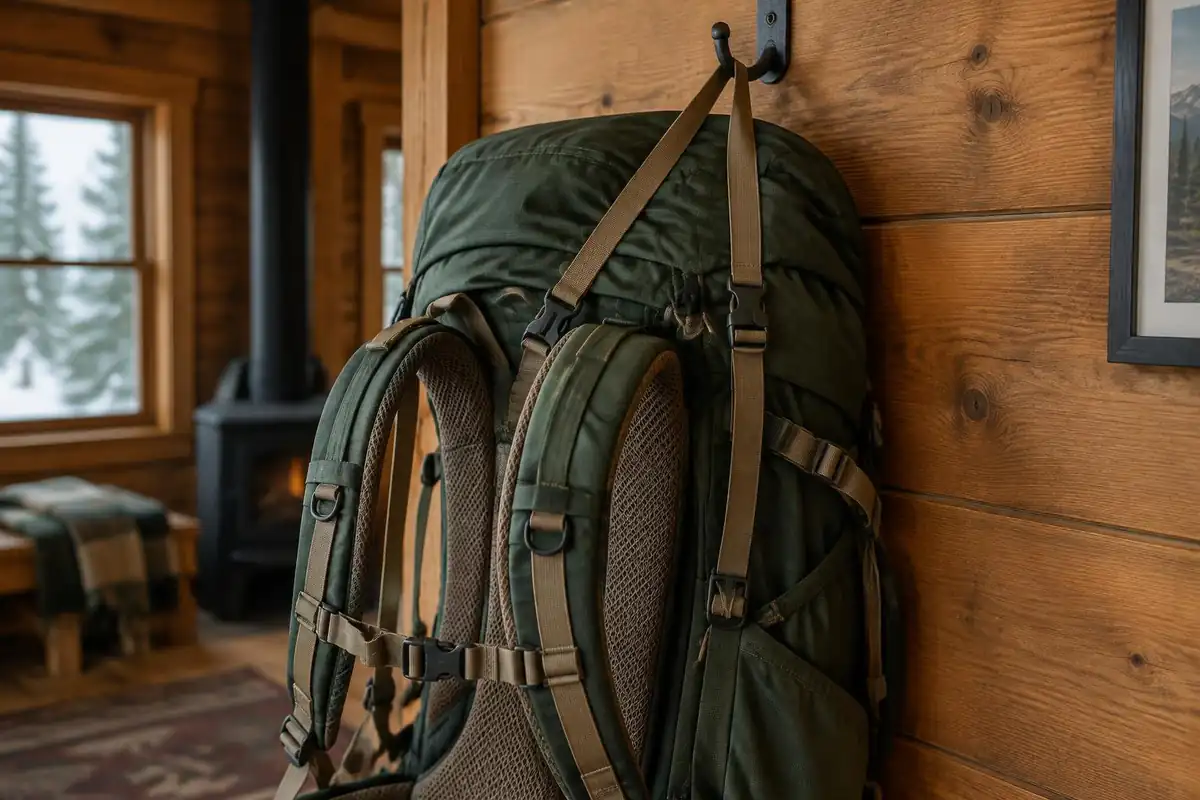
Full Ranking, Reviewed

Best for Backpacks for Tall Guys
- 65 L capacity
- 4.8 lb empty
- Rain cover included
- Floating top lid with lash points
- Packs an integrated rain cover to keep gear dry
- At 65 L it is more pack — and more weight — than a day hiker needs; it earns its keep on overnight and multi-day loads.
- Empty weight (4.8 lb) runs above ultralight rivals.
Verdict: This 65 L backpacking pack offers a bundled rain cover, making it our overall pick for Backpacks for Tall Guys.

Best for Backpacks for Tall Guys
- 65 L capacity
- 3.7 lb empty
- Rain cover included
- Adjustable AirSpeed Suspension
- Breathable mesh back keeps air moving against your spine
- Packs an integrated rain cover to keep gear dry
- At 65 L it is more pack — and more weight — than a day hiker needs; it earns its keep on overnight and multi-day loads.
Verdict: This 65 L backpacking pack pairs a breathable back with a bundled rain cover, making it an easy shortlist pick for Backpacks for Tall Guys.

Best for Backpacks for Tall Guys
- 75 L capacity
- 5.0 lb empty
- Hydration-ready
- Set up to carry a reservoir for hands-free sipping
- Ventilated back panel cuts sweat on long climbs
- Supportive hip belt takes weight off the shoulders
- That 75 L volume is overkill for quick hikes and better suited to multi-night trips.
- At 5.0 lb it is heavier than the lightest packs in its class before you load it.
Verdict: This 75 L backpacking pack pairs a breathable back with room for a bladder, making it a strong option for Backpacks for Tall Guys.

Best for Backpacks for Tall Guys
- 65 L capacity
- 4.0 lb empty
- Ventilated back panel
- Plenty of Pockets
- Airflow channels help your back stay cooler under load
- Adjustable torso dials the fit to your back length
- At 65 L it is more pack — and more weight — than a day hiker needs; it earns its keep on overnight and multi-day loads.
Verdict: This 65 L backpacking pack pairs a breathable back with an adjustable fit, making it a strong option for Backpacks for Tall Guys.
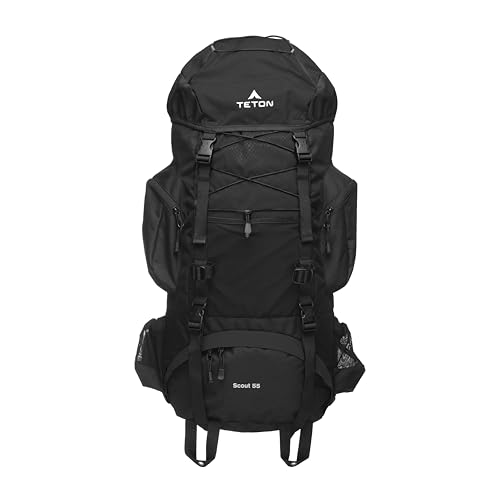
Best for Backpacks for Tall Guys
- 55 L capacity
- 4.1 lb empty
- Rain cover included
- Teton tough
- Routes a hydration bladder and hose without fuss
- Airflow channels help your back stay cooler under load
- That 55 L volume is overkill for quick hikes and better suited to multi-night trips.
Verdict: TETON Sports’s 55 L backpacking pack pairs a breathable back with room for a bladder, making it a strong option for Backpacks for Tall Guys.

Best for Backpacks for Tall Guys
- 65 L capacity
- 5.0 lb empty
- Rain cover included
- Custom Fit
- Packs an integrated rain cover to keep gear dry
- Adjustable torso dials the fit to your back length
- At 65 L it is more pack — and more weight — than a day hiker needs; it earns its keep on overnight and multi-day loads.
- Empty weight (5.0 lb) runs above ultralight rivals.
Verdict: This 65 L backpacking pack pairs a bundled rain cover with real hip-belt support, making it well worth a look for Backpacks for Tall Guys.
Torso length versus height: reading the size charts
Hyperlite says height is not a reliable proxy for torso length and that torso should be measured.1 The measurement runs from the C7 vertebra to the iliac crest; Gregory describes finding C7 by tilting your head forward and the iliac crest by sliding your hands up to the top ridge of your hip bones.2 A friend with a flexible tape gives a more reliable number than measuring yourself.
Charts vary, but here are two published examples. Granite Gear offers Short (15 to 18 inches), Regular (18 to 21) and Long (21 to 24) torso sizes,3 so its bands step in 3-inch increments. Deuter's regular fit targets a back length of about 46 cm and its EL fit about 50 cm,4 roughly 18 and 19.7 inches. A hiker measuring 22 inches would sit well inside Granite Gear's Long but beyond the target for Deuter's EL fit, which shows why each brand's own chart matters.
Deuter also says even adjustable packs should be chosen in the correct back length.4 An adjustable harness is for fine-tuning within a size, which fits the page's warning about pushing a system past its intended range.
Hipbelt size is its own measurement
Tall hikers often assume a larger torso size brings a larger belt, but belt size depends on your waist. Granite Gear bases hip belt size on the circumference at the hip crest, roughly your regular pant waist size,3 and ULA sizes men's belts at pant waist plus 2 inches.5 Gossamer Gear says the top third of the belt should rest on the top of the iliac crest.6
Osprey says a correctly sized belt leaves a 3 to 6 inch gap between the pad tips when tightened, and its Fit-on-the-Fly feature is an adjustable hipbelt used on packs including the Atmos AG.7 That makes it a belt-fit tool rather than a torso adjustment, so a tall, slim hiker should check the torso range and the belt range as two separate specs.
Checking the harness once it's on
Fit a pack with 10 to 20 pounds inside, as Big Agnes recommends,8 since an empty pack hides how the straps settle. Kelty says the shoulder straps should run over the shoulders and just begin to angle down toward the pack.9 If they lift off the tops of your shoulders, the torso is too short for you.
Gossamer Gear notes that straps set too high pinch the neck, while straps set too low reduce weight transfer to the belt.6 Load lifter angles differ by brand, from 45 degrees at Big Agnes8 to 30 to 45 at Deuter,10 and a tall hiker with lifters lying nearly flat is usually at the limit of the harness. Mystery Ranch, whose system differs from most brands, telescopes its adjustable yoke until the shoulder-strap seam lines up with the top of the shoulder blade.11
Frequently Asked Questions
How do I know if I need a tall-specific hiking backpack?
Measure torso length from the C7 vertebra to the iliac crest; if it's above roughly 20 to 21 inches, check whether a standard Large or the pack's adjustable range actually reaches that number before assuming a regular size will fit.
Do tall hikers need a bigger liter capacity, not just a bigger frame?
Not necessarily — torso length and pack volume are separate specs. A tall hiker with a short-duration trip plan can still choose a smaller-liter pack, as long as the harness size or adjustment range matches their torso length rather than their height or capacity needs.
Related Buying Guides
Planning a hiking trip? Compare hotels, lodges and guesthouses.
Book on Booking.com Book on AgodaAffiliate links: we may earn a commission at no extra cost to you.