
Best Backpack For Teenage Hikers
Best Backpack For Teenage Hikers, ranked from aggregated owner ratings and reviews, not first-hand testing. Real pros, cons, and who each pick is best for.
Affiliate disclosure: this page contains affiliate links. Purchases made through them may earn us a commission at no extra cost to you. See our affiliate disclosure.
In plain English
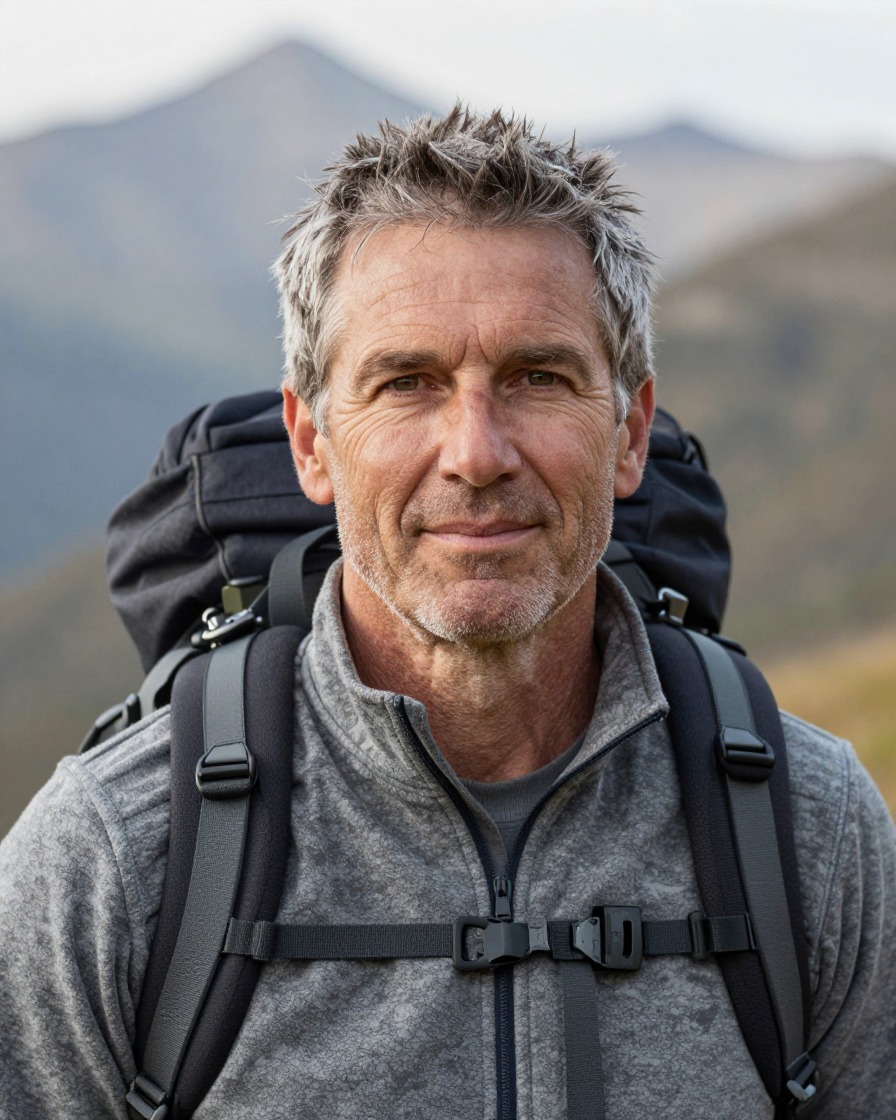
Teenagers are in between. Some already have an adult-sized back, and others are still growing fast. That is why the right pack depends on a tape measure, not on age or school grade. Measure from the bony bump at the base of the neck down to the top of the hip bones.
For a first overnight trip, lighter is better. A heavy pack turns an exciting trip into a slog and makes sore feet and blisters more likely. Think of it like a first long bike ride: you would start on an easy route, not the steepest hill in town.
Adults can help by carrying the heaviest shared things, like the tent or the stove, while the teen carries their own sleeping bag, clothes and snacks. As the teen gets stronger and more experienced, their share can grow.
Our Top 3 Picks
Quick Comparison
| Shell | Extras | Buy | ||||
|---|---|---|---|---|---|---|
| 1 | Spalding 50L Camping & Hiking Backpack for MenTop Overall Pick | 50 L | — | Nylon | — | View |
| 2 | Osprey Ace 38L Kids' Backpacking BackpackBest Value | 38 L | 3.0 lb | — | Rain cover | View |
| 3 | Deuter Fox 30 Kid's Backpack for Hiking and TrekkingBest Hydration Pack | — | 2.5 lb | 600D ripstop fabric | Hydration | View |
| 4 | Osprey Jet 18L Kid's Hiking BackpackBest Ultralight | 18 L | 18 oz | — | Hydration | View |
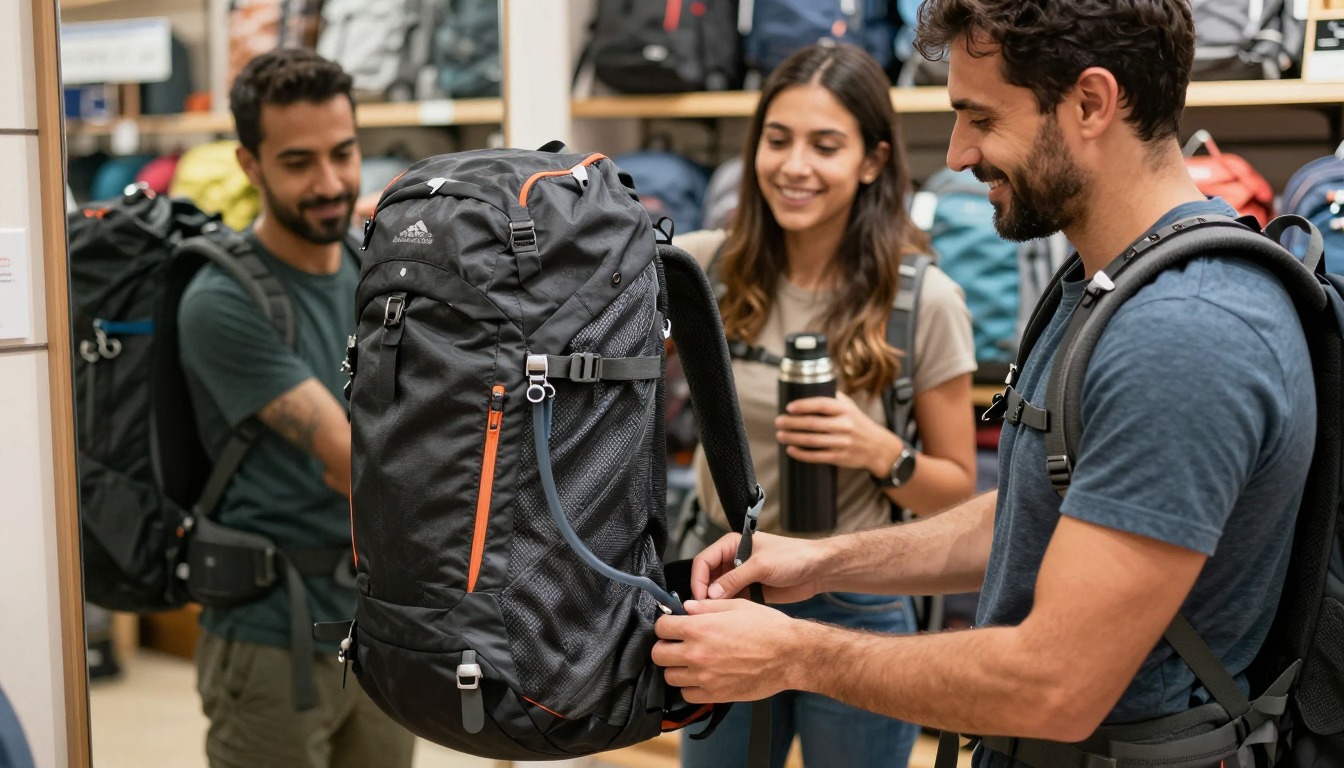
Choosing a backpack for a teenage hiker means deciding between a youth-specific pack and a genuine adult pack based on measured torso length and load capacity, not age or grade in school.
What size backpack does a teenage hiker need?
A teenage hiker's backpack size depends entirely on measured torso length and trip type: a teen doing day hikes needs roughly the same 15 to 25 liter daypack range as an adult, while a teen taking on overnight trips needs a pack sized to their torso in the 35 to 65 liter range depending on trip length. Teens grow quickly, so a pack with an adjustable-torso suspension is often worth the extra cost even at this age.
Should a teen use a youth pack or an adult pack?
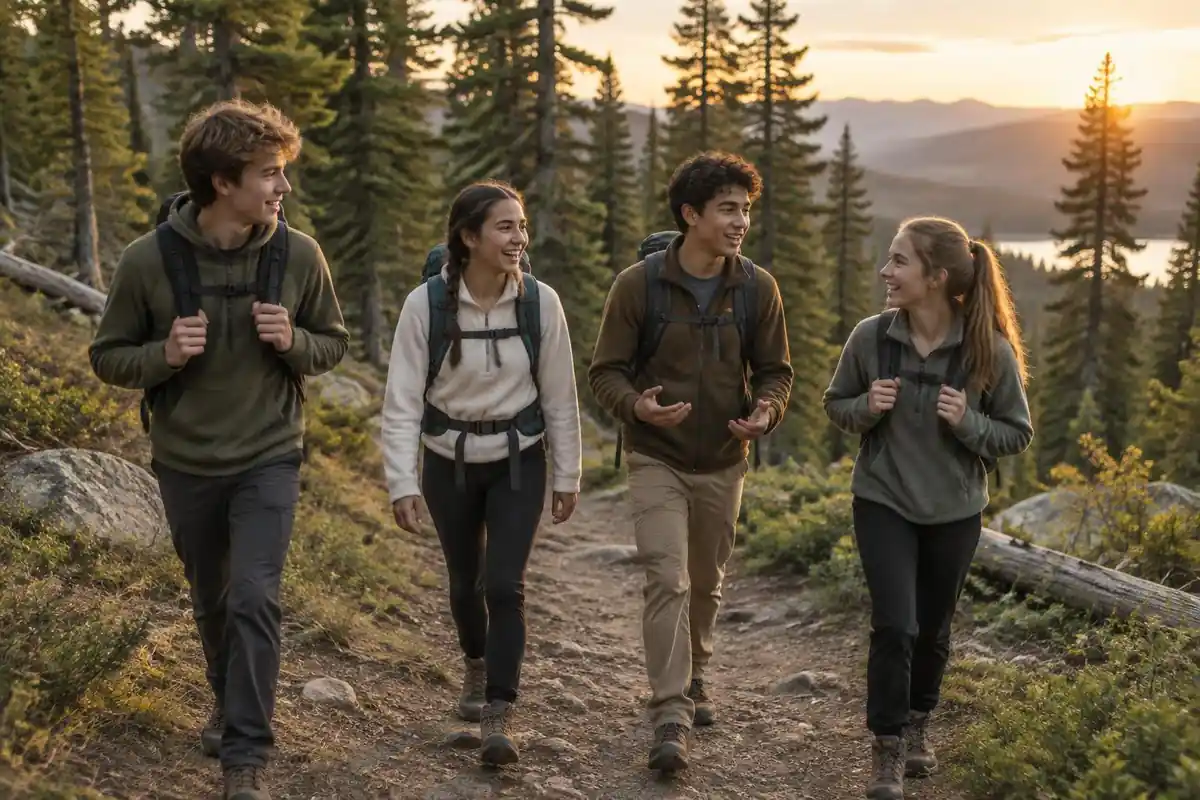
A teen whose torso length falls within a youth or junior pack's adjustment range is usually well served by that youth-specific pack, since it's built with a lighter frame and lower recommended load ceiling matched to a still-developing body. A teen whose torso length has reached the low end of adult sizing — commonly true for many mid-to-late teens — can move into a genuine adult pack, which opens up more capacity and feature options as their carrying capacity grows.
| Factor | Youth-specific pack | Adult pack |
|---|---|---|
| Torso range | Shorter, often with more adjustment | Standard adult range, less growth room |
| Frame weight | Lighter, built for lower loads | Heavier, built for higher loads |
| Load ceiling | Lower, matched to a developing body | Higher, matched to adult carrying capacity |
| Best for | Younger or smaller-framed teens | Taller or later-teen hikers near adult size |
How much weight can a teenager carry backpacking?
Load advice for teens is more conservative than for adults: Deuter, for example, advises that teens up to 16 carry no more than about 15 pounds (7 kg). The roughly 20%-of-bodyweight rule of thumb used for adult hikers is better treated as something to work toward than a starting point, especially for a first multi-day trip. A teen new to overnight backpacking is better served starting well below that and increasing gradually as fitness, technique and trip experience build, rather than loading a first pack to the adult maximum.
What features matter for a first overnight pack for a teen?
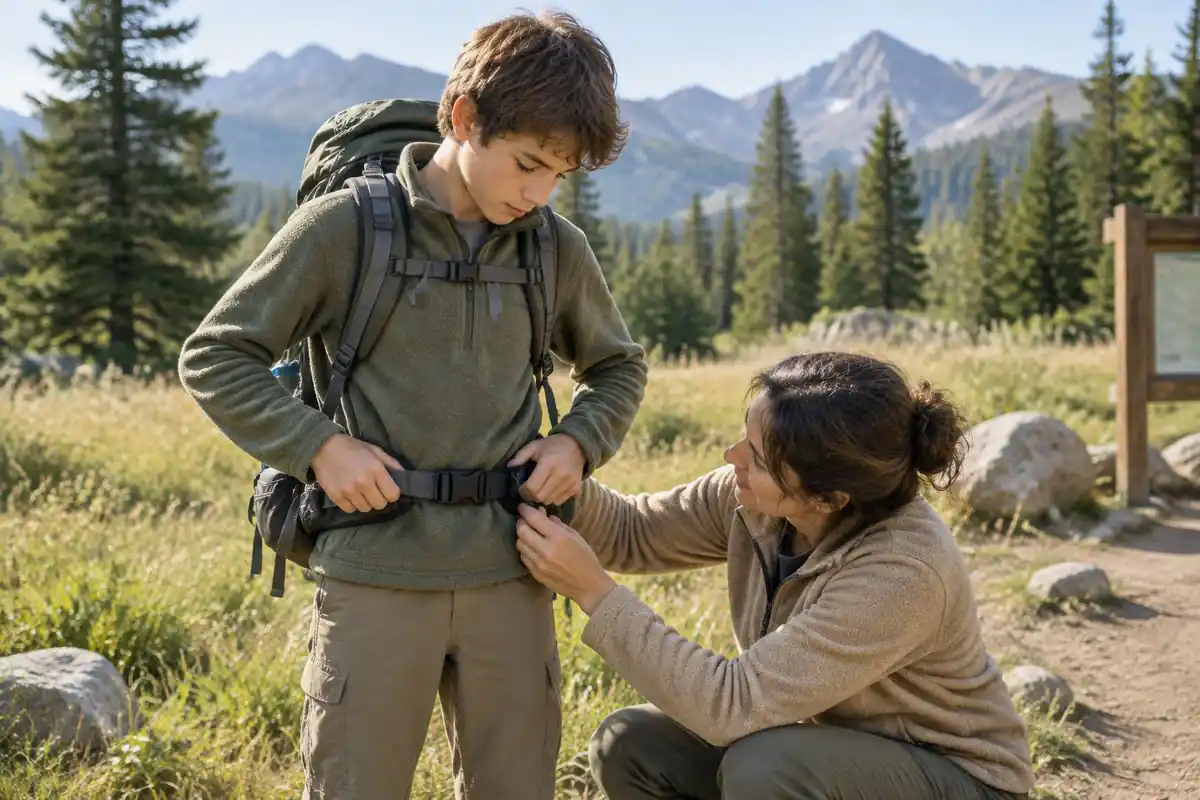
The features that matter most for a teen's first overnight pack are a correctly fitted hipbelt that carries, by a common rule of thumb, roughly 80% of the load, an adjustable torso length to accommodate continued growth, and a frame matched to the loads a multi-day trip actually requires rather than an oversized pack bought to "grow into." Ventilated back-panel construction also matters more for teens than young kids, since longer trip days and higher output mean more sweat and heat to manage.
- Hipbelt: structured and correctly sized, since it carries most of an overnight load's weight
- Torso adjustment: worth prioritizing given how much teens can grow between trips
- Frame type: matched to realistic trip loads, not oversized for hypothetical future capacity
- Back-panel ventilation: more relevant here than on lighter kids' daypacks, given longer trip days
How do you choose between youth-specific and full-size adult packs?
The honest way to choose is by measured torso length and typical trip load, checked against both a youth pack's adjustment range and an adult pack's minimum torso size, rather than by the teen's age or a parent's assumption about how much bigger they'll get. A teen who's near the top of a youth pack's range with no more growth expected is better served moving straight to an adult pack; a teen with a season or two of growth still likely ahead often gets more value from a youth pack's adjustable suspension and lighter, lower-load-ceiling frame.
Full Ranking, Reviewed

Best for Backpacks for Teenage Hikers
- 50 L capacity
- Nylon shell
- Smart Multi Compartment Storage System
- Waterproof build keeps contents dry through real weather
- Comfortable Design Made For Active Travel
- That 50 L volume is overkill for quick hikes and better suited to multi-night trips.
Verdict: This 50 L backpacking pack keeps things refreshingly simple, making it a strong choice for Backpacks for Teenage Hikers.
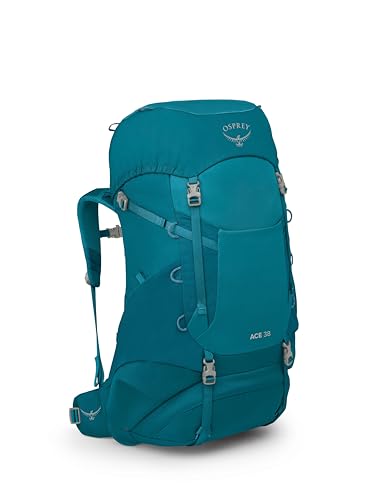
Best for Backpacks for Teenage Hikers
- 38 L capacity
- 3.0 lb empty
- Rain cover included
- Fit Adjustment for Growing Kids
- Airflow channels help your back stay cooler under load
- Includes a rain cover for sudden downpours
- The 38 L size is a versatile in-betweener rather than a specialist at either end.
Verdict: This 38 L hiking pack pairs a breathable back with a bundled rain cover, making it a strong option for Backpacks for Teenage Hikers.

Best for Backpacks for Teenage Hikers
- 600D ripstop fabric shell
- 2.5 lb empty
- Hydration-ready
- Designed for comfort
- Set up to carry a reservoir for hands-free sipping
- Airflow channels help your back stay cooler under load
- Check the size and colour options on the live listing, as availability shifts.
Verdict: This hiking pack pairs a breathable back with room for a bladder, making it well worth a look for Backpacks for Teenage Hikers.

Best for Backpacks for Teenage Hikers
- 18 L capacity
- 18 oz empty
- Hydration-ready
- Hydration Compatible
- Routes a hydration bladder and hose without fuss
- Breathable mesh back keeps air moving against your spine
- At 18 L it is best kept to shorter outings — it fills up once you add layers, lunch and water for a full day.
Verdict: This 18 L hydration pack pairs a breathable back with room for a bladder, making it an easy shortlist pick for Backpacks for Teenage Hikers.
Where the 15% and 20% figures come from
The page describes a start near 15% of body weight, building toward the roughly 20% guideline used for adults. The 20% figure is a hiking-community rule of thumb without a primary research source, and no published source was found for what 'many outdoor-education programs' recommend. The guidance that does exist for young people is more conservative.
The American Academy of Pediatrics advises that a child's backpack weigh no more than 15% of body weight.1 Deuter's guidance for young people uses kilograms instead and says teens up to 16 should carry no more than 7 kg, about 15.4 pounds.2 For a 120-pound teen, 15% is 18 pounds and 20% is 24 pounds, both above Deuter's figure. A 2022 research review says children should stay under 10% of body mass, while adults in hiking settings should stay under 40%.3
Most of this guidance comes from school-bag research rather than backpacking, so treat it as a caution light rather than an exact limit. Research on adult long-distance hikers found foot pressure rose clearly once packs passed about 10% of body weight,4 which supports keeping a first-trip load as light as the group can manage.
Fit a teen for today's torso, not next year's
Deuter says even adjustable packs should be chosen in the correct back length,5 which backs the page's advice against buying an oversized pack to grow into. Hyperlite notes that height is not a reliable proxy for torso length,6 and teens often grow in the legs before the torso, so measure rather than guess.
Fit the pack with some weight inside. Big Agnes recommends 10 to 20 pounds loaded,7 which is close to the teen's real trip load. Kelty cautions that a torso measurement is only a starting point for fit,8 so check that the belt sits on the hip bones and the shoulder straps wrap the shoulders without gaps.
The injuries a first trip is most likely to bring
A systematic review found blisters and ankle sprains are the most common hiking injuries, with blisters making up 8 to 33% of reported injuries, and the lower limb was the most injured body area in every study reviewed.9 Research on heavy load carriage links it to foot blisters, back strain and knee pain,10 so a lighter pack helps with the problems teens are most likely to face.
Dermatologists recommend nylon or moisture-wicking socks, properly fitted shoes, and stopping when skin becomes painful or red, before a blister forms.11 Teaching a teen to speak up about a hot spot early is as useful as any pack feature. If a blister shows signs of infection, such as redness, pus or swelling, see a doctor.11
Frequently Asked Questions
Can a teenager use an adult hiking backpack?
Yes, once their torso length reaches the adult pack's minimum sizing, which happens for many mid-to-late teens. Checking torso length rather than age is the reliable way to know, since adult packs are built with higher load ceilings that only suit a body ready to carry that weight.
How much backpacking weight is safe for a teenager on a first overnight trip?
A reasonable starting point is a light load well under the adult rule of thumb of roughly 20% of body weight (Deuter advises no more than about 15 pounds for teens up to 16), working up gradually as fitness and experience build. Pack fit and hipbelt sizing matter as much as the raw percentage for keeping the load comfortable.
Related Buying Guides
Planning a hiking trip? Compare hotels, lodges and guesthouses.
Book on Booking.com Book on AgodaAffiliate links: we may earn a commission at no extra cost to you.