
Best Mens Backpacking Backpack
Best Mens Backpacking Backpack, ranked from aggregated owner ratings and reviews, not first-hand testing. Real pros, cons, and who each pick is best for.
Our Top 3 Picks
Quick Comparison
| Product | Best for | Buy | |
|---|---|---|---|
| Osprey Rook 65L Men's Backpacking Backpack | Top Overall Pick | See Amazon | View |
| Osprey Atmos AG 65L Men's Backpacking Backpack | Best Value | See Amazon | View |
| Osprey Rook 50L Men's Backpacking Backpack | Most Breathable | See Amazon | View |
| Teton 75L Explorer Internal Frame Backpack for Hiking | Best Hydration Pack | See Amazon | View |
| Teton 55L Scout Internal Frame Backpack for Hiking | Best for Multi-Day | See Amazon | View |
| Loowoko 50L Hiking Backpack with Rain Cover for Both Men & Women | Best for Women | See Amazon | View |
Choosing a men's backpacking backpack starts with torso-length fit, then narrows by load-carrying capacity, frame type, and how much you're willing to trade comfort features for lighter base weight.
What makes a backpacking backpack a men's or unisex fit?
A men's or unisex backpacking pack uses a torso range that starts around 16 to 18 inches and runs to 20 inches or beyond, with shoulder straps set wider at the yoke and a straighter hipbelt curve than a women's-specific version of the same pack. Most backpacking brands build the frame and suspension identically across men's and women's versions and only change the harness geometry, so the underlying load-carrying performance is the same once torso length is correctly matched.
What frame type should men choose for backpacking?
The right frame type depends on typical pack weight: an internal frame with a rigid perimeter or twin stays suits loads over 30 pounds, while a lighter framesheet or removable stay suits loads under 25 pounds. Packs like the Osprey Atmos AG and Gregory Baltoro use a ventilated, rigid internal frame with a trampoline-style mesh back panel that holds the pack body off the back for airflow, which suits multi-day trips where load and comfort matter more than shaving ounces. Lighter framed packs, such as the Osprey Exos or Gregory Zulu line, use a simpler frame and closer-fitting back panel, trading some ventilation and max load capacity for a lower base weight — a fit for hikers who have already trimmed gear weight down toward a 20-pound total pack weight.
How much should a men's backpacking backpack hold?
Most three-season backpacking trips of two to five nights fit in a 55 to 65 liter pack, while thru-hikers and hikers using smaller, more compressible gear often run 45 to 55 liters. The 20%-of-bodyweight load guideline is the starting point for deciding: a hiker aiming to keep total pack weight near that threshold can usually fit gear and food for several days into the smaller end of the range, while a hiker carrying camera gear, a bear canister, or winter layers needs the larger end.
| Trip type | Typical capacity | What drives the size |
|---|---|---|
| Ultralight 2–4 night trip | 45–55L | Trimmed base weight, compressible gear |
| Standard 2–5 night trip | 55–65L | Full three-season kit, moderate food carry |
| Extended or winter trip | 65–75L+ | Bulkier insulation, bear canister, longer food carry |
Who suits an ultralight vs. a traditional framed pack?
A traditional framed pack, built with heavier-denier nylon and a rigid suspension, suits hikers still building their gear kit, carrying loads above 30 pounds, or prioritizing comfort and durability over pack weight. An ultralight framed pack — often built with lighter-denier fabric or Dyneema composite fabric (DCF), as seen on packs from Hyperlite Mountain Gear, Gossamer Gear, and ULA Equipment — suits hikers who have already dialed in a sub-20-pound base weight and don't need a heavy-duty hipbelt to carry it. The trade-off is real: ultralight packs generally have thinner hipbelt padding, less back-panel ventilation, and less structure for carrying an irregularly packed or heavier-than-planned load, so a hiker who hasn't yet cut base weight down often ends up less comfortable on an ultralight pack than on a traditional one, regardless of the weight saved on the pack itself.
Full Ranking, Reviewed

Best for Men's Backpacking backpacks
- 65 L capacity
- 3.7 lb empty
- Rain cover included
- Adjustable AirSpeed Suspension
- Ventilated back panel cuts sweat on long climbs
- Includes a rain cover for sudden downpours
- That 65 L volume is overkill for quick hikes and better suited to multi-night trips.
Verdict: This 65 L backpacking pack pairs a breathable back with a bundled rain cover, making it the one we would grab first for Men's Backpacking Backpacks.

Best for Men's Backpacking backpacks
- 65 L capacity
- 4.0 lb empty
- Rain cover included
- Floating top lid with lash points
- Packs an integrated rain cover to keep gear dry
- At 65 L it is more pack — and more weight — than a day hiker needs; it earns its keep on overnight and multi-day loads.
- Water-resistant shell handles showers, but a liner or cover is wise for all-day rain.
Verdict: This 65 L backpacking pack offers a bundled rain cover, making it well worth a look for Men's Backpacking Backpacks.

Best for Men's Backpacking backpacks
- 50 L capacity
- 3.6 lb empty
- Rain cover included
- Adjustable AirSpeed Suspension
- Ventilated back panel cuts sweat on long climbs
- Includes a rain cover for sudden downpours
- That 50 L volume is overkill for quick hikes and better suited to multi-night trips.
Verdict: This 50 L backpacking pack pairs a breathable back with a bundled rain cover, making it an easy shortlist pick for Men's Backpacking Backpacks.

Best for Men's Backpacking backpacks
- 65–85 L capacity
- 5.5 lb empty
- Rain cover included
- Teton tough
- Set up to carry a reservoir for hands-free sipping
- Ventilated back panel cuts sweat on long climbs
- That 65–85 L volume is overkill for quick hikes and better suited to multi-night trips.
- At 5.5 lb it is heavier than the lightest packs in its class before you load it.
Verdict: TETON Sports’s 65–85 L backpacking pack pairs a breathable back with room for a bladder, making it a strong option for Men's Backpacking Backpacks.
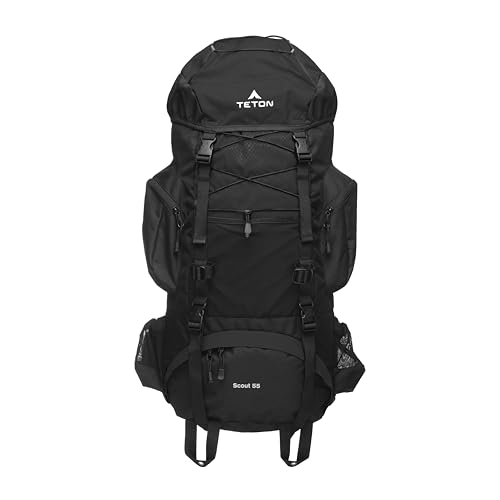
Best for Men's Backpacking backpacks
- 45–65 L capacity
- 4.1 lb empty
- Rain cover included
- Teton tough
- Set up to carry a reservoir for hands-free sipping
- Airflow channels help your back stay cooler under load
- That 45–65 L volume is overkill for quick hikes and better suited to multi-night trips.
Verdict: TETON Sports’s 45–65 L backpacking pack pairs a breathable back with room for a bladder, making it an easy shortlist pick for Men's Backpacking Backpacks.
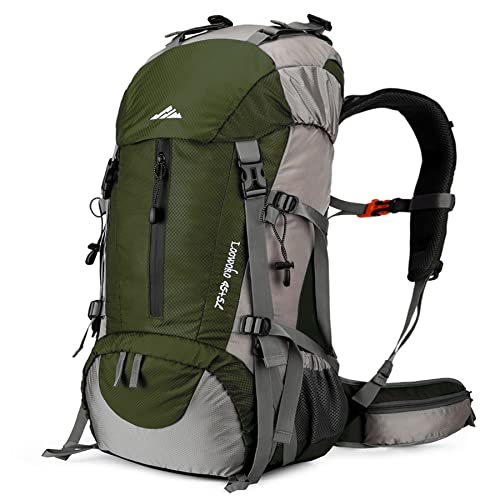
Best for Men's Backpacking backpacks
- 50 L capacity
- Nylon shell
- 2.4 lb empty
- Rain cover included
- Rain Cover Included
- Breathable mesh back keeps air moving against your spine
- Includes a rain cover for sudden downpours
- That 50 L volume is overkill for quick hikes and better suited to multi-night trips.
Verdict: This 50 L backpacking pack pairs a breathable back with a bundled rain cover, making it well worth a look for Men's Backpacking Backpacks.
Frequently Asked Questions
Is a men's backpacking backpack the same as a unisex one?
In most product lines, yes — 'men's' and 'unisex' describe the same harness geometry and frame, with the women's-specific version being the separate, distinct design. Check the torso-length range on the size chart rather than relying on the label alone.
How much weight can a men's backpacking backpack carry comfortably?
Most framed backpacking packs are rated to carry 30 to 50 pounds comfortably, with the hipbelt intended to carry roughly 80% of that load once correctly sized and tightened. Loads above a pack's rated range compress padding and reduce comfort even if the frame can technically hold the weight.