




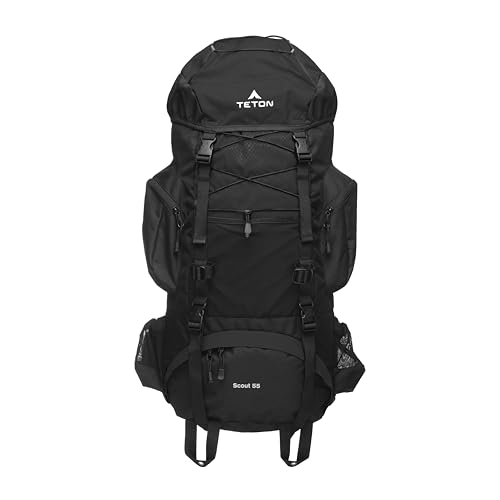
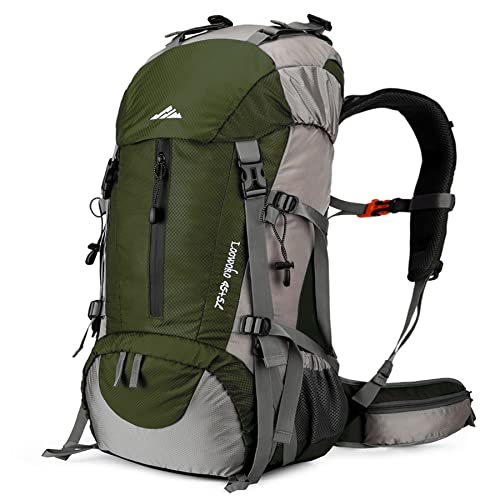
A hiking backpack pinches broad shoulders when the shoulder straps anchor too close together at the yoke, forcing the strap edges to dig into the outer shoulder or upper arm instead of sitting flat across the top of the shoulder. Widening the strap spacing, loosening the load lifters, or moving up to a pack built with a broader top-frame width usually resolves it.
Why do hiking backpack straps pinch broad shoulders?
Shoulder straps pinch when the anchor points on the pack body sit closer together than the wearer's shoulder width, which forces the strap to travel inward across the top of the shoulder before angling back out toward the arm. This creates a pressure point right where the strap crosses the outer shoulder, the same spot that takes the brunt of a loaded pack's weight on long descents. Pack frames built on a narrower unisex last transmit this problem more than frames designed with a wider yoke.
How do you know if a pack's shoulder straps are too narrow?
Straps that are too narrow show up as digging or chafing on the outside of the shoulder, straps that slide inward toward the neck as the hike goes on, or a visible gap between the strap and the collarbone when the pack is loaded. A hiker with this problem often reaches to pull the straps outward every few minutes, which is a reliable sign the harness is undersized for shoulder width rather than for torso length. Torso length and shoulder width are measured separately — a pack sized correctly by torso can still fit poorly across the shoulders, since most size charts only track the C7-vertebra-to-iliac-crest torso measurement and not shoulder breadth.
How do you adjust a backpack for broad shoulders?
Start by loosening the load-lifter straps, the short straps running from the top of the shoulder strap to the top of the frame, since over-tightened load lifters pull the whole harness inward and worsen pinching. Next check whether the sternum strap is set too low or too tight, since a low sternum strap also pulls the shoulder straps together across the chest. If the pack has adjustable strap spacing at the yoke — a feature on some framed packs but not most — widen it to the point where the straps sit flat without gapping or digging.
- Loosen load lifters to roughly a 45-degree angle rather than cinched flat
- Reposition the sternum strap slightly lower and looser if it currently pulls straps inward
- Check yoke spacing if the pack offers an adjustable harness width
- Re-measure after adjustment, since fixing one strap often changes how the others sit
Which packs run wide in the shoulders?
Framed packs built with a broader top-frame width and load lifters set at a wider angle off the shoulder generally run truer for broad-shouldered hikers than packs adapted from a narrower unisex or women's-specific last. Packs in the men's backpacking backpack category tend to offer this wider baseline more consistently than daypacks or ultralight frameless packs, since a stiffer frame gives the harness a wider anchor point to work from. A hiker who has tried adjusting load lifters and sternum strap position without success on a narrow-yoke pack is usually better served switching models than continuing to force the fit.
Does torso length affect shoulder fit too?
Torso length and shoulder width are independent measurements, but a mismatch in torso length can make a shoulder-pinching problem worse. If the harness sits too long for the torso, the shoulder straps ride down past the top of the shoulder before angling back up, adding a second pressure point on top of any yoke-width pinching. Correcting torso length first — using the C7-vertebra-to-iliac-crest method to confirm size — isolates whether a discomfort is a shoulder-width issue, a torso-length issue, or both stacked together. A hiker troubleshooting shoulder pain should re-check torso fit before assuming the yoke alone is the cause, since fixing torso length sometimes resolves what looked like a shoulder-width problem.
When trying on a pack matters more than the spec sheet
Shoulder-strap spacing isn't a number most brands publish, which makes trying a pack on — loaded to a realistic weight, not empty — the most reliable way to catch a poor fit before buying. An empty pack rarely reveals pinching, since the straps only pull inward once the frame is under load and the shoulders are bearing weight. Hikers buying online without a fitting should prioritize brands with a known reputation for wider harnesses, keep the return window in mind, and load the pack with roughly the weight of a real trip before judging fit rather than testing it empty around a living room.