
Best Mid-Range Value Hiking Backpack
Best Mid-Range Value Hiking Backpack, ranked from aggregated owner ratings and reviews, not first-hand testing. Real pros, cons, and who each pick is best for.

Affiliate disclosure: this page contains affiliate links. Purchases made through them may earn us a commission at no extra cost to you. See our affiliate disclosure.
In plain English
Spending more on a pack mostly buys better fit and comfort, not a safer pack. The biggest upgrade is usually an adjustable back, which lets you slide the shoulder straps up or down to match the length of your back, a bit like adjusting a car seat.
The second upgrade is airflow. Many packs at this level hold the bag a little away from your back with a stretched mesh panel, so your shirt stays drier on warm climbs.
Neither feature helps if the pack is the wrong size to begin with. Measure your back from the bump at the base of your neck to the top of your hip bones, check it against the pack's range, and try it with some weight inside. Then compare what the company will do if the pack tears or breaks.

Our Top 3 Picks
Quick Comparison
| Shell | Extras | Buy | ||||
|---|---|---|---|---|---|---|
| 1 | MIYCOO Ultralight Packable BackpackTop Overall Pick | 35 L | 13 oz | — | — | View |
| 2 | Osprey Talon 22L Men's Lightweight Hiking BackpackBest Value | 22 L | 2.4 lb | — | Hydration | View |
| 3 | Maelstrom 40L Hiking BackpackBest Ultralight | 40 L | 2.2 lb | 210D ripstop nylon | Rain cover | View |
| 4 | FENGDONG 40L Waterproof Lightweight Outdoor Daypack HikingBest for Women | 40 L | 25 oz | Polyester | Vented back | View |
A mid-range value budget opens up meaningfully more than an entry-level pack: real adjustable-torso suspensions, better ventilation, and 50–65 liter packs built with a genuine multi-day frame rather than a scaled-up daypack shell.
What changes at the mid-range value tier?
Packs at this tier commonly add dial-adjustable or ladder-lock torso sizing instead of fixed S/M/L, a ventilated back panel instead of flat foam, and a more structured, load-adjustable hipbelt. These upgrades directly affect fit precision and comfort over long days, which is why this tier tends to be where hikers stop compromising on suspension quality.
Is the mid-range enough for a full multi-day backpacking pack?
Yes — this tier covers a full-featured 50–65 liter backpacking pack from established outdoor brands, including an adjustable suspension, structured hipbelt, and ventilated or channeled back panel. It sits above pure entry-level budget packs but below premium ultralight brands, making it a realistic choice for a hiker's primary backpacking pack rather than a compromise purchase.
| Tier | Suspension | Back panel | Typical use |
|---|---|---|---|
| Entry level | Fixed torso sizing | Flat foam | Daypacks and small overnight packs |
| Value | Often adjustable | Lightly ventilated | Overnight to multi-day packs |
| Mid-range | Fully adjustable | Trampoline mesh | Overnight to extended-trip packs |
| Premium | Fully adjustable, load-specific | Trampoline mesh or minimalist | Full range, ultralight options |
What should I compare between two mid-range packs?
Compare torso-adjustment range (does it fit your measured torso, or only the middle of a size chart), hipbelt padding and shape, back-panel ventilation style, and empty pack weight, since two packs in the same tier can differ by a pound or more depending on fabric choice. Reading the frame type — single stay, dual stay, or perimeter frame — also tells you how the pack will handle heavier loads over multiple days.
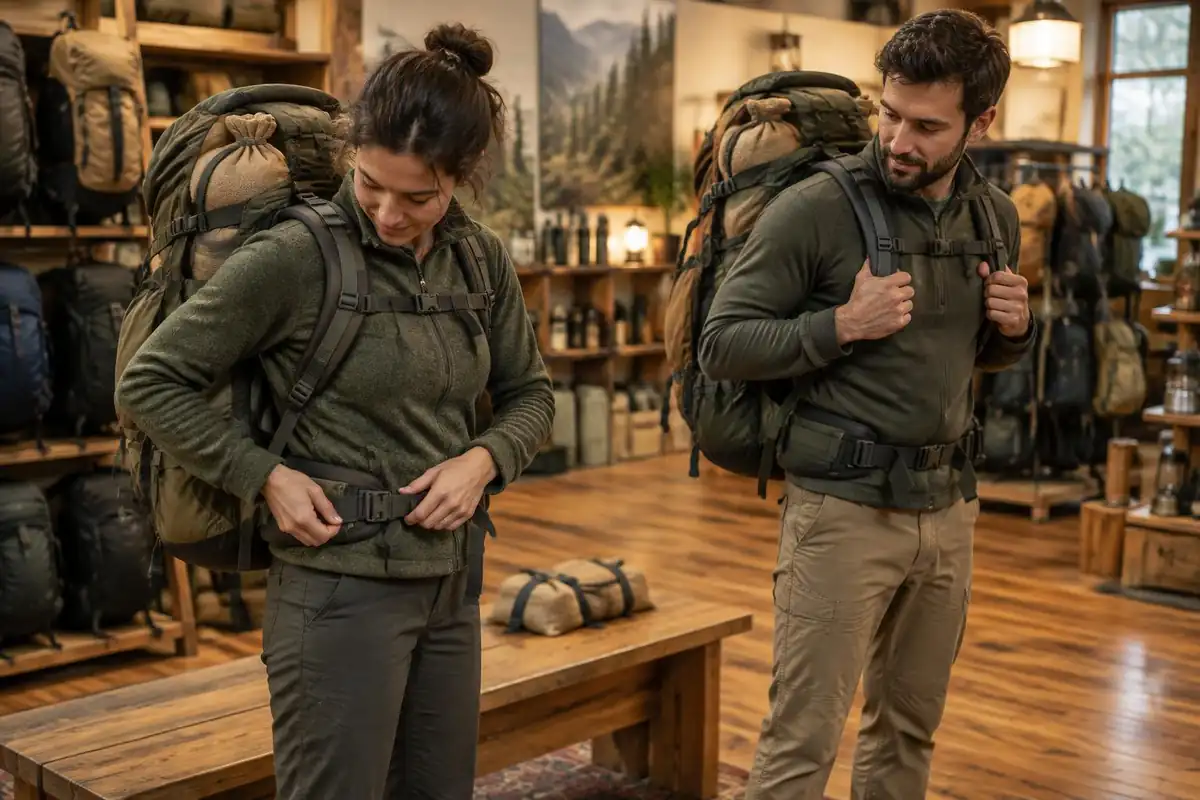
- Torso adjustment range: confirm your measured torso length (C7 to iliac crest) falls within the pack's adjustable range, not just its labeled size
- Hipbelt design: look for molded, contoured padding rather than a flat strap at this level
- Back-panel style: trampoline mesh ventilates best but sits the pack slightly further from your back, changing balance on technical terrain
- Empty weight: compare pack weight for the same liter capacity — a pound difference is common between two packs in the same tier
Is it worth waiting to save for a mid-range pack over an entry-level one?
It's worth the extra spend if you'll hike frequently, carry multi-day loads regularly, or need an adjustable suspension because your torso length falls outside standard fixed sizing — the adjustability and ventilation gains compound over many trips. For occasional day hikers or a first pack bought to test whether backpacking is a regular hobby, an entry-level pack often does the job just as well, with the mid-range upgrade better timed for a second pack once hiking frequency is established.
Which types of hikers get the most value at this tier?
Hikers who backpack multiple times a season, who need adjustable torso sizing because they don't fit a standard fixed size, or who hike in hot climates where back-panel ventilation matters most get the clearest value jump at this tier. Hikers who mainly day hike, or who backpack only occasionally, often find the gap between an entry-level and a mid-range pack less noticeable in practice than the gap between a mid-range pack and a premium ultralight one.
Hikers unsure whether they need this level of adjustability should check how to measure torso length and compare it against a pack's stated size range before spending the extra money, since a well-fitted budget pack can outperform a poorly fitted mid-range one regardless of feature list.
Full Ranking, Reviewed

Best for Mid-Range Value Hiking Backpacks
- 35 L capacity
- 13 oz empty
- Waterproof & Durability
- Light enough that you forget you are wearing it
- Packable build stows into its own pocket for travel
- Colours and exact capacity options change often on Amazon — confirm the current variant on the listing before buying.
Verdict: This 35 L hiking pack offers a packable build, making it our overall pick for Mid-Range Value Hiking Backpacks.

Best for Mid-Range Value Hiking Backpacks
- 22 L capacity
- 2.4 lb empty
- Hydration-ready
- Lightweight & versatile design
- Hydration sleeve keeps water within easy reach
- Breathable mesh back keeps air moving against your spine
- Colours and exact capacity options change often on Amazon — confirm the current variant on the listing before buying.
Verdict: This 22 L daypack pairs a breathable back with room for a bladder, making it well worth a look for Mid-Range Value Hiking Backpacks.

Best for Mid-Range Value Hiking Backpacks
- 40 L capacity
- 210D ripstop nylon shell
- 2.2 lb empty
- Rain cover included
- Ergonomic and Comfortable Design
- Hydration sleeve keeps water within easy reach
- Includes a rain cover for sudden downpours
- The 40 L size is a versatile in-betweener rather than a specialist at either end.
Verdict: This 40 L hiking pack pairs room for a bladder with a bundled rain cover, making it an easy shortlist pick for Mid-Range Value Hiking Backpacks.

Best for Mid-Range Value Hiking Backpacks
- 40 L capacity
- Polyester shell
- 25 oz empty
- Ventilated back panel
- Water Resistant & DURABLE
- Airflow channels help your back stay cooler under load
- Low carry weight pays off on big-mileage days
- The 40 L size is a versatile in-betweener rather than a specialist at either end.
Verdict: This 40 L hiking pack offers a breathable back, making it well worth a look for Mid-Range Value Hiking Backpacks.
What adjustable suspensions do and don't fix
The page says packs near this price often add adjustable torso sizing. That widens the fit window but does not remove the need to measure. Deuter advises that even adjustable packs should be chosen in the correct back length,1 and Kelty notes that a torso measurement is only a starting point for fit.2 Mystery Ranch describes adjusting its telescoping yoke until the shoulder-strap seam aligns with the top of the shoulder blade,3 which is a practical check you can use on other adjustable packs too.
Adjustment range covers length, not shape. ULA offers J-straps for flat or square shoulders and S-straps for standard or sloping shoulders.4 Hip belts are sized separately as well: ULA sizes men's belts at pant waist size plus 2 inches.4 When comparing two packs near this price, check which one offers the strap and belt shapes your body needs, not just the widest torso range.
Ventilated backs: comfort gain and balance cost
Suspended-mesh back panels hold the packbag a few inches off your back to reduce sweat.5 Deuter, which says it introduced its suspended-mesh Aircomfort system in 1984, describes it as a gap between mesh and back held by a flexible spring steel frame.6,7 On hot days the gain is real: the CDC notes sweat rates can reach 1 liter per hour.8
The cost is distance. A military review found that keeping a load's center of mass as close as possible to the body's gives the lowest energy cost,9 and the US Army's manual says packing heavier items higher and closer to the body can cut marching energy cost by as much as 25% versus low, away-from-body placement.10 A few inches of mesh gap is far smaller than that comparison, but it is why many hikers who scramble choose a close-fitting back even in summer.
Value beyond the sticker: warranties and materials
Two packs at a similar price can carry very different support. Osprey says it will repair or replace a bag for any damage at no cost, regardless of when it was made.11 Gregory guarantees against defects in workmanship and materials for as long as you own the pack, but excludes normal wear and tear.12 Deuter gives a two-year warranty plus a lifetime repair service where repair is possible.13 REI members get one year for replacements or refunds under its satisfaction guarantee, with exclusions.14
Materials are also shifting. California's law lists backpacks as textile articles and, since January 1, 2025, bars new ones containing regulated PFAS from being made or sold there.15 Many water-repellent finishes are now labeled PFAS-free as a result, so the label is becoming less of a premium feature and more of a baseline.
Frequently Asked Questions
Is a mid-range pack worth it for a primary hiking backpack?
Often, yes — the mid-range value tier typically gets you a full-featured 50–65 liter backpacking pack with an adjustable suspension and ventilated back panel. Premium ultralight packs sit above this tier, which makes it a practical choice for a primary backpacking pack.
What's the difference between an entry-level and a mid-range hiking backpack?
The mid-range pack typically adds an adjustable torso suspension instead of fixed sizing, a ventilated back panel instead of flat foam, and a more structured hipbelt. Both tiers can carry the same load safely; the mid-range pack fits more precisely and stays cooler over long days.
Related Buying Guides
Planning a hiking trip? Compare hotels, lodges and guesthouses.
Book on Booking.com Book on AgodaAffiliate links: we may earn a commission at no extra cost to you.