
Best Hiking Backpack For Tall Torso
Best Hiking Backpack For Tall Torso, ranked from aggregated owner ratings and reviews, not first-hand testing. Real pros, cons, and who each pick is best for.
Affiliate disclosure: this page contains affiliate links. Purchases made through them may earn us a commission at no extra cost to you. See our affiliate disclosure.
In plain English
Tall people often assume they need the biggest pack. They do not. They need a pack whose back is long enough, which is a different thing from how much it holds. A tall hiker on day hikes still wants a small pack, just with a longer frame.
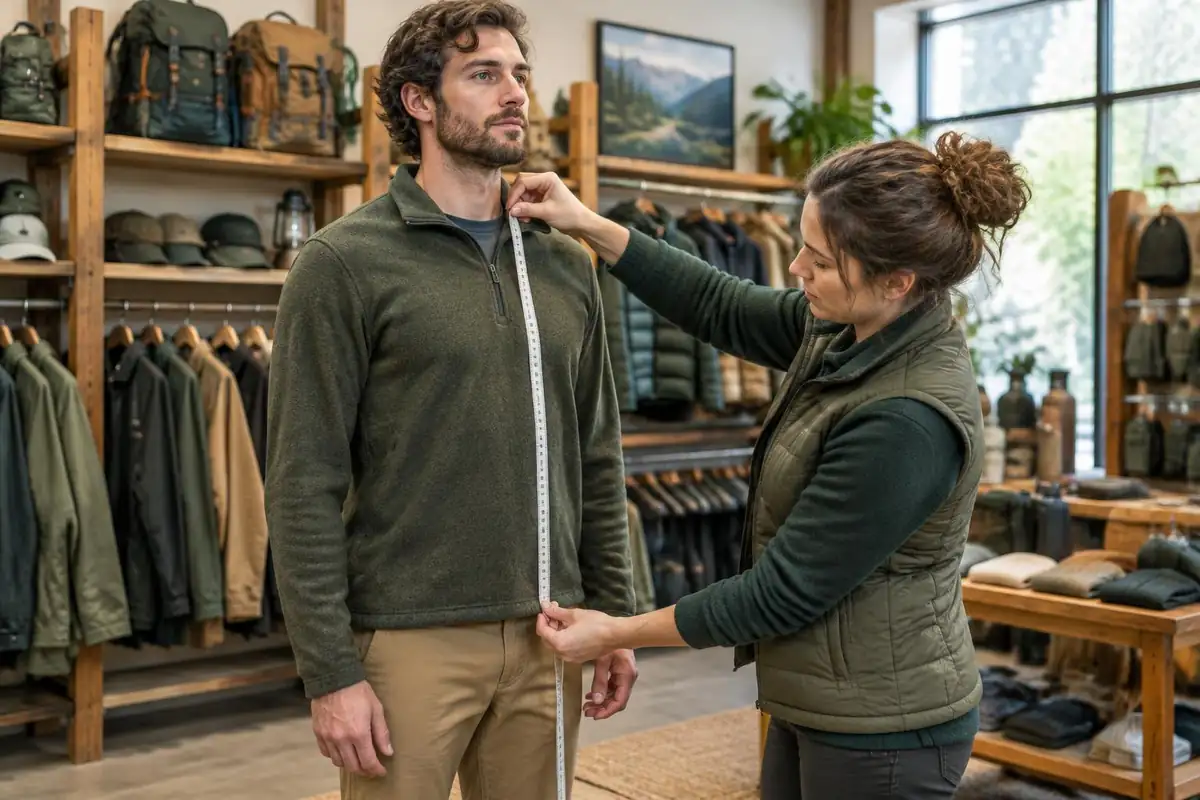
The measurement that matters is torso length: from the bump at the base of your neck down to the top of your hip bones. Two people who are both six feet tall can have quite different torsos, because some people are long in the legs and others long in the body.
Once you know your number, check it against each company's size chart. Charts are not the same across brands, so a Large from one maker may fit you and a Large from another may be too short.
Our Top 3 Picks
Quick Comparison
| Shell | Extras | Buy | ||||
|---|---|---|---|---|---|---|
| 1 | Teton 65L Explorer Internal Frame Backpack for HikingTop Overall Pick | 65–85 L | 5.0 lb | — | Rain cover | View |
| 2 | Teton 55L Scout Internal Frame Backpack for HikingBest Value | 45–65 L | 4.1 lb | — | Rain cover | View |
| 3 | Teton 75L Explorer Internal Frame Backpack for HikingBest Hydration Pack | 65–85 L | 5.5 lb | — | Rain cover | View |
| 4 | Teton 65L Scout Internal Frame Backpack for HikingBest for Multi-Day | 45–65 L | 4.5 lb | — | Rain cover | View |
What torso length range should you shop?
Shop by your measured torso length, generally 19.5 inches and above for a Large size, rather than by height or shoe size. Measuring from the C7 vertebra to the iliac crest with a helper and a flexible tape gives the number every backpack size chart is built around, and it's the only reliable predictor of fit.
Which size do you need: Large or Extra-Large?
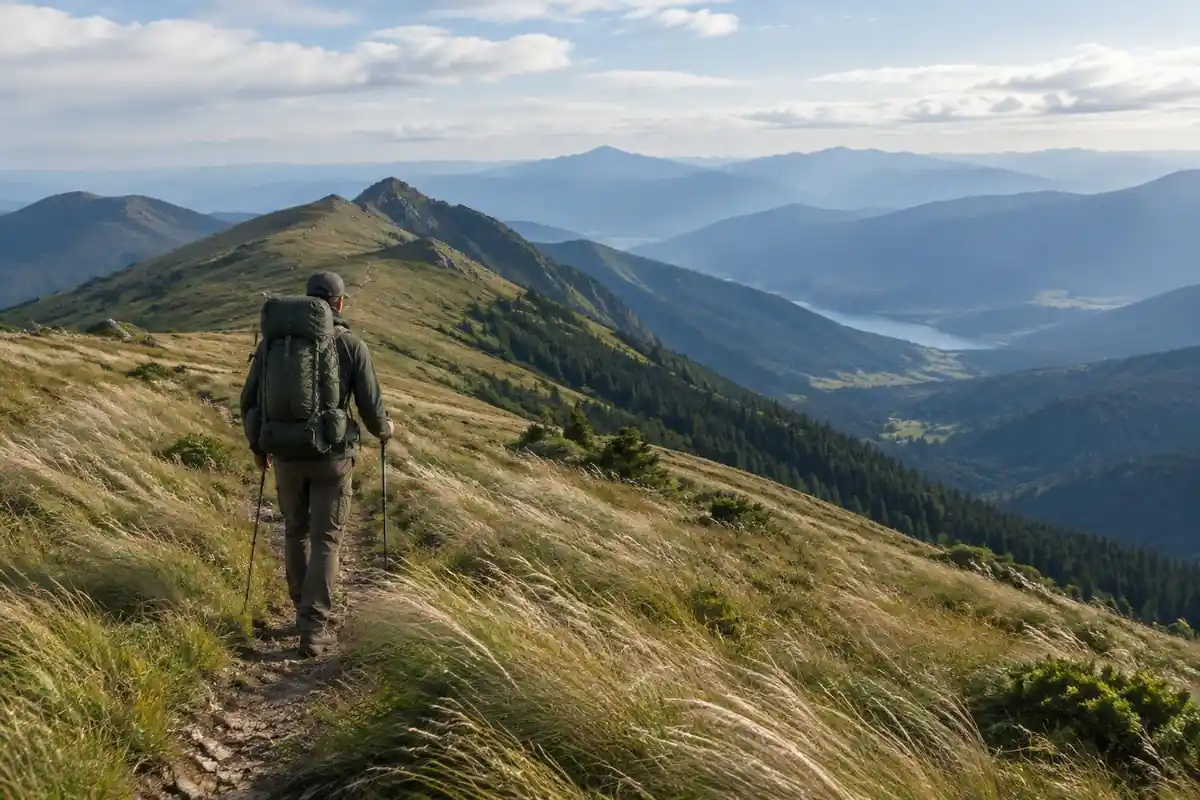
Most hikers in the long-torso range fit a standard Large size, since mainstream Large sizing typically covers torso lengths up to roughly 21 to 22 inches. Hikers measuring beyond that upper limit, or falling between a brand's Large and an unavailable Extra-Large, need either a brand that offers an Extra-Large option or a cottage manufacturer that builds to an exact measurement.
Adjustable or fixed frame for a long torso?
An adjustable harness, using a hook-and-loop or ladder-lock system, corrects roughly 3 inches of uncertainty within a size band and suits hikers unsure of their exact measurement or whose torso length shifts slightly. A fixed frame, common on ultralight and ultralight-adjacent packs, removes that adjustment hardware and its weight but requires ordering the correct length up front.
Consider these factors when choosing between them:
- Confidence in your measurement. A hiker who has measured carefully and confirmed the number across more than one fit check can commit to a fixed frame.
- Weight priorities. Fixed frames save a small amount of weight by removing sliding hardware, which matters more on long-mileage or multi-day trips.
- Household sharing. An adjustable harness lets a pack fit more than one person, useful if a pack is shared between hikers with different torso lengths.
What hip belt and shoulder harness details matter?
A hip belt that centers on the iliac crest and wraps the hip bones, not the waist, matters most, since it carries the majority of a loaded pack's weight and needs the correct torso length to sit in the right place. Shoulder straps should meet the frame close to the base of the neck with no visible gap, and load-lifter straps should run at roughly a 45-degree angle once the pack is loaded and worn.
How much should a long-torso pack weigh?
Empty pack weight for a Large-frame multi-day backpack generally runs higher than a Small or Medium version of the same model, since a longer frame and more suspension material add material weight. A tall hiker comparing two packs by spec sheet alone should expect the Large size to weigh several ounces more than the same pack's Medium listing, and should compare weights within the correct size rather than across sizes.
Who should consider a custom-built frame?
Hikers whose measured torso length falls outside the range any stock size chart covers, generally beyond a brand's largest Large or Extra-Large listing, are the clearest candidates for a cottage manufacturer that builds a frame to an exact measurement. Brands such as ULA Equipment take a hiker's specific torso number rather than assigning a size band, which removes the guesswork a stock size chart introduces for a hiker at the far end of the range.
How does capacity choice change for a tall hiker?
Torso length and pack capacity are independent decisions: a tall hiker with a long torso still chooses capacity based on trip length and gear volume, not body size. A long-torso frame is available across day-hike, multi-day, and expedition capacities, so sizing the frame correctly first, then choosing a liter range that matches the trip, keeps the two decisions from getting mixed together.
Full Ranking, Reviewed
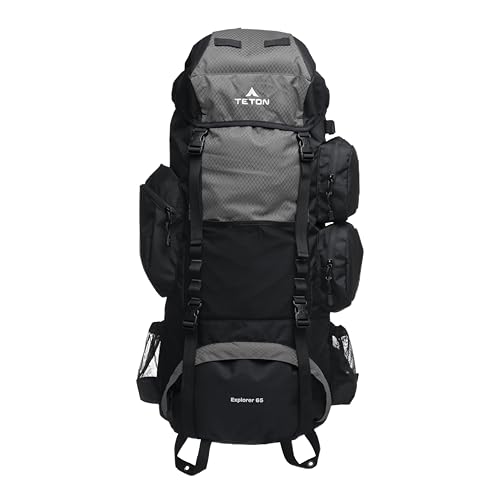
Best for Backpacks for Tall & Long Torsos
- 65–85 L capacity
- 5.0 lb empty
- Rain cover included
- Teton tough
- Set up to carry a reservoir for hands-free sipping
- Airflow channels help your back stay cooler under load
- At 65–85 L it is more pack — and more weight — than a day hiker needs; it earns its keep on overnight and multi-day loads.
- Empty weight (5.0 lb) runs above ultralight rivals.
Verdict: TETON Sports’s 65–85 L backpacking pack pairs a breathable back with room for a bladder, making it our overall pick for Backpacks for Tall & Long Torsos.

Best for Backpacks for Tall & Long Torsos
- 45–65 L capacity
- 4.1 lb empty
- Rain cover included
- Teton tough
- Set up to carry a reservoir for hands-free sipping
- Ventilated back panel cuts sweat on long climbs
- That 45–65 L volume is overkill for quick hikes and better suited to multi-night trips.
Verdict: TETON Sports’s 45–65 L backpacking pack pairs a breathable back with room for a bladder, making it a strong option for Backpacks for Tall & Long Torsos.

Best for Backpacks for Tall & Long Torsos
- 65–85 L capacity
- 5.5 lb empty
- Rain cover included
- Teton tough
- Hydration sleeve keeps water within easy reach
- Ventilated back panel cuts sweat on long climbs
- That 65–85 L volume is overkill for quick hikes and better suited to multi-night trips.
- At 5.5 lb it is heavier than the lightest packs in its class before you load it.
Verdict: TETON Sports’s 65–85 L backpacking pack pairs a breathable back with room for a bladder, making it an easy shortlist pick for Backpacks for Tall & Long Torsos.

Best for Backpacks for Tall & Long Torsos
- 45–65 L capacity
- 4.5 lb empty
- Rain cover included
- Teton tough
- Set up to carry a reservoir for hands-free sipping
- Ventilated back panel cuts sweat on long climbs
- That 45–65 L volume is overkill for quick hikes and better suited to multi-night trips.
- At 4.5 lb it is heavier than the lightest packs in its class before you load it.
Verdict: TETON Sports’s 45–65 L backpacking pack pairs a breathable back with room for a bladder, making it a strong option for Backpacks for Tall & Long Torsos.
Size charts disagree: what the published numbers show
The page uses 19.5 inches as a general starting point for Large and says mainstream Large sizes reach roughly 21 to 22 inches. Treat those as rough conventions. Published charts differ. Granite Gear's Long size covers torsos from 21 to 24 inches, with Regular at 18 to 21.1 Deuter's EL fit targets a back length of about 50 cm, or roughly 19.7 inches, against about 46 cm for its regular fit.2 So one brand's longest size can begin where another's ends.
Measurement methods differ too. Most makers measure from the C7 vertebra to the iliac crest,3 but Mystery Ranch measures from C7 down to a point just behind the belly button.4 A number taken for one system should not be dropped into the other's chart. And Hyperlite notes that height is not a reliable proxy for torso length,5 which is why tall hikers who guess from height alone often end up in the wrong size.
Measuring a long torso accurately
Small errors matter more when you are near the top of a size range. Gregory's method is to tilt your head forward and feel for the prominent bump where neck meets shoulders (C7), then place your hands on your hips and slide up to the top ridge of the hip bone.6 Granite Gear describes the bottom point as where your thumbs point across your back with hands on hips.1 Have a helper run a soft tape along the curve of the spine between those points, and measure twice.
Kelty notes that the measurement is only a starting point for fit.7 If you land within half an inch of a size boundary, try both sizes loaded if you can, or pick a pack with an adjustable harness that spans your number with room either side.
Load lifters and harness geometry on a long frame
The page says load lifters should run at roughly 45 degrees. Sources give a range. Big Agnes says 45 degrees,8 Deuter says they work best between 30 and 45 degrees,9 and Alpkit gives 25 to 45 degrees from horizontal.10 On a frame that is too short for your torso, the lifters end up nearly flat or even pull downward, which is one of the easiest visual signs that the size is wrong.
Shoulder strap height tells a similar story. Gossamer Gear notes that straps set too high pinch the neck, and straps set too low reduce weight transfer to the hip belt.11 The same source says the top third of the hip belt should rest on the iliac crest.11 For a tall hiker, a belt that sits on the waist instead of the hip bones usually means the frame is too short, not that the belt needs tightening.
Frequently Asked Questions
What size backpack fits a tall person?
The correct backpack size for a tall person depends on measured torso length, not height. A torso length of 19.5 inches or more generally calls for a Large size, though hikers should measure directly rather than assuming height alone determines the right frame size.
Do tall hikers need a bigger capacity backpack?
Not necessarily. Torso length determines frame size, while capacity depends on trip length and gear volume, which are independent of a hiker's height or torso length. A tall hiker doing day hikes still needs a smaller-capacity pack than one planning multi-day trips, regardless of frame size.
Related Buying Guides
Planning a hiking trip? Compare hotels, lodges and guesthouses.
Book on Booking.com Book on AgodaAffiliate links: we may earn a commission at no extra cost to you.