

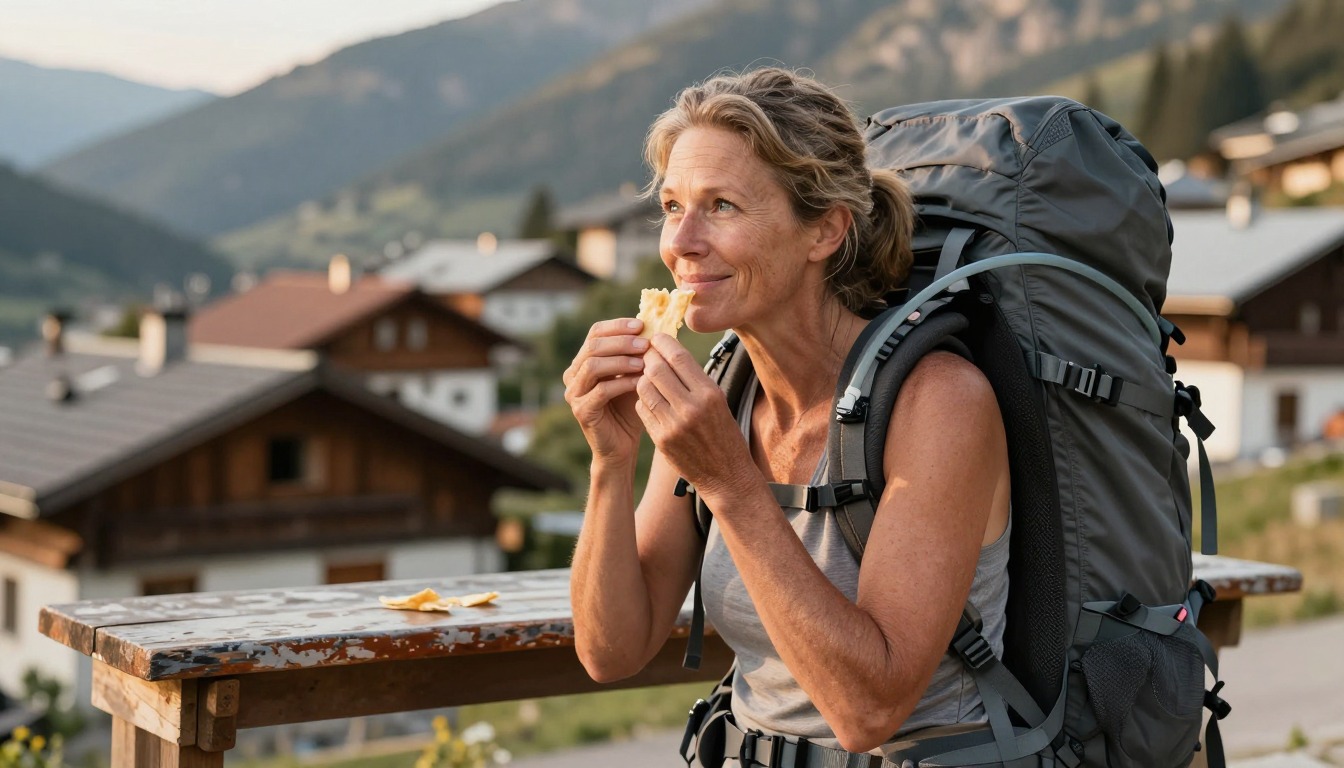
Pack a backpack for backpacking the same way you'd pack for a day hike, but scaled up: sleeping bag and camp clothes at the bottom, food, cook system, water, and shelter pressed against your back in the core, and daily-use items — rain gear, snacks, navigation tools — in the top lid. Multi-day trips add food volume, fuel, and shelter weight, which makes correct zone placement matter even more.
How do you pack a backpack for a multi-day backpacking trip?
Start with the same three zones used on any trip, then account for the extra bulk multi-day gear brings. The sleeping bag still anchors the bottom zone, but multi-day trips often add a sleeping pad, either compressed inside or strapped externally, plus extra insulating layers for changing weather across several days.
The core zone carries more weight on a multi-day trip than on a day hike: multiple days of food, a full-size cook system, fuel canister, and either a bear canister or food-storage bag all need to sit close to the spine. A tent body or shared tent components round out the core, while poles and stakes can pack alongside or move to external straps depending on available space.
How does packing change as food weight goes down each day?
Food is typically the single heaviest item in a multi-day pack on day one and gets lighter as you eat through it, which shifts the pack's overall weight distribution over the course of a trip. Keep the food bag or bear canister in the same central, spine-adjacent spot regardless of how full it is; consistency in placement matters more than the exact weight on any given day.
Some backpackers repack more loosely as food weight drops, using the freed-up core space to consolidate gear that started the trip in the top lid or external straps. This isn't required, but it keeps the pack from feeling unbalanced once several pounds of food have been eaten.
Where should a bear canister or food bag go on a multi-day trip?
A bear canister or food storage bag belongs in the core zone, close to the back panel, following the same where should heavy items go rule that governs every dense item in the pack. Its size and rigid shape, if it's a canister, often dictate where it fits best — many hikers pack it horizontally at the bottom of the core zone or vertically along the spine, depending on the pack's internal shape.
Because a full canister or food bag is one of the heaviest single items on a multi-day trip, keeping it centered and low-to-mid in the core zone does more for balance than any other single packing decision on a backcountry trip.
What's a full backcountry packing order for a multi-day trip?
A multi-day pack generally fills in this order, grouped by category rather than single items:
- Sleep system — sleeping bag, sleeping pad (bottom zone)
- Shelter — tent body, poles if not external (core zone)
- Kitchen and food — stove, fuel, cook pot, food bag or bear canister (core zone, centered)
- Clothing layers — insulation and spares not currently worn (bottom or core, filling gaps)
- Navigation and safety — map, first aid kit, headlamp, repair kit (top lid)
- Water treatment and daily-use items — filter, snacks, rain shell (top lid or hipbelt pockets)
- External gear — trekking poles, sleeping pad if not internal, wet gear (outside straps and loops)
How do you repack efficiently at camp each morning?
Repacking efficiently on a multi-day trip comes down to using the same zone order every morning rather than stuffing gear back in wherever it fits. Breaking camp in a consistent sequence — sleep system first, then shelter and kitchen, then daily-use items last — builds a routine that gets faster with each repeat and reduces the chance of leaving something loose or unbalanced before you start walking.