
Hiking Backpack Hub: Honest buying guides, sizing help & how-tos
In-Depth Guide Researched & Fact-Checked

Osprey Talon 22 Review

An Osprey Talon 22 review covering its ventilated foam back panel, torso fit, capacity, and everyday-carry features for day hiking and fastpacking.

Affiliate disclosure: this page contains affiliate links. Purchases made through them may earn us a commission at no extra cost to you. See our affiliate disclosure.

In plain English

The Talon 22 is a small backpack for a day on the trail. The 22 means it holds about 22 liters, roughly the size of a school backpack. That is room for water, snacks, a warm layer, a rain jacket and a few safety items.

Instead of a stretchy mesh panel, its back is a shaped foam pad with grooves cut into it so some air can pass through. It sits snugly against you, a bit like a well-fitted jacket instead of a loose coat. That snug fit keeps the pack from swinging when you move quickly or climb over rocks.

Because it is small, packing smart matters. Heavy items like water go close to your back, and light things go on the outside. If you want to camp overnight, you will usually need a bigger pack unless your sleeping gear is very small.

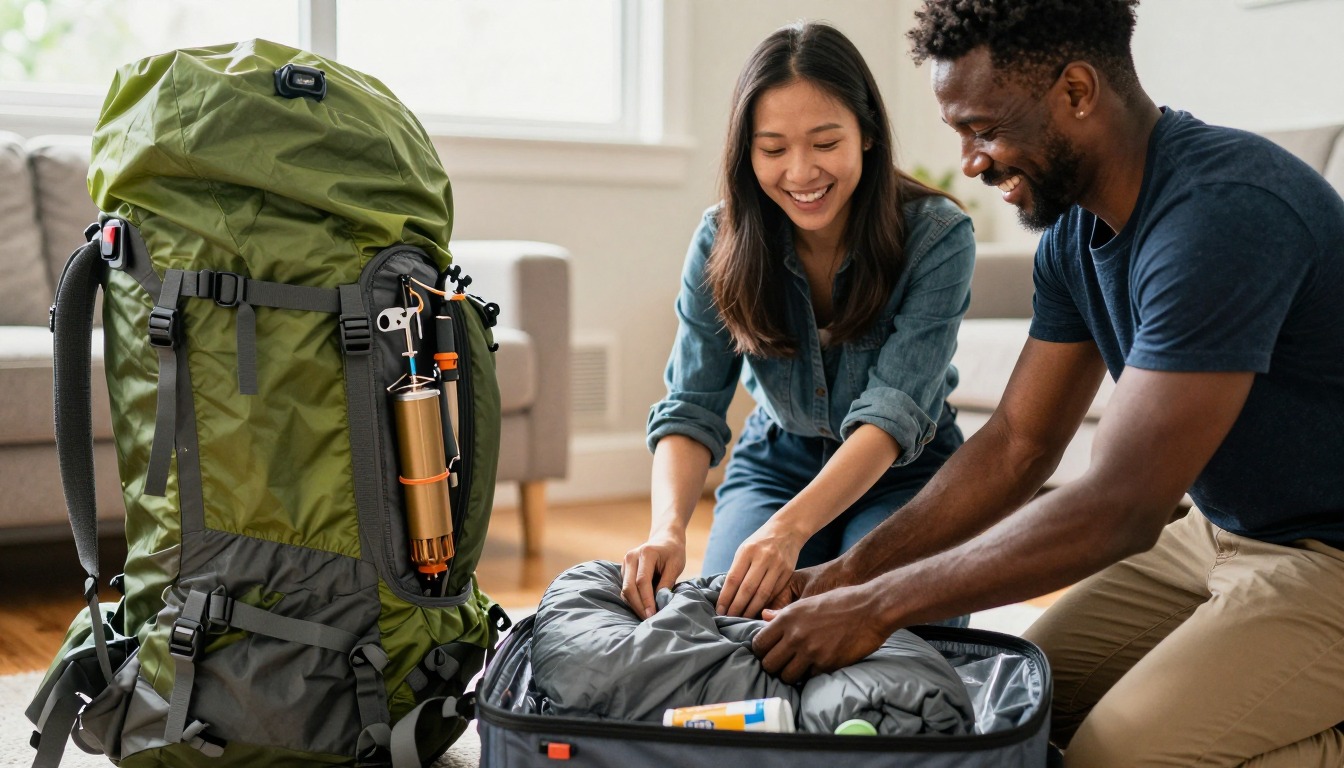
the pack from “Osprey Talon 22 Review” shown in context, brandless styling

The Osprey Talon 22 is a men's day-hiking and fastpacking pack sized for single-day trips and short, fast overnight pushes. Its women's counterpart is the Tempest 20, built on the same platform with a shorter torso range and narrower fit.

What kind of back panel does the Talon 22 use?

The Talon 22 uses a ventilated, contoured foam back panel rather than the fully suspended mesh found on Osprey's Anti-Gravity or AirSpeed lines. Channels cut into the foam let air move across the back, and the panel sits closer to the body than a suspended-mesh design, which gives the Talon a more athletic, closer-fitting carry suited to scrambling and fast hiking rather than maximum airflow. This puts the Talon in a different suspension category from Osprey's multi-day lines, a distinction worth understanding alongside general suspension and ventilation differences across pack types.
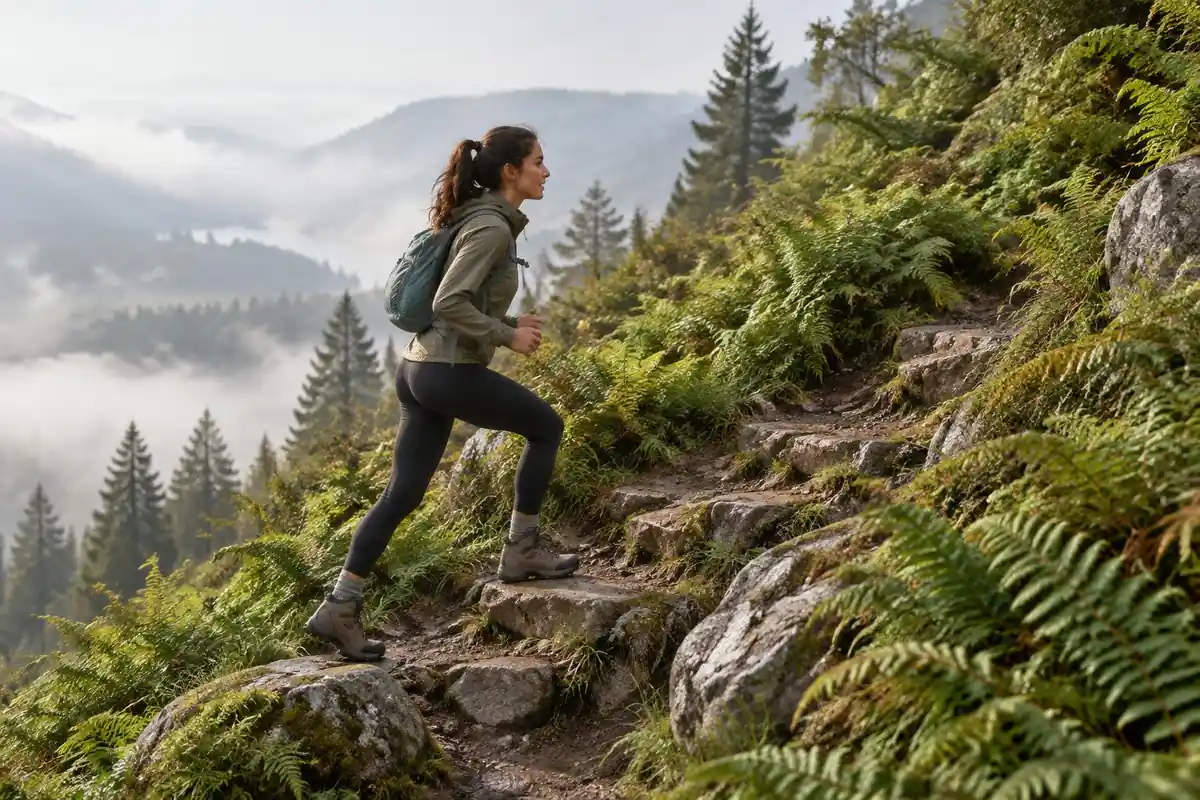
Day hiker on a steep rock stair trail in cool morning air

What is the Talon 22's capacity built for?

At a nominal 22 liters, the Talon 22 is sized for a single day of hiking with the ten essentials, water, and layers, or a very light, fast overnight for hikers who have pared their kit down. It sits at the smaller end of Osprey's Talon range, which also includes larger sizes for hikers who want more room for layers, gear, or a light overnight load without moving into a full backpacking pack.
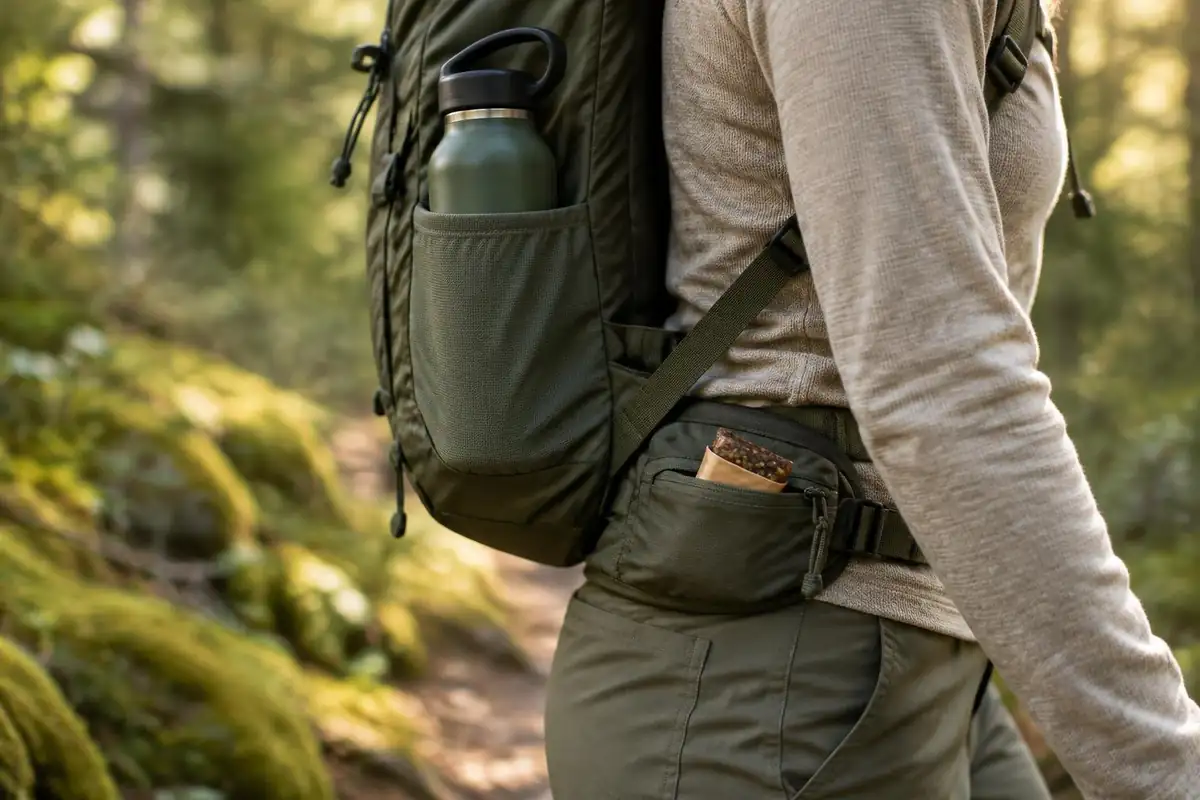
Small pack hugging a back with stretch pockets holding a water bottle

How does the Talon 22 fit for day hiking and fastpacking?

The Talon 22 is built with a closer, more athletic fit than Osprey's suspended-mesh packs, using a lighter internal frame and a slimmer hipbelt suited to a lighter daypack load rather than heavy multi-day weight. Like the rest of Osprey's line, it's sized by torso length, so matching a size correctly still depends on measuring torso length rather than assuming a size from height or shirt size alone.

What features does the Talon 22 include?

The Talon 22 packs a compact set of trail-focused features into a small volume.
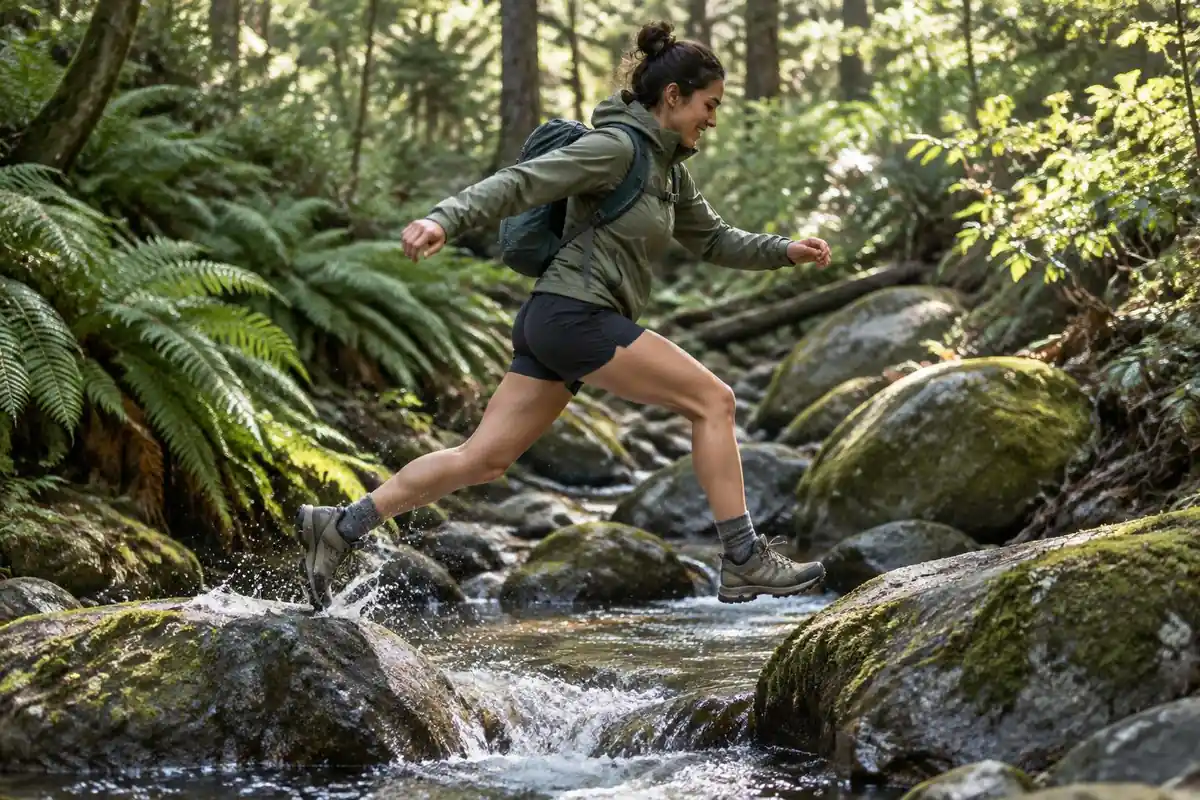
Trail runner style hiker hopping across creek stones with small pack
  • Stretch-mesh front and side pockets for quick-access items and water bottles.
  • A hipbelt with small pockets for snacks or a phone, reachable without stopping.
  • Trekking-pole and ice-axe attachment points for scrambles or fastpacking routes.
  • A hydration-reservoir sleeve and hose port for hands-free drinking.
  • Compression straps to stabilize a partial load on technical terrain.

How does the Talon 22 compare to other sizes in the Talon range?

Osprey sells the Talon in a range of nominal capacities beyond the 22, giving hikers who like the closer, athletic fit but want more room a way to stay in the same suspension family rather than switching to a suspended-mesh pack. The larger sizes add volume for layers, extra water, or a light overnight load, while keeping the same ventilated foam back panel and closer-to-the-body carry that defines the line. Choosing between sizes within the Talon range comes down to trip length and how much a hiker values a slim profile over extra capacity, the same trade-off that applies when choosing pack capacity for any day-hiking or fastpacking trip.

What kind of terrain suits the Talon 22's closer fit?

The Talon 22's closer-fitting, less bulky profile is an advantage on scrambles, rock hopping, and fast, technical terrain where a bulkier suspended-mesh pack can throw off balance or snag on rock. That same closeness to the body is part of why it ventilates less than a fully suspended-mesh pack; the trade-off favors stability and a low-profile carry over maximum airflow, which matters most on hot, exposed, low-effort trail miles rather than technical scrambling.

Who is the Talon 22 best for?

The Talon 22 suits day hikers, scramblers, and fastpackers who want a close, stable carry and don't need the load capacity of a multi-day pack. Hikers planning overnight or multi-day trips with a full gear list should look at Osprey's larger Talon sizes or its dedicated multi-day lines instead, since 22 liters leaves little room for a sleeping system.

Frequently Asked Questions

It's tight for most overnight setups unless a hiker has already minimized their gear list, since 22 liters leaves little room after water, food, and layers. Osprey sells larger Talon sizes, or its dedicated multi-day lines, for hikers who need more overnight capacity.

They share the same ventilated back panel and general feature set. The Tempest 20 is Osprey's women's version, built on a shorter torso range with a narrower hipbelt and shoulder straps, and a slightly smaller nominal capacity.

Continue Reading

Is 22 liters enough for a full day?

Guidance on daypack size varies. The Washington Trails Association says a 25 to 30 liter pack is good for a full-day hike,1 which puts the Talon 22 slightly under that range. Whether it's enough depends on the kit. The National Park Service describes the Ten Essentials as items that help with minor injuries, sudden weather changes or unexpected emergencies,5 and on a cold or wet day the extra layers fill a small pack quickly.

Water drives both volume and weight. A liter weighs about a kilogram,3 and in hot desert parks such as Guadalupe Mountains the NPS advises about a gallon per person per day, roughly 8 pounds.6 On a hot, long day, water alone can outweigh everything else in a 22-liter pack.

Why a close fit helps on rough ground

The Talon's close carry has a basis in load research. A review of soldier load carriage found the lowest energy cost comes when the load's center of mass is as close as possible to the body's, and noted that low or mid-back placement may suit uneven terrain while high placement may be best on even ground.2 That fits this page's point about scrambling: a load that stays tight and compact is less likely to pull you off balance.

A backpack also shifts your center of mass backward, which the body offsets by leaning the trunk forward.7 The less the pack sticks out and sways, the less correcting you do on every step. Compression straps help here; US Army doctrine notes they stop the load shifting and hold it closer to the body.8

How heavy should a daypack be?

Hiking advice often cites a limit of 10% of body weight for day hikes. That figure is a hiking-community rule of thumb, not a published standard. The closest evidence is a 2026 study of long-distance hikers, which noted that the literature suggests 10 to 15% of body weight and found that packs heavier than about 10% produced a clear, load-dependent rise in pressure under the feet.4 Forefoot pressure rose about 5.4% with a pack at 10% of body weight and about 8.7% with a pack at 20%, compared with no pack.4

Carrying a daypack also changes how hard you work. The Compendium of Physical Activities rates backpacking or hiking with a daypack at 7.8 METs, against 5.3 for hiking at a normal pace through fields and hillsides with no load.9 One MET is roughly the energy cost of sitting quietly.10 A small pack kept light keeps a long day closer to the lower figure.