
Best Osprey Backpack For Backpacking
Best Osprey Backpack For Backpacking, ranked from aggregated owner ratings and reviews, not first-hand testing. Real pros, cons, and who each pick is best for.
Affiliate disclosure: this page contains affiliate links. Purchases made through them may earn us a commission at no extra cost to you. See our affiliate disclosure.
In plain English
Backpacking means carrying everything you need to sleep outside for one or more nights: a tent, sleeping bag, food, water and cooking gear. That adds up, so the pack has to move weight onto your hips instead of hanging it all from your shoulders.
Before choosing among Osprey's backpacking packs, add up roughly what you will carry. Water is heavy: a one-liter bottle weighs about two pounds. Food for several days, a bear canister where required, and warm clothes all push the total up.
Then match the pack to that total. Lighter packs feel great with a small load but get uncomfortable when overfilled. Sturdier packs weigh more empty but handle heavy loads better. Think of it like choosing between a bike and a van: both are good, but only one is built to move a lot of stuff.
Our Top 3 Picks
Quick Comparison
| Shell | Extras | Buy | ||||
|---|---|---|---|---|---|---|
| 1 | Osprey Rook 65L Men's Backpacking BackpackTop Overall Pick | 65 L | 3.7 lb | — | Rain cover | View |
| 2 | Osprey Rook 50L Men's Backpacking BackpackBest Value | 50 L | 3.6 lb | — | Rain cover | View |
| 3 | Osprey Atmos AG 65L Men's Backpacking BackpackBest for Multi-Day | 65 L | 4.0 lb | — | Rain cover | View |
| 4 | Osprey Renn 65L Women's Backpacking BackpackBest for Women | 65 L | 3.6 lb | — | Rain cover | View |
| 5 | Osprey Kestrel LT 45L Men's Backpacking BackpackBest Hydration Pack | 45 L | 3.8 lb | Ripstop nylon | Rain cover | View |
Choosing the best osprey/" class="hbh-inline-link">Osprey backpack for backpacking means comparing three distinct multi-day lines rather than picking a single top pack, since Osprey builds its backpacking packs around different suspension priorities.
What makes a good backpacking pack from Osprey?
A good Osprey backpacking pack matches its suspension type and capacity to your typical trip length and pack weight, since the brand's three multi-day lines are built for different loads rather than ranked best to worst. The Atmos AG and Aura AG prioritize ventilation and moderate-to-heavy load comfort; the Exos and Eja prioritize low weight for hikers who have already trimmed their gear; and the Aether and Ariel prioritize maximum load-carrying capacity for extended or expedition trips. Deciding among them starts with an honest estimate of your loaded pack weight and trip length rather than choosing by price or popularity alone.
Atmos AG vs Exos vs Aether: which should you choose?
The table below compares Osprey's three core backpacking lines on the factors that matter most for a multi-day trip.
| Line | Suspension | Weight priority | Load range | Best trip type |
|---|---|---|---|---|
| Atmos AG / Aura AG | Anti-Gravity suspended mesh | Balanced weight and ventilation | Moderate to heavy | Weekend to week-long trips |
| Exos / Eja | AirSpeed suspended mesh | Lowest pack weight | Light to moderate | Thru-hiking, trimmed gear lists |
| Aether / Ariel | Structured frame and panel | Load capacity over weight | Heavy | Extended or expedition trips |
How much capacity do you need for backpacking?
Match capacity to trip length and season rather than buying the largest pack available, since an oversized pack for a short trip is harder to compress and carries worse than a correctly sized one. Shorter, warm-weather trips generally need less capacity than longer trips or cold-weather trips requiring bulkier insulation and a heavier sleep system; matching liters to nights out, rather than defaulting to one size, is covered in more depth under choosing pack capacity for backpacking trip lengths.
Does hipbelt fit matter more than suspension type?
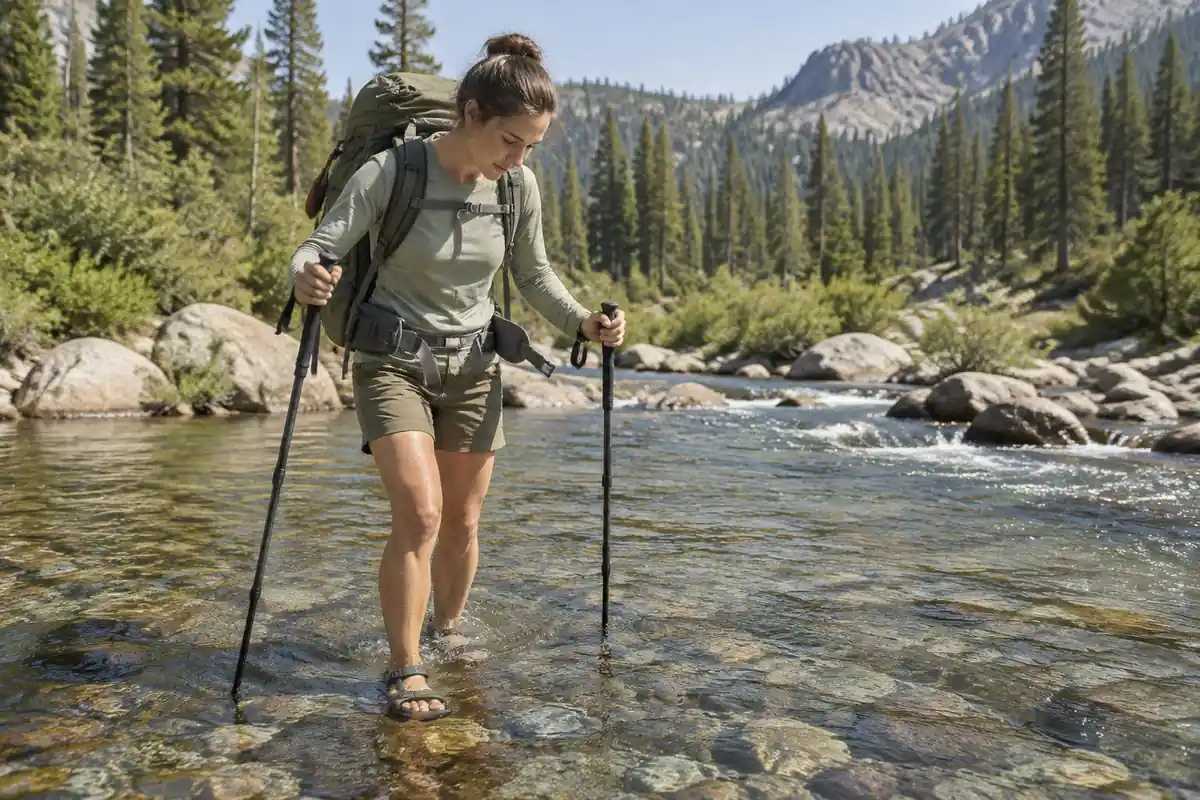
Hipbelt fit matters as much as suspension type for backpacking, since a well-fitted hipbelt transfers most of a loaded pack's weight onto the hips regardless of which Osprey line it belongs to. A pack with the "right" suspension for a hiker's trip but a poorly fitted hipbelt will still feel worse than a correctly fitted pack from a different line, which is why hipbelt load transfer deserves as much attention during fitting as the suspension family itself.
Should thru-hikers choose a different Osprey pack than weekend backpackers?
Thru-hikers generally do better with the Exos or Eja because sustained daily mileage rewards a lighter base pack weight, while weekend and week-long backpackers carrying a fuller traditional gear list often do better with the Atmos AG or Aura AG for the added comfort margin on moderate-to-heavy loads. Hikers on extended trips with heavy resupply loads, technical gear, or winter conditions should weigh the Aether or Ariel instead, since its structured frame is built for loads beyond what the lighter two lines are designed to carry comfortably.
Full Ranking, Reviewed

Best for Osprey Backpack for Backpacking
- 65 L capacity
- 3.7 lb empty
- Rain cover included
- Adjustable AirSpeed Suspension
- Ventilated back panel cuts sweat on long climbs
- Packs an integrated rain cover to keep gear dry
- At 65 L it is more pack — and more weight — than a day hiker needs; it earns its keep on overnight and multi-day loads.
Verdict: This 65 L backpacking pack pairs a breathable back with a bundled rain cover, making it our overall pick for Osprey Backpack for Backpacking.

Best for Osprey Backpack for Backpacking
- 50 L capacity
- 3.6 lb empty
- Rain cover included
- Adjustable AirSpeed Suspension
- Ventilated back panel cuts sweat on long climbs
- Packs an integrated rain cover to keep gear dry
- At 50 L it is more pack — and more weight — than a day hiker needs; it earns its keep on overnight and multi-day loads.
Verdict: This 50 L backpacking pack pairs a breathable back with a bundled rain cover, making it well worth a look for Osprey Backpack for Backpacking.

Best for Osprey Backpack for Backpacking
- 65 L capacity
- 4.0 lb empty
- Rain cover included
- Floating top lid with lash points
- Includes a rain cover for sudden downpours
- That 65 L volume is overkill for quick hikes and better suited to multi-night trips.
- The fabric is water-resistant rather than fully waterproof, so a pack liner helps in sustained rain.
Verdict: This 65 L backpacking pack offers a bundled rain cover, making it an easy shortlist pick for Osprey Backpack for Backpacking.

Best for Osprey Backpack for Backpacking
- 65 L capacity
- 3.6 lb empty
- Rain cover included
- Adjustable AirSpeed Suspension
- Ventilated back panel cuts sweat on long climbs
- Packs an integrated rain cover to keep gear dry
- At 65 L it is more pack — and more weight — than a day hiker needs; it earns its keep on overnight and multi-day loads.
Verdict: This 65 L backpacking pack pairs a breathable back with a bundled rain cover, making it a strong option for Osprey Backpack for Backpacking.

Best for Osprey Backpack for Backpacking
- 45 L capacity
- Ripstop nylon shell
- 3.8 lb empty
- Rain cover included
- Rugged, classic rucksack
- Hydration sleeve keeps water within easy reach
- Airflow channels help your back stay cooler under load
- The 45 L size is a versatile in-betweener rather than a specialist at either end.
Verdict: This 45 L hiking pack pairs a breathable back with room for a bladder, making it well worth a look for Osprey Backpack for Backpacking.
Working out your real loaded weight
Start with base weight: the Appalachian Trail Conservancy defines it as pack weight with all gear, minus consumables such as food, water and fuel.1 Then add the consumables back. Water's density is about 1 gram per milliliter, so each liter weighs about 1 kg, or roughly 2.2 lb.2 In dry country it adds up fast: Guadalupe Mountains National Park tells backpackers to carry a gallon per person per day, about 8 lb per gallon.3
Food storage can add more. Rocky Mountain National Park requires bear canisters for all wilderness overnights,4 and Denali's small loaner container weighs 3 lb for 3 to 5 days of food.5 Rules are park-specific and change, so check before you go. Once you have a realistic total, compare it with each pack's published load range. For scale, REI rates its Flash 55 as comfortable up to 35 lb6 and its framed Traverse 60 for loads up to 45 lb,7 which shows how much ratings can differ between packs of similar volume.
How heavy is too heavy? What the evidence says
Many guides say a backpacking load should stay under 20% of body weight. That figure has no primary research source; it is a hiking-community rule of thumb. Deuter, a pack maker, says people can carry a maximum of 20 to 25% of their body weight.8 A 2022 narrative review says adult loads in military, hiking and mountaineering settings should generally not exceed 40% of body mass.9 A 2026 study of long-distance hikers found plantar (sole-of-foot) pressure rose clearly once packs passed about 10% of body weight.10
Real hikers often go past 20%. A study of Appalachian Trail long-distance backpackers found packs averaged 25.0% of body weight for men and 27.9% for women.11 The cost is energy: in one lab study, metabolic energy use rose roughly linearly by about 7.6 W for every extra kilogram carried.12 The practical lesson is that lighter is easier, but there is no single safe cutoff. Pick a pack rated for the load you will really carry, not the load you hope to carry.
Capacity and the hip-belt question
The Washington Trails Association suggests 45 to 50 liters for a standard one- or two-night trip, 50 to 70 liters for 3 to 7 nights, and 70+ liters for large loads of gear and food.13 Osprey itself positions the Atmos AG 65 for heavyweight weekends or week-long trips where comfort and ventilation matter most,14 which fits inside that range.
The page says a well-fitted hipbelt moves most of the weight onto the hips. Sources disagree on how much. WTA says around 80%,13 Alpkit says 60 to 80%,15 and US Army doctrine says that with a pack frame and hip belt about 30% goes to the hips and lower back and 70% to the shoulders.16 What they agree on is direction: a hip belt shifts load off the shoulders. Osprey says a correctly sized hipbelt leaves a 3 to 6 inch gap between the pad tips when tightened,17 which is a quick check worth doing in the store.
Frequently Asked Questions
Is the Osprey Atmos AG or Exos better for backpacking?
The Atmos AG suits hikers carrying a fuller traditional gear list who want maximum ventilation and moderate-to-heavy load comfort. The Exos suits hikers who have already trimmed their gear list and prioritize lower pack weight over the Atmos AG's extra structure.
What Osprey pack is best for a week-long backpacking trip?
The Atmos AG or Aura AG is the most common choice for week-long trips, since its capacity range and Anti-Gravity suspension balance moderate-to-heavy loads with strong ventilation. Hikers with heavier resupply loads may prefer the higher-capacity Aether or Ariel instead.
Related Buying Guides
Planning a hiking trip? Compare hotels, lodges and guesthouses.
Book on Booking.com Book on AgodaAffiliate links: we may earn a commission at no extra cost to you.