
Hiking Backpack Hub: Honest buying guides, sizing help & how-tos
In-Depth Guide Researched & Fact-Checked

Granite Gear Blaze 60 Review

A look at the Granite Gear Blaze 60's single-stay frame, torso-adjustable fit, and who this multi-day backpacking pack suits best on the trail.

Affiliate disclosure: this page contains affiliate links. Purchases made through them may earn us a commission at no extra cost to you. See our affiliate disclosure.

In plain English

The Blaze is a big backpack with more stiffness built into its back than Granite Gear's lighter Crown. That stiffness comes from a framesheet, a firm plastic sheet a bit like a clipboard hidden in the back panel, plus a metal support. Together they stop the pack from sagging, so the weight can flow down to the hip belt.

The hip belt is the padded belt that wraps around the bony tops of your hips. When it fits well, your strong leg muscles carry much of the load and your shoulders mostly keep the pack steady.

Fit comes from two measurements. One is your torso length, the stretch of your back from the bump at the base of your neck to the top of your hip bones. The other is around your hips, close to your jeans waist size. Get both right and the pack sits where it should.

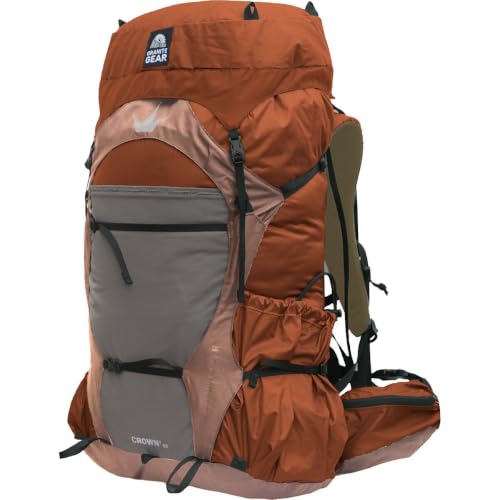
the pack from “Granite Gear Blaze 60 Review” shown in context, brandless styling

The Granite Gear Blaze is a lightweight backpacking pack in the 60-liter range, built around a single-stay frame and molded framesheet that gives it more structure than Granite Gear's more minimal Crown line while staying lighter than most mainstream framed packs. It suits hikers who carry multi-day loads and want more back-panel support without stepping up to a heavier, more cushioned pack.

What kind of pack is the Granite Gear Blaze?

The Granite Gear Blaze is a framed backpacking pack, generally offered around 60 liters, that pairs a single aluminum or composite stay with a molded framesheet to transfer load to the hips. It sits between Granite Gear's most minimal packs and the heavier, more structured packs sold by mainstream brands like Osprey and Gregory.
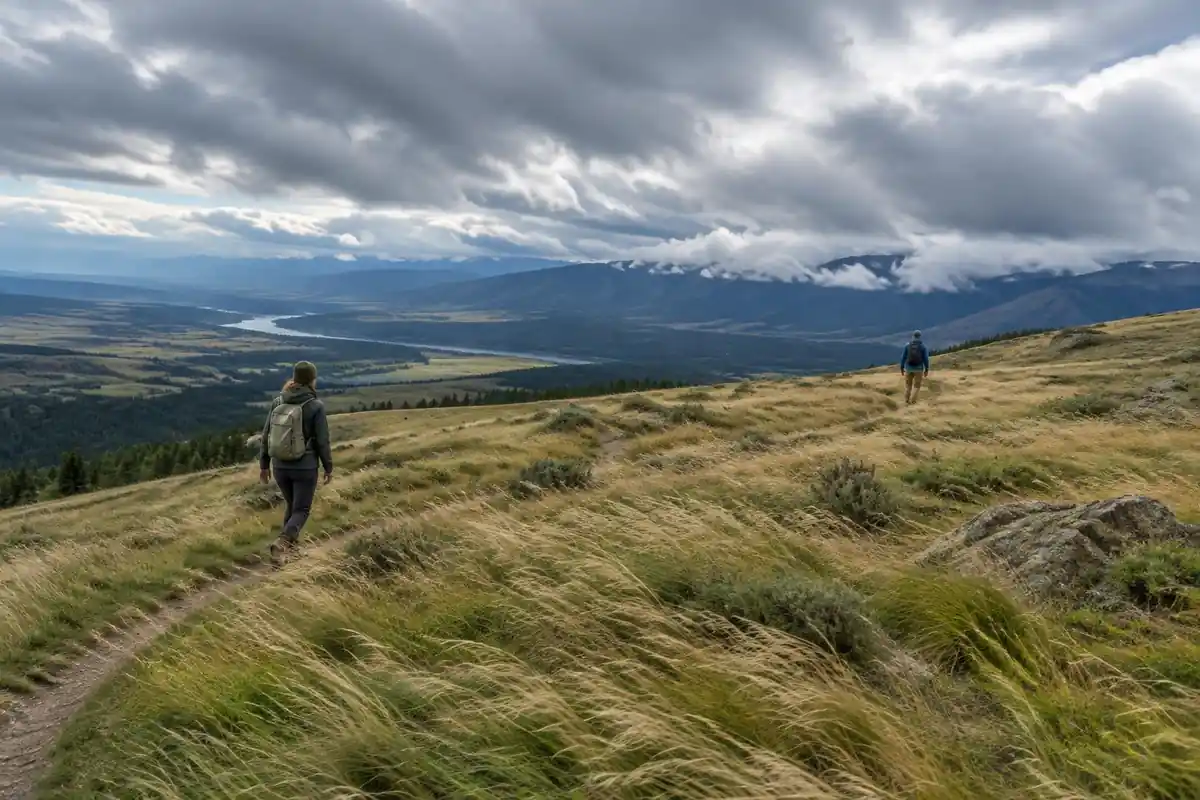
Two thru-hikers on a windy prairie ridge with light packs

The frame system on the Blaze is built to carry more weight comfortably than a frameless or ultra-minimal pack, using the molded framesheet to keep the load stable against the back rather than shifting with every step. A padded hip belt bolts onto the frame and does most of the work of carrying a loaded pack, following the general rule that a well-fitted hip belt carries, by a common rule of thumb, roughly 80% of total pack weight. The shoulder straps and back panel add stability and fine-tune the fit rather than bearing the bulk of the load.

How does the Blaze fit?

Granite Gear sizes its packs by torso length, so check the maker's size chart for the Blaze's exact ranges. Getting the fit right starts with an accurate torso measurement rather than guessing from height or shirt size.

Measuring torso length from the C7 vertebra at the base of the neck down to the iliac crest at the top of the hip bones gives the number needed to set the Blaze's back panel correctly. A pack set too long rides low and transfers weight to the shoulders; one set too short rides high and crowds the shoulders on the climb. Once the torso length is dialed in, the hip belt should sit centered over the top of the hip bones, not above them on the waist, since that's where the belt transfers load most effectively.

Who is the Blaze built for?

The Blaze suits hikers who carry multi-day gear lists heavier than an ultralight kit, including hunters, cold-weather backpackers, and anyone packing extra food or gear for longer stretches between resupply. Its added frame structure, compared with Granite Gear's lighter Crown line, makes it more forgiving of a heavier pack job.
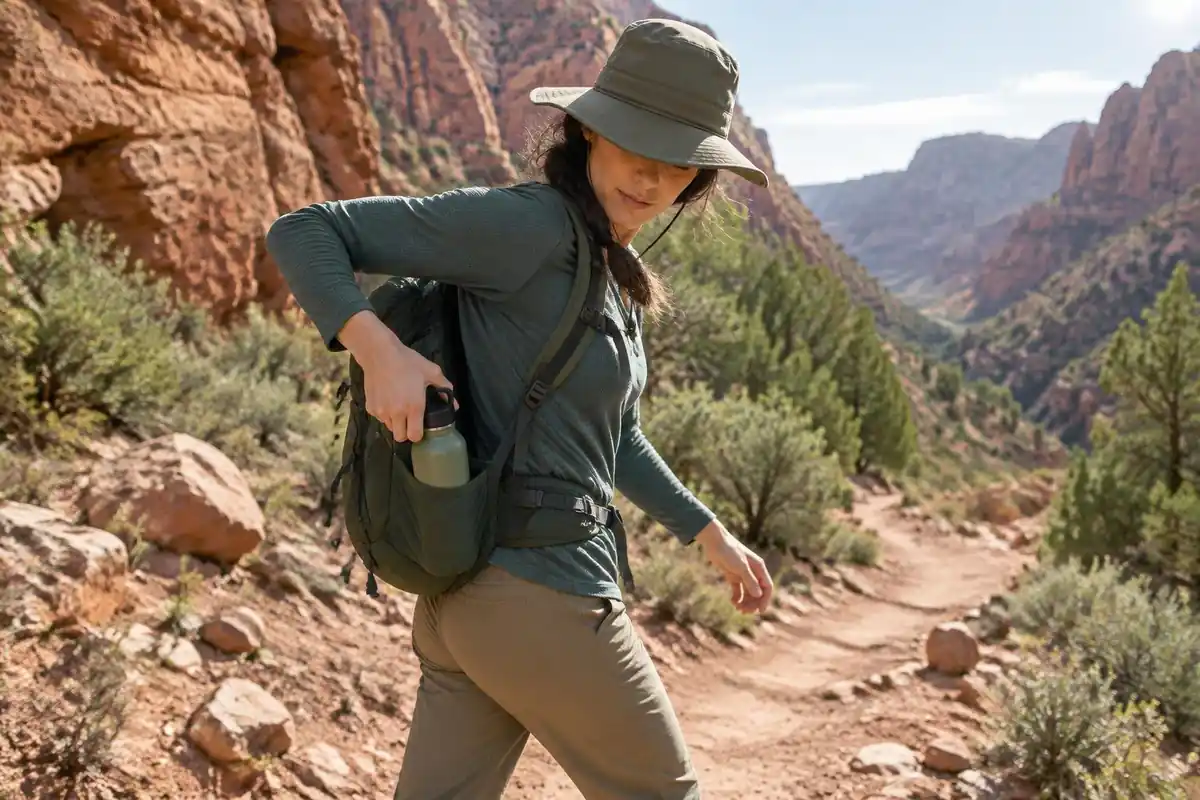
Hiker retrieving water bottle from a side pocket without stopping

Hikers chasing the lowest possible base weight for a thru-hike may find the Blaze heavier than they want, since the added frame structure that makes it comfortable under heavier loads also adds weight compared with more minimal packs. The trade-off runs in the other direction, too: a hiker who overloads a truly ultralight pack designed for light loads risks discomfort and premature wear, while the Blaze's sturdier frame gives more margin for a heavier pack.

How does the Blaze compare with the Crown?

The Blaze generally carries heavier loads more comfortably than the Crown, thanks to its more structured frame and framesheet, while the Crown generally weighs less and suits hikers prioritizing minimal base weight over maximum load capacity.
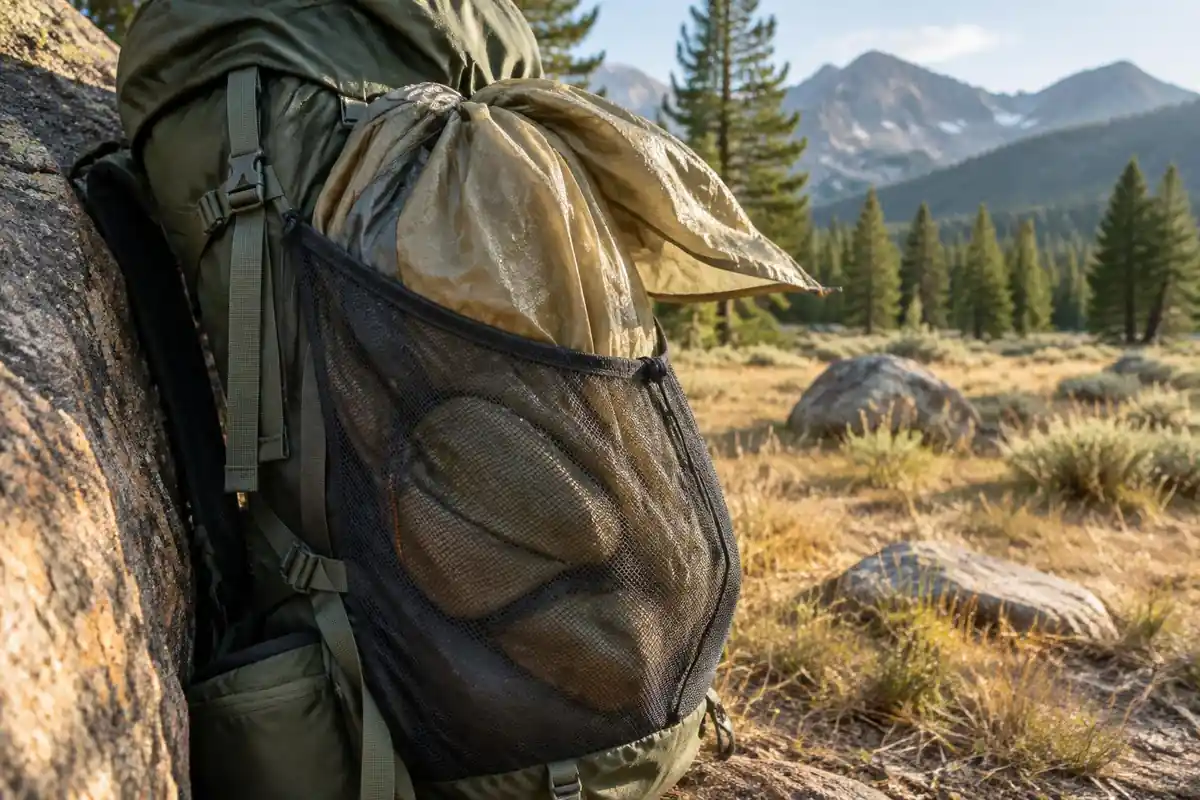
Stretch mesh pocket stuffed with wet tent fly on a warm rock

Both packs share Granite Gear's core design philosophy: a lightweight framesheet-based frame system rather than a full internal frame, and durable ripstop nylon construction. The decision between them comes down to typical pack weight and how much structure a hiker wants underneath a loaded pack, more than a difference in overall build quality.

Frequently Asked Questions

The Granite Gear Blaze is generally offered in the 60-liter range, sized for multi-day backpacking trips rather than day hikes or minimalist overnight loads. Check the current product listing for exact capacity, since Granite Gear has offered different sizes across product generations.

The Blaze carries heavier loads better than Granite Gear's more minimal Crown line, thanks to its single-stay frame and molded framesheet. It still weighs less than most mainstream framed packs, making it a middle option between ultralight and heavily structured packs.

Continue Reading

Sizing a Granite Gear pack from two numbers

Granite Gear's fit guide starts at the C7 vertebra, the bony bump at the base of the neck, which marks the top of the torso. With your hands on your hips, your thumbs point across your back at the iliac crest, the bottom of the torso.1 Height is a poor shortcut; Hyperlite notes it is not a reliable proxy for torso length.5 Granite Gear then offers Short (15 to 18 in), Regular (18 to 21 in) and Long (21 to 24 in) torso sizes.1

The hip belt is its own measurement. Granite Gear sizes it by the circumference at the hip crest, roughly your regular pant waist size, and says a properly sized belt wraps over the hipbones while leaving a gap in the padding at the front.1 Its women's hip belts are built for hips with a greater angle than the unisex belts.1 Even with both numbers right, Kelty's fit advice holds for any brand: a torso measurement is only a starting point, and the loaded feel decides.6

The 80% figure and what has actually been measured

This page describes a well-fitted hip belt carrying roughly 80% of pack weight as a general rule. That number is real, but it is a target from fit guides rather than a settled measurement. Big Agnes aims for about 80%, and Alpkit gives 60 to 80%.7,8 US Army doctrine, by contrast, states that with a frame and hip belt carrying 31 to 90 lb, about 30% goes to the hips and lower back and 70% to the shoulders.2 The honest summary is a range, attributed to each source.

What is not disputed is why you want the hips working. Researchers found the hip region tolerates pack pressure significantly better than the shoulders, and that static strap force predicts discomfort.9 A stiffer frame like the Blaze's helps here because a pack that sags cannot pass weight down to the belt, however well the belt fits.

Blaze or Crown is really a load-rating question

Granite Gear publishes clear load ratings for the Crown3 60: 25 lb without its framesheet, 35 lb with it and 43 lb with the optional aluminum stay.3 Those steps show that the frame parts, not the fabric or the volume, set how much a pack carries comfortably. Check the current Blaze listing for its own rating and compare it against what you realistically pack, including water, which weighs about 1 kg per liter.10

Choose the lowest structure that handles your real load. Extra frame weight is not free: metabolic cost during walking rises by about 7.6 watts per extra kilogram carried.11 Granite Gear itself traces its roots to 1986, when Jeff Knight and Dan Cruikshank conceived the company on a paddling trip in Quetico Provincial Park, and it backs both packs with a limited lifetime warranty against defects, repairing or replacing at its option.12,4