
Affiliate disclosure: this page contains affiliate links. Purchases made through them may earn us a commission at no extra cost to you. See our affiliate disclosure.
In plain English
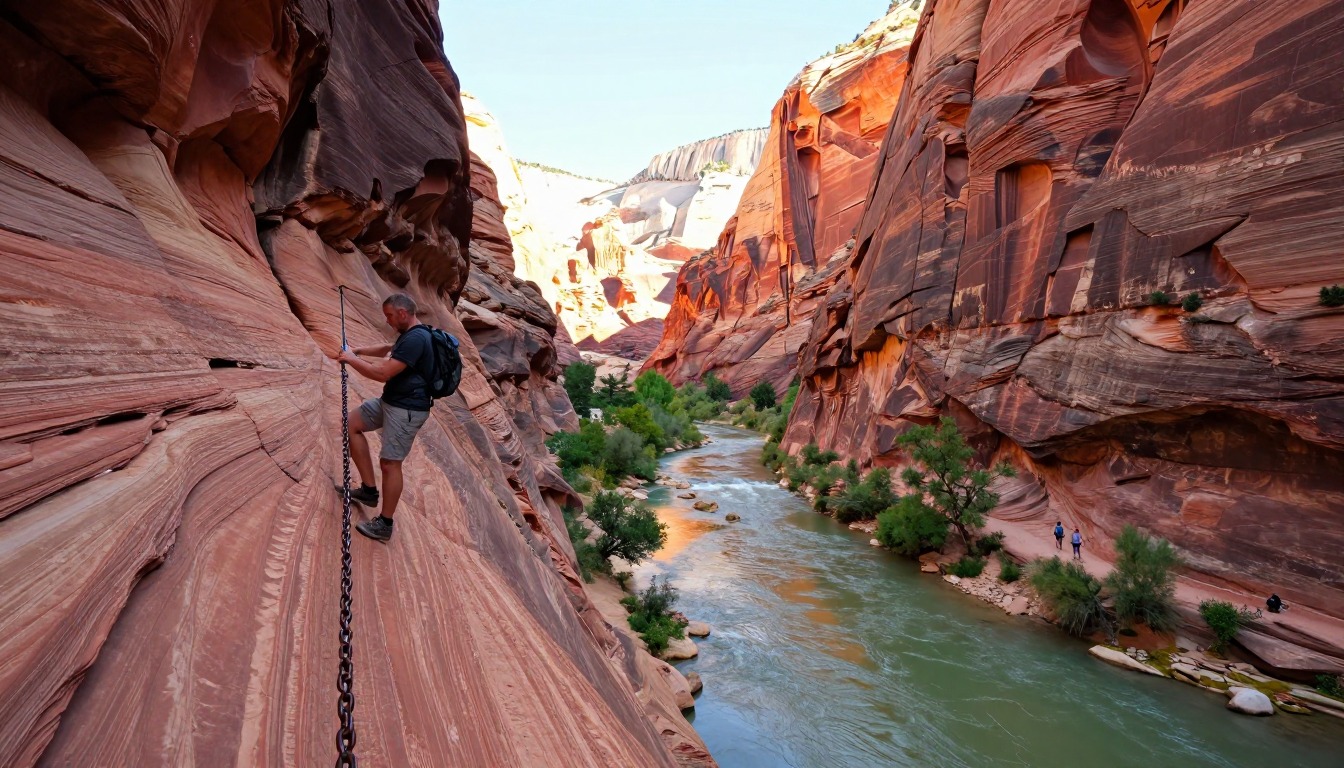
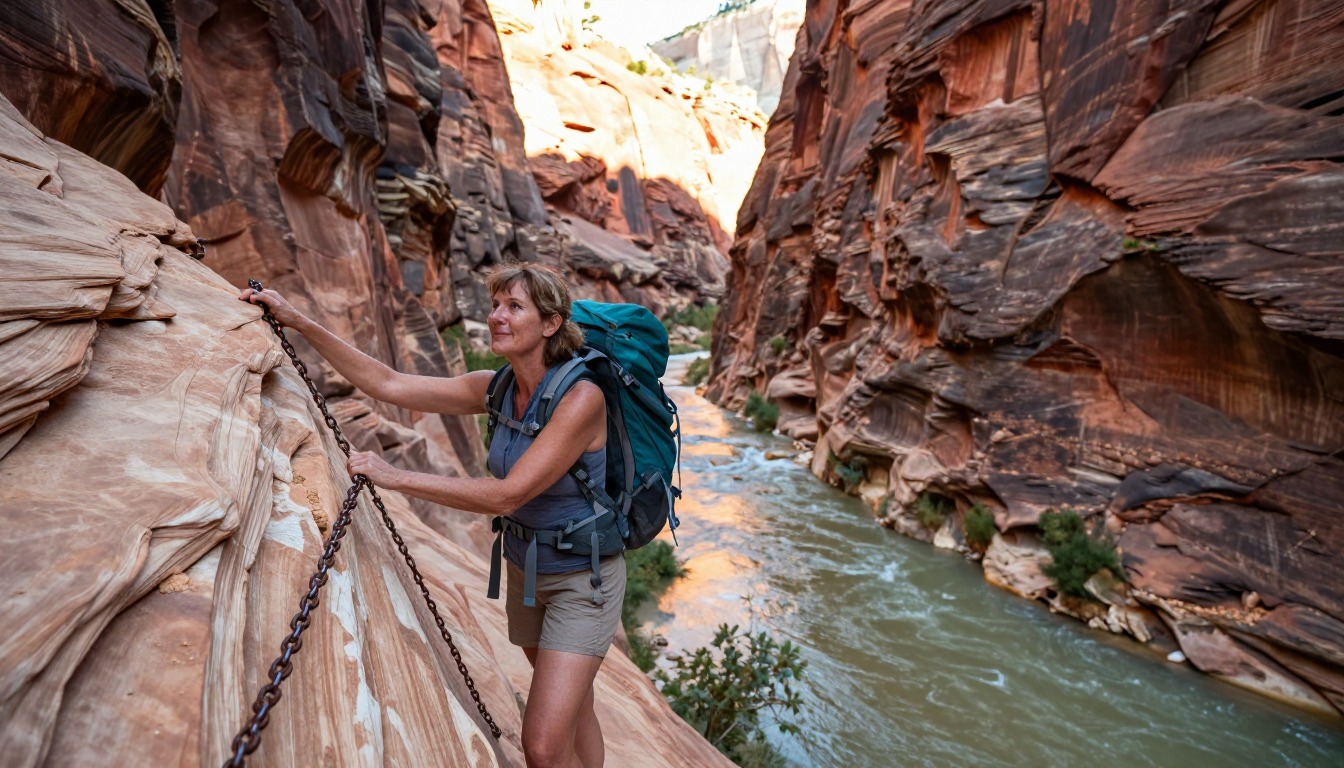
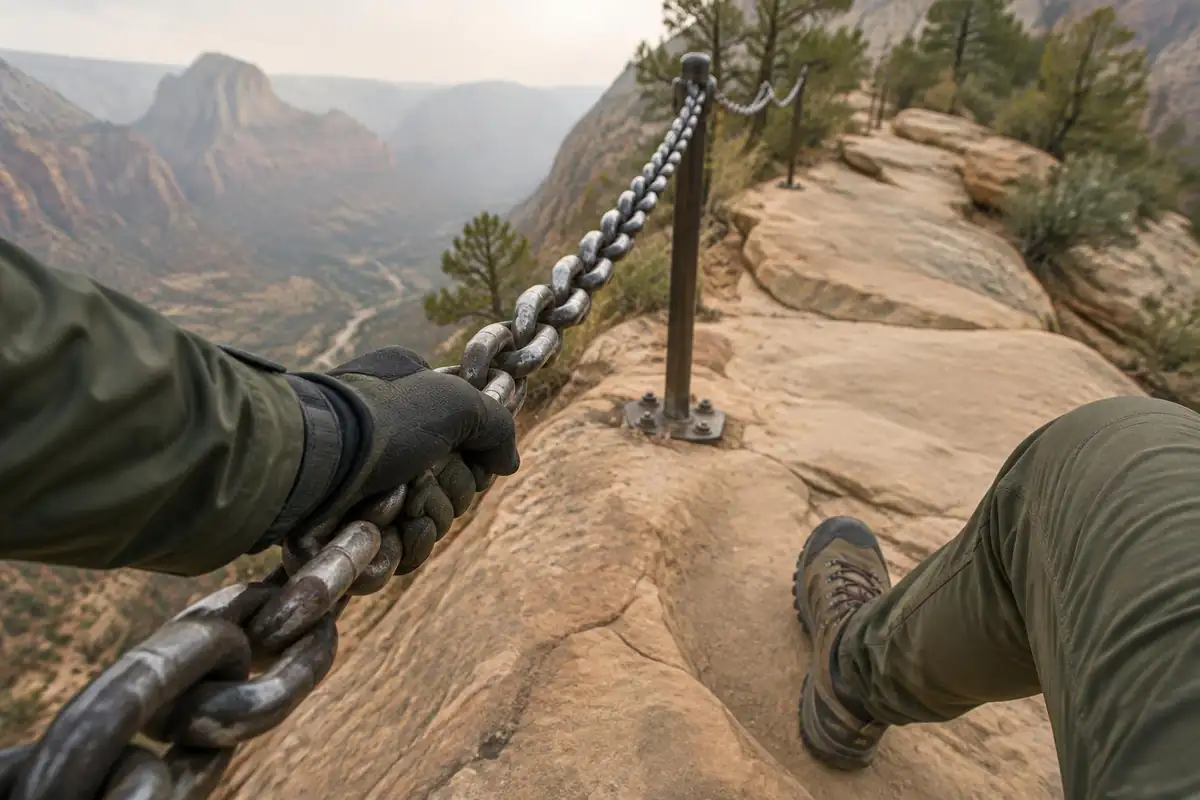
Zion has two famous hikes that feel completely different. Angels Landing climbs steeply to a narrow rock ridge where you hold onto chains fixed into the rock, with big drops on both sides. You need a permit to do it.1
The Narrows is the opposite. You walk up a river inside a deep, narrow canyon, wading through water over slippery round stones. You start at the end of a paved path called the Riverside Walk and just follow the river upstream.1
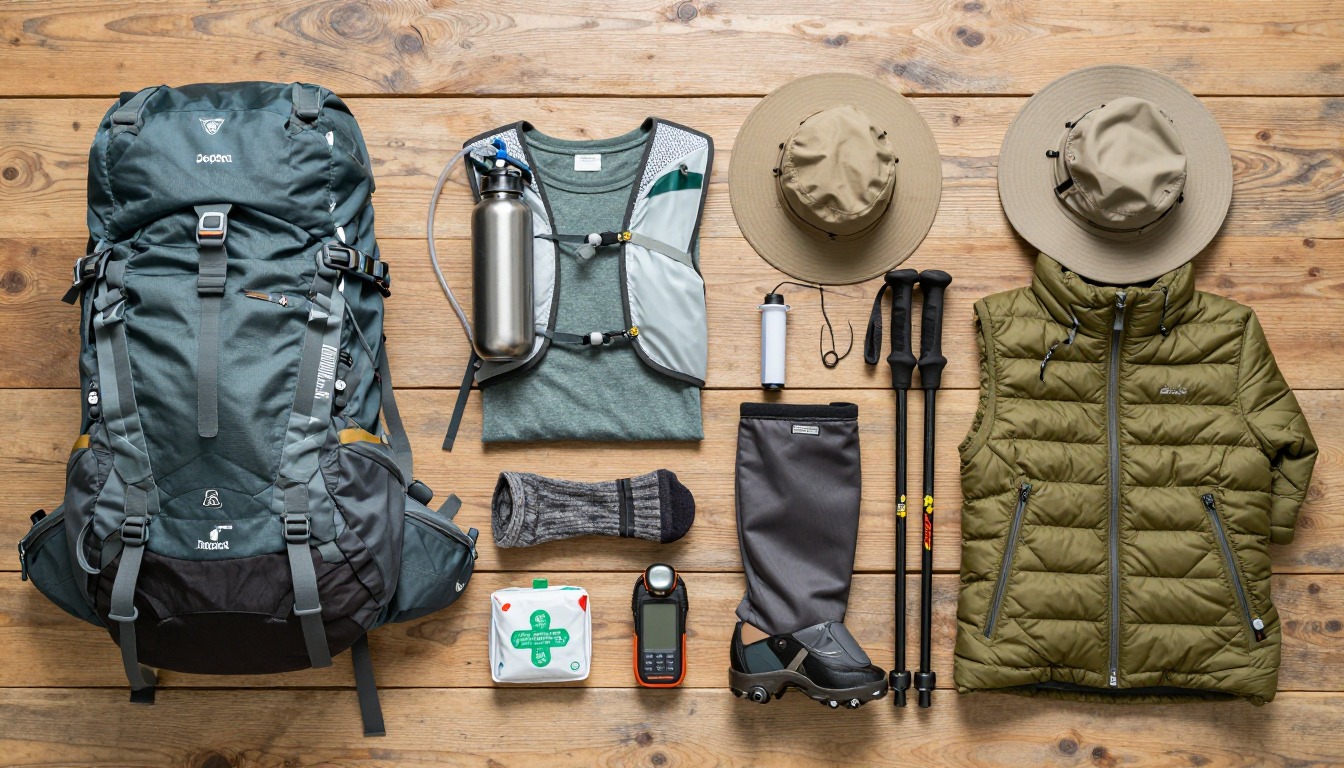
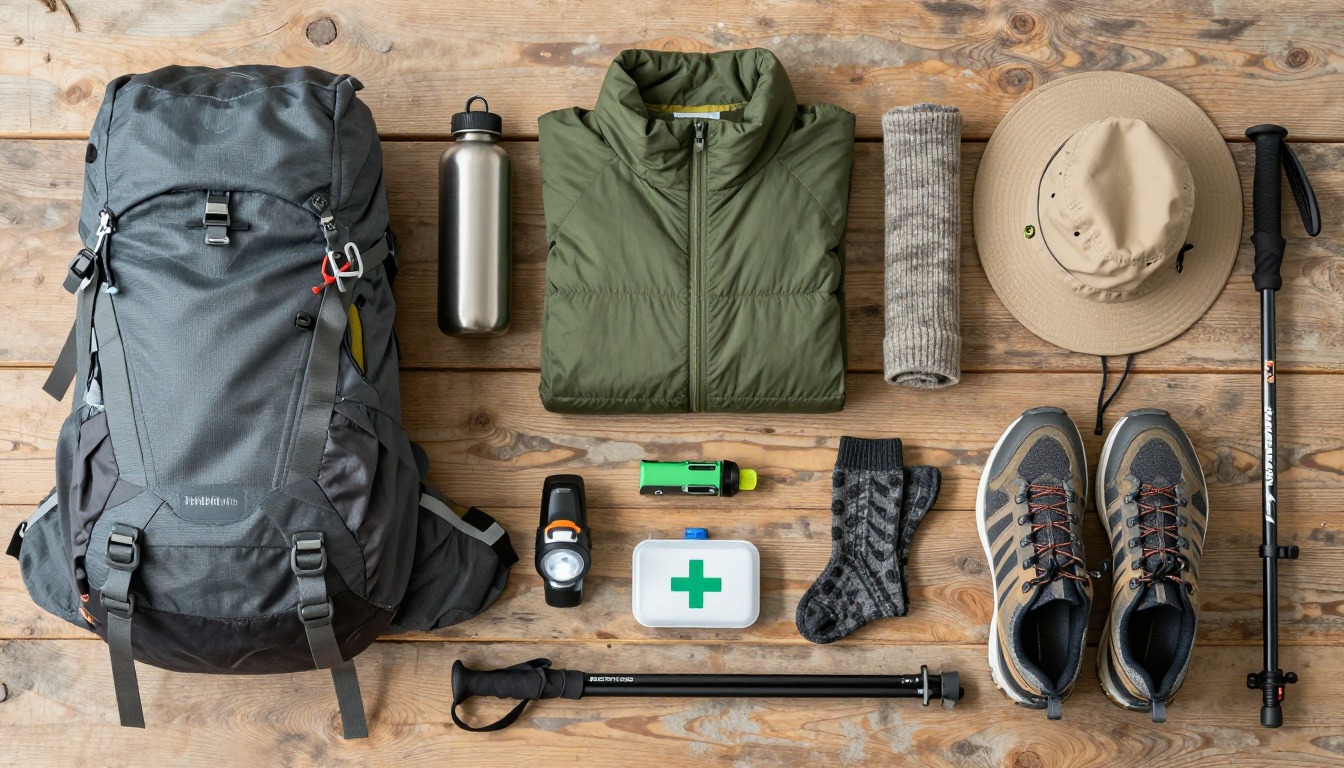
For Angels Landing, bring water, grippy shoes and a way to keep your hands free for the chains. For the Narrows, wear shoes that can get wet and drain, carry a walking stick and keep a dry warm layer in your pack. Both hikes are best started early in the day.
What the hike is like
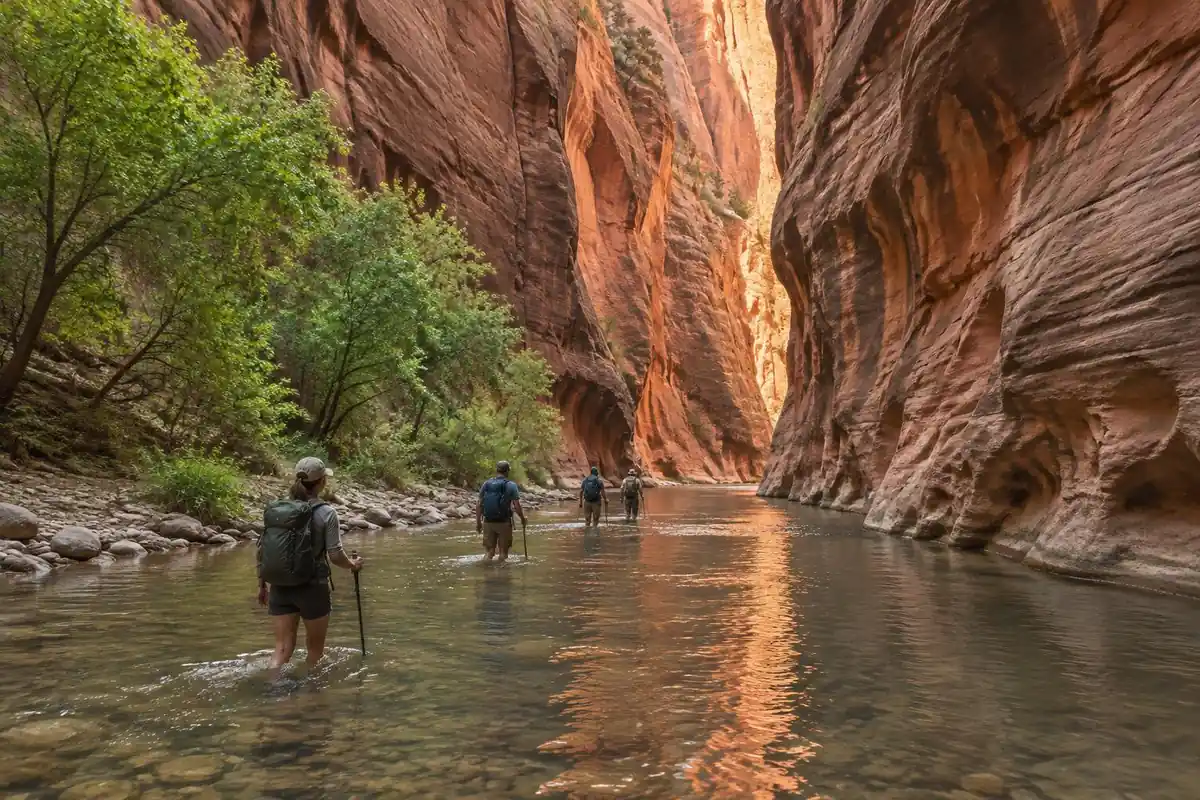
These are two hikes that share a canyon and almost nothing else. Angels Landing starts as paved trail climbing the canyon wall, stiffens through a set of tight engineered switchbacks stacked against the rock, and levels out at a saddle where the paved path ends. Everything after that is the reason people come: a narrow sandstone fin with chains bolted into the rock, hand-over-hand in places, with long drops on both sides and two-way traffic on ground barely wide enough for it. The Narrows is the inverse — no climbing at all, just a paved riverside path that simply runs out, after which the route is the river itself. You wade upstream over rounded, invisible cobbles, in water that ranges from ankle to thigh deep, between walls that lean in until the sky is a strip.
How to plan the itinerary
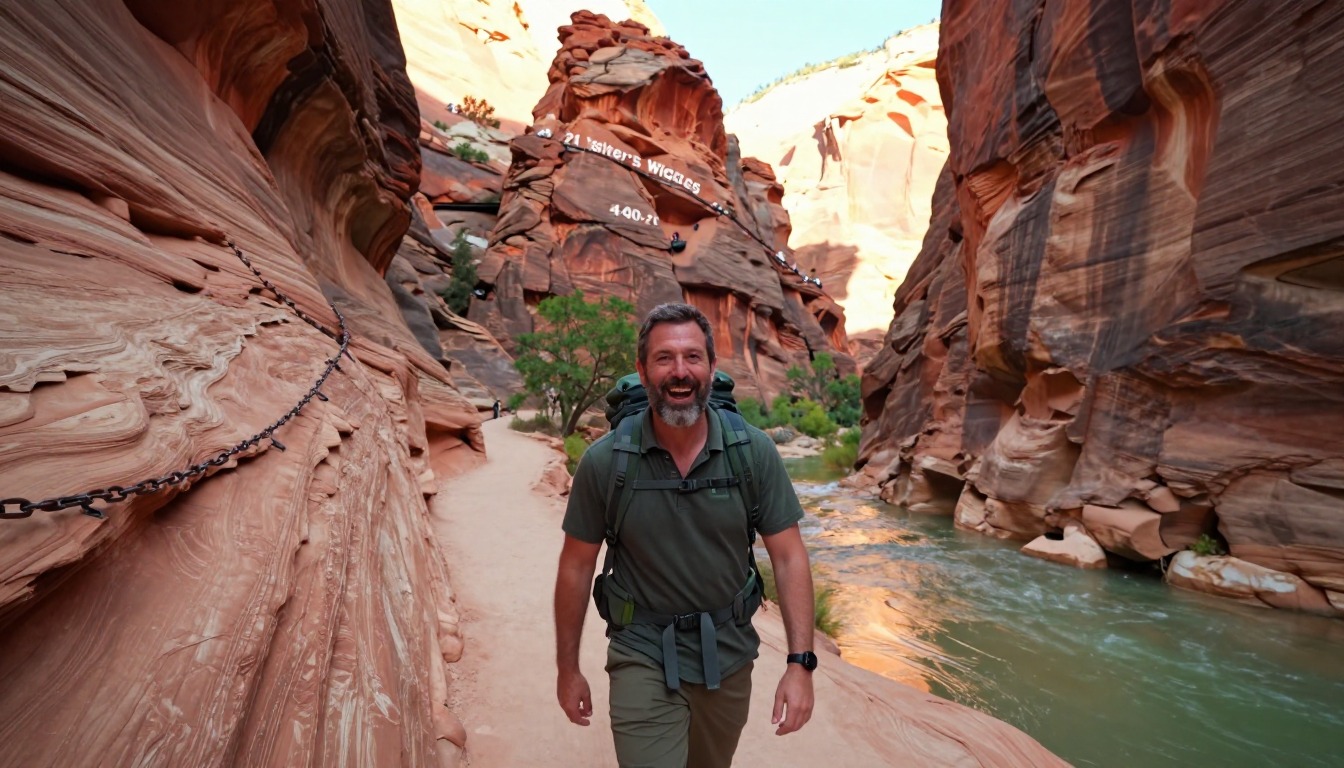
Both work comfortably as day hikes, and most people give each its own day rather than stacking them. Angels Landing rewards an early start: you want the exposed chain section before the heat builds and before the queue on the fin gets long, and the shuttle schedule effectively sets your start time. The Narrows is the most flexible hike in the park because it's out-and-back with no summit — you wade upstream as far as you feel like, then turn around, so you can make it a couple of hours or a full day. Many hikers pair them by doing Angels Landing in the morning and a short Narrows wade the following day, when tired legs don't matter much because the river does half the work of slowing you down anyway.
Plan this trip in 5 steps
-
Pick the right pack
Match a pack to your trip, fit and priorities.
-
Book a place to stay
Campgrounds, huts and lodges near Zion — Angels Landing & The Narrows.
-
Plan food & water
Calories, food weight and water for your days on trail.
-
Estimate your time
Pre-filled with this trail’s distance and climb — adjust for your pace.
Trail-specific tips
For The Narrows, footwear decides your day: closed, draining shoes with real grip and neoprene socks make cold water and slippery cobbles a non-issue, and a sturdy stick or a pole gives you a third point of contact against the current. Always check the flash-flood outlook before entering a slot canyon. On Angels Landing, yield on the chains rather than squeezing past, and remember that the saddle where the pavement ends is a perfectly respectable place to stop — nobody's obligated to do the fin. Broader desert-heat and canyon-safety judgment is covered on /trail-smarts/.
Permits & rules
Angels Landing requires a permit via a seasonal and day-before lottery. A top-down Narrows hike or any overnight needs a wilderness permit; always check the flash-flood forecast before entering the river.
Gear suited to this hike
Matched to the terrain and conditions here. Real products — check current price on Amazon.


Two hikes, two different permit questions
The park lists permits for three things together: visiting Angels Landing, camping in the Zion Wilderness and carrying out other special activities.1 A day wade up the Narrows from the bottom does not appear in that list; the park describes it simply as starting at the end of the Riverside Walk.1 A top-down Narrows trip or any overnight falls under wilderness permits, as this page says.
This page describes a seasonal lottery plus a day-before lottery for Angels Landing. The park's homepage does not spell out those dates, so check the current lottery windows on Zion's permit pages. The free shuttle in Zion Canyon, which the park runs alongside service to Springdale, often sets your real start time.1
Cold water on a long wade
The Narrows can mean hours with feet and legs in moving water. NIOSH notes that wet feet lose heat 25 times faster than dry feet and that immersion hypothermia develops faster than ordinary hypothermia and can occur in any water below 70°F.2 It also warns that trench foot can occur at temperatures as high as 60°F if the feet stay wet.2 That is the reason for neoprene socks in cooler months and for drying your feet properly afterward.
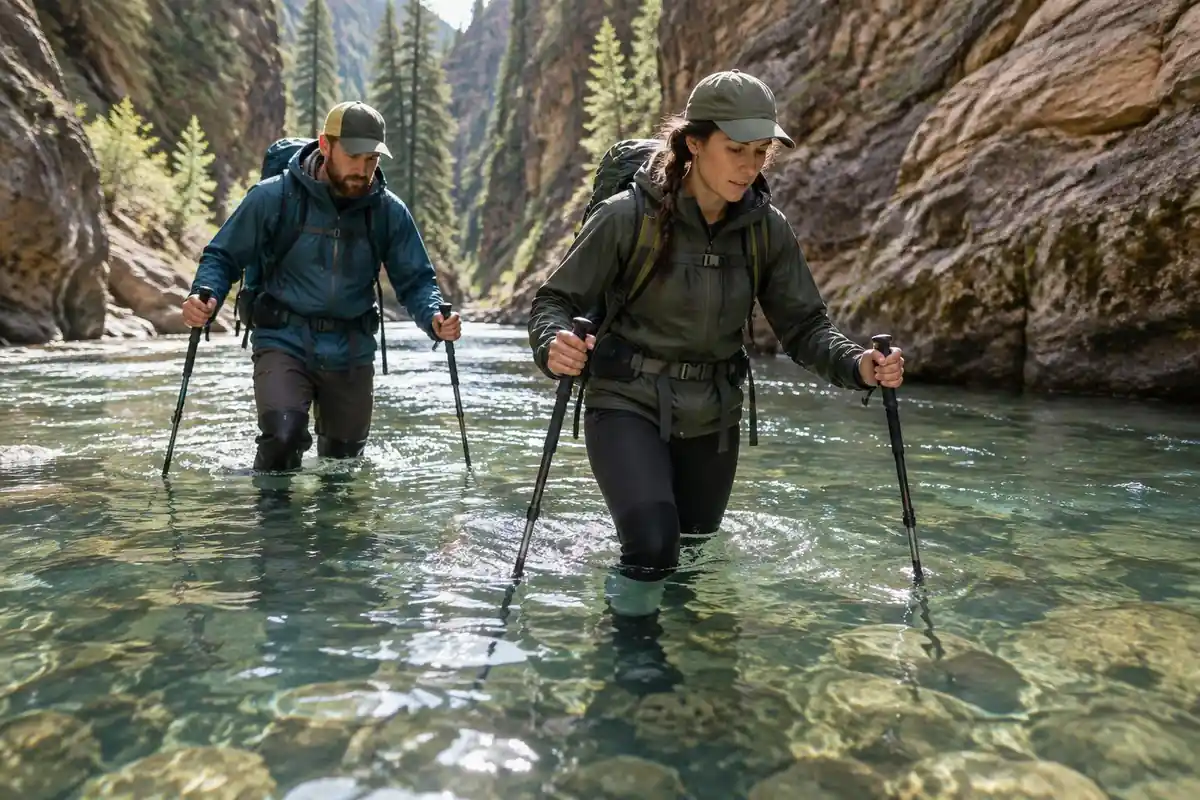
The CDC adds that hypothermia can develop above 40°F when someone is chilled by cold water or wet clothing, and that shivering, fumbling hands and confusion are early warning signs.4 A dry fleece in a waterproof bag inside your daypack is cheap insurance on a shaded canyon floor, even when the rim is warm. Flash-flood risk is the other reason to check the park's forecast before entering; this page covers that, and the park's rangers have the current outlook.
Heat, lightning and water weight on Angels Landing
The fin is the textbook high, exposed spot the National Weather Service tells hikers to avoid in storms. It notes that mountain thunderstorms often build in the early afternoon and advises being off exposed ground by noon.3 If you can hear thunder, you are likely within striking distance.5
Heat is the other reason to start early. The CDC suggests doing outdoor activity during the coolest parts of the day when heat risk is high.6 At nearby Grand Canyon, the NPS reports that most heat-illness rescues involve people hiking between 10 a.m. and 4 p.m.7
Water is heavy: a liter weighs about a kilogram, so three liters add about 6.6 lb to a daypack.8 Carry it in a pack that sits close to your back, and keep hands free on the chains by stowing poles and bottles before the saddle.
Common questions
How exposed is Angels Landing, really?
Very, on the final section. The fin narrows to a few feet in places with steep drops either side, and the chains are there because the rock alone wouldn't be enough. There's no technical skill needed, but there is no margin for a careless step. Hikers who dislike heights often stop at the saddle, and that's a sensible call rather than a failure.
Do I need special shoes for The Narrows?
Not strictly, but they change the experience. The riverbed is rounded cobble under moving water, so grip and ankle stability matter more than waterproofing — everything gets wet regardless. Closed shoes that drain, worn with neoprene socks in cooler months, are the standard setup, and rental outfitters in the gateway town supply them for people who'd rather not buy.
Can I do both hikes in one day?
It's possible for fit hikers, particularly if you keep The Narrows short, but it makes for a long day built around shuttle timings. Most people enjoy them far more split across two days. If you only have one, pick by preference: vertical and airy, or enclosed and wet underfoot.
How far up The Narrows should I go?
As far as you're enjoying it, then turn around — there's no destination that makes the hike count. Progress is slow because you're wading, so plan by time rather than distance and allow roughly as long to come back. The canyon walls close in as you continue upstream, which is why most people keep going a little further than planned.
Complete gearsets for this trip
Full curated kits built for exactly this kind of hike.
Trail conditions, permits and access rules change without notice — always confirm current information on the official source above before you go. Some facts on this page are still pending owner verification and are marked accordingly. Product links and the accommodation map are affiliate links: we may earn a commission at no extra cost to you; product prices and availability are shown on Amazon, and accommodation prices on the booking site. See our affiliate disclosure.