
Affiliate disclosure: this page contains affiliate links. Purchases made through them may earn us a commission at no extra cost to you. See our affiliate disclosure.
In plain English
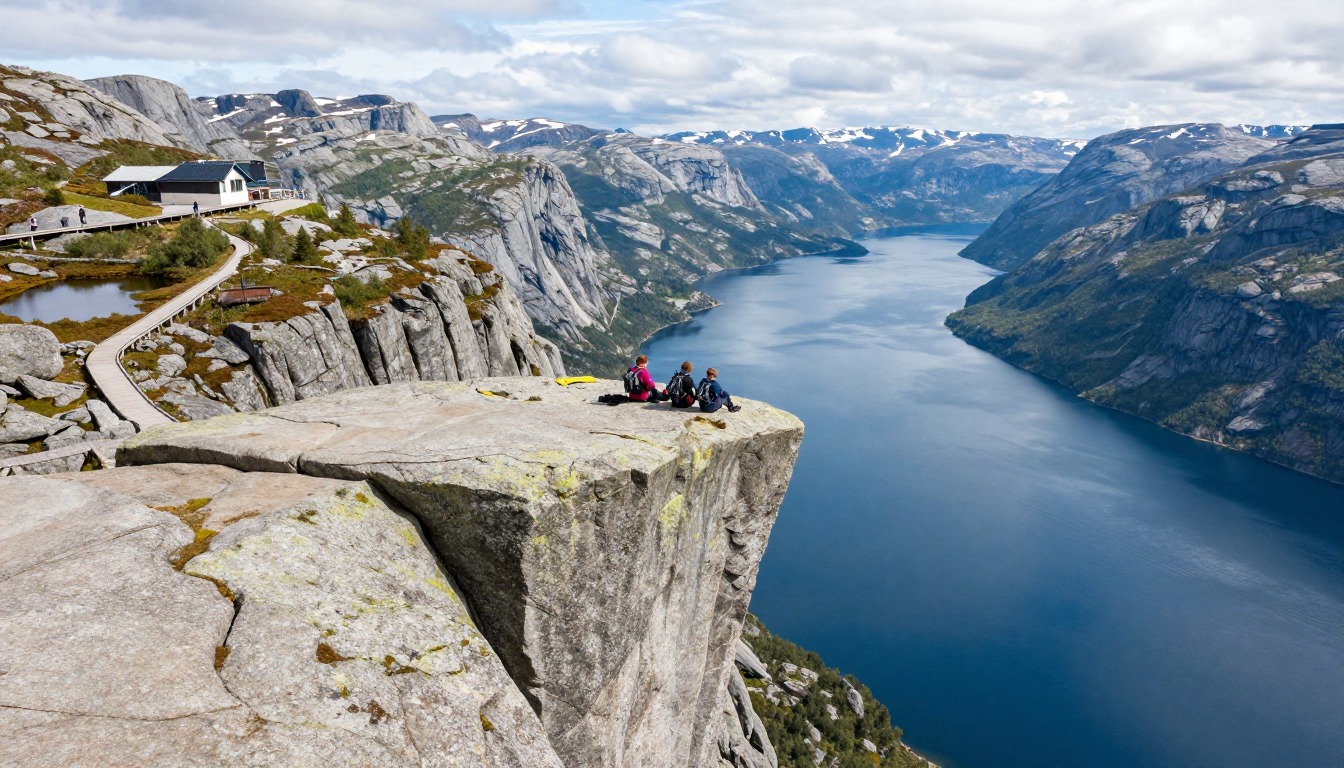
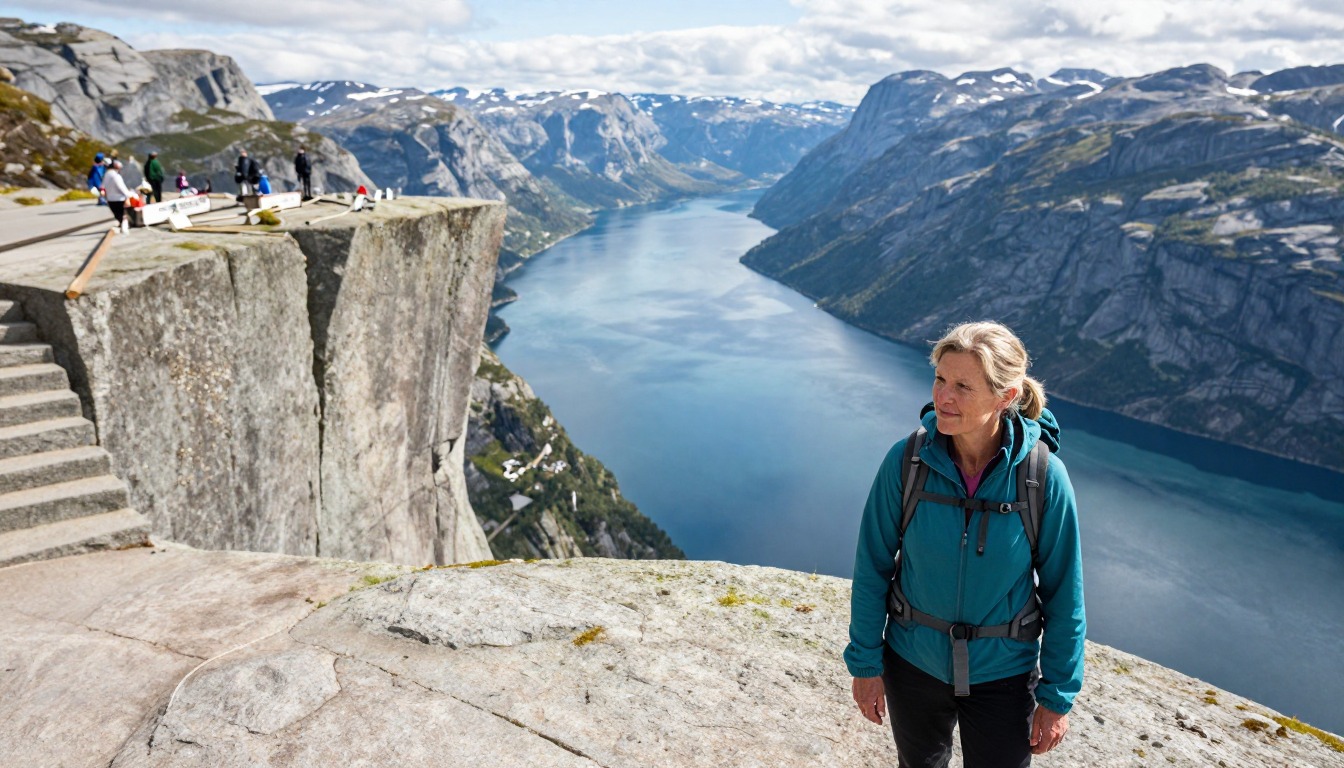
Preikestolen, or Pulpit Rock, is a flat-topped cliff that sticks out high above a fjord, which is a long, narrow arm of the sea between steep mountains. The walk to it is on a well-built path with lots of stone steps, so it feels a bit like climbing many flights of stairs in the fresh air, with breaks of flat ground in between.
You walk out and back the same way. There is no fence at the top, so the one big rule is to stay well back from the edge, especially when it's windy or wet.
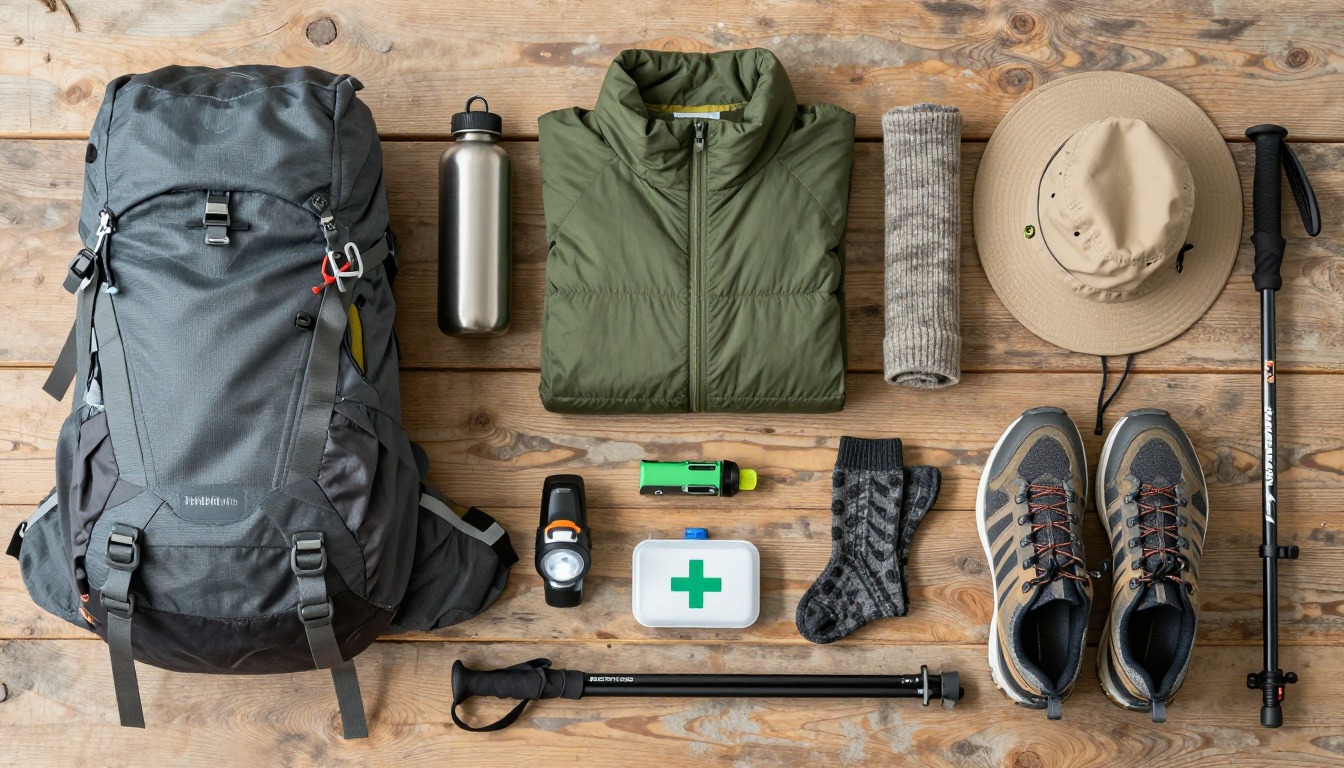
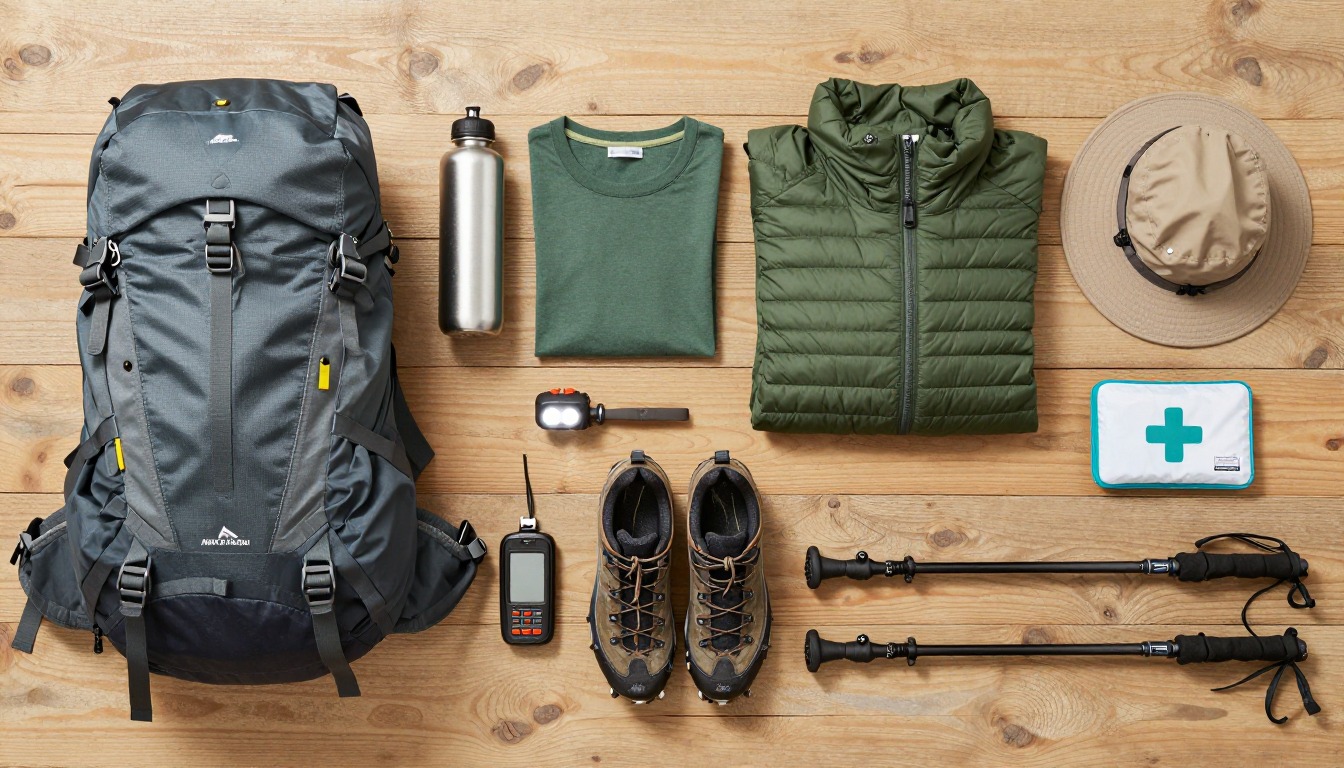
A small backpack is enough. Put in water, because there is nowhere to fill up, plus snacks, a warm layer and a rain jacket. Wear shoes with good grip. The steps can be slippery on the way down, when your legs are tired, and going slowly then is the smartest thing you can do.
What the hike is like
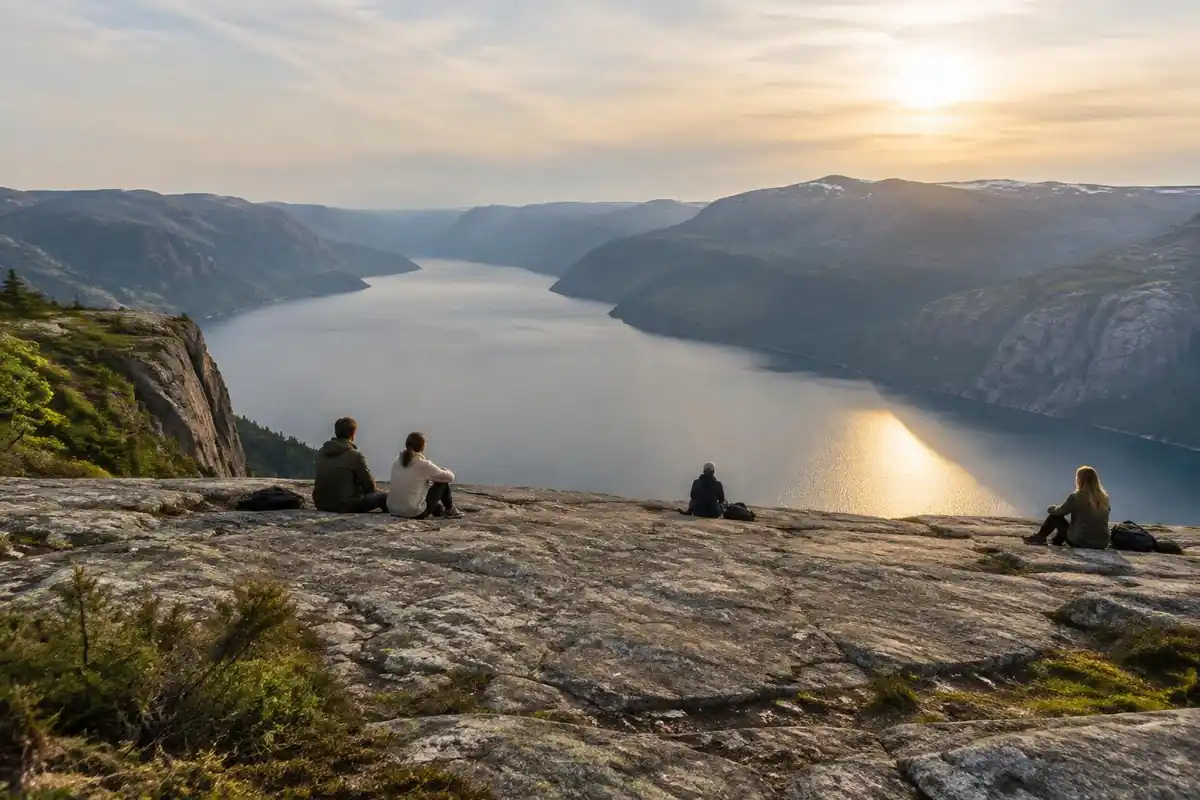
The path out of the trailhead is one of the most heavily built in Norway, and that shapes the whole walk: long flights of set stone steps alternate with flatter stretches of boardwalk laid over boggy ground and bare rock slabs. The climbing comes in distinct bursts rather than one steady grind — a staircase section, then a level breather, then another staircase. Partway along, the trail traverses a slope with the fjord opening up below, and the ground underfoot shifts from constructed steps to natural rock where you follow painted markers across the slabs. The final approach runs out onto open granite toward the platform itself, which has no barrier of any kind at its edge. The whole route is walked out and back the same way, so you see every staircase twice.
How to plan the itinerary
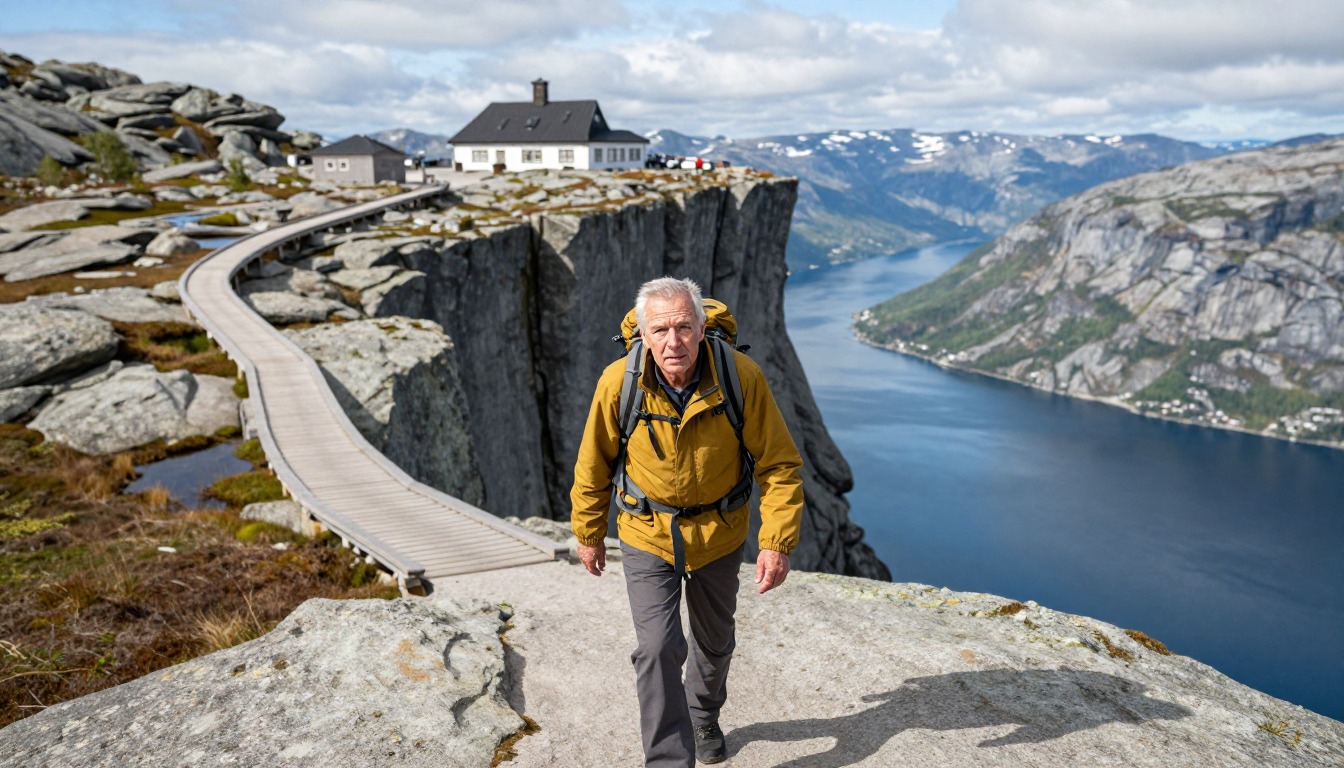
Almost everyone treats this as a single day out from a nearby base rather than an overnight, and the planning question is really what time you start. Hikers sleeping at the trailhead area often set off early to reach the platform before the main wave arrives, which makes a real difference to how the top feels. Those coming from Stavanger build the ferry and bus connection into the morning and arrive later, so their day is shaped by the return schedule as much as by walking pace. In the long-daylight months an evening start is a popular alternative, giving a quieter platform and low light over the fjord, provided you are confident descending the stone steps in fading light. Outside the main season, guided trips are the usual approach.
Plan this trip in 5 steps
-
Pick the right pack
Match a pack to your trip, fit and priorities.
-
Plan food & water
Calories, food weight and water for your days on trail.
-
Estimate your time
Pre-filled with this trail’s distance and climb — adjust for your pace.
Trail-specific tips
Those beautiful stone steps get slick when wet, and the descent is where most twisted ankles happen — take the downhill slower than feels necessary and use poles if your knees complain. Carry your own water; there is nothing to refill from along the way. The platform has no railing and the rock near the edge can be greasy after rain, so stay well back rather than trusting your footing for a photograph. Wind on the exposed upper section is often stronger than at the parking area. For general trail safety habits, see /trail-smarts/.
Permits & rules
No permit is needed. The cliff edge has no railings and a huge drop — keep well back, especially in wind or wet, and start early to avoid the busiest hours on the narrow path.
Gear suited to this hike
Matched to the terrain and conditions here. Real products — check current price on Amazon.



Why the descent is the hard half
Visit Norway lists Preikestolen with Trolltunga, Kjerag and Besseggen among Norway's best hikes and says National Hiking Trail status is meant to make sure these routes last for years to come.1 That investment is why the path is built from set stone steps and boardwalk. A built path is easier to follow, but it concentrates the effort into repeated step-downs on the return.
Step-downs are where knee load peaks. In a lab study on a 25-degree downhill ramp, hiking poles lowered knee compressive and shear forces by 12–25%,3 and another study found poles reduced lower-limb joint loading on descents at every pack load tested.5 On level ground the benefit largely disappears.6 So poles are optional on the way up and most useful on the way down.
The injury pattern backs this up. A 2023 systematic review found blisters and ankle sprains were the most common hiking injuries, and the lower limb was the most commonly injured body area in every study reviewed.4
Footwear and fit for wet stone
This page recommends boots or trail shoes with real grip rather than sneakers. The fit matters as much as the sole. The American Academy of Orthopaedic Surgeons says a hiking shoe should give stability on uneven ground and cushioning for impacts, and advises leaving about half an inch between the longest toe and the tip of the shoe.7,8 That space stops toes jamming into the front on hundreds of stone steps down. The American Academy of Dermatology recommends moisture-wicking socks and warns that cotton holds sweat, which leads to friction and blisters.9
Timing, daylight and water
Naismith's classic rule, one hour per three miles plus one hour per 2,000 feet of climb,2 puts the 5-mile, 1,640-foot round trip at about 2.5 hours of moving time. Real days run longer because of stair pace, passing places and time at the top.
For an evening start in the long-daylight months, check actual sunset for the date; NOAA's solar calculator gives sunrise and sunset for any location.10 During civil twilight, after sunset, terrain is usually still visible without artificial light, but that window is limited.11 The US National Park Service recommends headlamps as the hands-free light source.12
There is no refill point, so carry all your water. CDC notes sweat rates can reach about 1 liter per hour, and also advises drinking to thirst rather than forcing water.13
Common questions
Is Preikestolen suitable for beginners or families?
The route is well built, clearly marked and needs no scrambling, which makes it one of Norway's more approachable big-view hikes. The catch is the sustained stair climbing and the unprotected edge at the top. Fit families do it regularly, but children need close supervision on the platform, and anyone unsteady on stone steps should think carefully about the descent.
Do I need hiking boots, or will sneakers do?
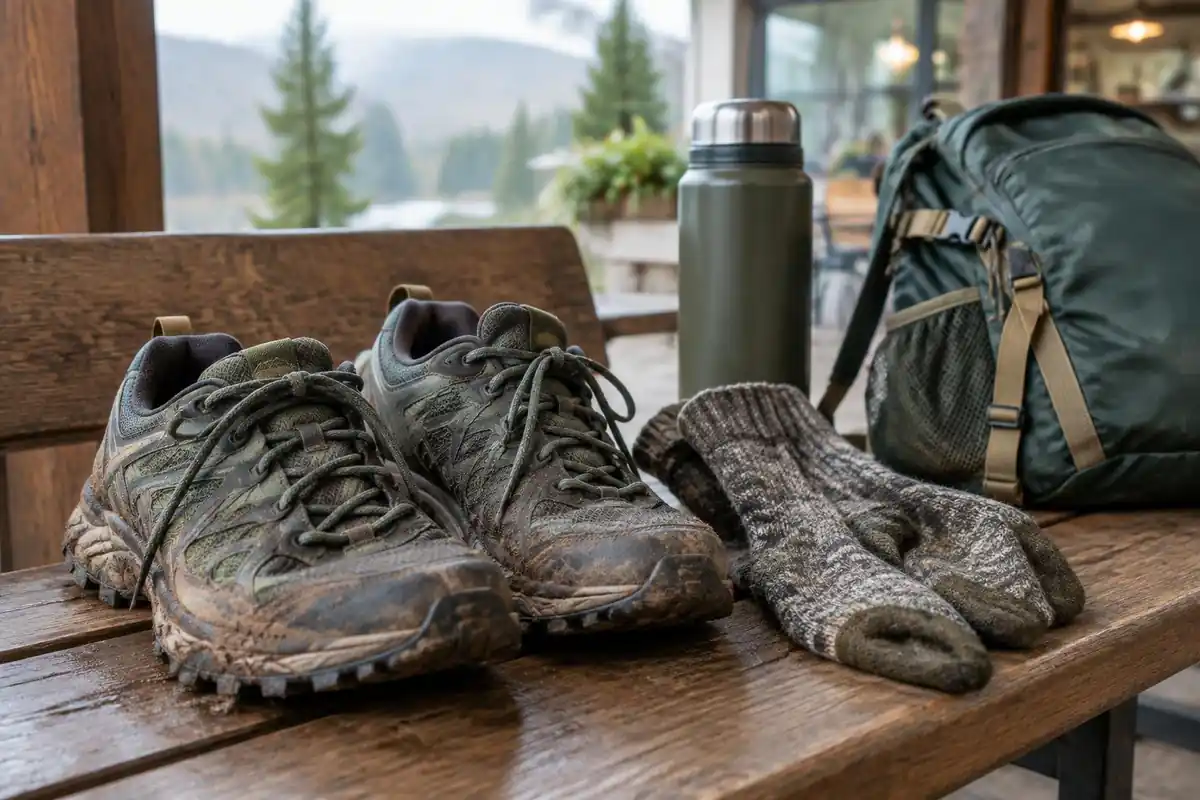
Boots or trail shoes with real grip are the sensible choice. Much of the surface is stone and bare rock that turns slippery in rain, and Norwegian weather rarely gives long guarantees. Smooth-soled sneakers are the footwear behind a lot of avoidable slips here, particularly on the way down when legs are tired.
How busy does the trail get, and can I avoid it?
It is one of Norway's most-walked routes, and the middle of the day in high season means a steady stream of people on the path and a crowded platform. Starting early or heading up later in the evening during the long-daylight months both thin things out considerably. Sleeping near the trailhead rather than commuting in makes either option far easier.
Can it be hiked outside the main season?
It can, but winter conditions change the character of the route completely — ice on the stone steps and snow over the marked slabs make navigation and footing far more serious. Going with a guide is the common approach in those months, and guided winter trips are widely run. Check current conditions before assuming the path is straightforward.
Complete gearsets for this trip
Full curated kits built for exactly this kind of hike.
Trail conditions, permits and access rules change without notice — always confirm current information on the official source above before you go. Some facts on this page are still pending owner verification and are marked accordingly. Product links and the accommodation map are affiliate links: we may earn a commission at no extra cost to you; product prices and availability are shown on Amazon, and accommodation prices on the booking site. See our affiliate disclosure.