
Affiliate disclosure: this page contains affiliate links. Purchases made through them may earn us a commission at no extra cost to you. See our affiliate disclosure.
In plain English
The Camino is less a hike than a long series of ordinary walking days in a row. Nothing on the Galician stretch is hard on its own. The difficulty is that you do it again the next morning, and the morning after that, with the same feet.
That is why pilgrims obsess over feet and pack weight. A blister that would be a minor nuisance on a day hike can slow you for days when you have to keep walking on it. A pack that feels fine at breakfast can feel heavy by the fourth afternoon, because every kilogram costs energy on every step.
You also carry a small booklet, called a credential, that you get stamped along the way. At the end you can take it to the Pilgrim's Office in Santiago to receive the certificate. Rules and busy-season procedures can change, so it is worth checking the office's own guidance before you go rather than trusting an older blog post.
What the hike is like
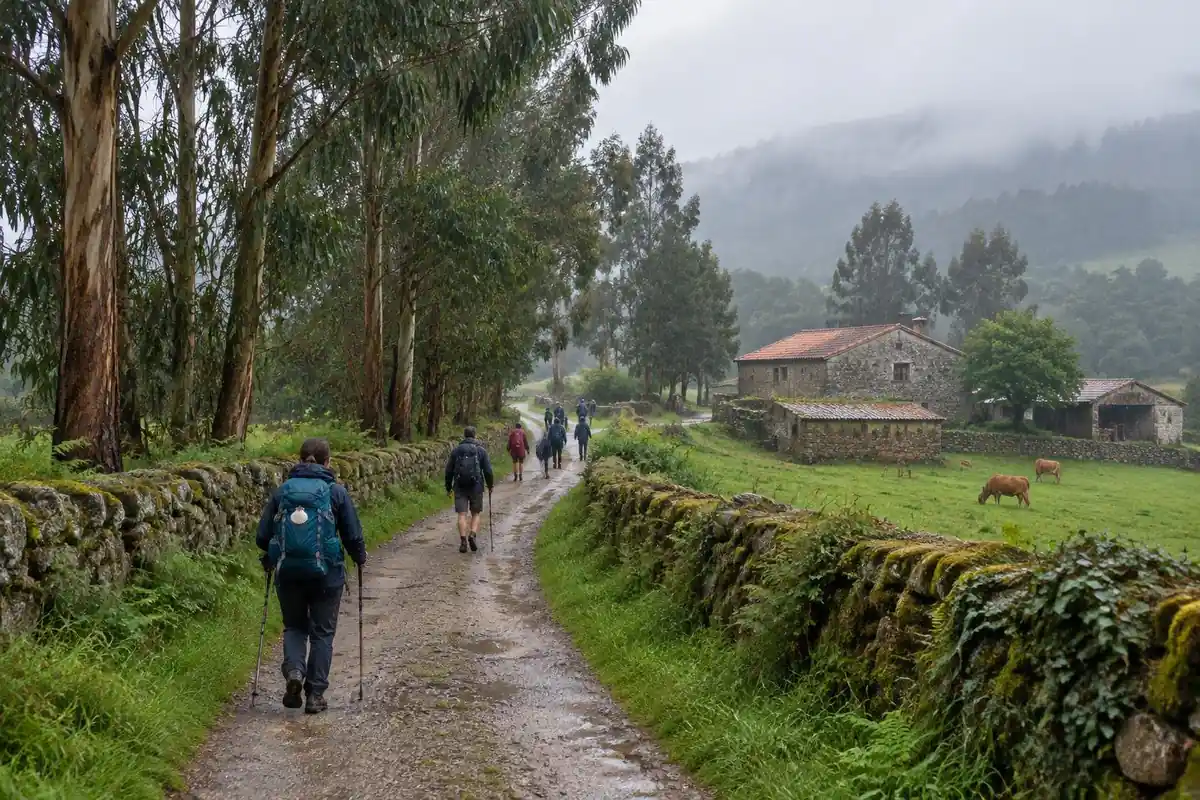
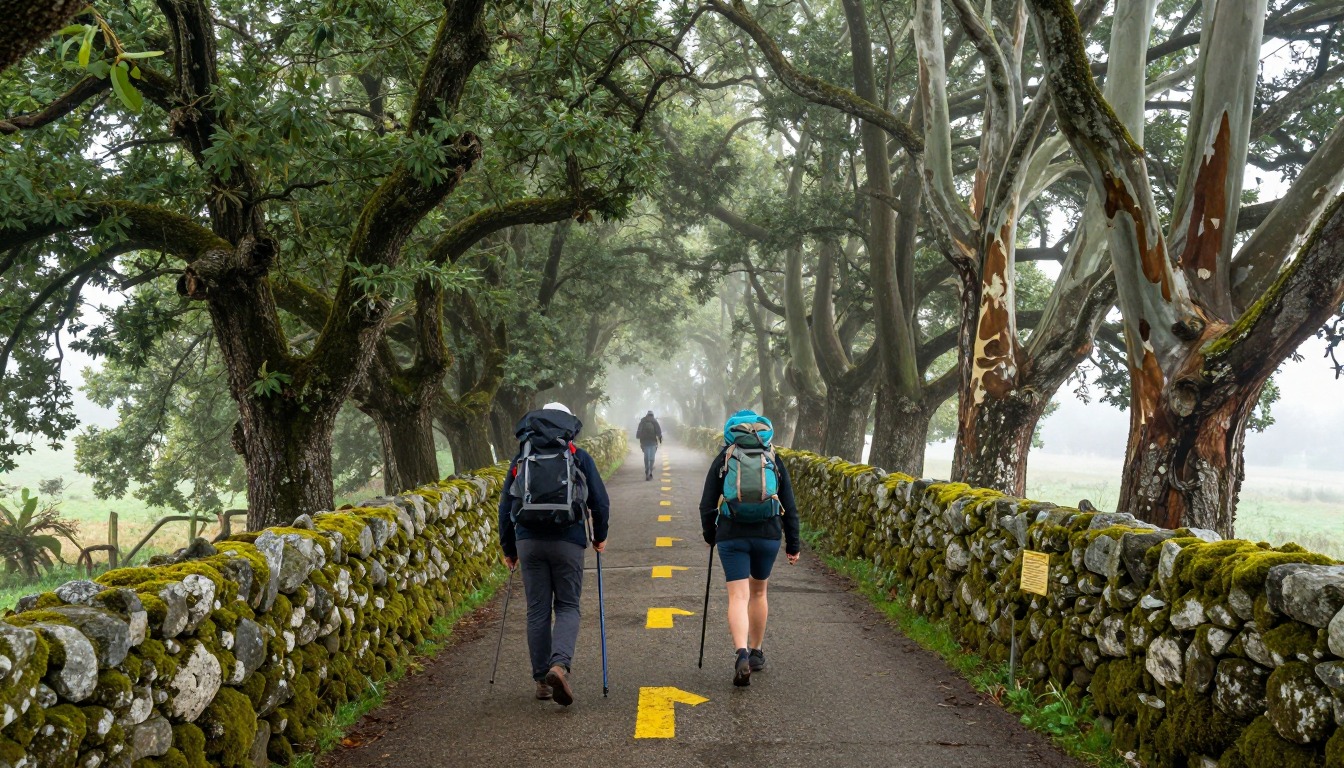
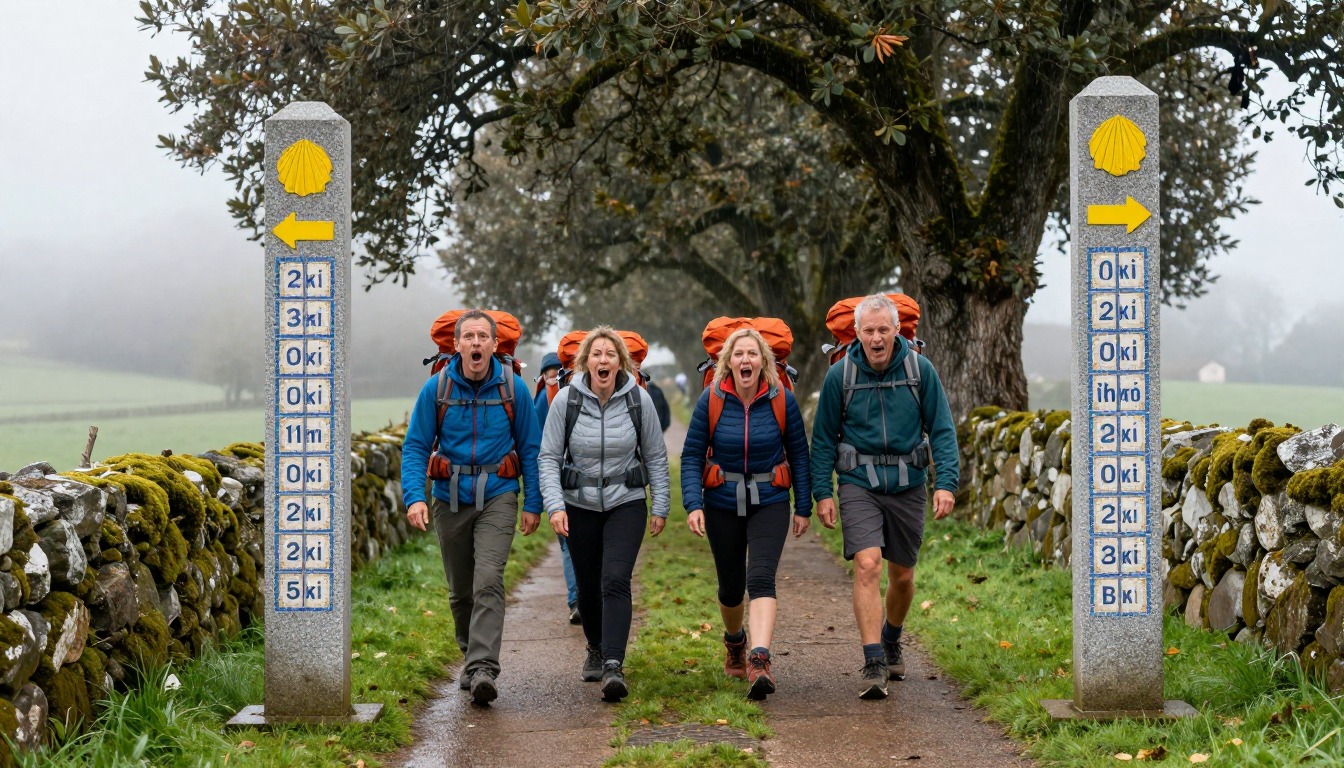
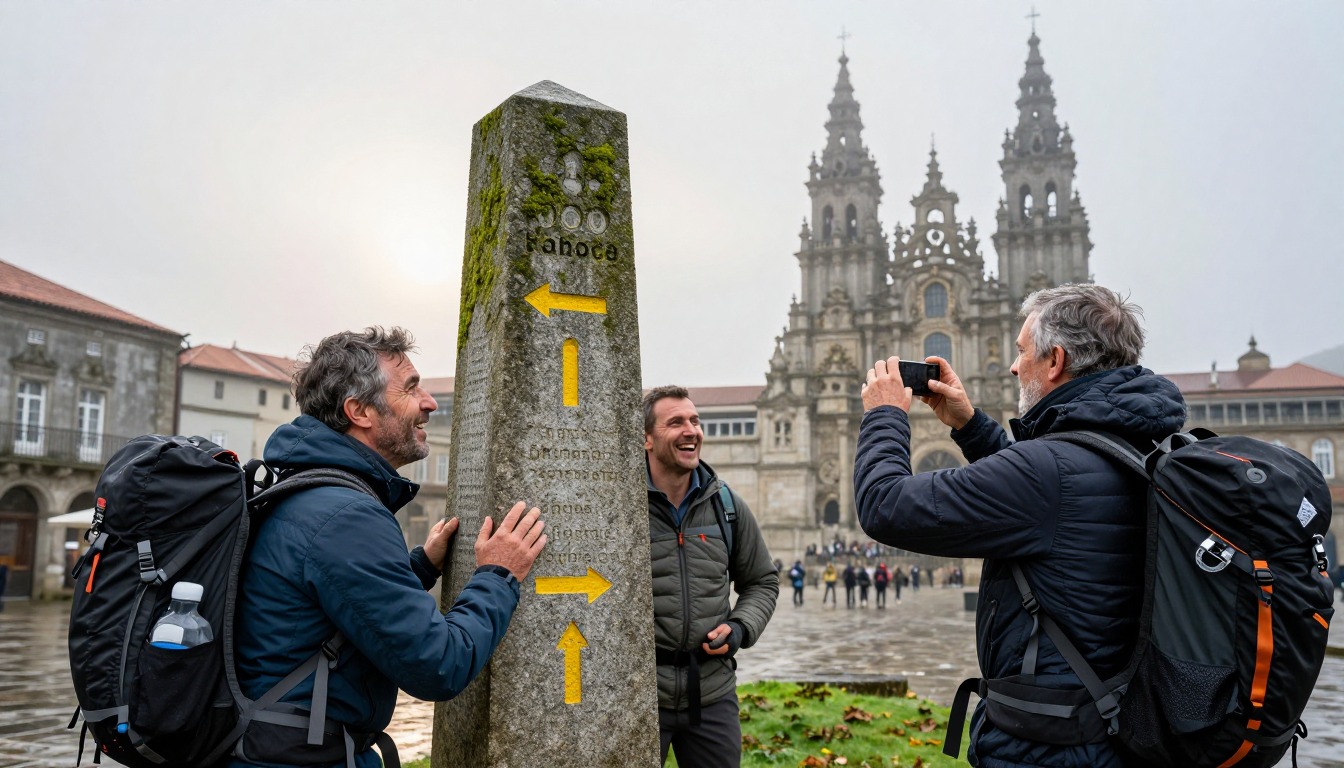
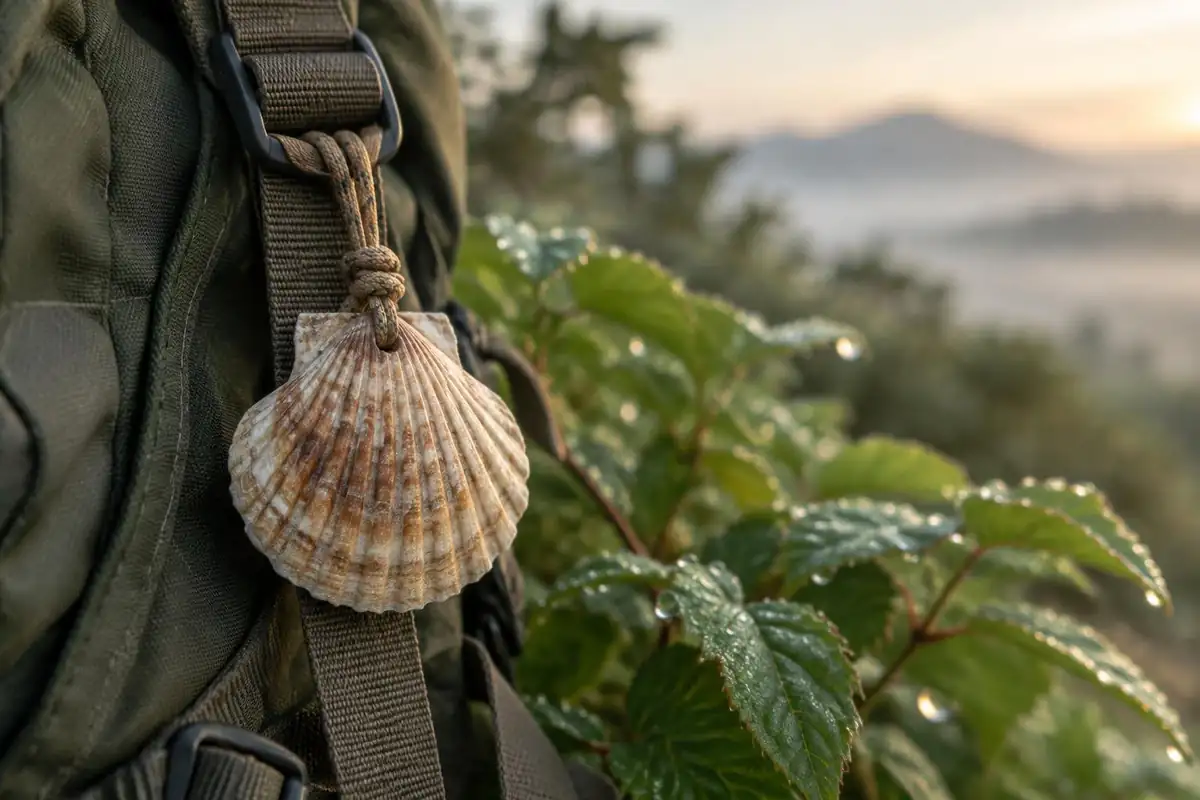
Galicia walks as a long series of small climbs and drops rather than mountain days — there is no summit to build toward, just rolling country that never quite flattens out. The surface rotates between sunken dirt lanes running between mossy stone walls, forest track through eucalyptus and oak plantation, farm concrete, and stretches beside or along minor roads, which is where the day starts to tell on your feet. Old stone bridges carry the route over rivers, and hamlets appear often enough that you are rarely more than a short walk from a café. Waymarking is constant: yellow arrows, scallop shells, and stone markers counting down toward Santiago. The finish changes character completely, threading through city outskirts before the old town's granite streets funnel everyone into the cathedral square.
How to plan the itinerary
From the usual Galician starting point, most walkers spread the route over about five days (the exact number depends on where you start and your pace), with each day ending in a town that has beds and food. Strong walkers compress it into fewer, longer days; people who want the experience rather than the mileage add a rest day or split a stage in two. The daily rhythm is remarkably consistent — set off around first light, stop for coffee in the first village, walk through the morning, and be finished by early afternoon. Some time the final day to arrive in Santiago before midday so there is time in the city afterward. The stretch into Santiago has its own credential-stamping expectations, so confirm the current requirements with the Pilgrim's Office rather than assuming. The Office ties the Compostela certificate to a religious or spiritual motive for the walk and offers a separate certificate of distance otherwise.
Plan this trip in 5 steps
-
Pick the right pack
Match a pack to your trip, fit and priorities.
-
Book a place to stay
Campgrounds, huts and lodges near Camino Francés — Galicia to Santiago.
-
Plan food & water
Calories, food weight and water for your days on trail.
Trail-specific tips
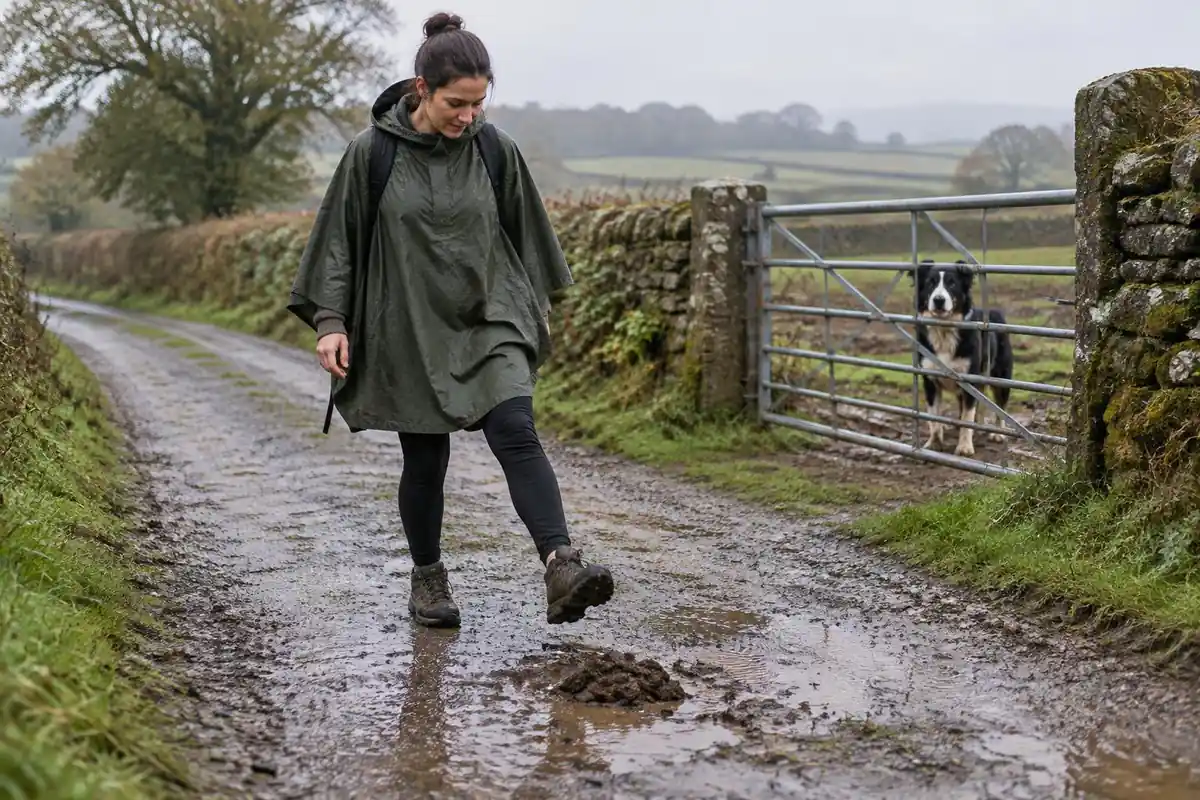
Feet are the limiting factor here, not fitness. Days back to back on hard-packed lanes and asphalt cause more grief than any single climb, so walk in your shoes beforehand and treat hot spots the moment you notice them rather than at the next stop. Because so many people begin at the same town, walking half an hour earlier or later than the crowd changes the whole feel of the day. Galicia is genuinely wet country in any season — carry real rain gear, not a token layer. See /trail-smarts/ for blister care and general prep.
Permits & rules
No permit is needed to walk. The Compostela is issued by the Pilgrim’s Office to pilgrims who walk at least the last 100 km with a religious or spiritual motive (otherwise a separate certificate of distance is available); you carry a pilgrim credential and collect stamps (Sarria onward is the popular start). Albergue priorities vary.
Gear suited to this hike
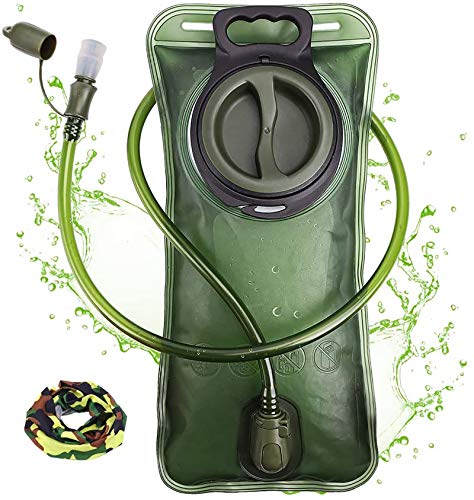
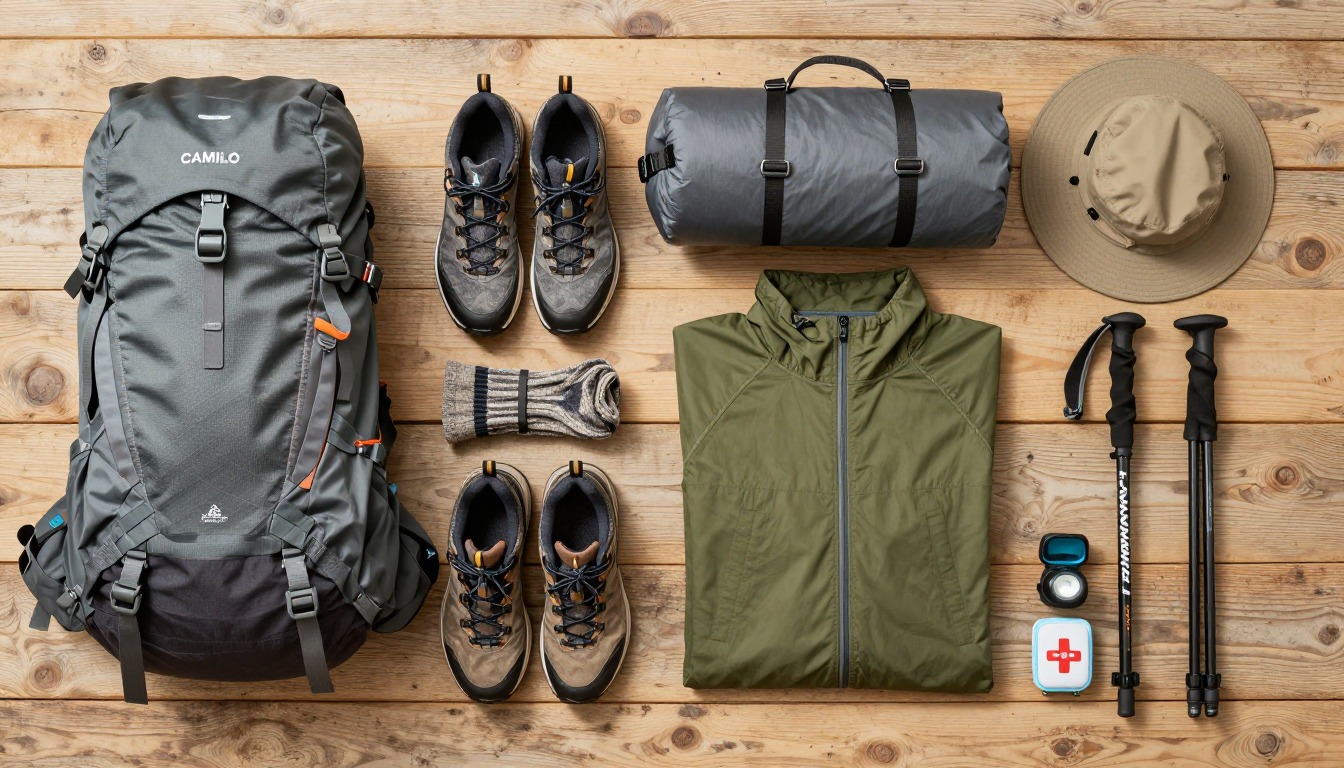
Matched to the terrain and conditions here. Real products — check current price on Amazon.



The credential, the Compostela and the office in Santiago
The Pilgrim's Office website describes three documents: the Compostela, which it calls the traditional pilgrimage certificate; the credential, the pilgrim's passport; and a certificate of distance.1 It also says you need to collect a ticket with a QR code to receive the Compostela, and that in busy periods same-day collection cannot be guaranteed.1
Two practical points follow. First, the credential is something you plan for before you start walking, so it belongs on your packing list next to your rain jacket. Second, the busy-period note is a reason not to schedule a flight home for the same afternoon you arrive. The page here suggests timing the last day to reach Santiago before midday. Treat that as a comfort choice, not a rule, and check the requirements for stamps and eligibility with the office directly, because this page does not spell them out and they are set by the office, not by us.
Why feet decide the trip
Common injuries from prolonged load carriage include foot blisters, stress fractures, back strains, metatarsalgia and knee pain.2 Most of those trace back to shoes, socks and load. Dermatologists recommend nylon or moisture-wicking socks, shoes that fit properly, and stopping as soon as skin turns red or painful, and note that moleskin or soft bandages can protect trouble spots.3 Cotton soaks up sweat and moisture, which raises friction.3
Shoe fit needs a test at the right time of day. Feet can swell up to 8 percent during the day, so try shoes on late, standing, with about half an inch of space in front of the longest toe.4 Galicia's surface changes between soft lanes and concrete or road walking, so a shoe with some cushioning is a reasonable choice. Footwear makers make their own claims about boots versus lighter shoes; KEEN, for one, says a boot's added stability can be welcome under a fully loaded pack, while lighter shoes are built for weight and breathability.5 Since you carry little on the Camino, the lighter option is usually the one that suits the load.
Keeping the pack honest
Because you are staying in towns with beds and food, you can carry far less than a wilderness backpacker. Energy cost rises with load weight, body mass, speed and grade,2 so the simplest way to walk further with less fatigue is to leave things at home. Base weight, meaning your gear excluding food, water and fuel, is a useful yardstick: lightweight backpacking is usually defined as under 20 pounds of base weight.6 A Camino pack should sit well below that.
If you fly with the pack, Delta, as one example, limits carry-on bags to 22 by 14 by 9 inches, and a small backpack can count as the free personal item if it fits under the seat.7 Other airlines differ, so check yours. A compact pack that fits those dimensions also saves you from checking a bag that might be delayed while your shoes are the one item you cannot replace mid-trip.
Common questions
How fit do I need to be for the Galician stages?
Less fit than people expect, but more durable than they expect. There is no technical ground and no sustained mountain climbing — the challenge is repetition, walking a substantial distance day after day on hard surfaces. If you can comfortably walk for several hours and then do it again the next morning, you are in the right territory.
Is this stretch as crowded as people say?
It is the busiest part of the Camino Francés, because this is where most people join to complete the walk into Santiago. Summer amplifies it. The practical fixes are simple: walk in shoulder season, start earlier or later than the main wave, and accept that companionship on the trail is part of what this particular stretch is about.
Do I have to carry my own pack the whole way?
No. Daily bag-transfer services operate along this route, moving your luggage ahead to your next stop so you walk with a small day pack. Plenty of pilgrims carry everything themselves as a point of principle; plenty do not. Either is normal here, and switching partway if your feet or shoulders object is entirely reasonable.
Trail shoes or boots for the Camino in Galicia?
Most walkers choose low-cut trail shoes or well-cushioned walking shoes, because the ground is rarely rough enough to need ankle support and cushioning matters more on hard lanes. Whatever you pick, wear it on long walks beforehand. Wet Galician weather also means a second pair of socks in the pack is a genuinely good idea.
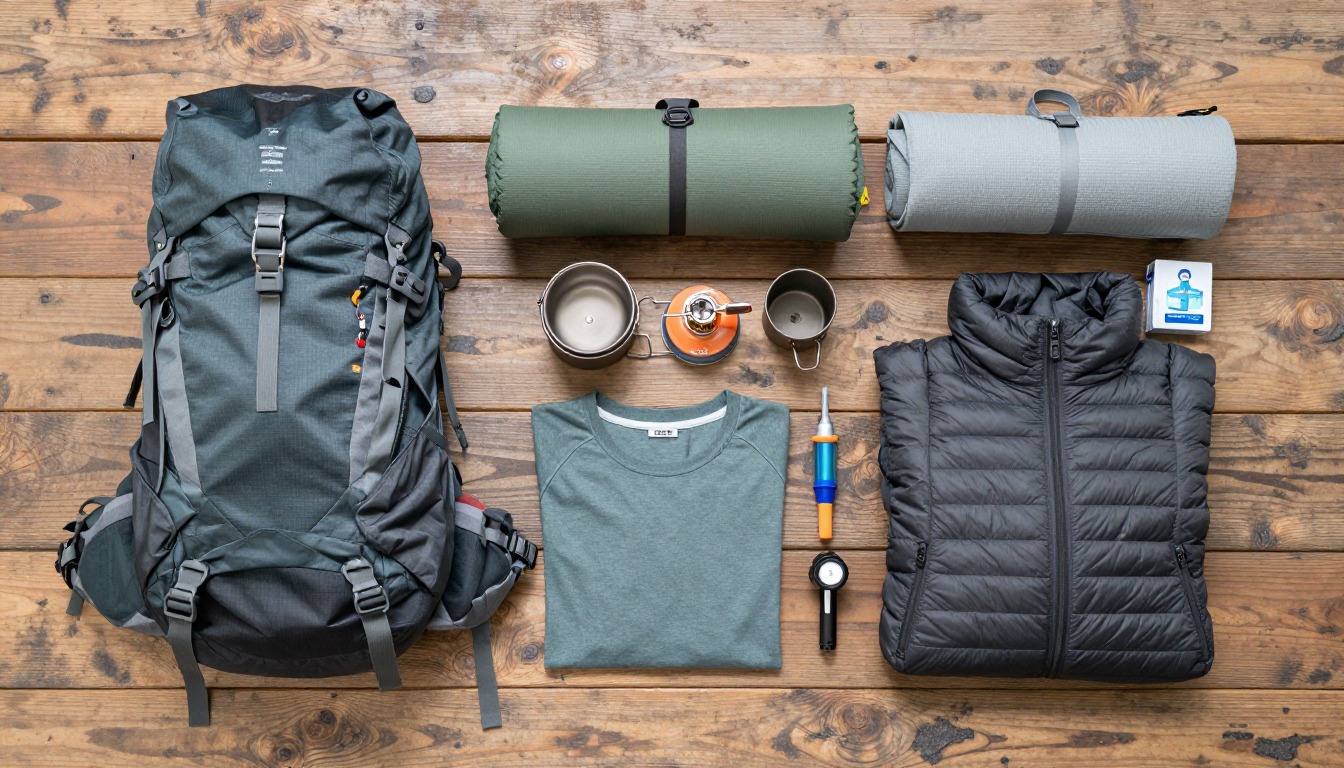
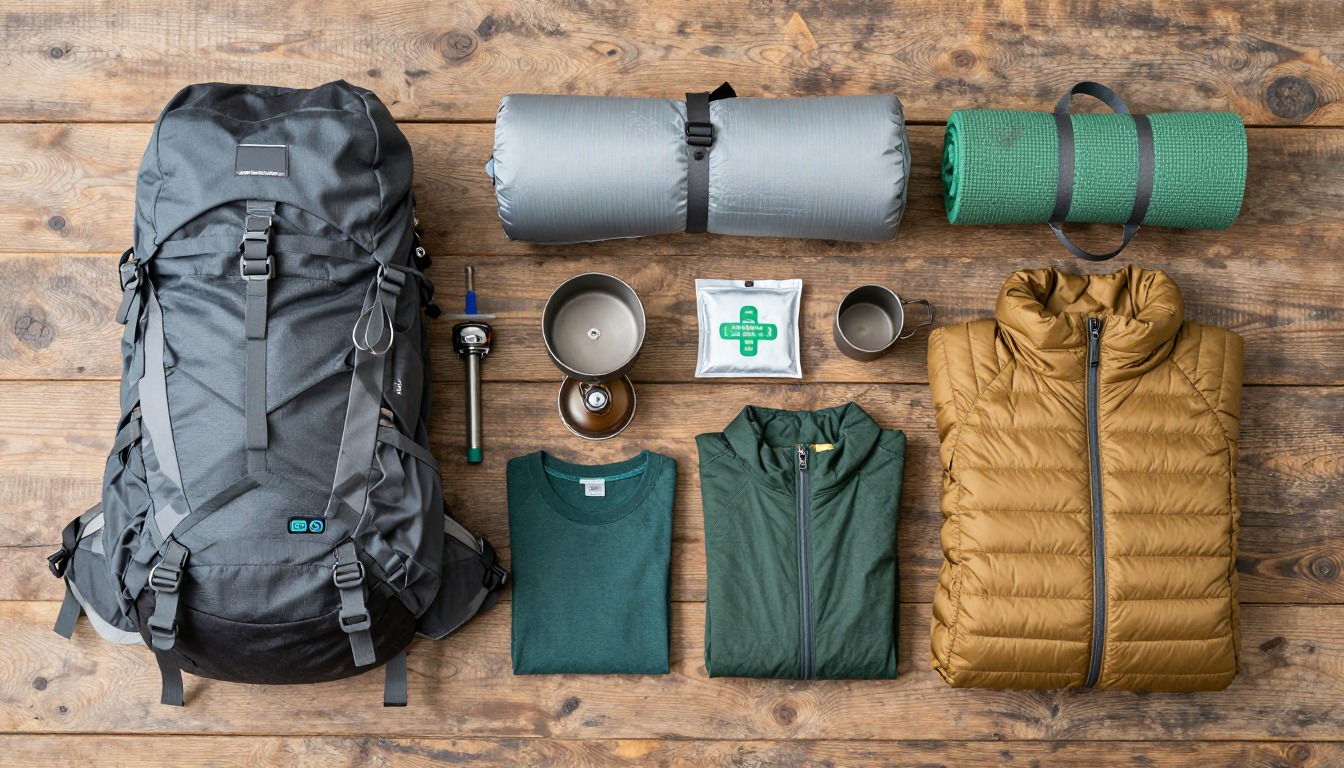
Complete gearsets for this trip
Full curated kits built for exactly this kind of hike.
Trail conditions, permits and access rules change without notice — always confirm current information on the official source above before you go. Some facts on this page are still pending owner verification and are marked accordingly. Product links and the accommodation map are affiliate links: we may earn a commission at no extra cost to you; product prices and availability are shown on Amazon, and accommodation prices on the booking site. See our affiliate disclosure.