
Affiliate disclosure: this page contains affiliate links. Purchases made through them may earn us a commission at no extra cost to you. See our affiliate disclosure.
In plain English
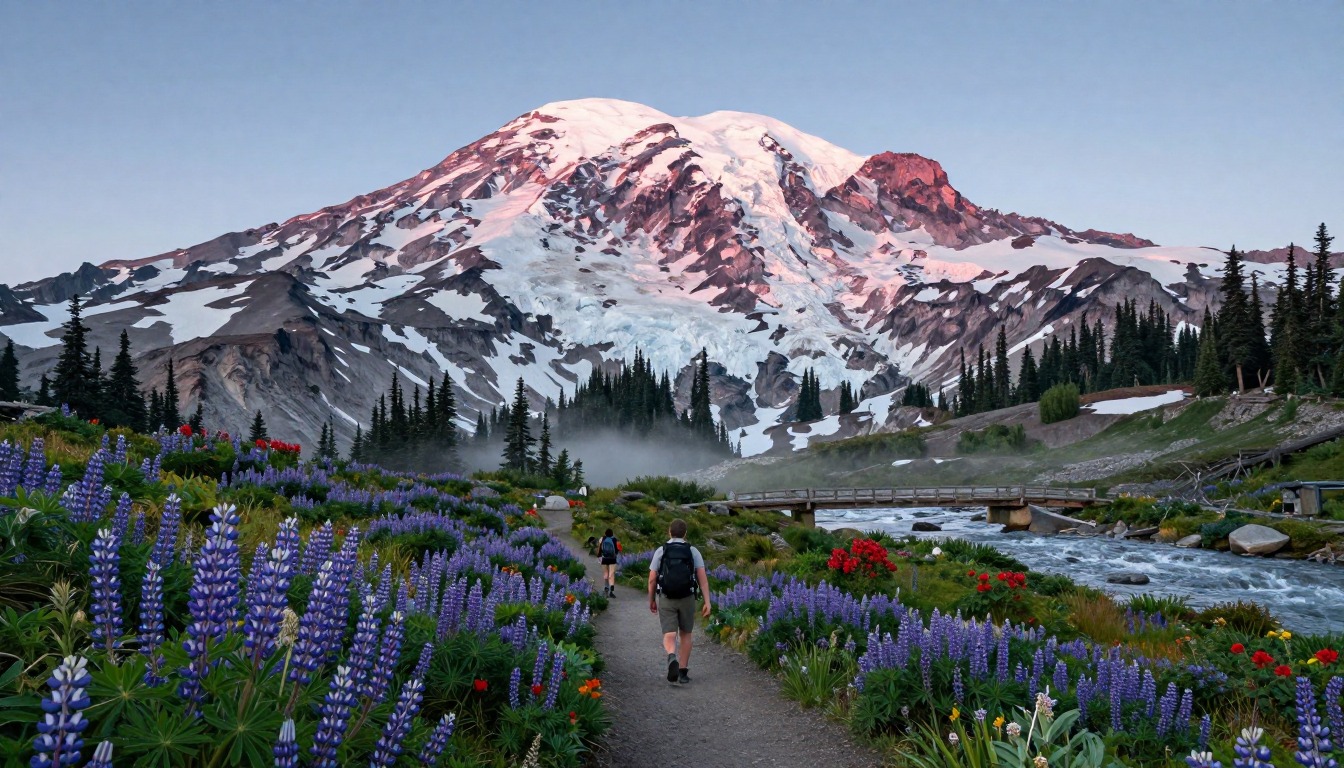
The Wonderland Trail is a path that goes all the way around Mount Rainier, a huge volcano in Washington covered in glaciers.1 Most people take a week and a half to two weeks to walk it, sleeping at set campsites along the way that you reserve with a permit.
The walk goes down into river valleys and back up over ridges again and again, so it feels like climbing stairs for days. The rivers are milky gray because they carry ground-up rock from the glaciers.
You carry everything you need to live outdoors: a tent, sleeping bag, stove, clothes and food. That means a big backpack, much bigger than a daypack. Most hikers mail or drop off boxes of food at points around the mountain so they do not carry two weeks of food at once. The weather can turn stormy fast, so good rain gear matters.1
What the hike is like
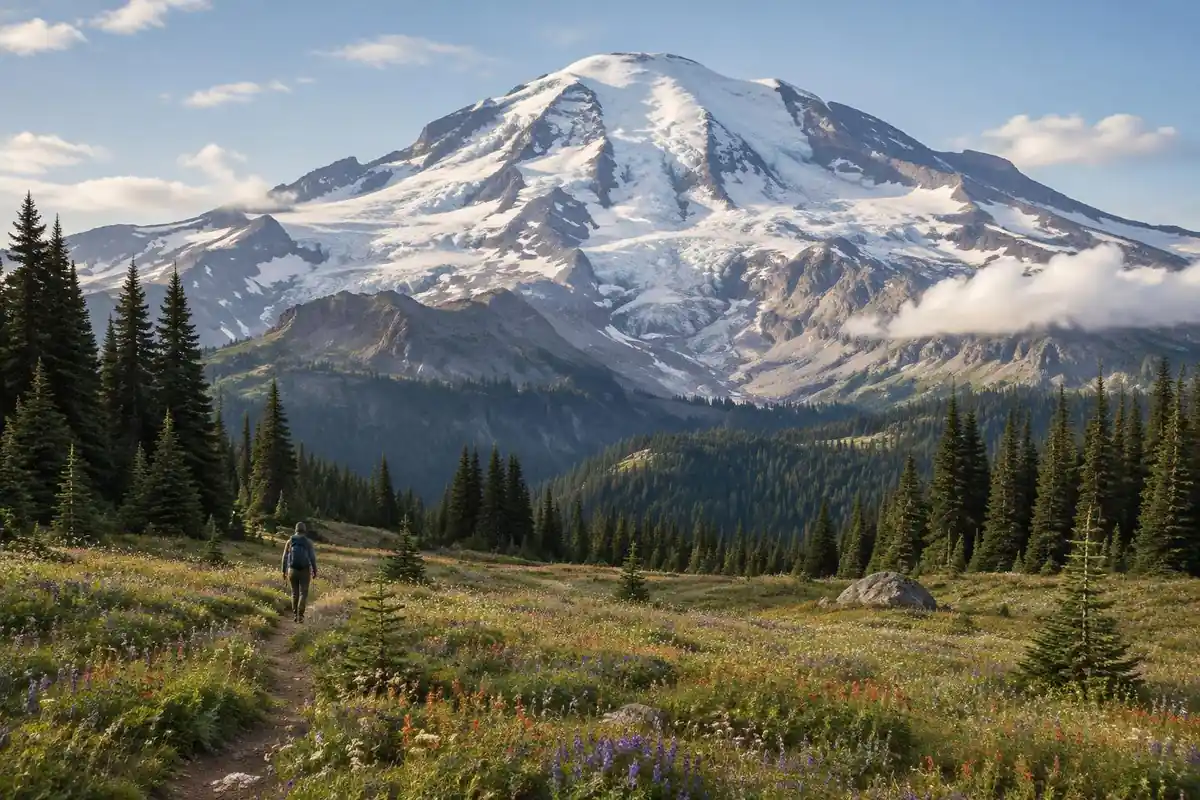
The defining feature of the Wonderland is that it almost never stays level. The loop works around the mountain by dropping into one river valley and climbing back out to the next ridge, over and over, so the profile reads as a saw blade rather than a single ascent. Low sections run through deep old-growth forest on soft, rooty tread beside glacier-fed rivers that run gray with rock flour; crossings are made on log bridges and seasonal suspension spans that get pulled or damaged by high water. Climb out of those valleys and the trail opens into subalpine meadow and heather, then bare rock at the passes, where snow lingers long into the season and the route may be marked by wands or cairns rather than obvious tread. The walking is rarely technical. It is simply relentless, and the mountain reappears from a new angle constantly.
How to plan the itinerary
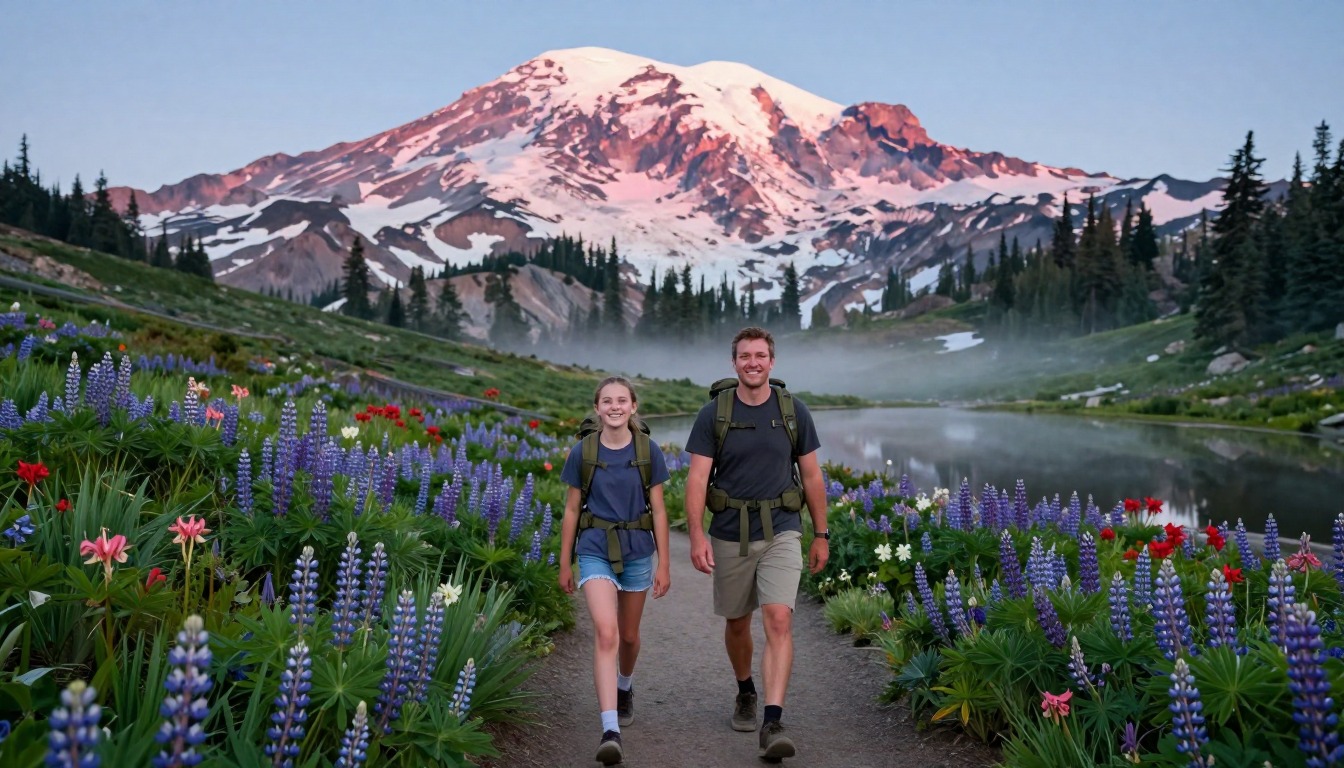
Most hikers plan somewhere in the region of a week and a half to two weeks for the full circuit, staging it camp to camp since the designated wilderness camps are spaced roughly a day's walk apart and your permit fixes which ones you use. Strong, light-packing hikers do it faster; plenty of people deliberately go slower to leave time for side trips and weather days. Because carrying two weeks of food is unpleasant, resupply caches placed in advance at road-accessible points along the loop are the norm rather than the exception. Direction is a genuine choice and hikers argue about it: the decision usually comes down to which climbs you would rather do fresh and which section you want to reach when the meadows peak. Section hiking the loop across separate trips is also common.
Plan this trip in 5 steps
-
Pick the right pack
Match a pack to your trip, fit and priorities.
-
Book a place to stay
Campgrounds, huts and lodges near Wonderland Trail — Mount Rainier.
-
Plan food & water
Calories, food weight and water for your days on trail.
-
Estimate your time
Pre-filled with this trail’s distance and climb — adjust for your pace.
Trail-specific tips
Plan your itinerary around the passes, not the mileage. The climbs out of the river valleys are where days actually get long, and a schedule that looks even on paper often is not. Early in the season, snow on the high passes and damaged or missing river crossings cause more changed plans than fatigue does, so check current conditions with the park and keep a fallback camp in mind. Protect your feet: wet forest sections, glacial fords and day after day of steep descent are hard on them. For blister prevention, river-crossing judgment and food storage, see /trail-smarts/.
Permits & rules
A wilderness permit with camps is required for the Wonderland Trail; it is competitive, with an optional early lottery, roughly two-thirds of itineraries reservable in advance and roughly one-third available as walk-up permits. Store food properly and plan resupply caches in advance.
Gear suited to this hike
Matched to the terrain and conditions here. Real products — check current price on Amazon.


Pack size and weight for a two-week loop
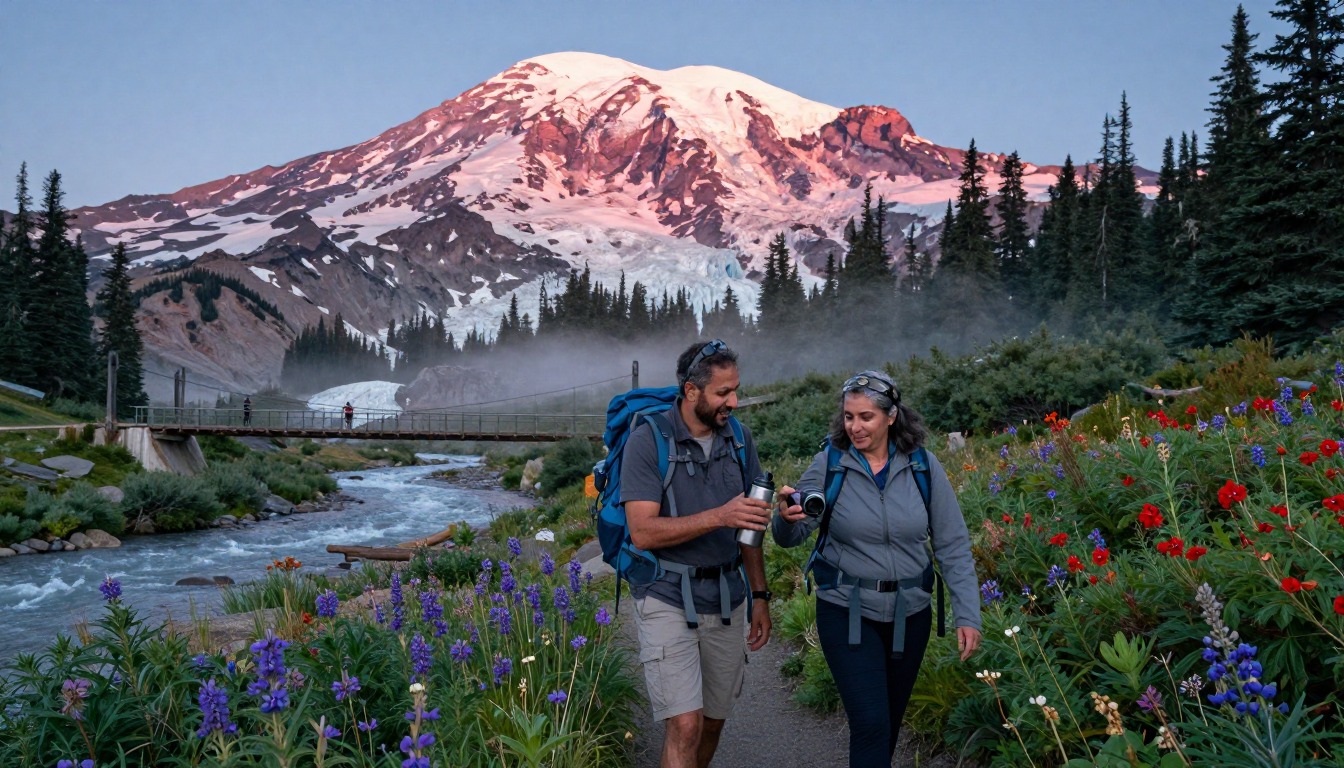
WTA suggests a 50–70 L pack for trips of 3 to 7 nights and describes 70+ L packs as large packs for carrying a lot of gear and food.2 Resupply caches are what keep most Wonderland hikers in the 50–70 L range: each leg becomes a few days of food rather than the whole trip. Gossamer Gear defines lightweight backpacking as a base weight under 20 pounds and ultralight as under 10, where base weight excludes food, water and fuel.5
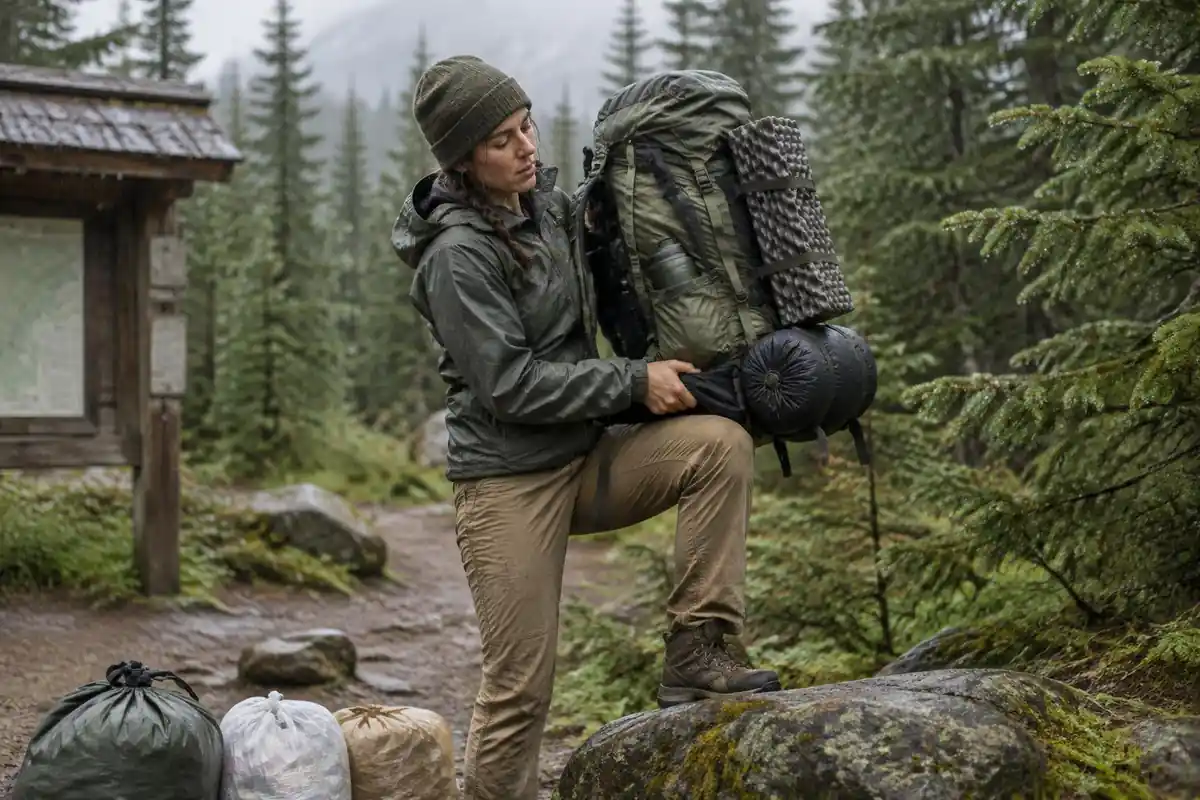
The weight matters more here than on most trails because of the page's 27,000 feet of cumulative gain. Lab research found walking energy use rose roughly linearly with pack load, by about 7.6 watts per extra kilogram.4 Spread over ten days of steep climbs, a few kilograms of unneeded gear is a lot of extra work. Over 10 to 14 days, that total gain works out to roughly 2,000 to 2,700 feet of climbing per day on average, before counting the matching descents.
The common rule that a pack should stay under 20% of body weight is a hiking-community rule of thumb with no primary source; a 2004 study found long-distance Appalachian Trail backpackers carried about 25% to 28%.6
Glacial rivers, gray water and treatment
The park's official site says Rainier spawns five major rivers and is the most glaciated peak in the contiguous United States.1 The rivers run gray with rock flour, and that silt affects water treatment. The CDC says UV light does not work well in cloudy water and that water should be filtered first; it also notes most portable filters remove parasites but not viruses or bacteria.3 The EPA advises letting cloudy water settle and filtering it through cloth or a coffee filter before disinfecting.7 Where you have a choice, clearer side streams are easier on filters than the main glacial channels.
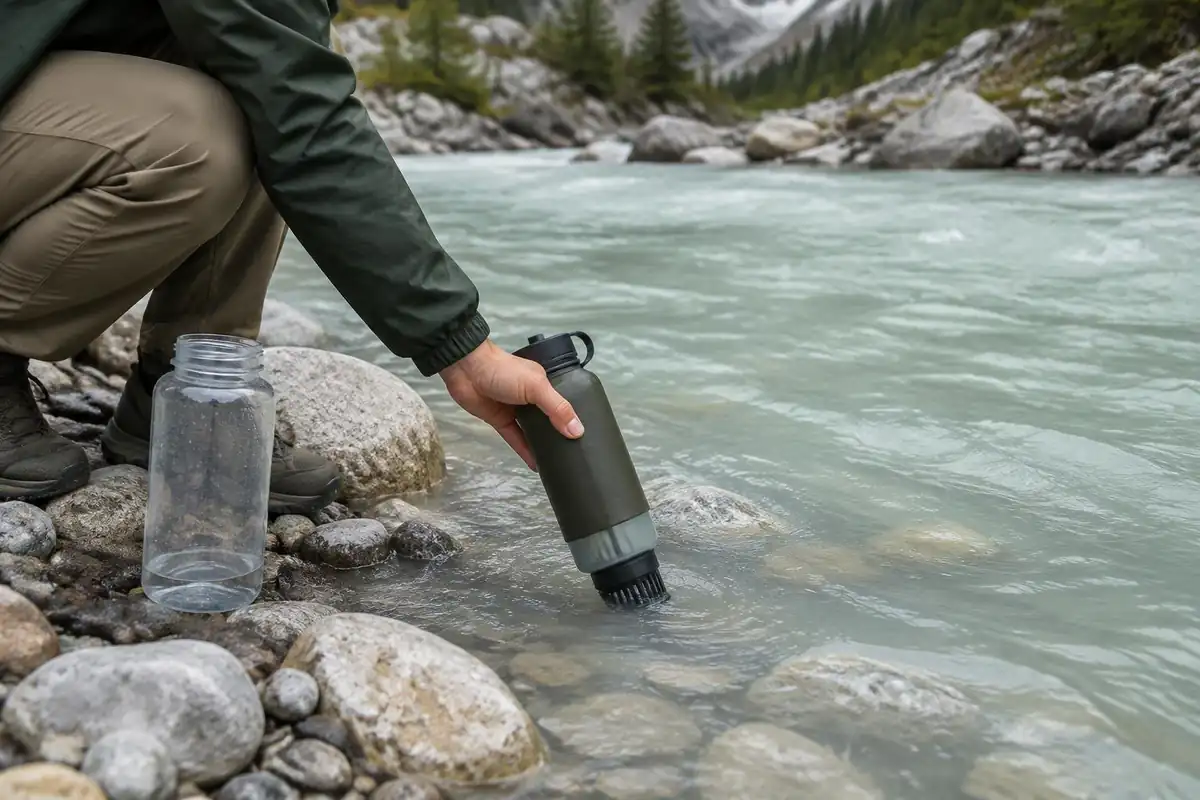
Heavy silt clogs filters faster, so a backup treatment method is sensible on a trip this long.
Weather, wet feet and permits
The park warns that weather at Mount Rainier can change quickly from calm to stormy.1 Multi-day rain is where hikers get into trouble: NIOSH says wet feet lose heat 25 times faster than dry feet and trench foot can occur at temperatures as high as 60°F if feet stay wet.8 A dry pair of socks sealed in a bag is cheap insurance. The CDC says hypothermia can develop above 40°F from rain, sweat or cold water.9 In whiteout on the high passes, Mount Rainier's winter guidance is that it is usually better to camp and wait than continue and risk getting lost, and that principle holds in a summer cloud-in too.10
The park's site links backcountry information and permits, road status, fire information and air quality.1 Food storage rules vary by park, and the NPS notes bears treat any scented item as food, so check Rainier's current rules for your camps.11
Common questions
How fit do I need to be for the Wonderland Trail?
Fitter than the distance alone suggests, because the cumulative climbing is the real challenge. This is a route for hikers who have already done multi-night backpacking trips with significant elevation change and know how their body handles consecutive long days. Training with a loaded pack on hills, rather than on flat ground, is the most useful preparation.
Do I really need to cache food?
Most hikers do, because carrying food for the whole loop means starting with a very heavy pack on the steepest days. Caches are placed in advance at road-accessible points around the mountain and collected as you pass. Some fast, minimalist hikers carry everything instead. Follow the park's current rules on how and where caches may be left.
Which direction should I hike the loop?
Both directions are walked regularly and neither is clearly easier. The practical decision usually follows your permit: you take the camps you are given and the direction that makes those nights work. If you do have a choice, think about which big climbs you would rather tackle with fresh legs early in the trip.
Can I hike part of it instead of the whole loop?
Yes, and section hiking is a good way to see the best of the route without the permit difficulty of a full circuit or the time commitment. Several road-accessible points let you walk a multi-day segment and exit, and shorter permits can be easier to secure. Many hikers complete the loop this way across several seasons.
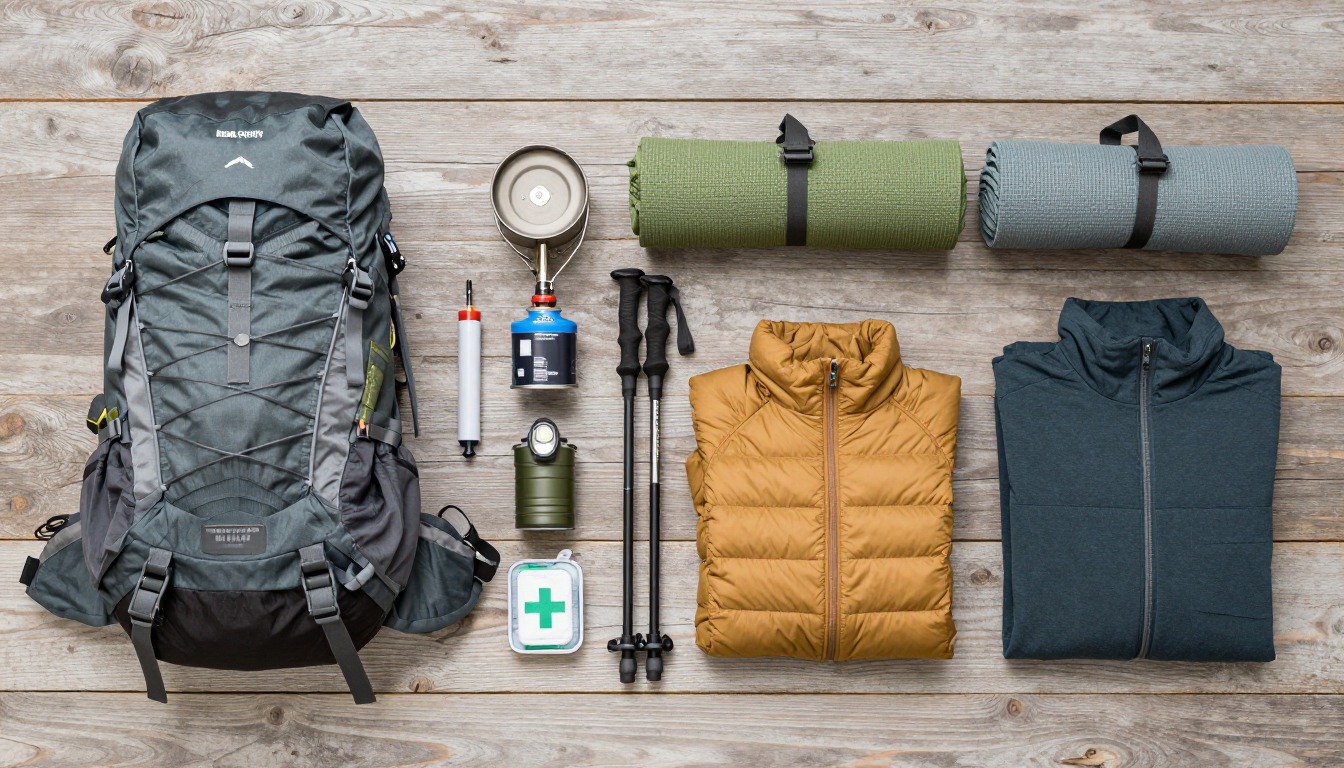
Complete gearsets for this trip
Full curated kits built for exactly this kind of hike.
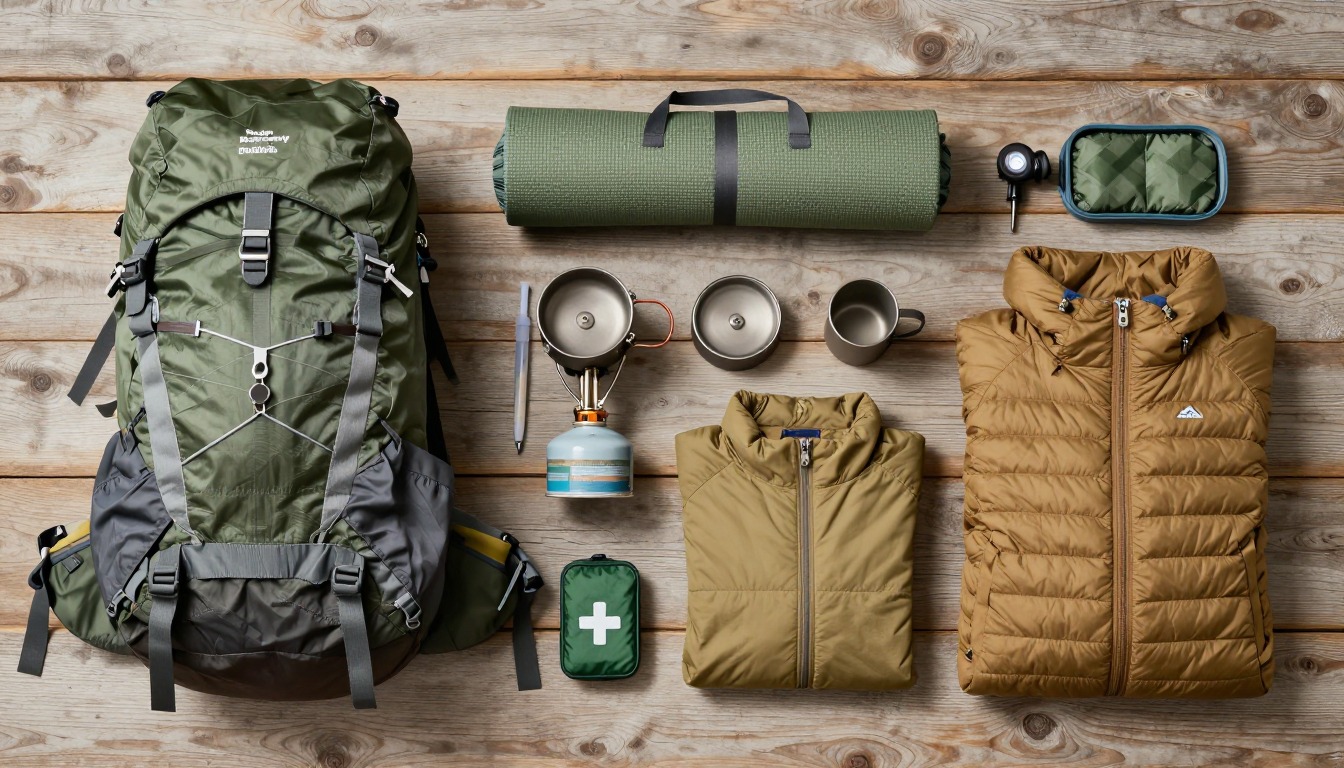
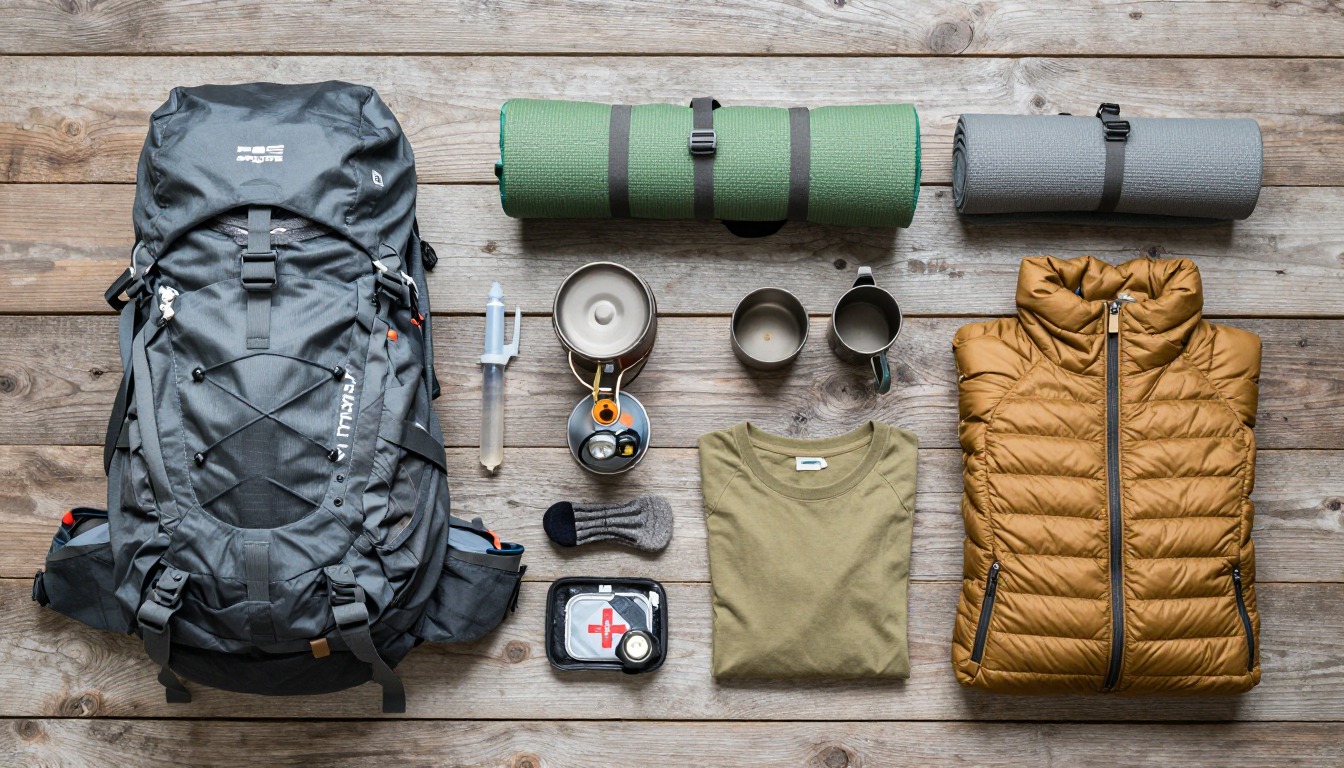
Trail conditions, permits and access rules change without notice — always confirm current information on the official source above before you go. Some facts on this page are still pending owner verification and are marked accordingly. Product links and the accommodation map are affiliate links: we may earn a commission at no extra cost to you; product prices and availability are shown on Amazon, and accommodation prices on the booking site. See our affiliate disclosure.