
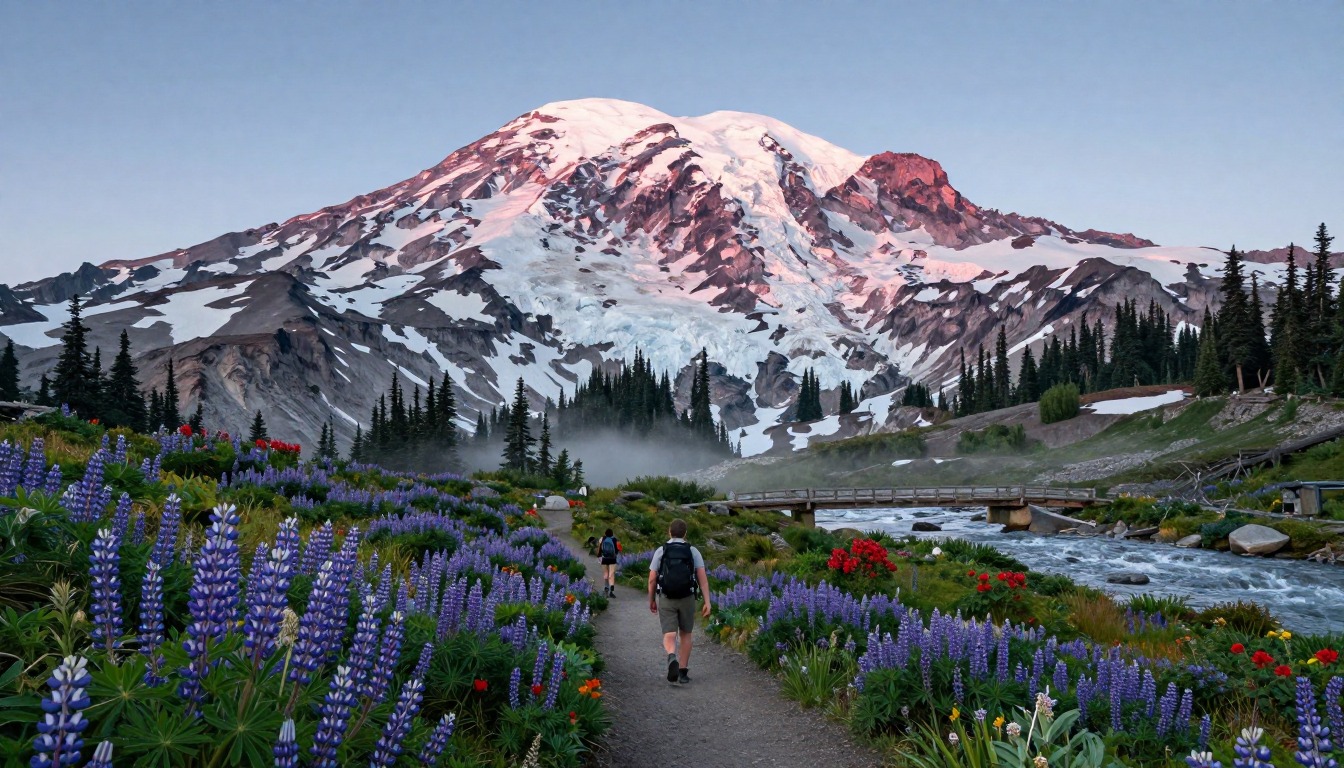
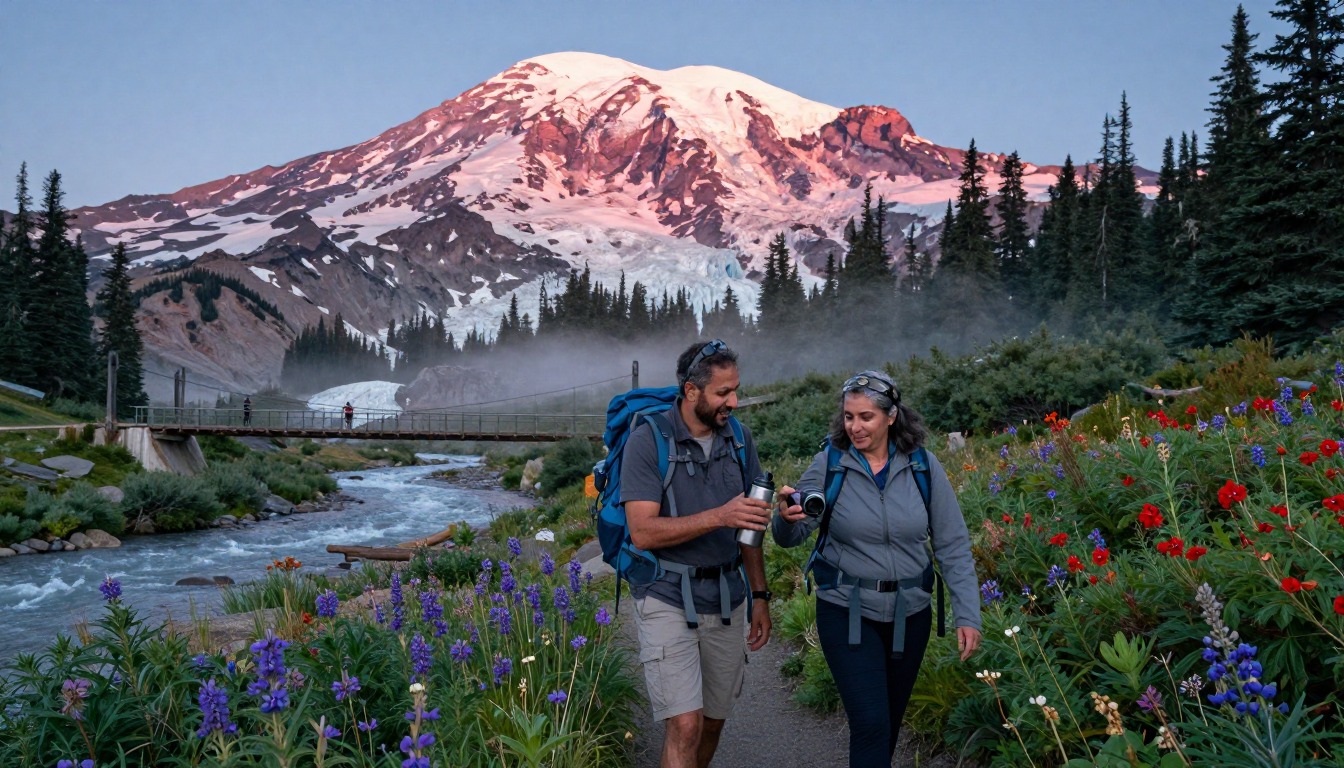
Illustrative artwork — an impression of Wonderland Trail — Mount Rainier, not a literal photograph.
The Wonderland Trail is a roughly 93-mile loop that circles Mount Rainier in Washington's Mount Rainier National Park, crossing huge elevation swings between old-growth forest, wildflower meadows, and glacier-fed rivers. It's a camping trail: nights are spent at designated wilderness camps spaced about a day's walk apart, and access to them runs through a competitive early-season permit lottery rather than a simple booking. For most hikers, the only real lodging near the route sits at the start and finish, or in the small gateway community outside the park.
Why hike here
Circling the mountain means it never leaves your view for long, and it looks different depending on which side you're on — glaciers close overhead in one stretch, then meadows of wildflowers rolling below it a day later. The elevation swings are relentless: the route drops into river valleys thick with old-growth forest, then climbs back into open subalpine country for the next pass, so the scenery resets rather than settling into one long view. Late July through September is when the meadows are at their fullest and the high passes are most reliably clear of snow, which is also exactly why the permit lottery for those weeks is so competitive. Few trails let you watch one mountain change this much from every angle.
Getting there
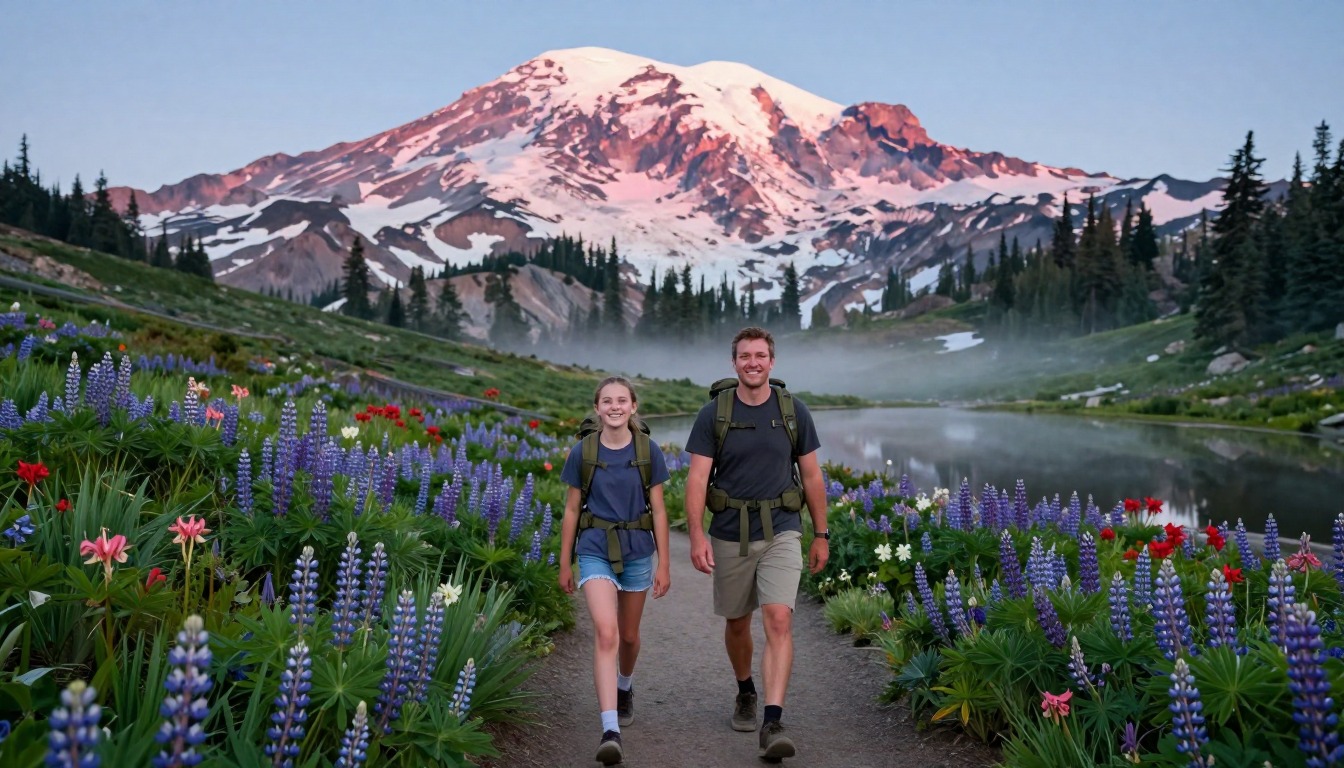
Most hikers fly into Seattle-Tacoma International Airport, the region's major hub, then drive south to Mount Rainier National Park, a trip of a couple of hours depending on traffic and which entrance you're using. Ashford, a small community just outside the park's southwest entrance, is the usual staging point, with basic services for a night before or after the hike. Many hikers also start or end near the historic in-park inns, Paradise Inn and National Park Inn, run by Mount Rainier Guest Services, both close to trailhead access.
Where to stay
The realistic options, closest-to-the-trail first. Book through the official links — we don't list prices or availability because they change all the time.
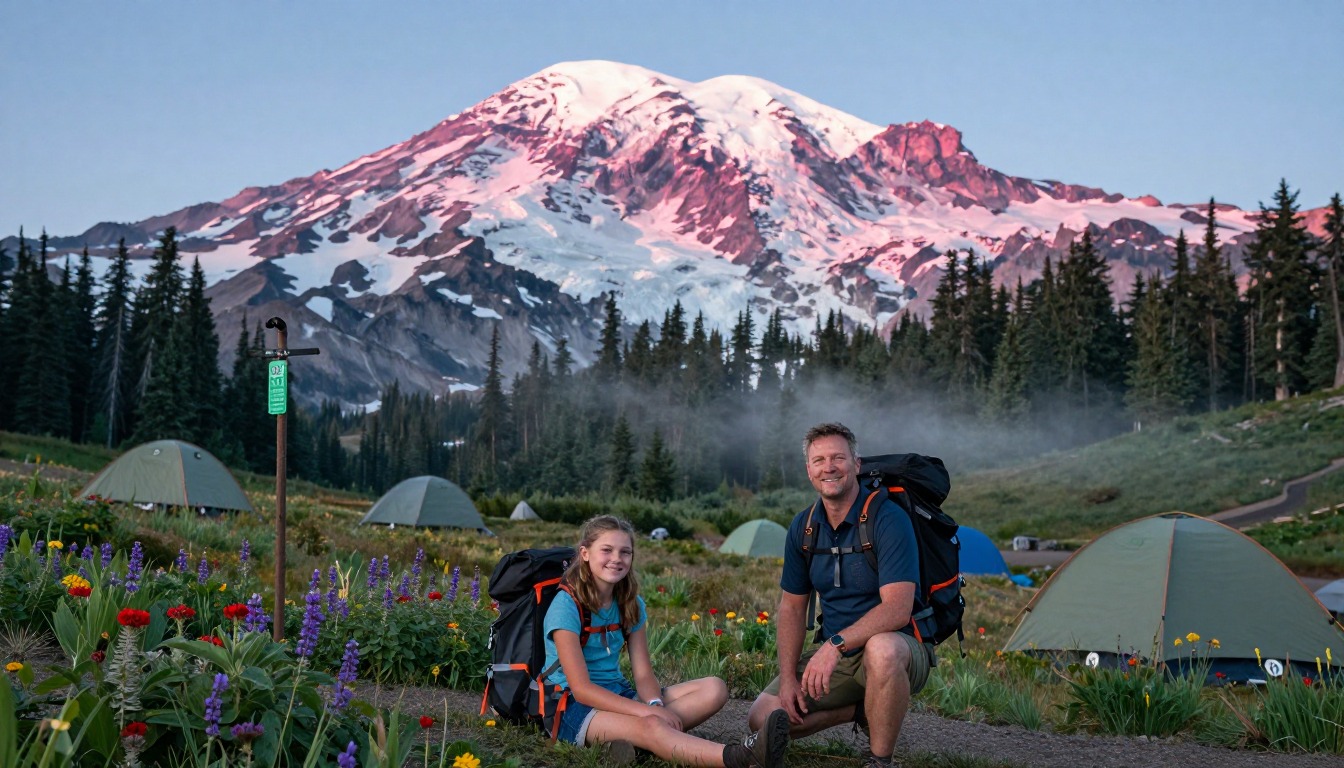 Illustrative — evokes the setting, not a specific property.
 For example: Designated trailside camps spaced roughly a day apart around the mountain
Everyone hiking the loop — the Wonderland is a camping trail.
Permits are allocated by an early-season reservation lottery and fill fast.
Mount Rainier wilderness permit (Recreation.gov)For example: Historic in-park inns for the nights before or after the loop
Hikers wanting a bed at the start or finish.
Seasonal and booked well ahead.
Mount Rainier Guest ServicesFor example: Cabins, motels and rentals near the park entrances
Hikers staging vehicles and resupply.
Handy for organizing food caches before you start.
Nearby-town lodging (official park info)Permits & rules
A wilderness permit with reserved camps is required for the Wonderland Trail; it is competitive and released on an early-season schedule. Store food properly and plan resupply caches in advance.
Gear you'll want for this trip
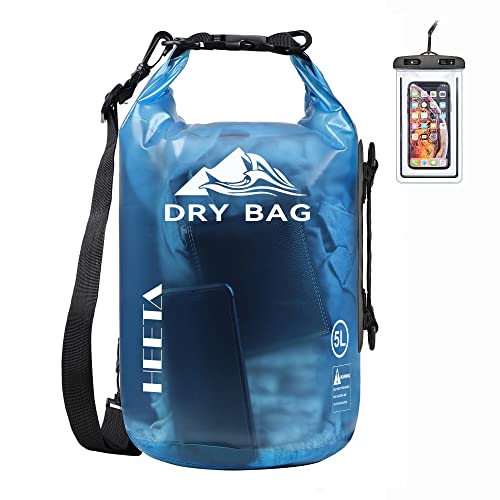
Matched to the terrain and conditions here. Real products — check current price on Amazon.


Common questions
Do I need a permit to hike the Wonderland Trail?
Yes. Because it's a wilderness camping route, every night requires a permit tied to a specific camp, and most hikers get theirs through the park's early-season reservation lottery. Demand is high relative to the number of camps available, so apply as soon as the lottery window opens and keep your date and camp choices flexible to improve your odds.
Where can I stay before or after hiking the loop?
The historic in-park inns, Paradise Inn and National Park Inn, both run by Mount Rainier Guest Services, sit near trailhead access and suit a night before starting or after finishing. The gateway community of Ashford, just outside the park, also has lodging for hikers staging their trip or picking up last-minute supplies.
How do hikers manage food over a trip this long?
Because the full loop typically takes about a week or more, most hikers cache resupply food in advance at points along the route rather than carrying everything from the start. Food needs to be stored properly at each camp, using whatever food storage is provided, to keep it away from wildlife.
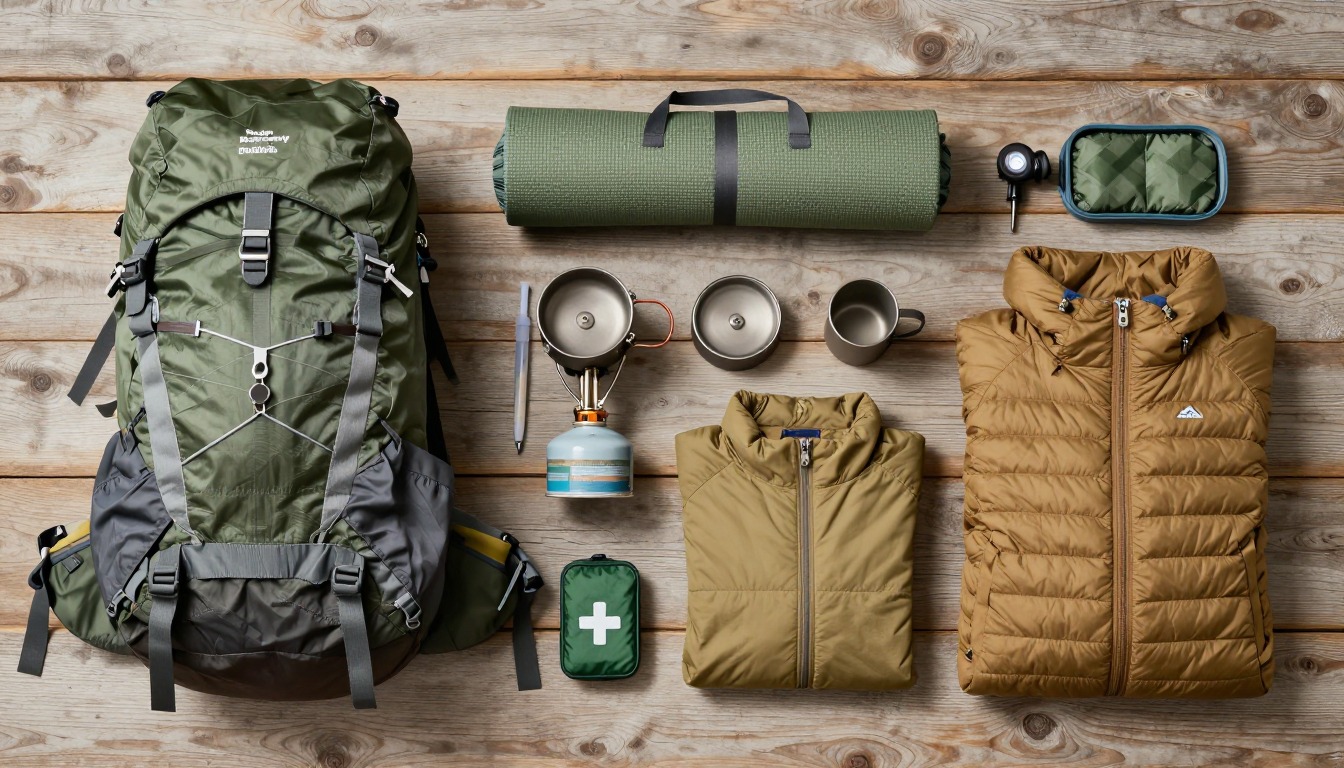
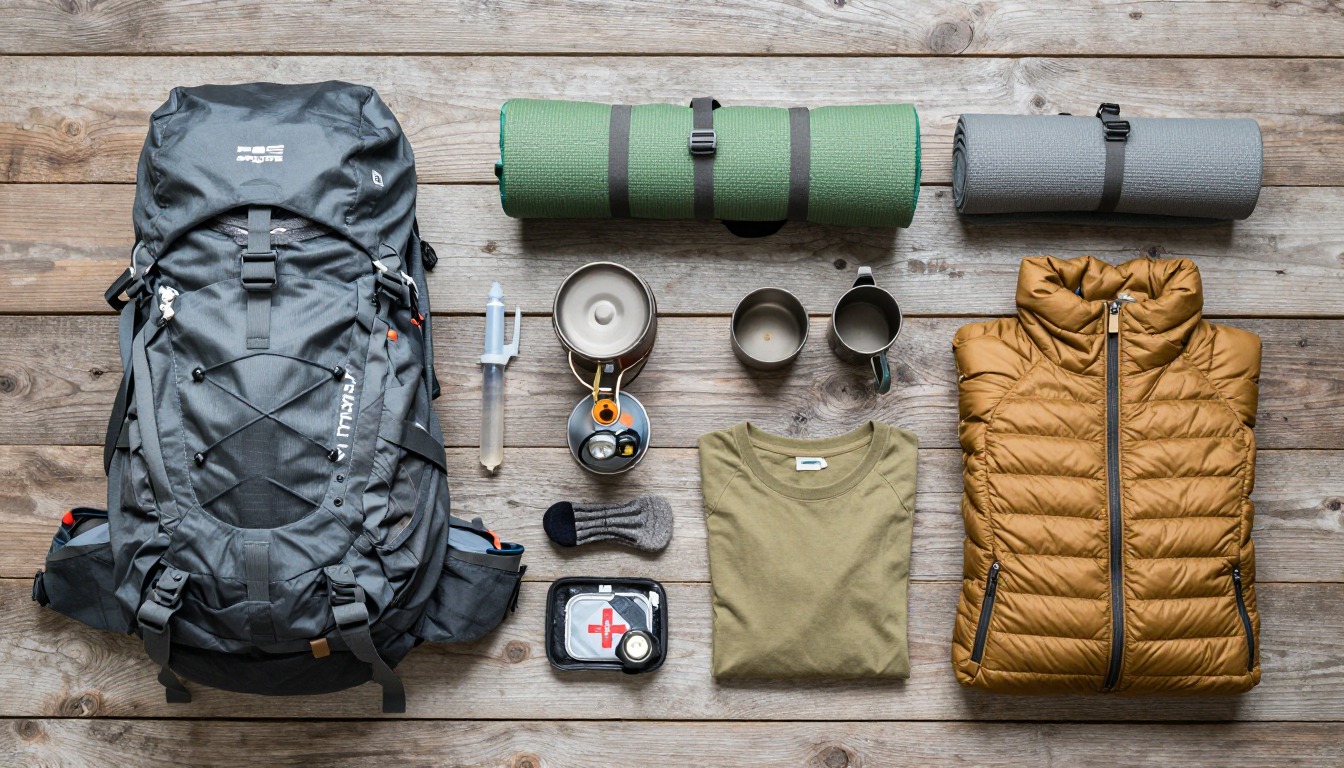
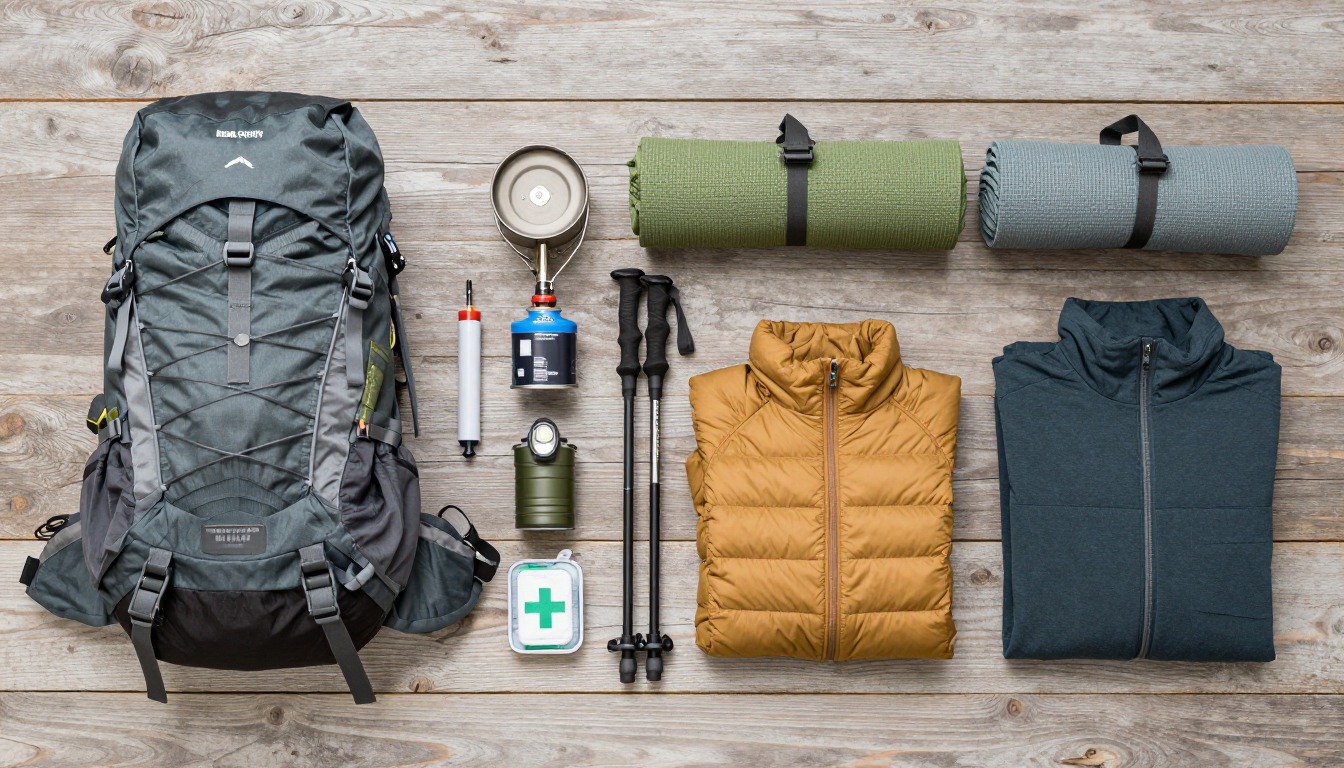
Complete gearsets for this trip
Full curated kits built for exactly this kind of hike — what to bring, why, and links to similar gear.
Lodging details are compiled from official parks, refuge associations and reservation systems and can change without notice. We publish no prices, availability or ratings — always confirm current information on the official site before booking or setting out. Product links are affiliate links: we may earn a commission at no extra cost to you; prices and availability are shown on Amazon. See our affiliate disclosure.