
Affiliate disclosure: this page contains affiliate links. Purchases made through them may earn us a commission at no extra cost to you. See our affiliate disclosure.
In plain English
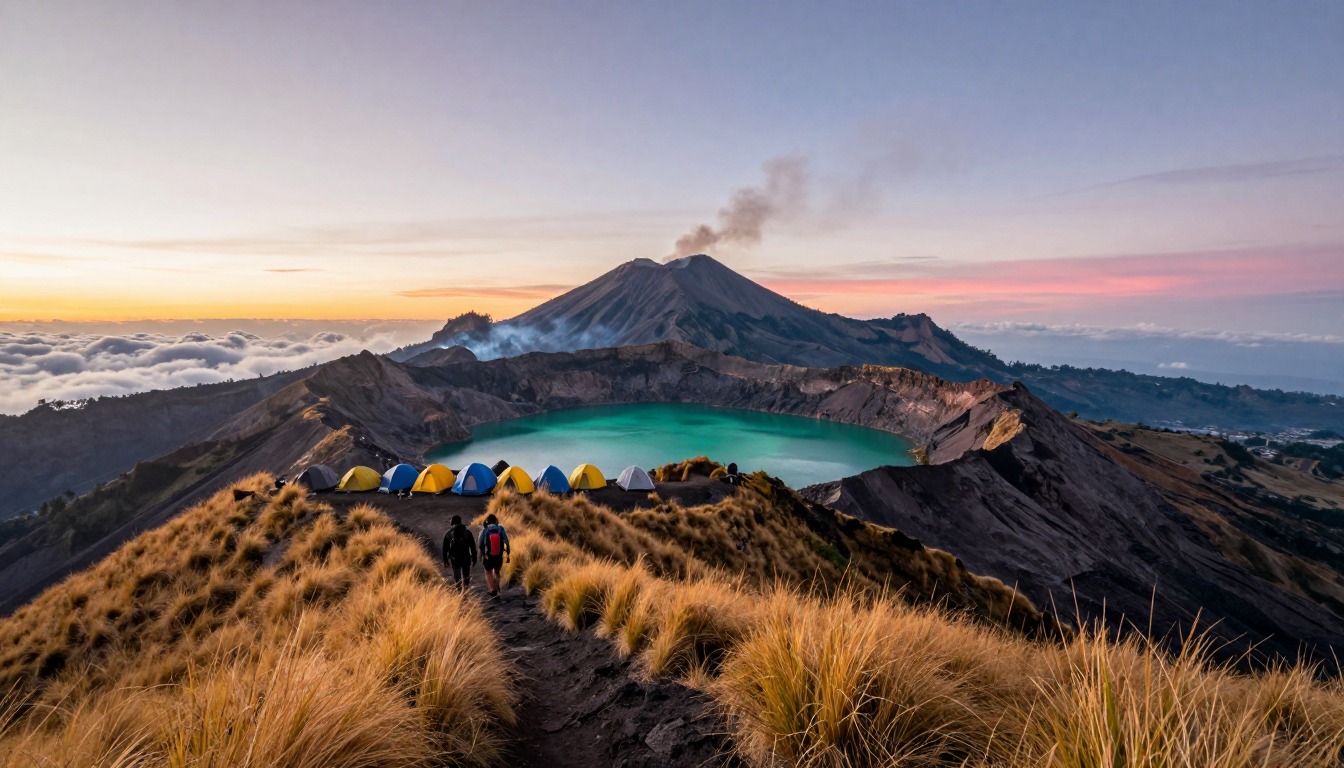
Mount Rinjani is a volcano on the Indonesian island of Lombok. Most people do it as a guided two- or three-day trek with porters who carry camp gear. You walk up through open grassland to the rim of a huge crater, camp there, then climb the final cone before dawn.
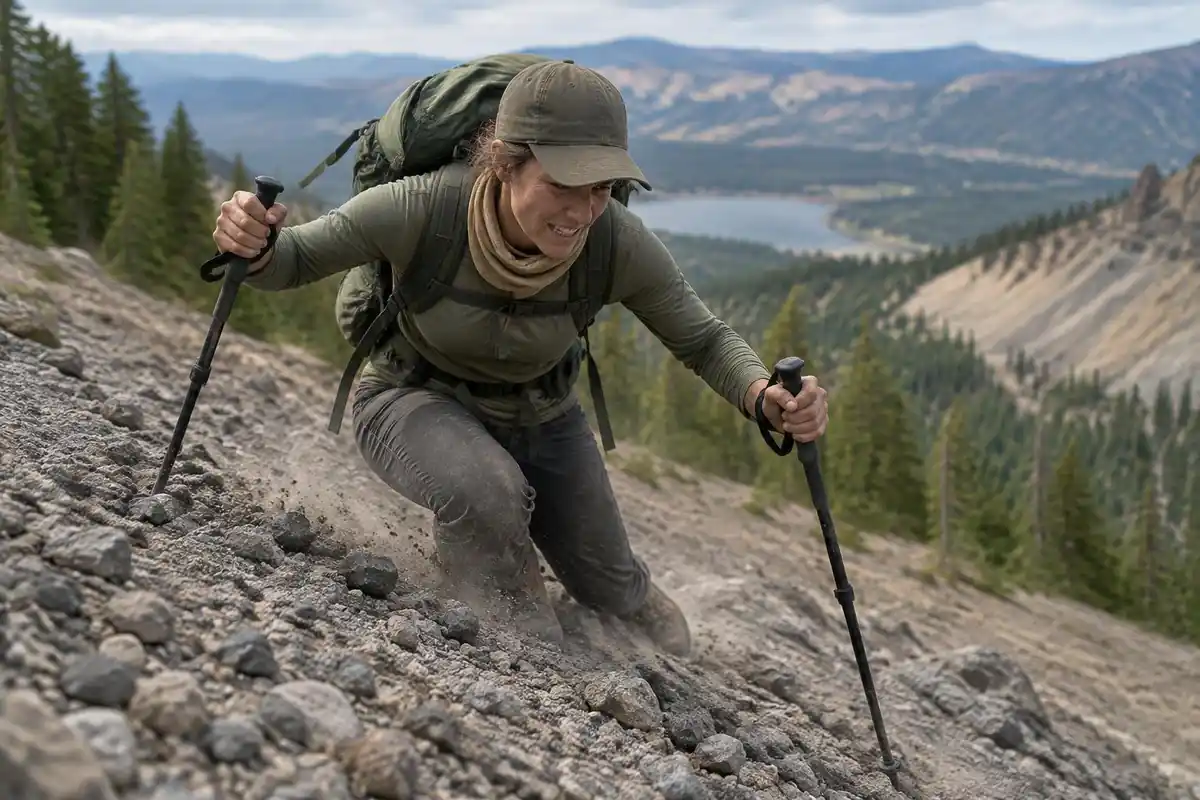
The last part is the hard part. The ground is loose ash and small stones, and each step slides back a little. Think of walking up a giant sand dune in the dark. It is slow, and your legs burn, even for strong walkers.
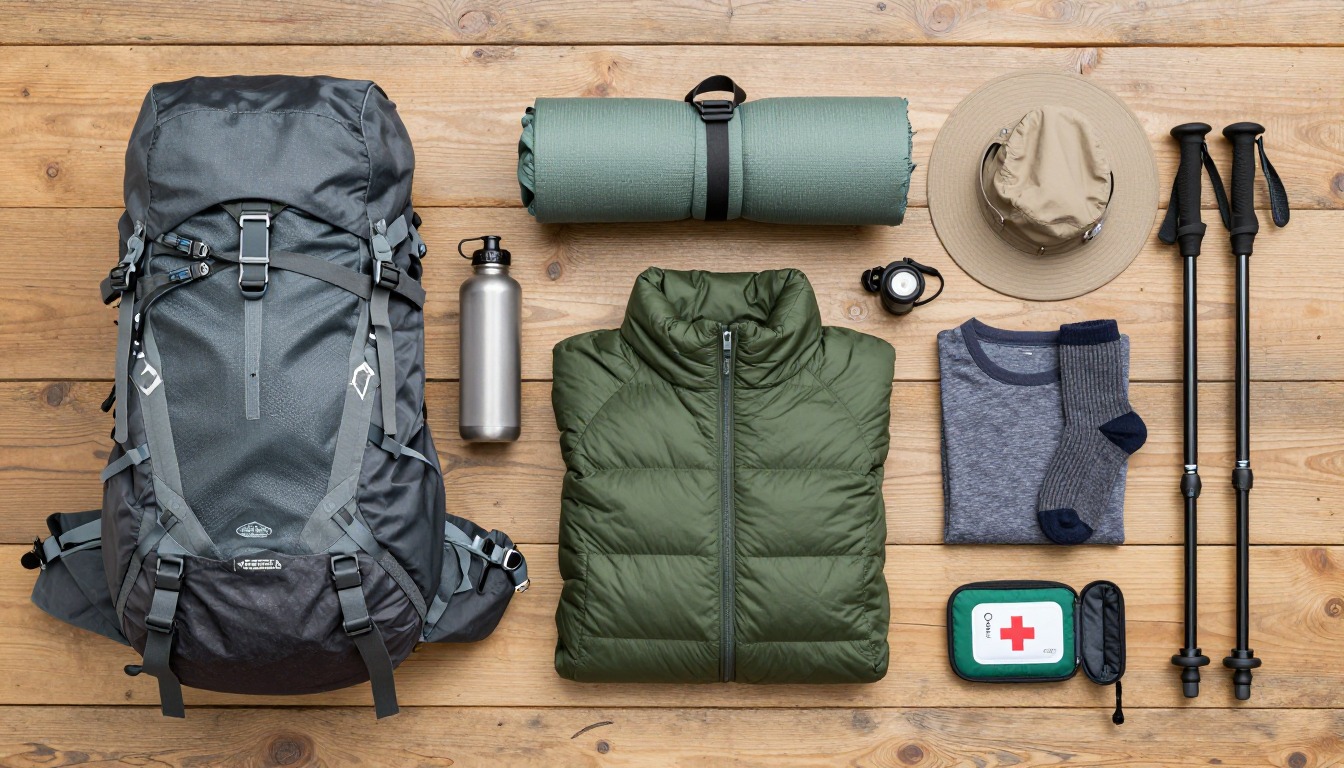
Though it is a tropical island, the rim is windy and cold at night. Pack a proper warm layer, a windproof jacket, a hat and gloves. A headlamp, water and a small daypack for the day are the other key items.
What the hike is like
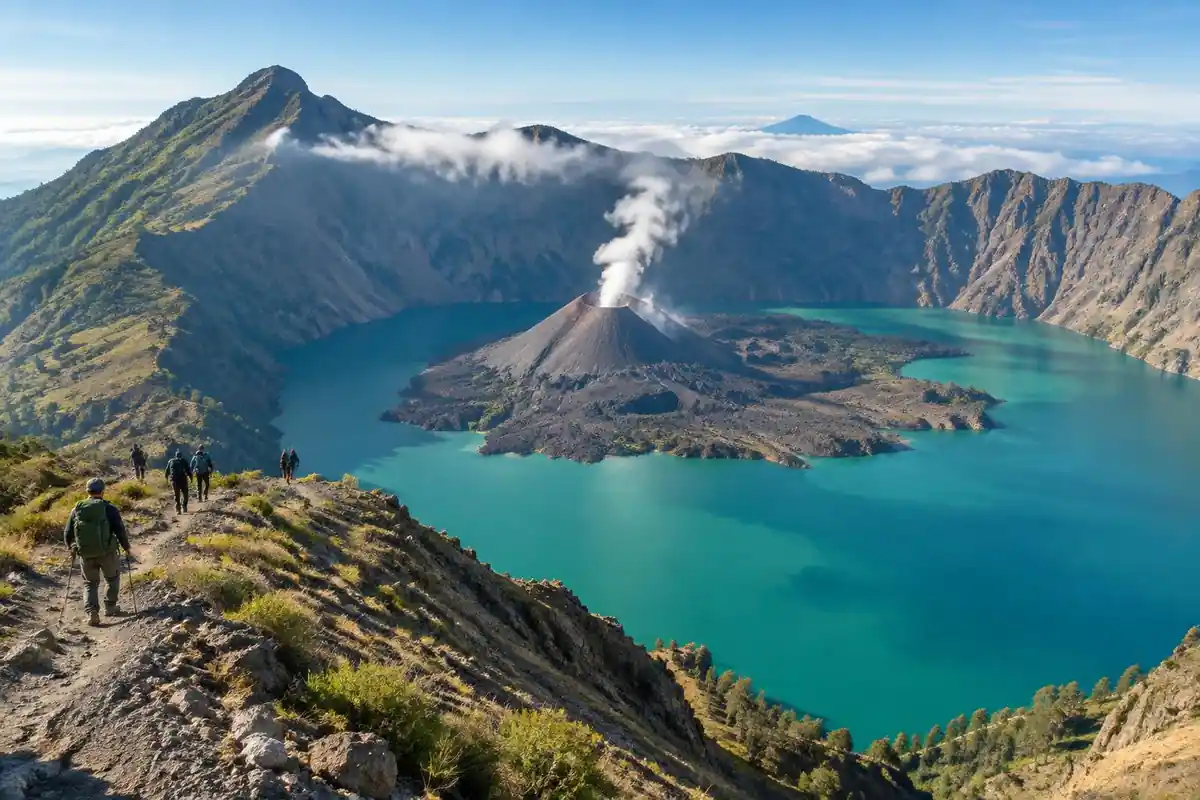
Rinjani's walking divides into three distinct kinds of ground. The approach from the grassland side is long and open, rolling savanna with little shade, gentle at first and then climbing through a series of steep switchback ridges that gain the crater rim in one sustained effort. The rim is where most groups camp, and where the route turns properly volcanic: the summit push is loose scree and ash on a steep cone, the kind of surface where every step slides back part of the way, walked in the dark and the wind. Then there is the inside of the caldera, a steep drop from the rim down toward the crater lake with fixed ropes on some sections, and an equally steep climb back out to the far rim before a long forest descent to the other trailhead village.
How to plan the itinerary
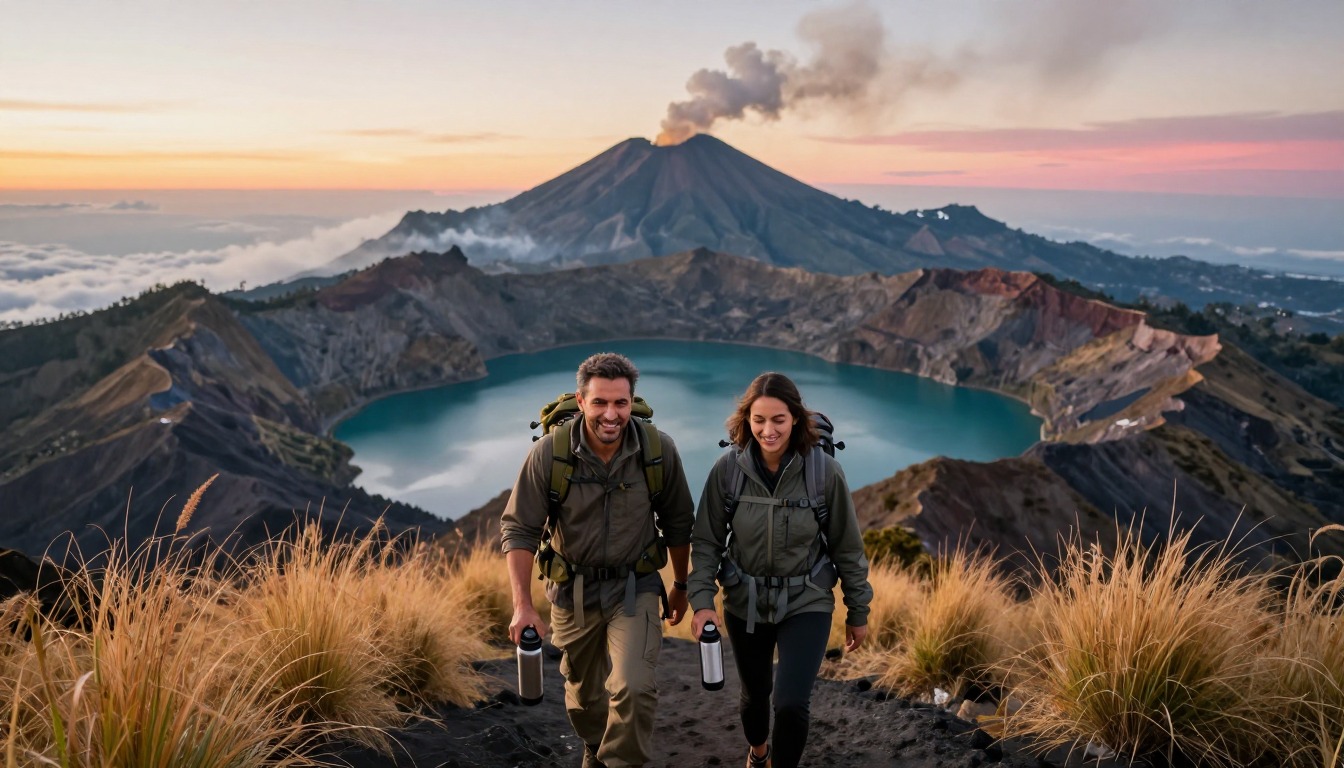
Most people do this as a two- or three-day guided trek, and the length determines what you get; routes, permit rules and trail closures change, so confirm them with Rinjani National Park and a licensed operator. The shorter version climbs to the crater rim, camps, summits before dawn, and descends the same way. The longer version continues after the summit down into the caldera to the lake, camps a second night, then climbs back out and descends through forest to the opposite village, making it a traverse rather than an out-and-back. Either way the summit attempt starts in the middle of the night so you are on top around sunrise and off the exposed cone before wind and heat build. Porters carry and pitch camp, which changes the feel of the days: long in hours but walked with a light pack, and paced by the crew's camp plan rather than your own.
Plan this trip in 5 steps
-
Pick the right pack
Match a pack to your trip, fit and priorities.
-
Plan food & water
Calories, food weight and water for your days on trail.
Trail-specific tips
The summit cone is the great equalizer, loose ash and scree that gives back much of every step, at altitude, in the cold and dark. Shorten your stride, accept it will take far longer than the distance suggests, and keep grit out of your boots with gaiters. The other recurring problem is temperature: people pack for a tropical island and then spend a windy night on an exposed rim, so bring proper warm layers and a sleeping bag rated for cold. Check the mountain's current status before booking, since it is active. General safety guidance is at /trail-smarts/.
Permits & rules
Rinjani is an active volcano climbed via the national park, and treks are normally done with a licensed guide and porters; a park entry ticket is required and the mountain can close on volcanic or safety grounds. Check current status before booking.
Gear suited to this hike
Matched to the terrain and conditions here. Real products — check current price on Amazon.



Loose ash, scree and what covers your feet
Ash and scree get into low shoes and socks. Kahtoola describes gaiters as sealing around footwear to keep dirt, dust, rocks and snow out.2 Low gaiters are a light, cheap answer to a real problem on a slope where every step slides. Grippy soles with some protection also help, and KEEN says lighter shoes are designed to be lightweight and breathable while boots are built for durability and weather resistance, so it is a trade-off to make around your own ankles and your operator's advice.3
The crater descent uses fixed ropes in places, which is a handhold, not a substitute for careful footing. Poles help on descents: a laboratory study found knee forces fell by 12 to 25% with poles on a steep ramp.4
A tropical island with a cold, windy rim
The existing page notes that people underpack warm clothing. The CDC says hypothermia can develop above 40°F if a person is chilled from rain, sweat or cold water.1 Rim camps at height in wind, with a sweaty climb beforehand, are a textbook set-up for a chill. The NPS advises layers of wool or synthetic instead of cotton.5 Bring an insulating layer, windproof shell, hat and gloves, and keep a dry set for sleeping.
Headlamps are the recommended light source because they are hands-free, and they matter for a pre-dawn summit push.6
Altitude and the summit attempt
The CDC Yellow Book says an unacclimatized person sleeping at 8,000 ft or above is at risk of altitude illness, and that fitness and training do not protect against it.7 If your rim camp sits above that height, the summit night is your second night of altitude exposure in quick succession. The guidance is never to go higher to sleep while symptomatic, and to descend for rapid relief.7 This is general information; see a doctor before you go and get medical help if symptoms worsen.
Permits and current requirements
Descriptions of the two- and three-day routes, the porters and the caldera on this page are planning estimates. Permit rules, trail closures and volcano status can change, so confirm them with Rinjani National Park and a licensed operator, and check for current volcano alerts before you book.
Common questions
How hard is the summit push?
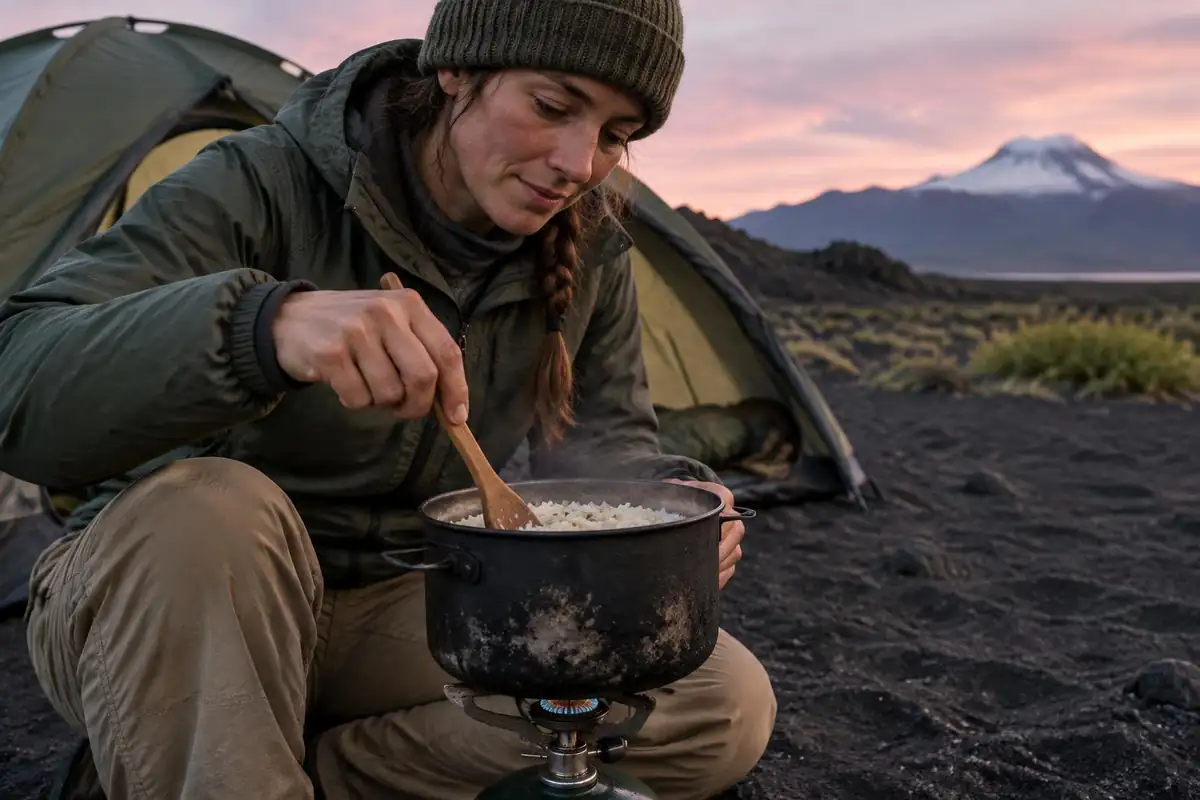
It is the crux of the trek for most people. The ground is deep volcanic scree on a steep cone, so progress is slow and frustrating even for strong walkers, and it is done in darkness, cold, and wind after a short night in a tent. No technical skill is needed, but persistence and pacing are.
Should you choose the two-day or three-day trek?
Two days gets you the rim and the summit and back down the same side. Three days adds the descent into the caldera toward the crater lake and the climb back out to finish at the opposite village. The longer version is considerably more walking but shows you the inside of the volcano rather than only the view from above.
Do you need previous trekking experience?
Not formally, but this is a demanding hike rather than a casual one. The days are long, camps are basic and cold, and the summit push defeats a fair number of people who are otherwise reasonably fit. Recent hill walking with sustained climbs is worthwhile preparation, and being honest with your guide about your pace helps.
What do people most often fail to pack?
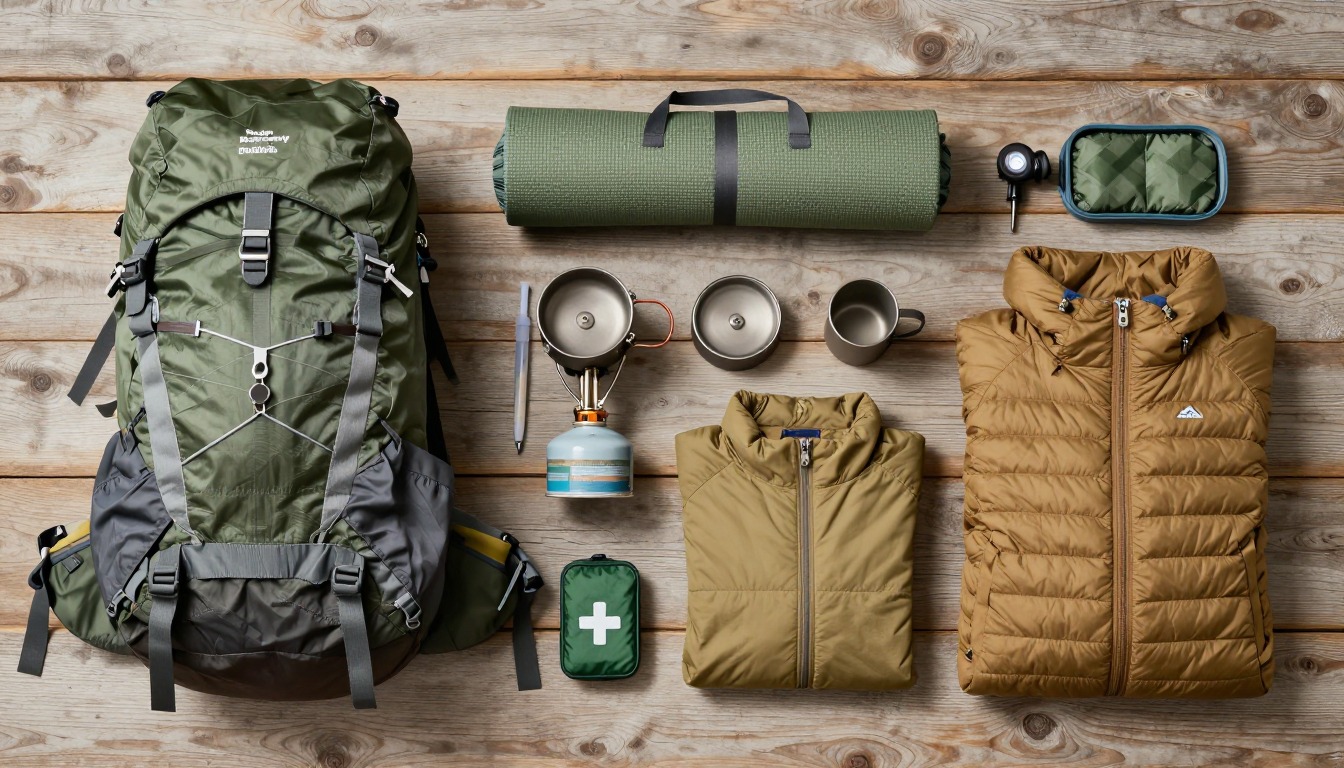
Warm clothing. The tropical setting misleads visitors into bringing light layers, and then the rim camp is windy and close to freezing overnight, with the summit push colder still. A proper insulating layer, windproof shell, hat, gloves, and a warm sleeping bag are the items people wish they had brought.
Complete gearsets for this trip
Full curated kits built for exactly this kind of hike.
Trail conditions, permits and access rules change without notice — always confirm current information on the official source above before you go. Some facts on this page are still pending owner verification and are marked accordingly. Product links and the accommodation map are affiliate links: we may earn a commission at no extra cost to you; product prices and availability are shown on Amazon, and accommodation prices on the booking site. See our affiliate disclosure.