
Affiliate disclosure: this page contains affiliate links. Purchases made through them may earn us a commission at no extra cost to you. See our affiliate disclosure.
In plain English
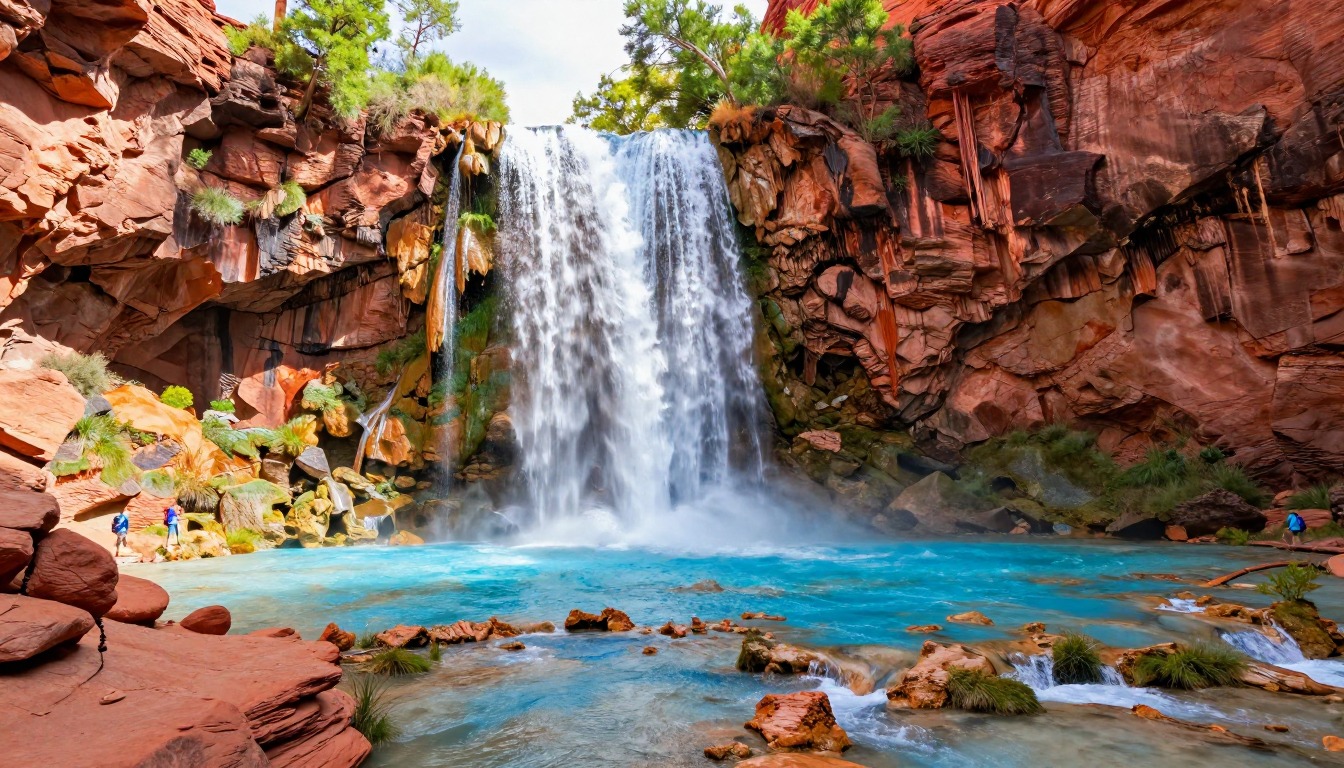
Havasu Falls is a set of bright blue-green waterfalls deep in a side canyon of the Grand Canyon, on the land of the Havasupai Tribe. You can only visit with an overnight reservation from the tribe, and there are no day trips.1
The hike starts at a spot called Hualapai Hilltop. You walk down steep zigzag paths, then along a long sandy canyon floor to Supai Village, and then on to the campground.1 Going in is mostly downhill. Coming out, you do the steep climb at the very end, with your full pack, often as the day heats up.
Pack plenty of water, salty snacks, sun protection and shoes that handle sand. You must carry out all your own trash. Treat this as a visit to someone's home: follow the tribe's rules and wear the wristband you are given.
What the hike is like
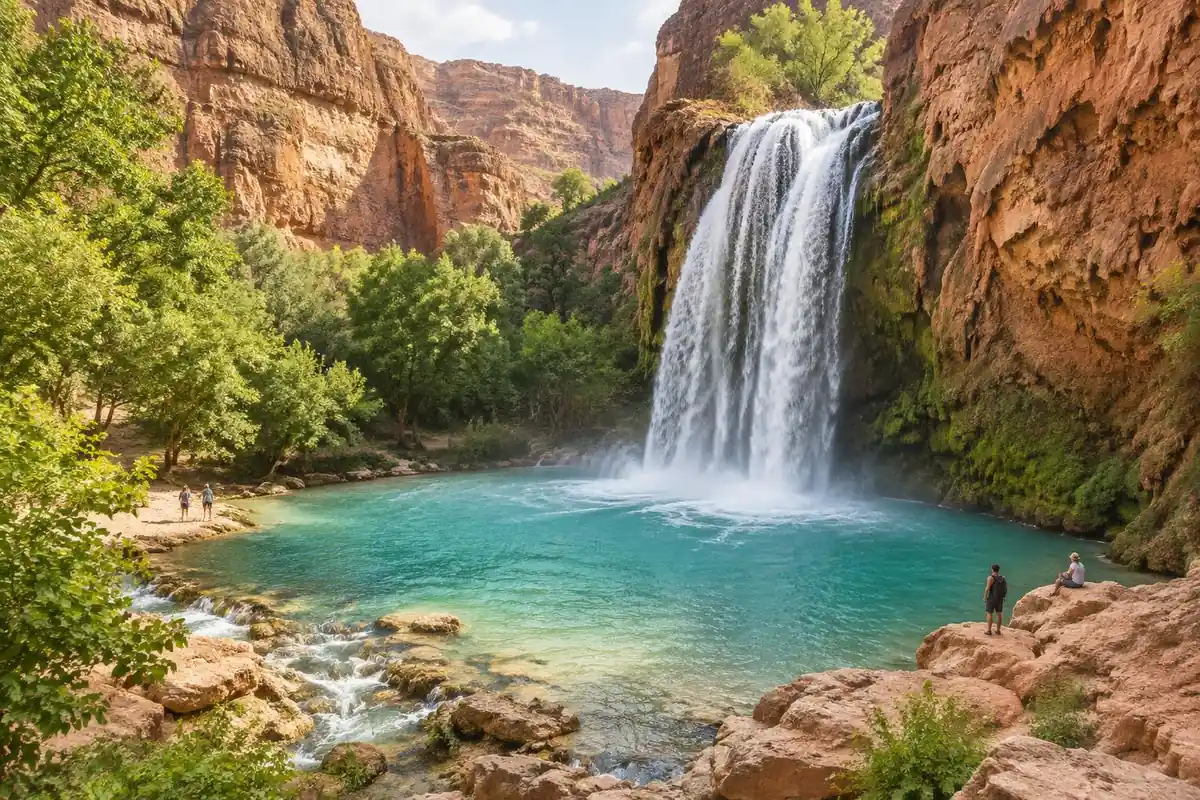
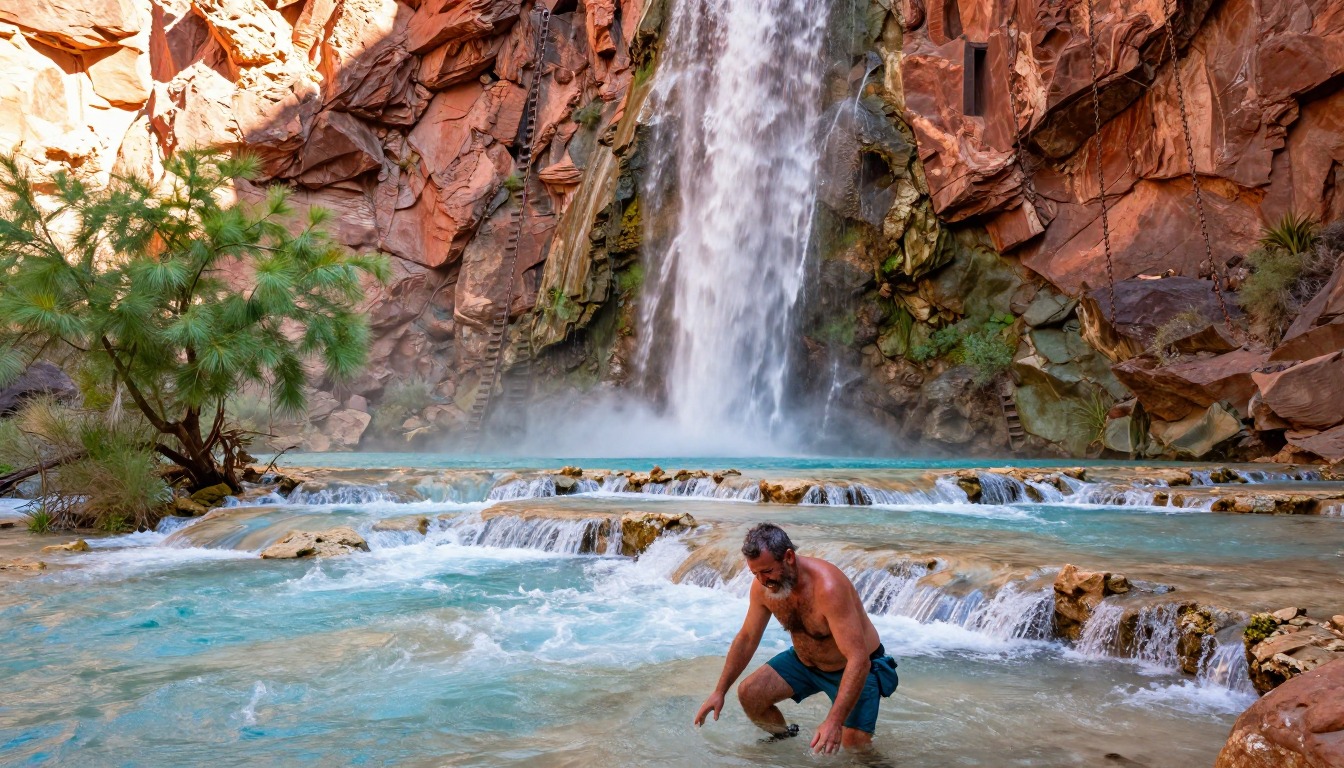
The hike begins with the descent, dropping off Hualapai Hilltop down a series of steep switchbacks cut into the canyon wall — rocky, loose in places, and the only real elevation on the route in either direction. Once you're down, the character changes completely: the trail follows a dry wash along the canyon floor, and for miles the walking is flat but tiring, over deep sand and loose gravel that saps more energy than the grade suggests. The canyon narrows and cools as you go, and eventually water appears beside the trail, turning the last stretch green. Past Supai village the route strings the falls together one after another, and the descent below Mooney Falls is the genuine crux — a steep passage through wet limestone tunnels onto chains and ladders down a slick, spray-soaked rock face.
How to plan the itinerary
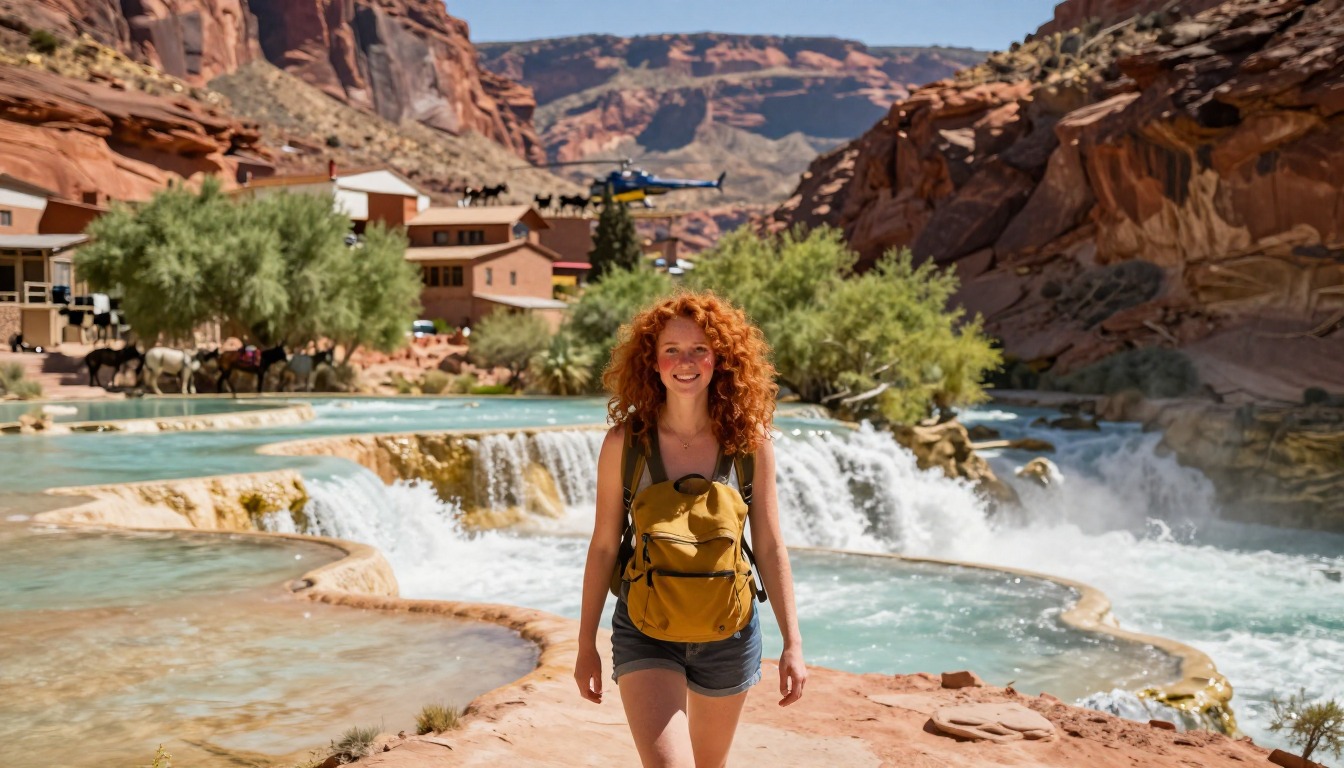
Because every visitor holds an overnight reservation, the trip is built around at least one night down in the canyon and commonly a few. The usual shape is a walk in on the first morning, one or more full days spent moving between the falls and exploring further downstream, and a walk out on the last. Timing matters more than pacing here: most people start the hike in early, well before the canyon heats up, and start the hike out earlier still — pre-dawn is standard, because the climb back up the switchbacks at the end comes with a full pack and rising heat. Give yourself at least one complete day in the canyon rather than treating it as an overnight turnaround; the falls are spread out and the walking between them takes real time.
Plan this trip in 5 steps
-
Pick the right pack
Match a pack to your trip, fit and priorities.
-
Plan food & water
Calories, food weight and water for your days on trail.
-
Estimate your time
Pre-filled with this trail’s distance and climb — adjust for your pace.
Trail-specific tips
The hike out is the hard part of this trip, and it catches people who found the walk in easy — you're climbing the steepest section last, in heat, with the same pack. Start it in the dark. Deep sand along the wash is more tiring than it looks, so shoes with decent support beat minimal ones. The chain-and-ladder descent below Mooney Falls is slippery and should be taken one person at a time, unhurried, with both hands free. Remember this is tribal land and a living community: follow the tribe's own rules for visitors. General heat and desert-canyon judgment is on /trail-smarts/.
Permits & rules
Access is by tribal reservation only — no day permits, no walk-ins. Buy directly from the tribe’s official site; third-party resellers are not authorized. Respect that this is a living community, not a park.
Gear suited to this hike
Matched to the terrain and conditions here. Real products — check current price on Amazon.


What the tribe's rules require of hikers
The Havasupai reservations site offers two permit types, campground and lodge, and every visitor must agree to its terms, cancellation policy, rules and a release of liability.1 Each visitor must wear a wristband throughout the stay, and the site says plainly that entering the reservation without a permit and wristband is trespassing.1 There is also no camping at the Hilltop trailhead, which rules out the common trick of sleeping at the trailhead for a pre-dawn start.1
Two rules affect how you pack. The tribe requires pack-it-in, pack-it-out, and says failure to comply results in a civil citation and fine, so bring sturdy trash bags and room to carry them out.1 Pack mule bookings are non-refundable, so if you plan to send gear down by mule, commit to that plan carefully.1
The hike out, by the numbers
The official distances are 8 miles from Hualapai Hilltop to Supai Village and another 2 miles to the campground.1 With this page's figure of about 2,400 to 2,500 ft of elevation change, Naismith's rule, one hour per three miles plus one hour per 2,000 ft of ascent, gives roughly three and a third hours for distance plus about an hour and a quarter for climbing on the way out.3 That is about four and a half hours of steady walking before breaks, heat or deep sand slow you down, and the climbing is concentrated at the end.
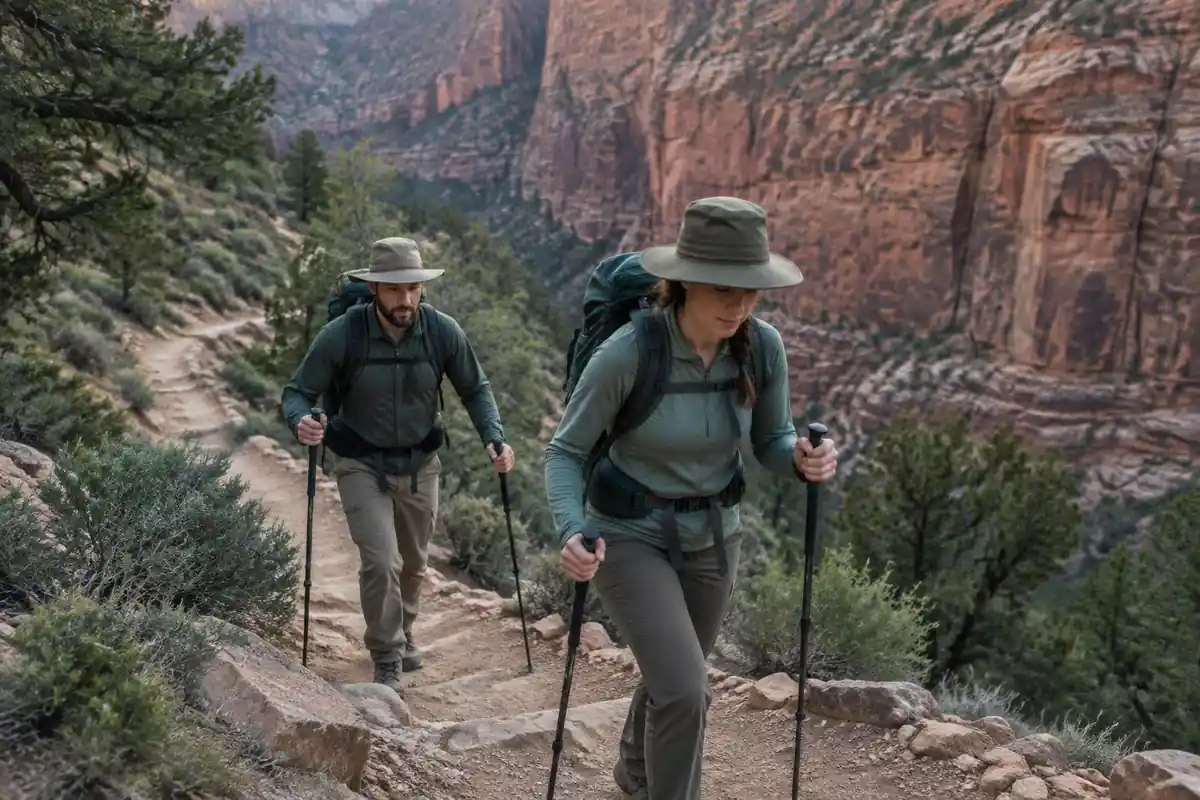
Weight matters on that last climb. Water weighs about a kilogram per liter, so each extra liter adds about 2.2 lb.4 A major load-carriage review found the energy cost of walking with a pack rises with load weight, walking speed and grade, so extra weight costs most on the climb.5
Heat and water in a desert canyon
At neighboring Grand Canyon, the NPS says hikers in heat can lose one to two quarts of water per hour, advises salty snacks, and reports that most heat-illness rescues involve people hiking between 10 a.m. and 4 p.m.2 That is the evidence behind the pre-dawn start for the hike out.
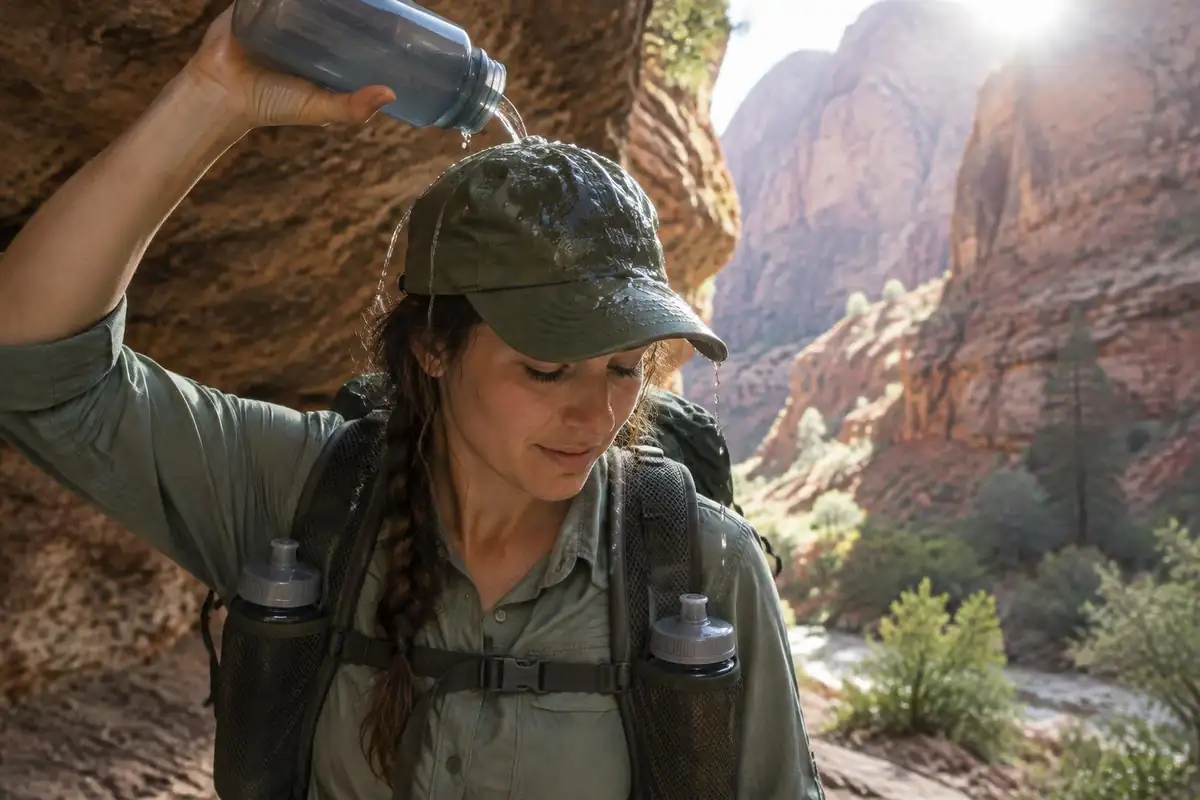
Know the warning signs. The National Weather Service lists heavy sweating, weakness, cool clammy skin, nausea and headache for heat exhaustion, and confusion, slurred speech and a body temperature above 103°F for heat stroke, which is a medical emergency.6 Treat creek water before drinking it; the CDC notes that clear-looking water can still carry germs.7
Common questions
How hard is the hike back out?
It's the toughest part of the trip by a wide margin. The canyon floor section is long and sandy, and then the switchbacks up to the hilltop come at the very end, with a loaded pack, in air that's warming by the hour. Hikers who found the walk in straightforward are often surprised. Start very early and pace it conservatively.
What's the descent below Mooney Falls like?
Steep and genuinely committing: a route down through wet limestone tunnels onto chains and metal ladders bolted to the rock, with constant spray making everything slick. No technical skill is required, but it's exposed and demands care. Take it one at a time, keep both hands free, and don't attempt it in a hurry or with a bulky pack on.
Can I visit just for the day?
No. There's no day-hiking access here — every visitor needs an overnight reservation before setting out, and you won't be allowed past the trailhead without one. That isn't a formality to work around; it's the Havasupai Tribe's rule for its own land, and it shapes how the whole trip has to be planned.
What's the trail surface like underfoot?
Three distinct kinds. Rocky, loose switchbacks at the top and bottom of the canyon wall; long miles of soft sand and gravel along the wash, which is flat but heavy going; and smoother, greener creekside trail near the falls. Supportive shoes and something to keep grit out of them make more difference than you'd expect.
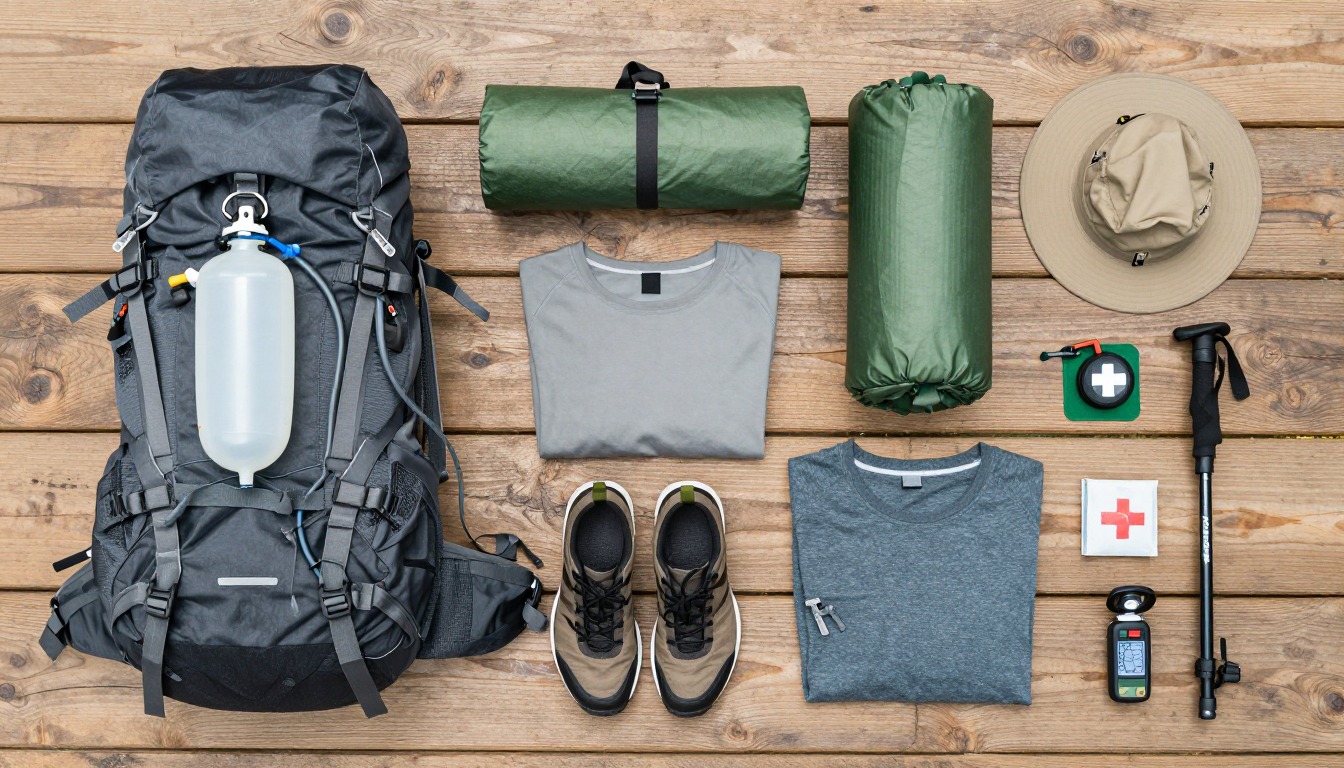
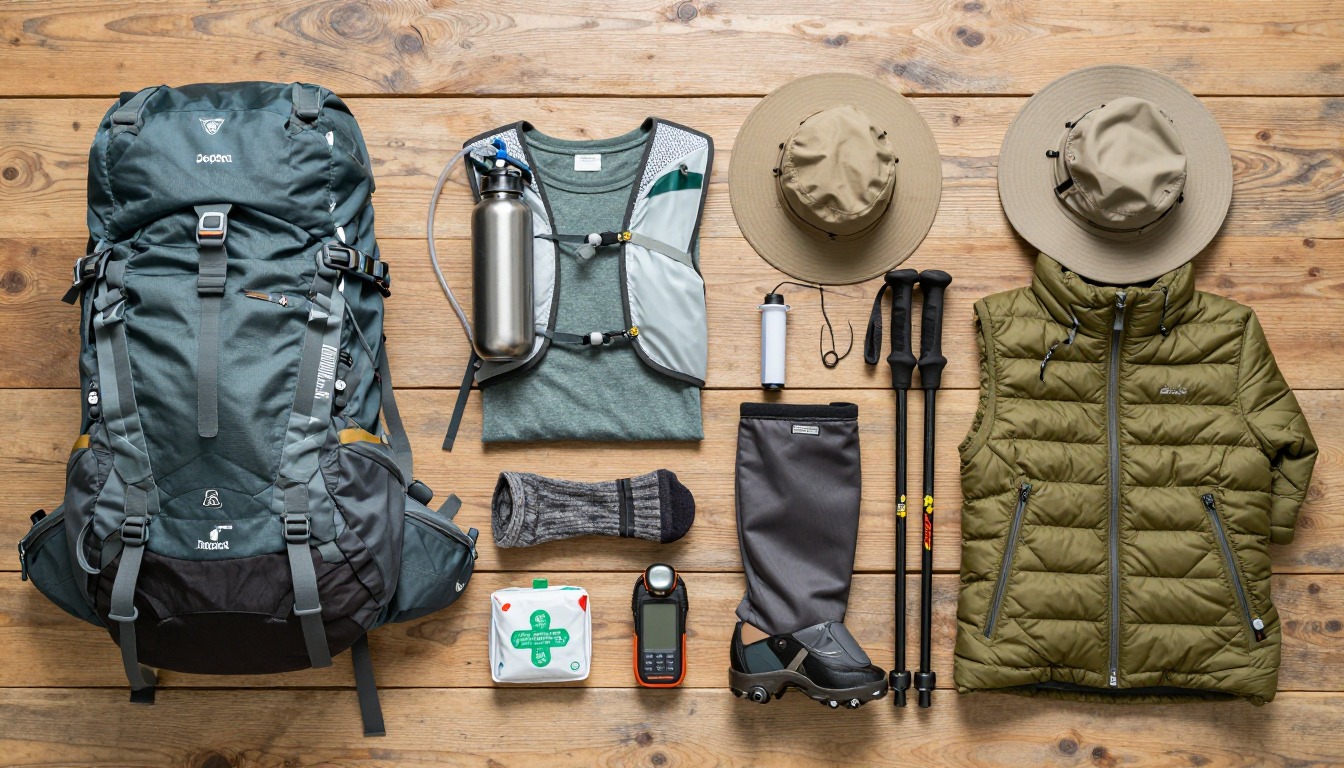
Complete gearsets for this trip
Full curated kits built for exactly this kind of hike.
Trail conditions, permits and access rules change without notice — always confirm current information on the official source above before you go. Some facts on this page are still pending owner verification and are marked accordingly. Product links and the accommodation map are affiliate links: we may earn a commission at no extra cost to you; product prices and availability are shown on Amazon, and accommodation prices on the booking site. See our affiliate disclosure.