
Affiliate disclosure: this page contains affiliate links. Purchases made through them may earn us a commission at no extra cost to you. See our affiliate disclosure.
In plain English
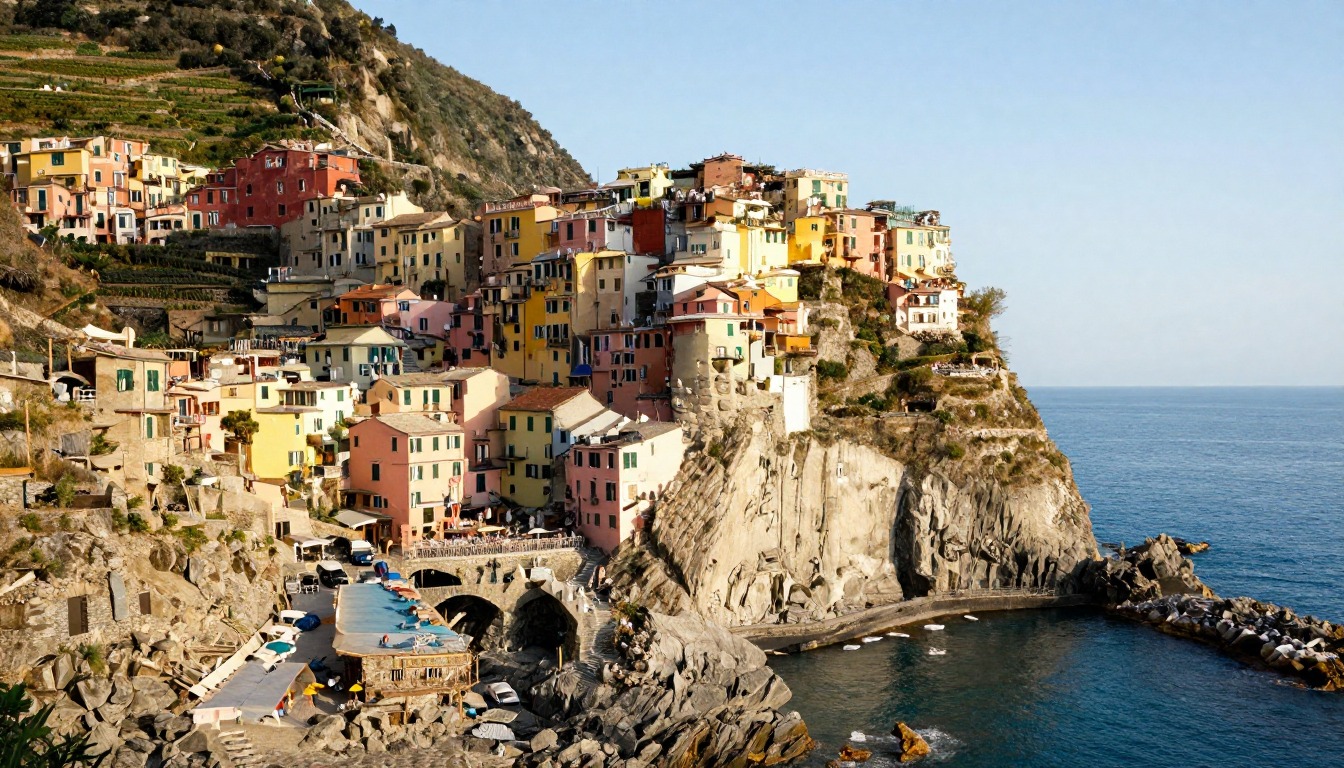
Cinque Terre means Five Lands. It's a string of five colorful villages on the cliffs of the Italian coast, joined by old footpaths. The main path, often called the Blue Trail, runs village to village along stone steps and narrow ledges between vineyards, with the sea below.
You don't have to walk it all at once. A local train links all five villages, so you can walk one section, have lunch, and ride back, like hopping on and off a tour bus.
Some sections close after storms or landslides, and the park posts updates. Summer is hot and there is little shade. Bring a small backpack with plenty of water, a hat and sunscreen, and wear proper shoes. Sandals and flip-flops slip on worn stone.
What the hike is like
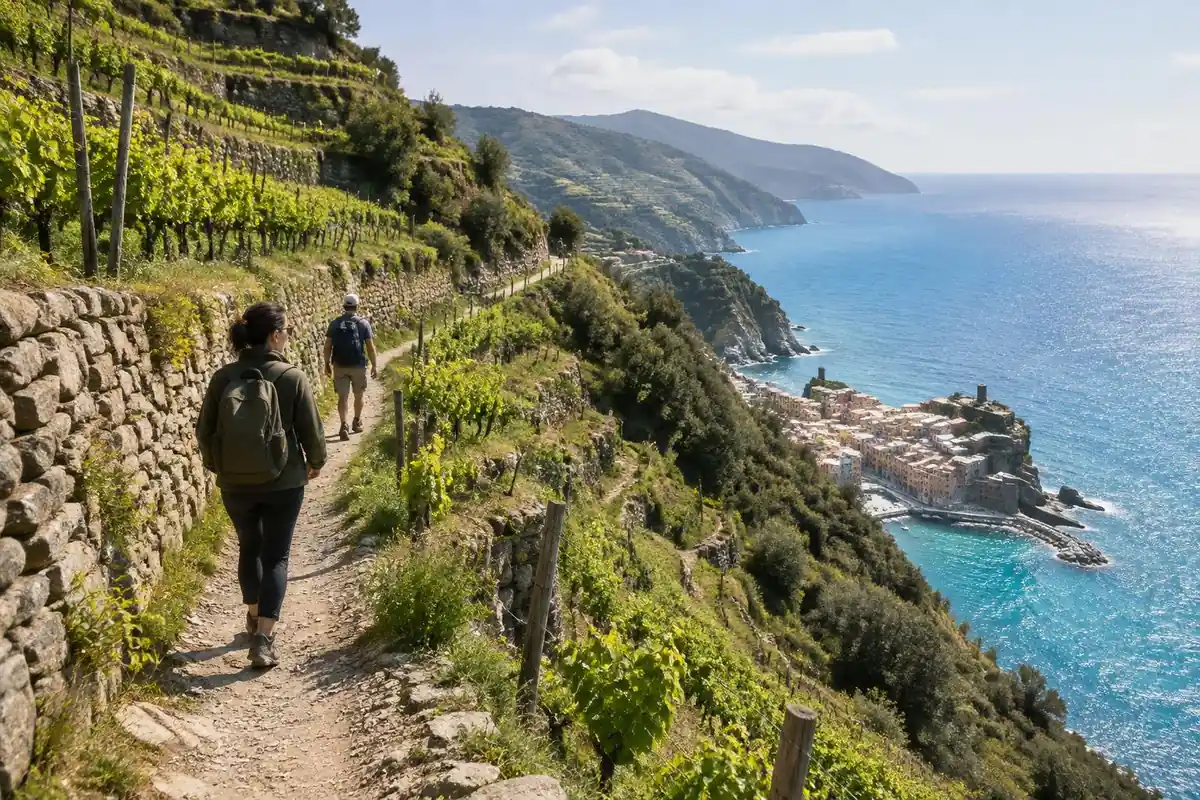
The Blue Trail is a working mule track more than a mountain path: old stone steps, packed dirt, and narrow paved sections squeezed between dry-stone terrace walls, with vines on one side and open air over the sea on the other. It is rarely level for long. The northern stretches, linking Monterosso and Vernazza and then Vernazza and Corniglia, do the real climbing — flights of stone steps up out of one village, a contouring section through terraces and scrub, then steps back down into the next. Corniglia adds its own long stairway between the village and the shore below. The southern sections toward Manarola and Riomaggiore run low and nearly flat where they are open, which makes them a completely different kind of walk. Width is tight throughout, and passing often means someone stands aside.
How to plan the itinerary
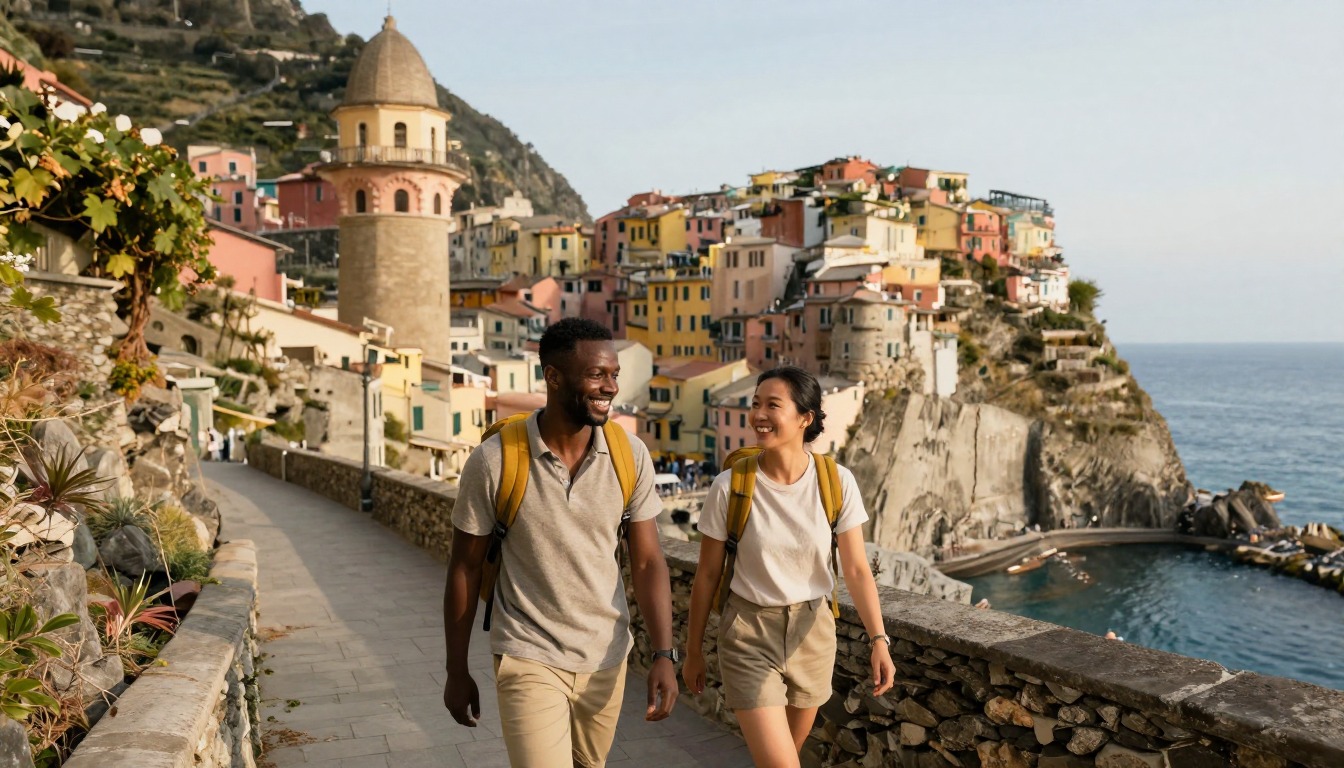
Most visitors walk the Blue Trail in pieces rather than as one continuous push, using the local train that links all five villages to fill the gaps and to get home at the end. A common shape is one or two connecting sections in a morning, a long lunch in whichever village you land in, and the train back — which lets you take the hillier northern stretches when it's cooler and skip anything closed or too hot. Fit walkers do link the whole chain in a single day when all the sections are open, though it makes for a hot, step-heavy outing in summer. Direction is a genuine choice: north to south gets the strenuous climbing done first, while south to north saves it for the end. Starting early beats the heat and the crowds either way.
Plan this trip in 5 steps
-
Pick the right pack
Match a pack to your trip, fit and priorities.
-
Book a place to stay
Campgrounds, huts and lodges near Cinque Terre — Sentiero Azzurro.
-
Plan food & water
Calories, food weight and water for your days on trail.
-
Estimate your time
Pre-filled with this trail’s distance and climb — adjust for your pace.
Trail-specific tips
Check which sections are actually open before you build a day around them — parts of this trail have been closed for long stretches after landslides, and the southern low-level links in particular come and go. Bring more water than the short distances suggest, because the terraced sections have almost no shade. The stone steps punish knees on the descents far more than the climbs, so poles help. Proper shoes matter: sandals and flip-flops are a bad idea on worn stone. Heat management basics are on /trail-smarts/.
Permits & rules
No permit is required, but a Cinque Terre Trekking Card is needed for the main coastal-path sections; train travel uses a separate Treno card sold by the park. Some trail segments close after landslides (as of September 2026 the Manarola–Corniglia section is closed) and the Via dell’Amore has its own access arrangements — check which are open before you set out.
Gear suited to this hike
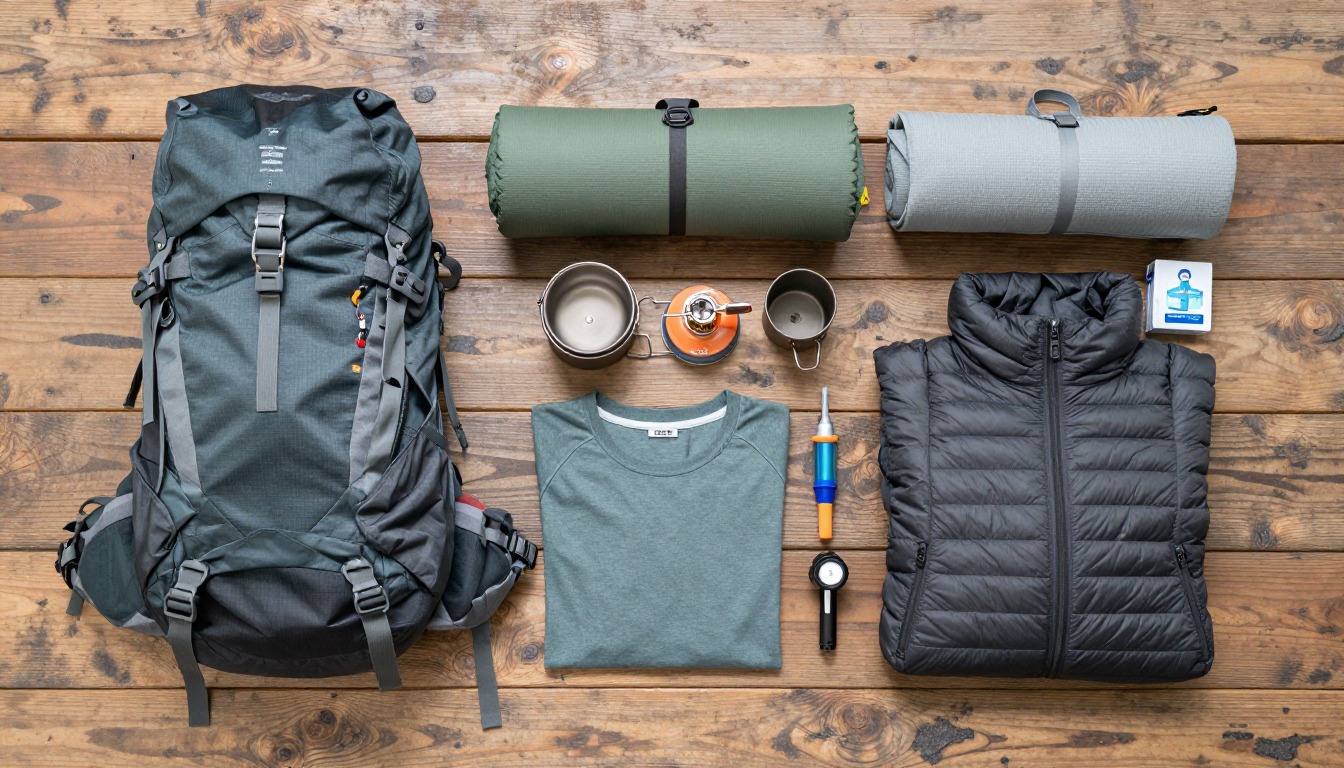
Matched to the terrain and conditions here. Real products — check current price on Amazon.
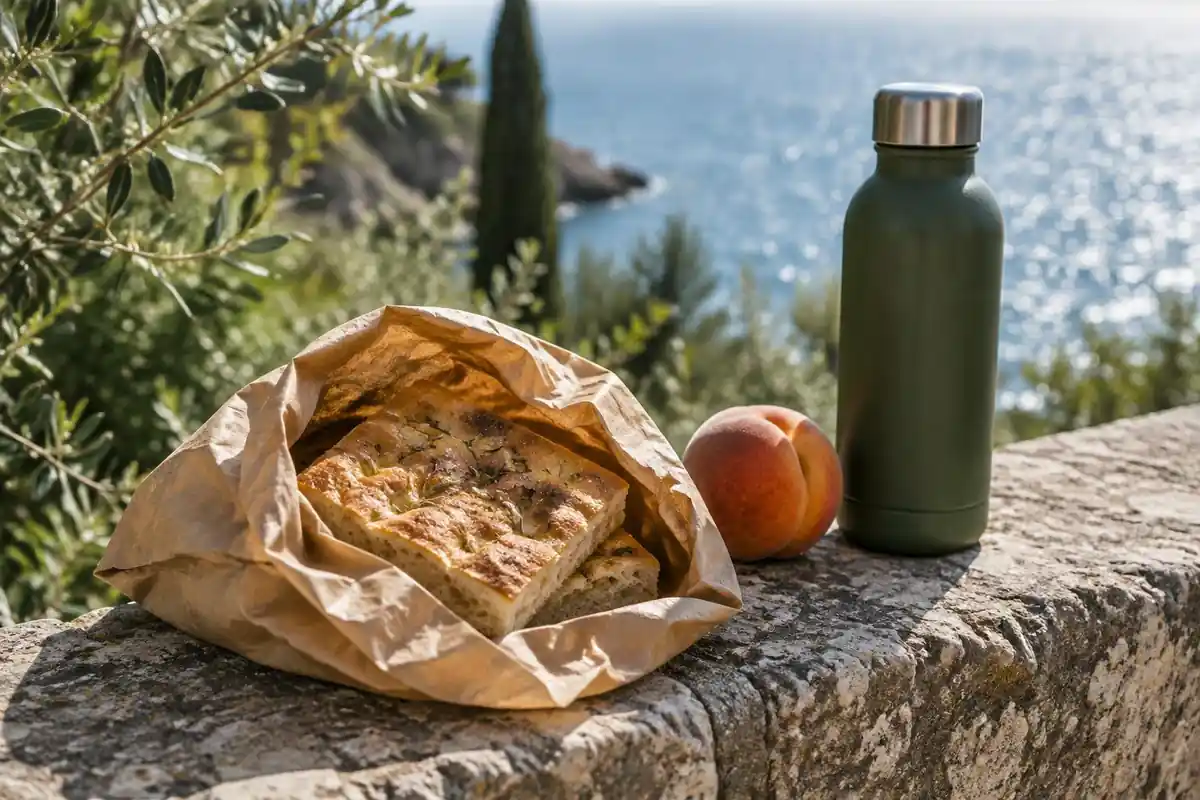
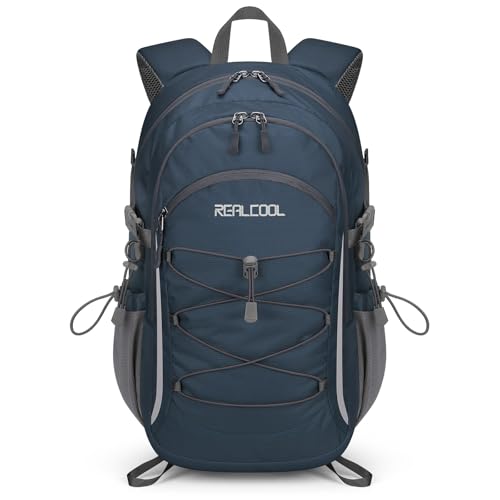


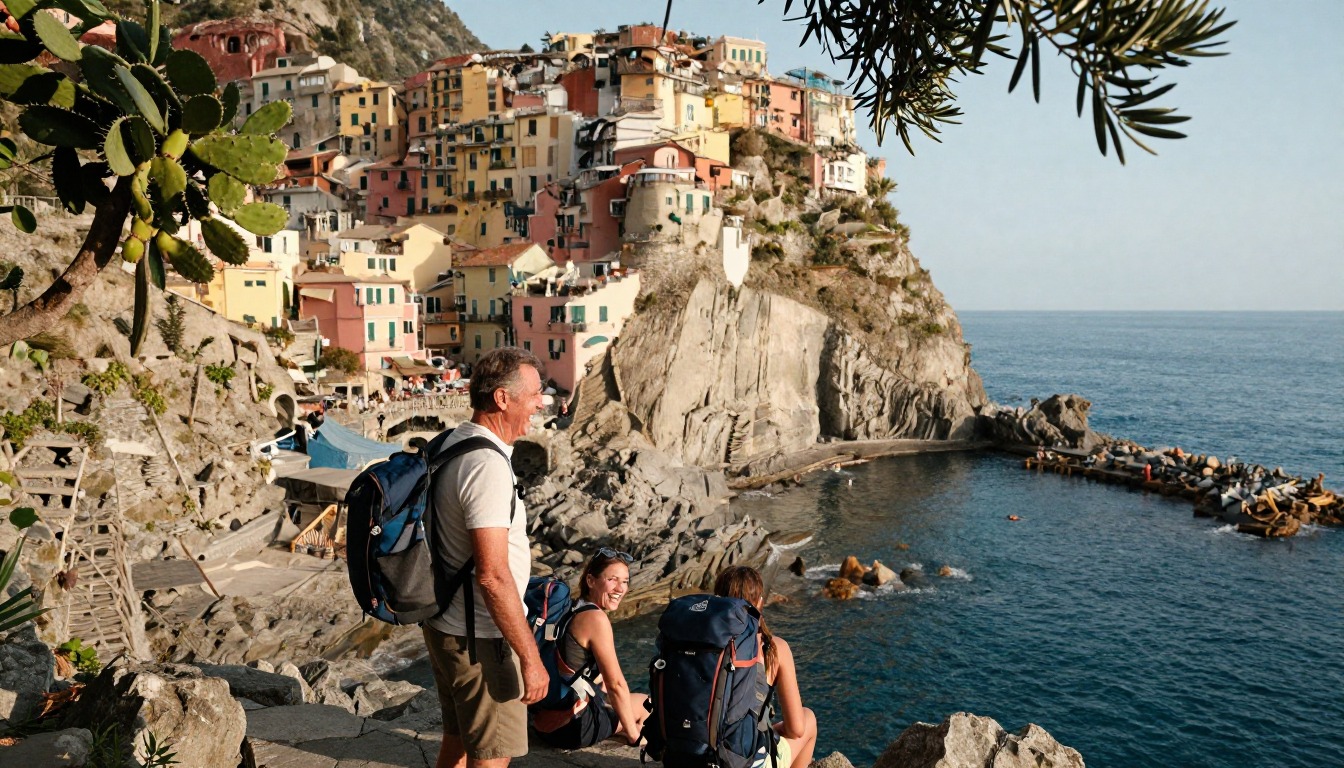
Tickets, names and closures: what the park actually publishes
The Cinque Terre National Park, a UNESCO World Heritage Site, publishes a trail practicability notice, dated updates on what the park calls the Sentiero Verde Azzurro (SVA), and separate access arrangements for the Via dell'Amore.1 Its recent notices include orange and yellow weather alerts, a yellow alert for thunderstorms, and warnings of slippery trails.1 Checking those notices on the day is more reliable than any guidebook description of which links are open.
On tickets, some guides say the Trekking Card also covers the local trains. The park's own site lists a Cinque Terre Trekking Card and a separate Cinque Terre Treno (Train) Card.1 The Trekking version may not include train travel, so check what each card covers before you rely on it to skip a closed section or get back to your lodging.
Heat, water and timing
Short distances fool people here. The terraced slopes have little shade, and stair climbing is hard work. CDC's Yellow Book notes sweat rates can reach about 1 liter per hour, and names dehydration as the most important predisposing factor in heat illness besides weather and exercise intensity.2 It also warns against forcing water when not thirsty, because drinking far more than you lose can cause low blood sodium.2
CDC suggests doing outdoor activity in the coolest parts of the day when heat risk is high,5 and its sun guidance notes UVB is most intense between 10 a.m. and 4 p.m. and that water reflects UV.6 Heat stroke is a medical emergency; NWS lists confusion, slurred speech and a body temperature above 103°F among the signs, and says to call for emergency help immediately.7
Steps, knees and the pack
The northern sections, Monterosso to Vernazza and Vernazza to Corniglia, are stair-heavy in both directions. On a steep downhill ramp, poles lowered knee forces by 12–25%,3 while on level ground they showed no clear knee benefit.4 Collapsible poles you can stow for the narrow village lanes are the practical choice.
The paths are narrow and passing often means someone steps aside, so a slim daypack beats a wide one. With the train as backup and villages every hour or two, you rarely need more than water, sun protection, a light layer and snacks. If a thunderstorm alert is in force, remember NWS guidance that there is no safe place outdoors during a thunderstorm.8
Common questions
Do I need the Cinque Terre Trekking Card?
Yes for the main coastal sections of the Sentiero Azzurro, which are ticketed. The park sells a separate Trekking Card and a Train (Treno) Card, and the Trekking Card may not include train travel, so check what the version you buy covers. Since the trains are how most walkers get back to their lodging or skip a closed section, decide which card you need before you set out.
Can I walk all five villages in one day?
It's feasible for fit walkers when every section is open, but it is a long, hot, stair-heavy day rather than a stroll. Many people prefer to split it across two days and use the train to fill gaps. Whether it is even possible depends on current closures, so confirm which links are open before committing to the full chain.
Which sections are the hardest?
The northern links between Monterosso, Vernazza and Corniglia are the strenuous ones, with sustained stone stairways and terraced climbs. The southern stretches toward Manarola and Riomaggiore are low and much flatter when open. If your group has mixed fitness, the northern sections are where that difference will show.
Which direction should I walk it?
Either works, since the train lets you start and finish anywhere. Walking north to south puts the hilliest sections early while you're fresh and finishes on gentler ground; going the other way saves the climbing for tired legs but ends in Monterosso, where the beach makes a good finish. Heat is usually a bigger factor than direction.
Complete gearsets for this trip
Full curated kits built for exactly this kind of hike.
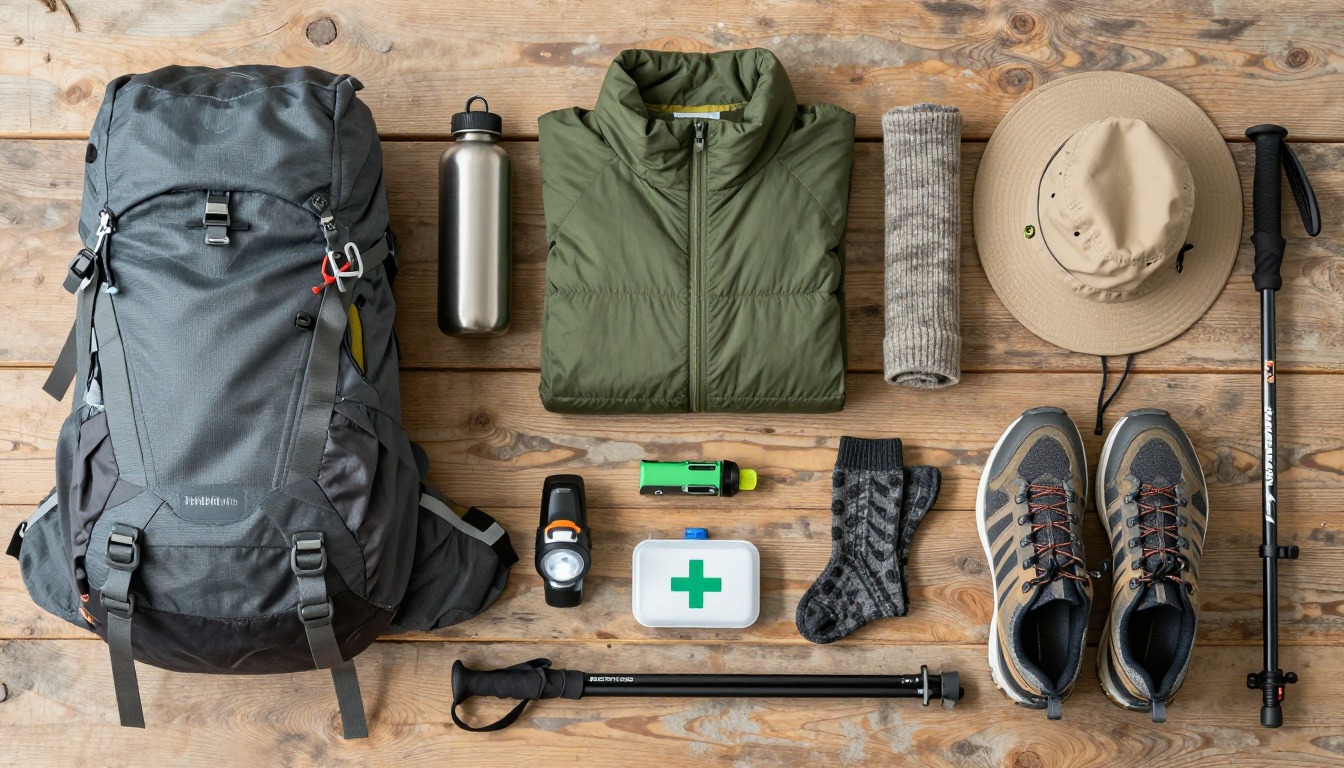
Trail conditions, permits and access rules change without notice — always confirm current information on the official source above before you go. Some facts on this page are still pending owner verification and are marked accordingly. Product links and the accommodation map are affiliate links: we may earn a commission at no extra cost to you; product prices and availability are shown on Amazon, and accommodation prices on the booking site. See our affiliate disclosure.