
Wildlife safety on the trail
Sharing a trail with wild animals is normal, and the overwhelming majority of sightings are uneventful. Good wildlife habits are less about fear than about distance, awareness and food discipline — plus reading the current guidance for the specific place you are hiking, because the right advice genuinely changes by species and region.
In plain English
Most wild animals want nothing to do with you. Trouble usually starts when a person gets too close, surprises an animal, or leaves food where it can get to it. So wildlife safety is mostly about space, noise and tidy food habits.
A good comparison is a guard dog behind a fence. From across the street it just watches you. Walk up to the gate and it gets nervous. Wild animals are the same, except there is no fence, so the distance has to come from you.
The right response to a close encounter depends on the animal, and sometimes on the type of bear. That is why it helps to read the official page for the park or forest you are visiting. For bites, from snakes to ticks, the plan is the same: get proper medical help instead of trying to fix it yourself.
The short answer
Give every wild animal far more space than feels necessary, never approach or feed one, and make casual noise on blind corners in bear and big-animal country. Store food properly, watch where you place hands and feet on rocky ground, and check the current official guidance for the specific park or forest you are visiting.
Distance is the whole strategy
Almost everything written about wildlife safety comes back to one idea: most problems are proximity problems. An animal with room to move away almost always takes it. One surprised at close range, cornered, guarding food or defending young has far fewer options, and that is where encounters go badly. The skill is not memorizing worst-case responses — it is keeping the distance that stops the worst case from starting.
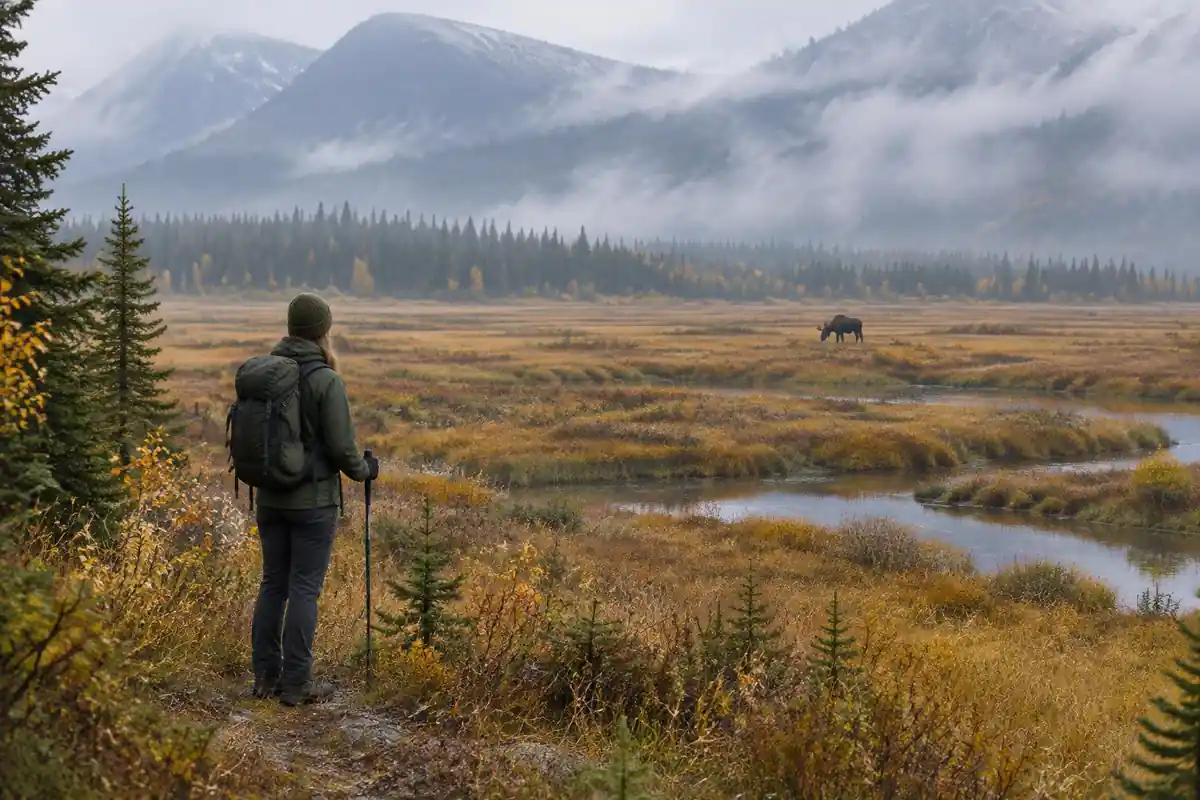
That shapes three habits worth making automatic. Never approach wildlife for a closer look or a better photo: if an animal changes its behavior because of you — freezing, staring, moving off or toward you — you are already too close. Never feed anything, including the chipmunk at the overlook, because animals that learn to associate people with food get bolder and often end up relocated or destroyed. And make your presence known before you arrive, especially on blind corners, in thick brush and near rushing water that masks sound.
Hiking in a group helps for the same reason: more noise, more visibility, fewer close-range surprises. Leashed dogs and children within arm's reach fit the same logic — basic trail craft, alongside the rest of our hiking dos and don'ts.
Wildlife guidance is regional, not universal. Recommended distances and close-encounter responses differ by species, season and land manager. Nothing here replaces the current official guidance for the trail you are hiking.
Bear country basics
In bear country, food discipline does more for your safety than anything else you carry. Properly stored food keeps bears from ever associating your group with a meal, which is the chain of events behind most serious conflicts. That means approved storage — a hard-sided canister, a provided locker, or whatever the land manager requires — for everything scented, not just dinner, and requirements vary by area. Our guide to backpacking food storage and bear safety covers the methods, canisters and camp layout in depth.
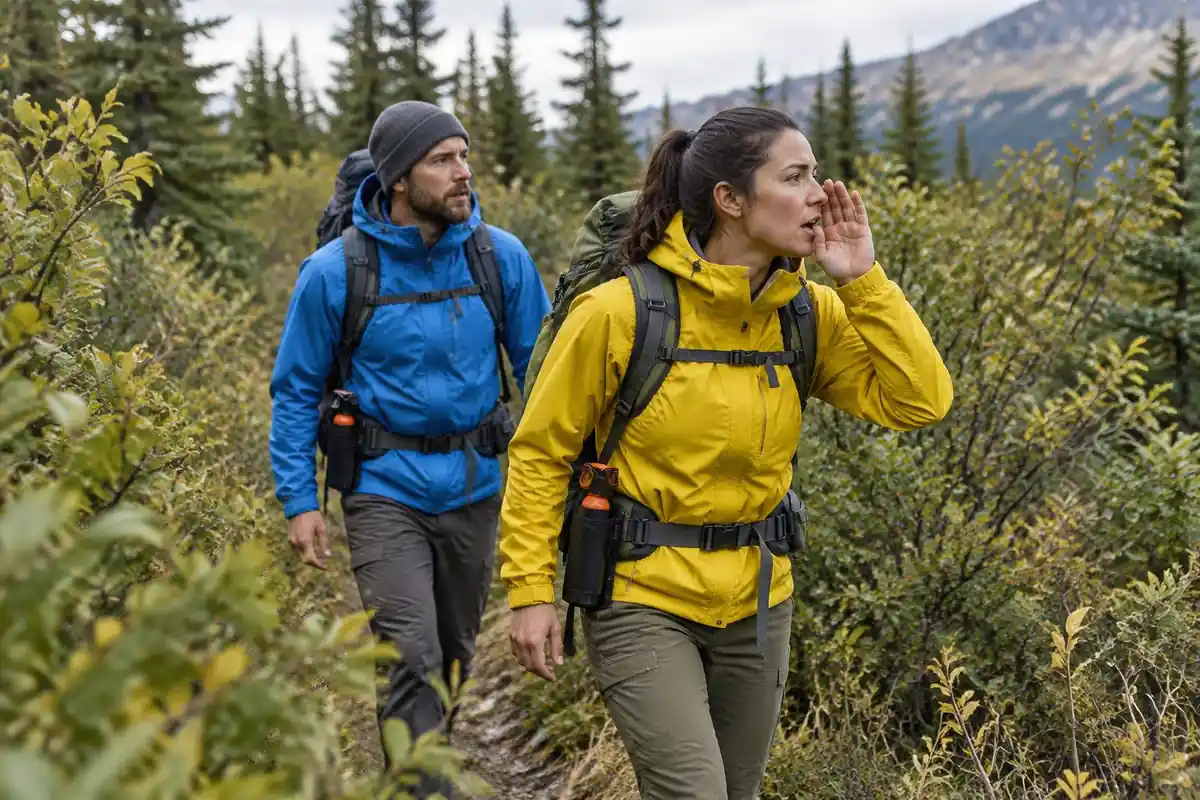
On the move, the goal is simply not to surprise a bear. Most land managers recommend hiking in a group, keeping noise up where sightlines are poor, and watching for fresh sign — tracks, scat, torn logs, or a carcass with birds circling, which is a place to leave the way you came.
Do
- Store all food, trash and scented items by the local rules.
- Make casual noise on blind corners and near loud water.
- Hike in a group where you can, and keep children close.
- Watch for fresh sign and leave the area if you find a carcass.
- Read the managing agency's current bear guidance before the trip.
Don't
- Approach, follow or photograph a bear from closer range.
- Run, which can trigger a chase response.
- Get between a sow and her cubs, even accidentally.
- Leave a pack unattended with food in it.
- Cook, eat or store food inside or beside your tent.
If you see a bear at a distance and it has not noticed you, the widely published advice is to keep it that way: stop, watch, and quietly detour or back out the way you came. If it has noticed you, most agencies advise staying calm, not running, speaking in a low voice so it identifies you as a person, and backing away slowly while leaving an escape route. Close-range encounters are where guidance genuinely diverges by species and region — not a detail to guess at from a general article, so look up the current advice for the land you are visiting.
Snake awareness
Snakes are mostly a foot-and-hand-placement issue. In general, snakes are not interested in people and will move away or stay still rather than seek an encounter; the bites that happen often involve someone stepping onto or reaching into a spot they could not see, or handling a snake deliberately. The habits are unglamorous: look before you put a hand on a ledge, step onto rather than blindly over a log, watch warm rocks and sunny trail edges on a cool morning, and use a light after dark. Boots and long pants help; stepping wide around one helps more. Never try to move, handle or kill a snake.
For first aid, keep it simple and non-negotiable: any suspected bite means getting to professional medical care promptly, and calling emergency services if that is an option. Keep the person calm and as still as practical while help is organized, and do not chase the snake for identification. Nothing in a trail kit treats a venomous bite — the kit's job is the ordinary stuff covered in our guide to first aid and blisters, and the plan for anything serious is evacuation.
Ticks and insects
Ticks are the wildlife hazard most hikers actually meet, and the easiest to manage with routine. Where and when they are active varies enormously by region and season, but the general practices are consistent.
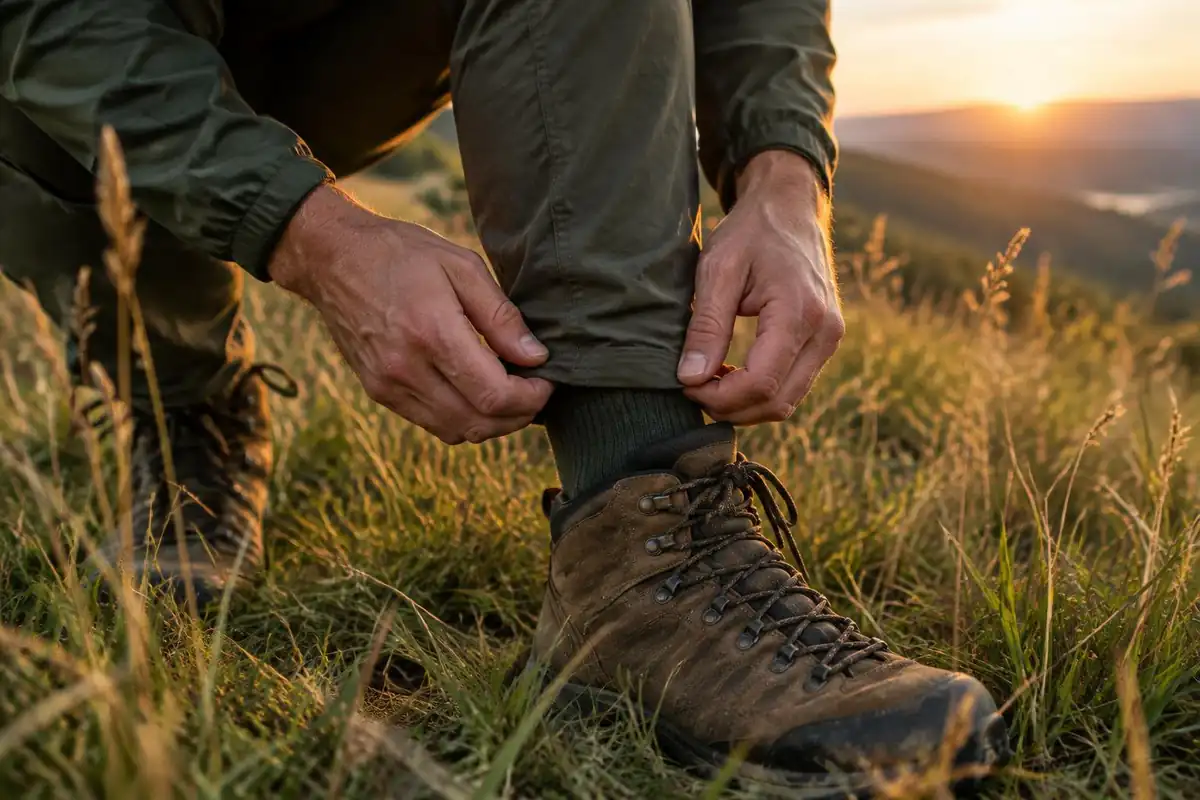
- Cover up sensibly. Long pants, a tucked shirt and socks pulled over the cuffs make it far harder for a tick to reach skin, and light colors make one easier to spot — our hiking socks guide covers what to look for.
- Treat clothing. Permethrin-treated clothing and gear is a long-standing, widely recommended practice in tick-heavy areas. Treat garments rather than skin, follow the product's directions exactly, and let items dry fully before wearing.
- Use repellent on exposed skin according to the label, and reapply as it directs.
- Stay center-trail. Ticks wait on vegetation at the edges, so brushing through tall grass and leaf litter is where most hitchhikers are collected.
- Check thoroughly, and early. Do a full-body check as soon as the hike ends — scalp, behind the ears and knees, armpits, waistband and anywhere warm and hidden. Check packs, clothing and dogs too.
Remove an attached tick promptly with fine-tipped tweezers, gripping close to the skin and pulling steadily straight out, then clean the area. If a rash develops, or you feel unwell in the days or weeks after a bite, see a clinician and mention the hike. Mosquitoes and stinging insects follow the same pattern: cover up, use repellent as labeled, avoid disturbing nests, and treat any severe reaction as a medical emergency.
Moose, elk and other large animals
Bears get the attention, but moose, elk, bison and other large herbivores account for plenty of injuries, largely because people underestimate them. They are big, fast and willing to defend themselves or their young. The general rules are consistent across agencies: keep a wide distance, never place yourself between a mother and her calf, and never approach for a photo.
Learn to read the warning signs. A moose that lays its ears back, raises its hackles or starts licking its lips is telling you it is unhappy; elk in the fall rut and bison during calving season are notably less tolerant. The response to an agitated large herbivore is generally different from a bear encounter — most agencies advise putting distance and a solid object such as a tree or boulder between you and the animal rather than standing your ground.
Smaller animals deserve the same restraint. Rodents, raccoons and foxes that have learned to raid packs can carry disease and will bite, and any bite or scratch from a wild mammal warrants prompt medical advice. The rule covering all of it comes from Leave No Trace: observe from a distance, never feed.
Check the local guidance
It is worth being blunt about the limits of any general article, including this one. Wildlife advice is genuinely regional: close-encounter guidance differs between bear species, food-storage rules differ between adjacent national forests, tick and snake activity vary by climate and elevation, and agencies update guidance as conditions change. A single universal rule stated confidently for all of North America would be wrong somewhere that matters.
So build one step into trip planning: read the current wildlife page for the park, forest or state land you are visiting, and check recent alerts. Trailhead boards and ranger stations carry the same information, often more current.
This is general trail craft, not medical or emergency advice. For any bite or sting, seek professional medical care promptly; in an emergency call your local emergency number (911 in the US). For wildlife-specific rules, defer to the agency that manages the land you are hiking.
Bear spray: what the numbers mean
Both the Park Service and the Interagency Grizzly Bear Committee say to buy only EPA-registered bear spray, because other sprays are not effective enough.1,2 IGBC notes that bear spray is typically 2% capsaicinoids compared with 1.33% in pepper spray, and leaves the can at over 70 mph, so it works even in wind. Most bear sprays reach only 20 to 30 feet.2
Timing guidance varies. The Park Service says to use spray when a charging bear is within 60 feet, and warns that wind, snow, rain and cold reduce its range.1 Yellowstone suggests spraying at 30 to 60 feet to put a cloud between you and the bear, and says each person in a group should carry spray in a quick-access holster.3 The Park Service says bear spray is highly successful at stopping aggressive bear behavior,4 and it does not recommend firearms for stopping an attack.1 If you fly to a trip, note that the TSA does not allow bear spray in carry-on or checked bags.5
When the response depends on the animal
The page is right that close-range advice differs, and the Park Service spells out how. Talk calmly so a bear identifies you as a person, and never run, because bears can run as fast as a racehorse. If a brown or grizzly bear attacks, play dead face down with your hands behind your neck. If a black bear attacks, do not play dead: try to escape or fight back.4 The Fish and Wildlife Service recommends staying at least 100 yards away, traveling in groups of three or more and making noise.6
Mountain lions call for a different approach again. The Park Service says not to run, since running may trigger a chase, to make yourself look larger, to fight back if attacked, and to keep children close, especially at dawn and dusk.7 The page's advice on moose, elk and bison, including the warning signs it lists, is general guidance that this site's library could not tie to a specific agency source, so the managing agency's own page is the place to confirm it.
Snakes and ticks by the numbers
Yosemite's rattlesnake guidance explains why hand and foot placement matters so much: rattlesnakes can strike only about half their body length, so a step back puts you out of range. Never put your hands where you cannot see, and treat every rattlesnake bite as a medical emergency.8
For ticks, the CDC says they are most active from April through September, though exposure can happen year-round, and that walking in the center of trails and avoiding high grass and leaf litter reduces contact.9 Showering within two hours of coming indoors has been shown to reduce Lyme disease risk, and tumble drying dry clothes on high heat for 10 minutes kills ticks on them.9 To remove an attached tick, use clean, fine-tipped tweezers close to the skin and pull with steady, even pressure without twisting; don't use petroleum jelly, heat or nail polish.10
Know what to watch for afterward. Early Lyme symptoms appear 3 to 30 days after a bite, and the rash, which appears in about 70 to 80% of infected people, does not always look like a classic bull's-eye.11 See a doctor if a rash or fever develops within several weeks of removing a tick.10
Frequently asked questions
What should you do if you see a bear on the trail?
General guidance from most land managers is the same at a distance: stop, stay calm, do not run, and back away slowly while keeping the bear in sight and giving it a clear escape route. Close-range advice differs by species and region, so read the specific park or forest guidance before your trip.
How far away should I stay from wildlife?
The US Fish and Wildlife Service recommends staying at least 100 yards from bears, and other distances are set by each park or forest, so check the rule where you are hiking. Treat any posted distance as a floor rather than a target, and give large animals far more space than feels necessary.
Does making noise on the trail actually help?
In general, yes. Most unwanted encounters with large animals are surprise encounters at close range, and many land managers recommend talking, calling out or clapping on blind corners, in dense brush and near loud water. A normal speaking voice carries the point without turning the hike into a shouting match.
What should I do if a snake bites me?
Get to professional medical care as quickly as possible, and call emergency services if you can. Keep the person calm and as still as practical while help is arranged. Do not attempt home remedies, cutting, suction or ice. The single thing that matters most is prompt assessment by a clinician.
How do I check for ticks after a hike?
Do a full-body check as soon as you can, including the scalp, behind the ears and knees, the waistband and any warm, hidden spots. Check clothing, pack and dog too. Remove an attached tick promptly with fine-tipped tweezers, pulling straight out, and see a clinician if a rash or illness follows.