
Affiliate disclosure: this page contains affiliate links. Purchases made through them may earn us a commission at no extra cost to you. See our affiliate disclosure.
In plain English
There are really two ways to sleep for this trip. The first is to stay down in a village in the valley, then ride a cable car up in the morning and walk around the high meadows. The second is to stay high up in a mountain hut, so you are already among the peaks at sunrise and sunset.
A mountain hut in the Alps is not a wilderness shelter. Many are like small inns on a hillside that sell hot meals, and some also have beds. That is why the tourism association's description of them is mostly about food. If you want to sleep in one, you need to contact that specific hut, not assume it has room.
Most people are happiest sleeping in the valley and using the lifts. It means a lighter bag, a proper bed and an easy way down if the weather turns, since afternoon storms in the mountains can build fast.
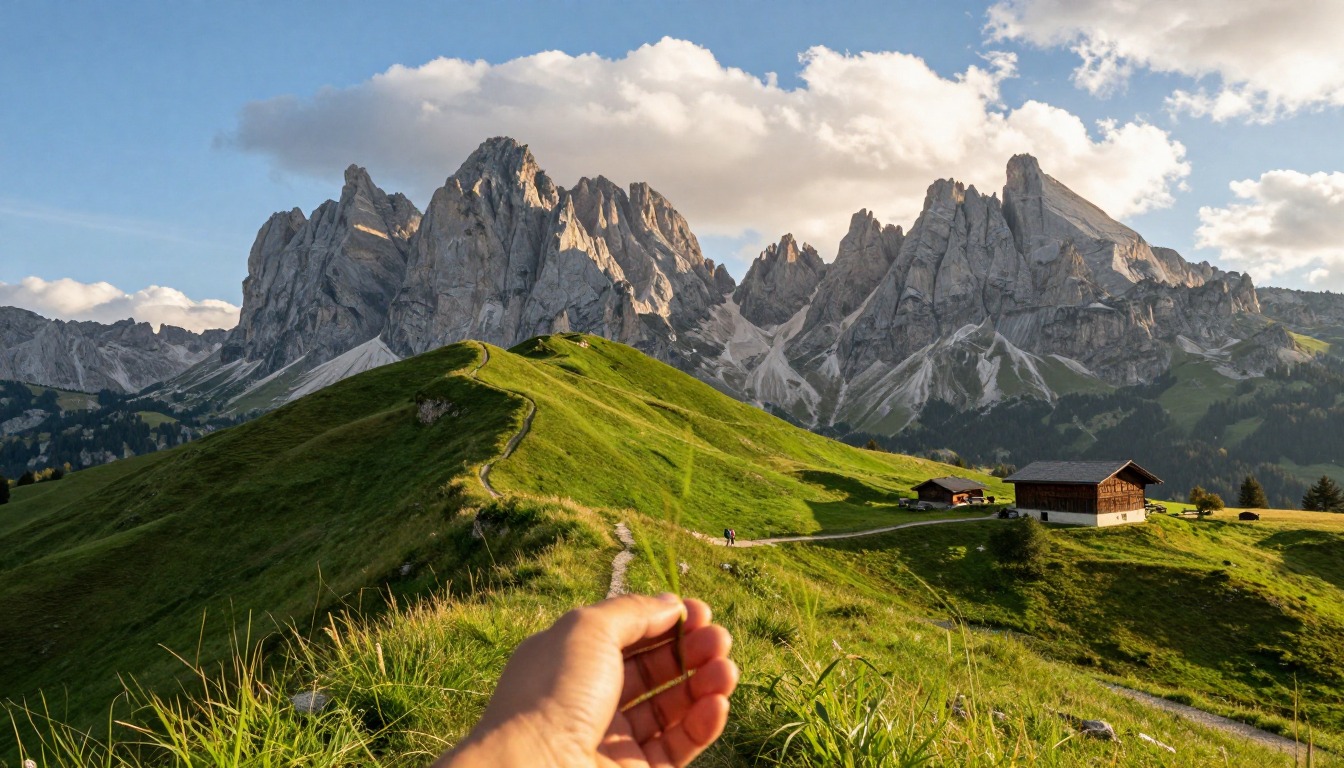
Seceda and the Alpe di Siusi sit above Val Gardena in the Dolomites of South Tyrol, and unlike most alpine treks in the range, cable cars carry you most of the way up. That means a full day among jagged peaks and Europe's largest high-alpine meadow is possible without ever camping out, and where you sleep is mostly settled down in the valley rather than on the mountain itself.
Why hike here
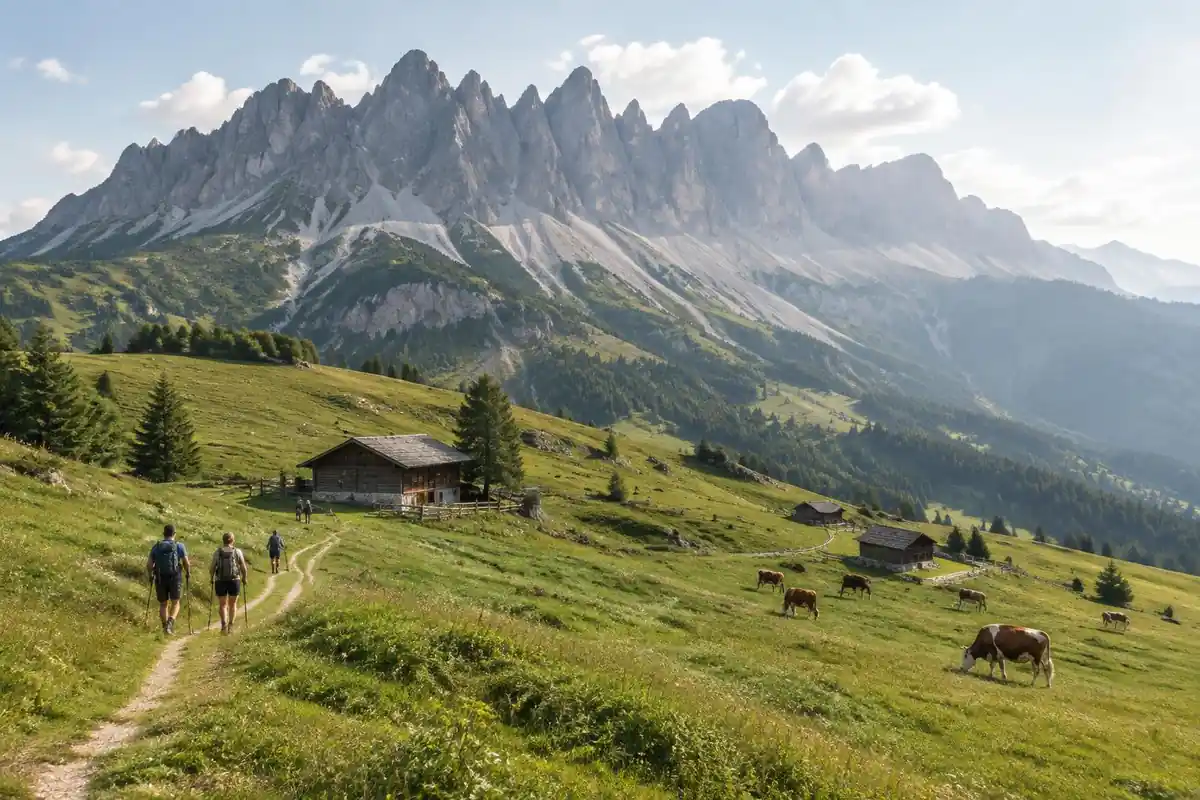
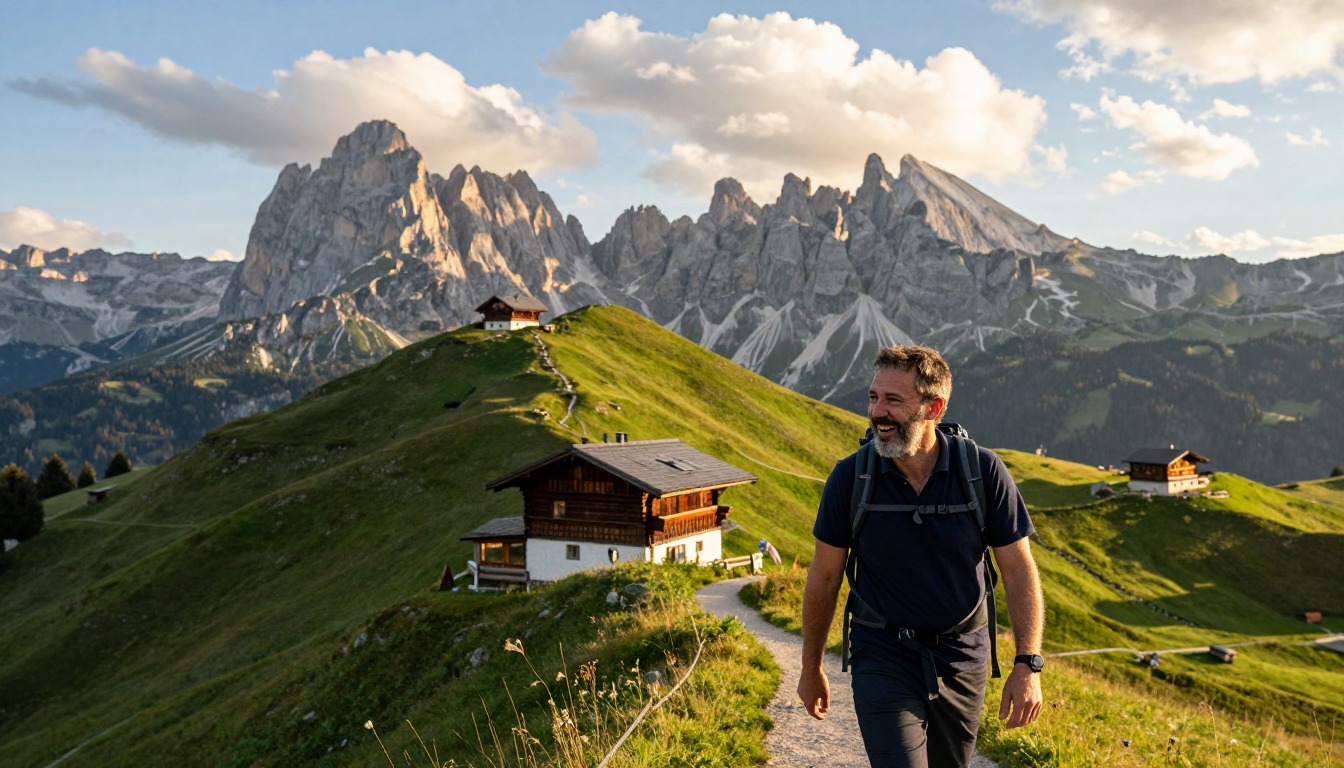
What makes Seceda unforgettable is the reveal at the top of the lift: the jagged Odle/Geisler spires rise straight out of green pasture, more like a wall than a mountain range, and the view opens up all at once rather than building slowly. The Alpe di Siusi feels different again — a wide, rolling expanse of grassland so large it's known as Europe's biggest high-alpine meadow, grazed by cattle and crossed by broad, easy paths instead of exposed ridgelines. Cars are restricted up there, so the meadow keeps a quiet, pastoral feel even in the busier summer weeks, with the Dolomite spires staying in view for most of the walk. Together the two give you contrast in one trip: a dramatic ridge and a gentler wander through open grassland, both reached by lift rather than a grinding climb.
Getting there
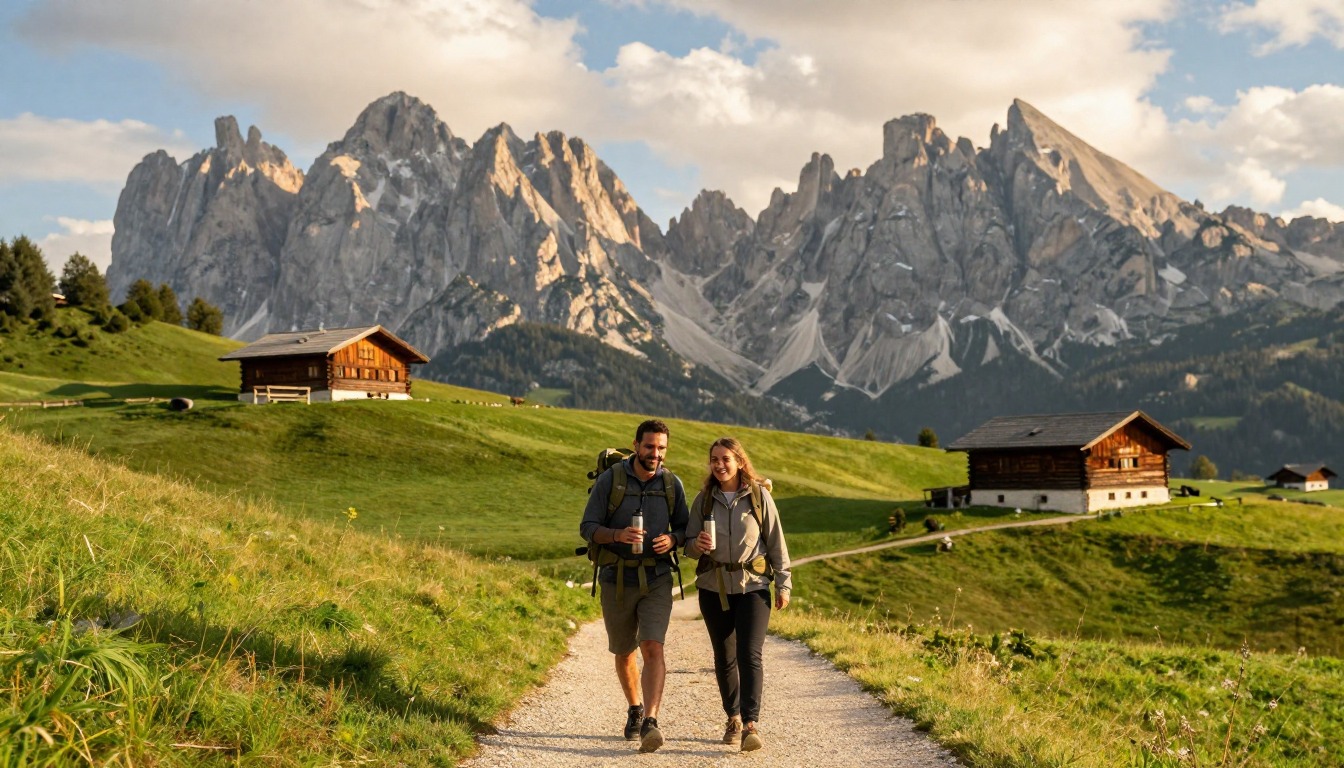
The nearest major airports are Venice, Verona, and Innsbruck, and from any of them the standard approach is a rental car or arranged transfer up into the Dolomites, since there's no direct rail line into Val Gardena. From the villages of Ortisei, Santa Cristina, or Selva, cable cars run up to Seceda and the Alpe di Siusi and do the bulk of the elevation gain for you. Because private cars are restricted on the Alpe di Siusi, plan to park down in the valley and ride a lift or shuttle up rather than expecting to drive to the trailhead itself.
Where to stay
The realistic options, closest-to-the-trail first. Book through the official links — we don't list prices or availability because they change all the time.
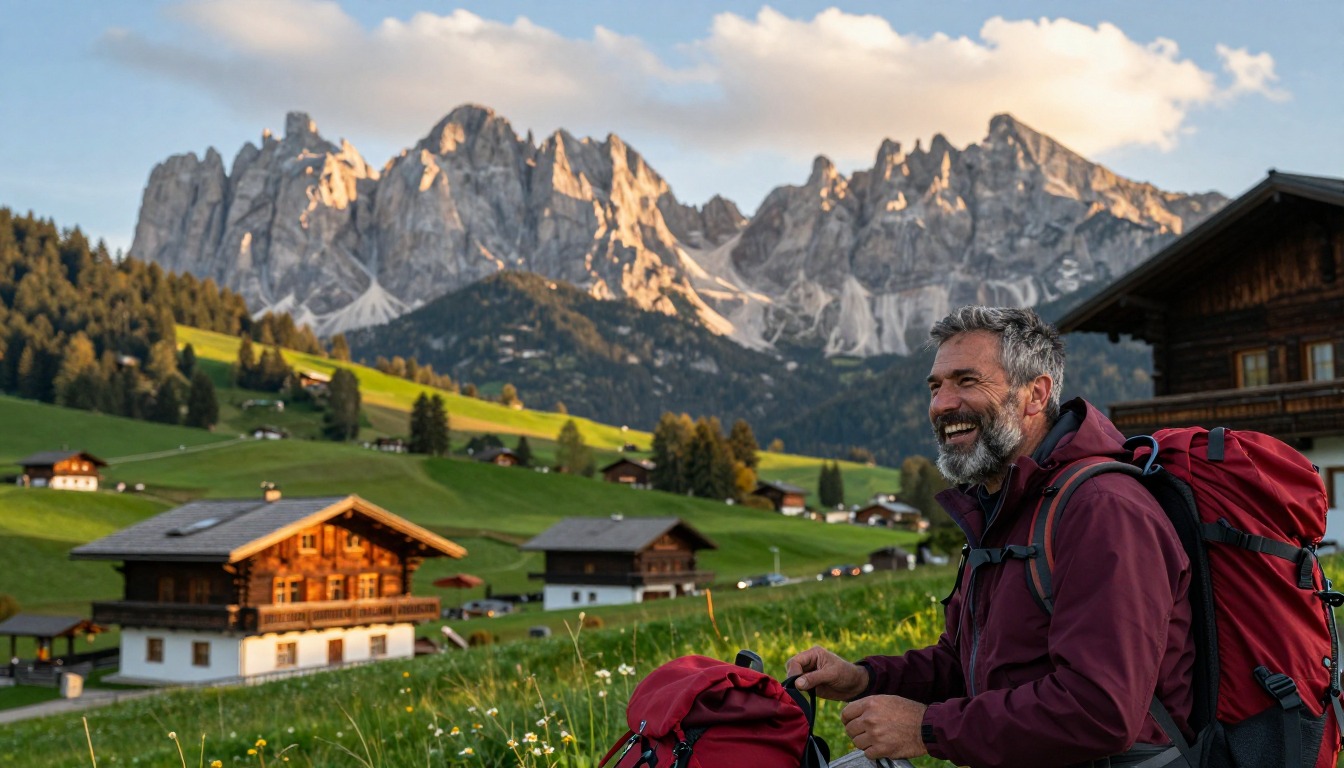
For example: Hotels and guesthouses in Ortisei, Santa Cristina and Selva
Most visitors — a comfortable base with lifts up to Seceda and the Alpe di Siusi.
Lifts from the villages reach the high meadows quickly.
Village lodgingFor example: Mountain huts (rifugi and malghe) on Seceda and the Alpe di Siusi for meals and refreshments
Hikers who want a meal or rest high on the meadows.
The Alpe di Siusi (Europe’s largest alpine meadow) restricts cars — use the lifts.
Book huts direct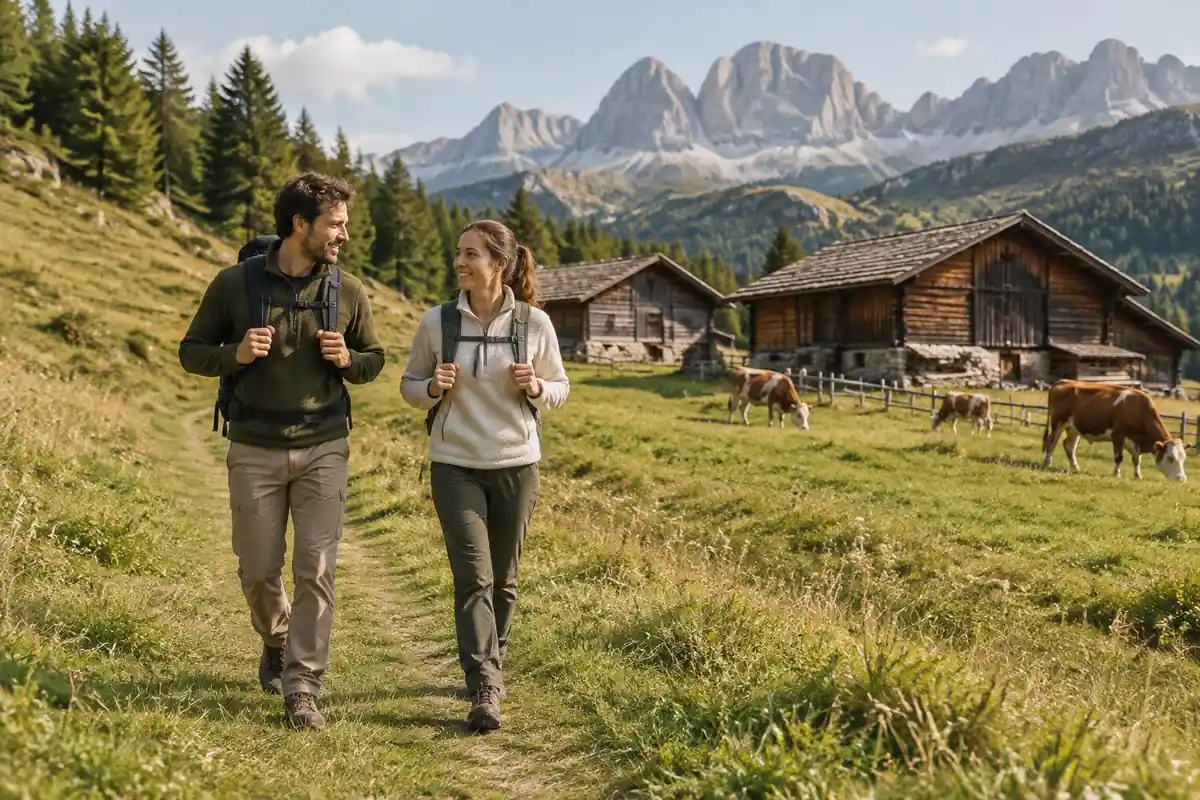
Permits & rules
No permit is needed. Lifts do most of the climbing, so these are gentle high-meadow walks by Dolomite standards — but the weather up top is still alpine, and afternoon storms build fast, so start early and pack a warm, waterproof layer.
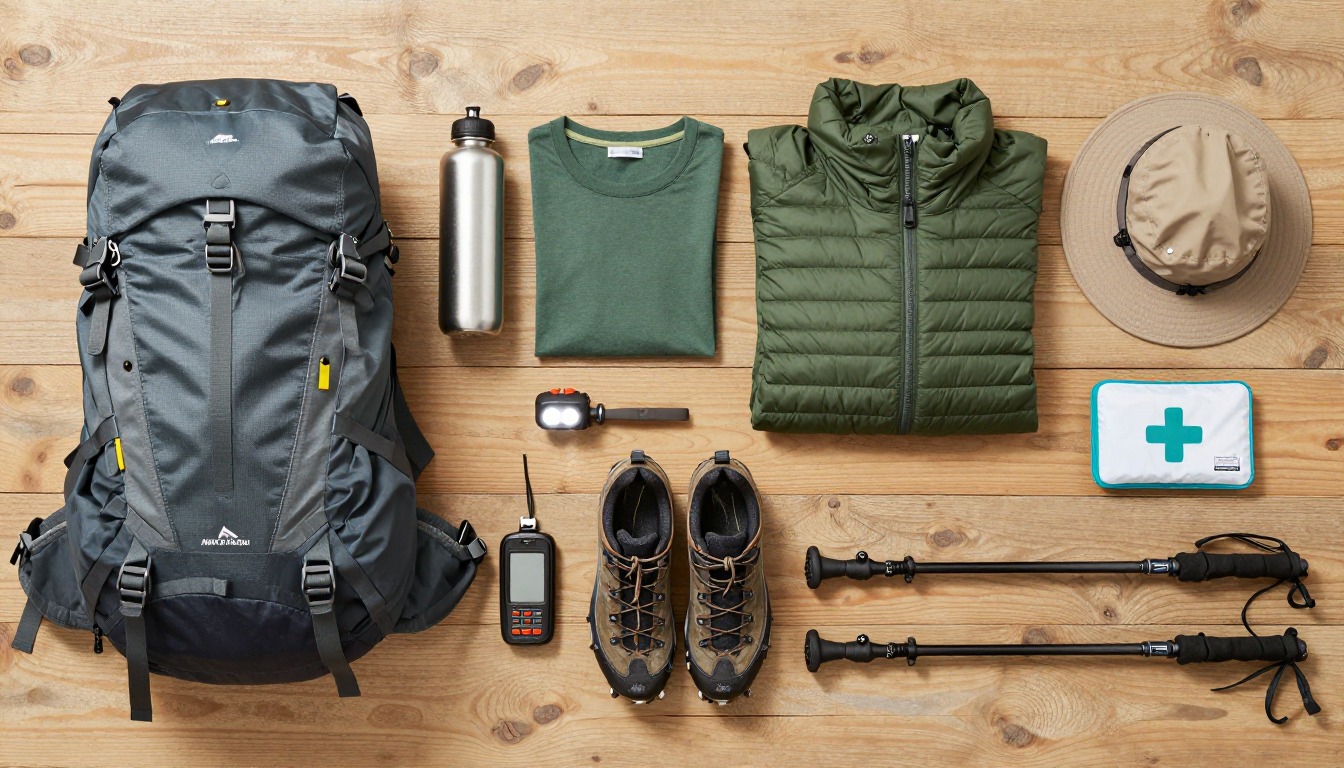
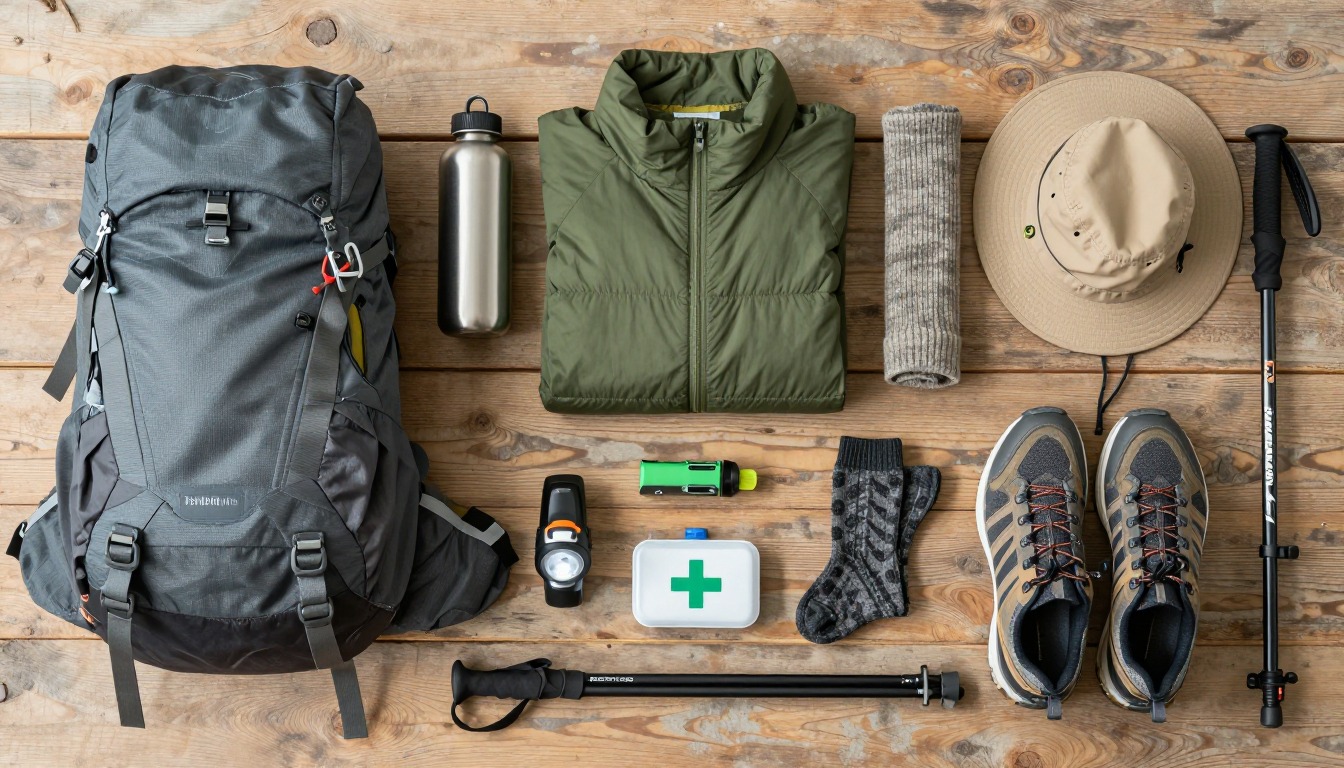
Gear you'll want for this trip
Matched to the terrain and conditions here. Real products — check current price on Amazon.


Valley base versus a night in a hut
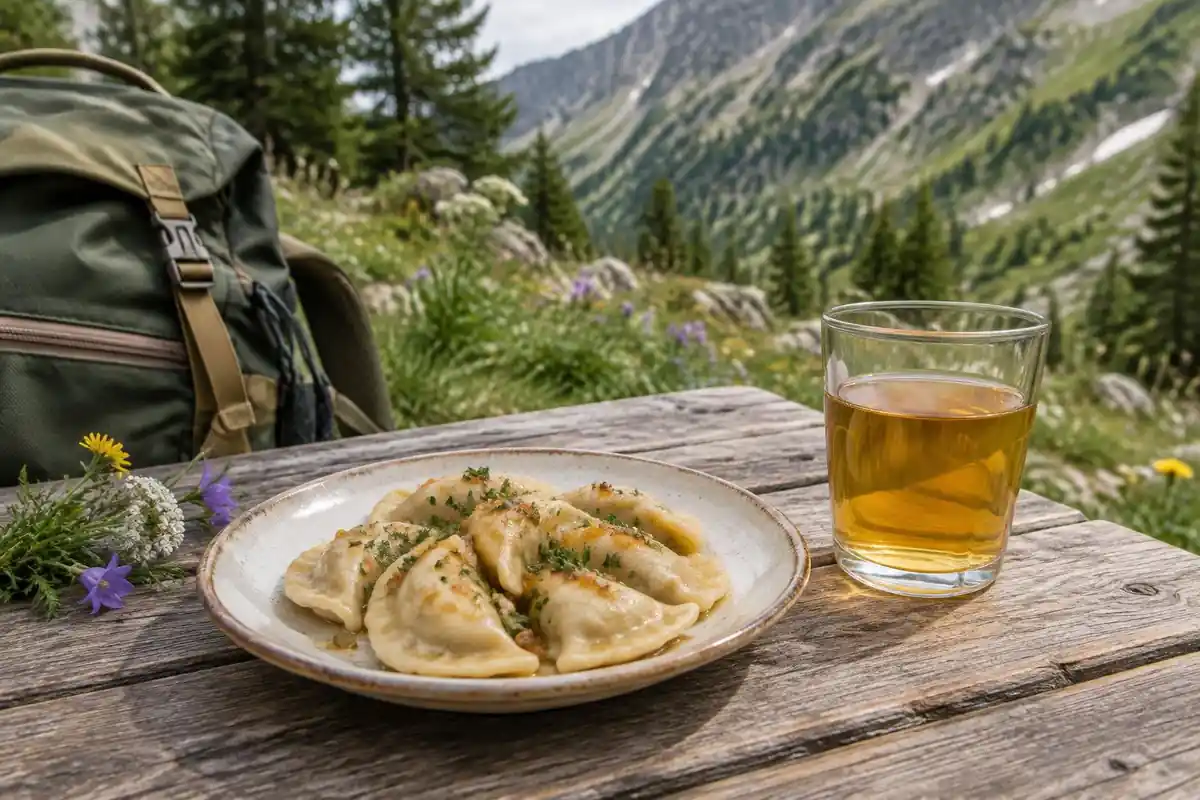
Dolomites Val Gardena, the valley's destination website, describes refuges, mountain huts and mountain restaurants in Val Gardena and on the Alpe di Siusi, and says the huts serve Mediterranean and South Tyrolean meals as well as Ladin dishes.1 The emphasis is on stopping for a meal during a hike. Some guides mention overnights, so treat a hut bed as something you arrange directly with the hut, well before you set out.
The trade-off is simple. A valley hotel gives you private space, showers, a normal breakfast and lift access to the meadows. A hut night gives you the high-country evening and early light, but you must carry an overnight kit up to it. On a lift-served route, the lift does the climbing, so the extra weight is smaller than on a route you must climb on foot, but it is still an overnight pack rather than a day pack.
Confirm bookings, opening dates and any rules for staying overnight with the hut and with the local tourist office before you go.
Planning for a mountain that can turn quickly
The association's safe-hiking guidance says choosing and preparing a tour starts at home, that you should climb with full equipment and good health, and that you should tell someone your destination so help can be sent quickly if needed.2 It explains that the Val Gardena mountain rescue team's first responders are volunteers, asks that 112 be called only in genuine emergencies, and states that helicopter rescue missions are not free.2 Check what your travel insurance or any alpine rescue membership covers before you travel, since a helicopter rescue is not free.
The page notes that afternoon storms build fast in the Dolomites. The National Weather Service's rule of thumb is that when you can hear thunder you are likely within striking distance, and that there is no safe place outdoors during a thunderstorm.4 It also states that a tent offers no protection from lightning, and the only completely safe action is to get inside a safe building or vehicle.5 On a lift-served route, that is a practical argument for starting early and heading for a hut or the lift before the afternoon.
UV exposure also rises with elevation. The CDC's travel guidance says UVB is most intense from 10 a.m. to 4 p.m. and at higher elevations.3 Sun protection and a warm, waterproof layer belong in the pack even on a short walk.
Sizing the pack for the lodging you choose
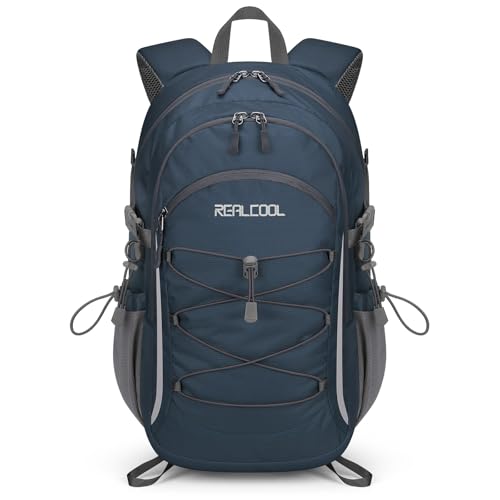
The Washington Trails Association describes 25 to 30 liters as a good size for a full-day hike.6 That is enough for a valley-base day: water, layers, food, a rain shell and sun protection. If you add a night in a hut, you will likely need a somewhat larger pack for a change of clothes and toiletries, depending on what the hut provides. Ask the hut what it supplies before you pack.
Common questions
Where should I base myself for hiking Seceda and the Alpe di Siusi?
Most hikers base themselves in one of the Val Gardena villages — Ortisei, Santa Cristina, or Selva — where hotels and guesthouses sit close to the lifts up to Seceda and the Alpe di Siusi. Mountain huts higher up mainly serve meals during the day, so confirm any overnight bed directly with the hut, but the valley villages are the practical, comfortable choice for most visitors.
When is the best time to hike here?
June through October is the main window, when the cable cars and mountain huts are running. Afternoon thunderstorms build quickly in the Dolomites even in midsummer, so it pays to start hikes early and watch the sky — a clear morning up on the meadow can turn stormy well before the lifts stop for the day.
Do I need to be an experienced hiker for Seceda and the Alpe di Siusi?
Not especially. Because the cable cars handle most of the climbing, the walking itself is comparatively gentle by Dolomite standards — mostly rolling meadow and marked paths rather than technical terrain. You're still up at altitude in an alpine environment, though, so proper footwear, warm layers, and respect for fast-changing weather still matter.
Complete gearsets for this trip
Full curated kits built for exactly this kind of hike — what to bring, why, and links to similar gear.
Lodging details are compiled from official parks, refuge associations and reservation systems and can change without notice. We publish no prices, availability or ratings — always confirm current information on the official site before booking or setting out. Product links and the accommodation map are affiliate links: we may earn a commission at no extra cost to you; product prices and availability are shown on Amazon, and accommodation prices on the booking site. See our affiliate disclosure.