
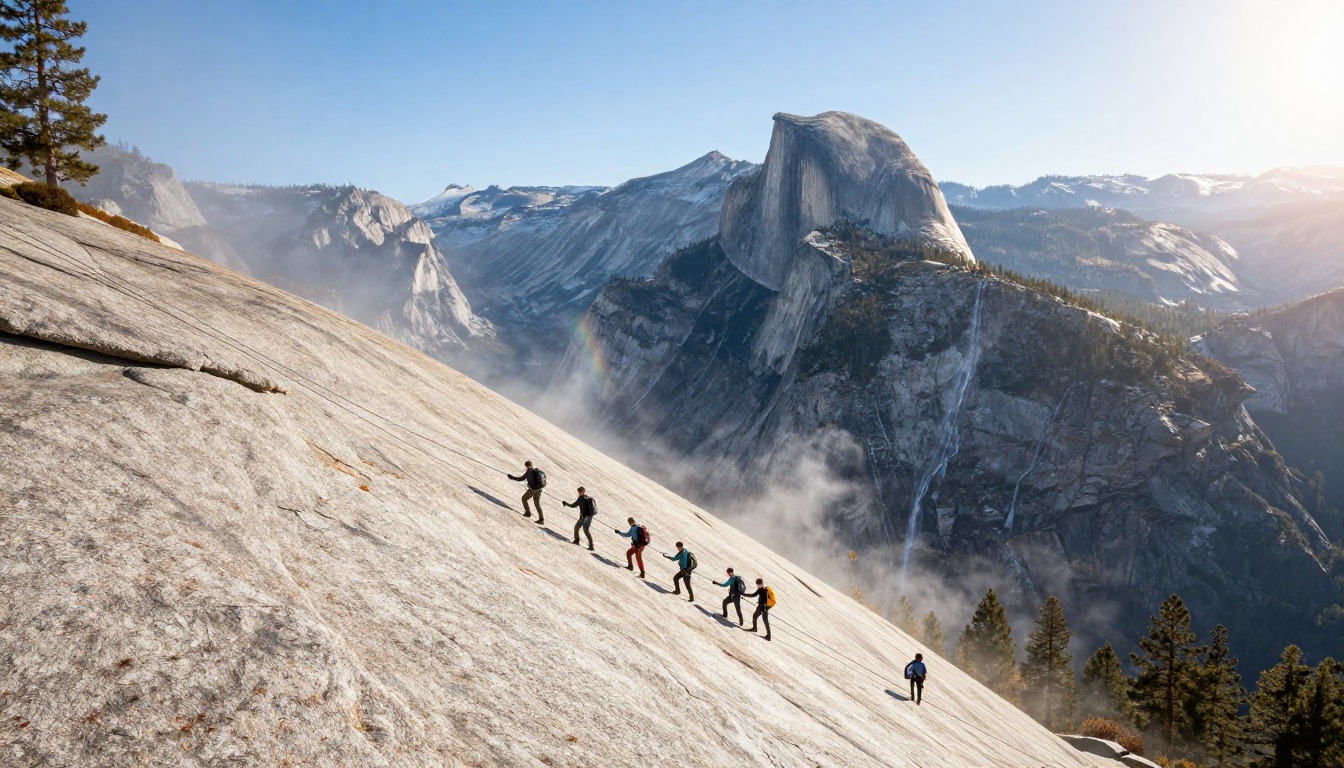
Illustrative artwork — an impression of Half Dome & Yosemite Valley, not a literal photograph.
Half Dome is Yosemite Valley's signature summit: a strenuous round-trip of roughly 14 to 16 miles that climbs from the valley floor to the base of the dome's granite shoulder, then up a steel cable route to the top. Because the trailhead sits right in Yosemite Valley, most hikers base themselves there rather than at the summit — sleeping among the Valley's lodges, cabins, and campgrounds, or splitting the effort with a night at a backcountry wilderness camp along the way.
Why hike here
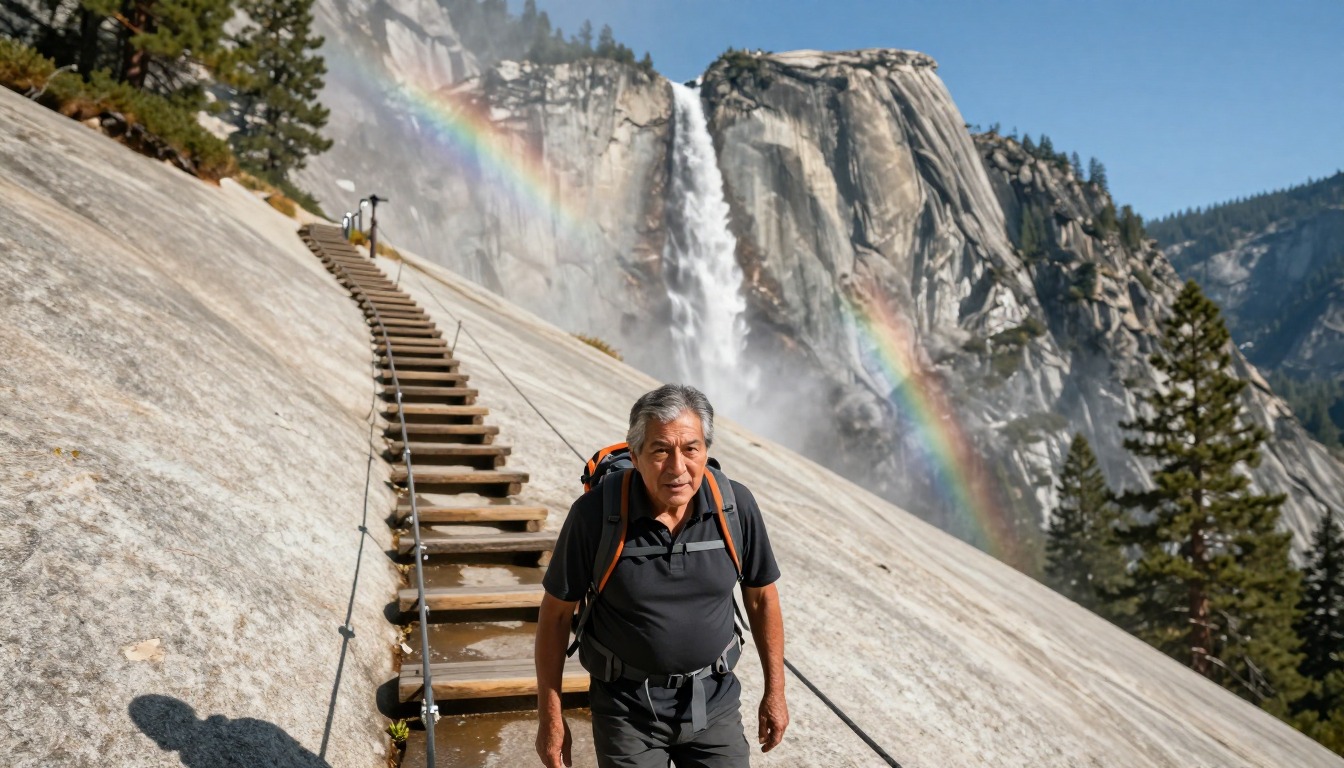
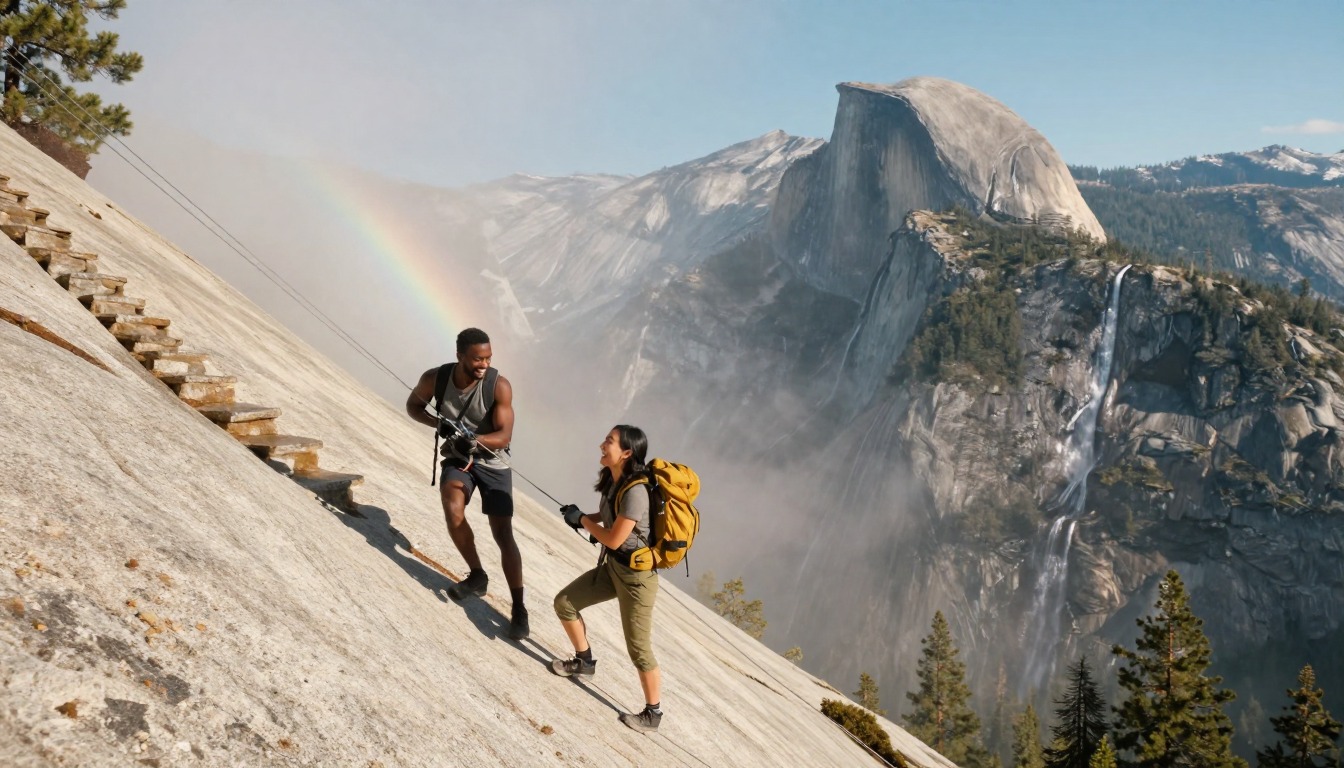
What makes Half Dome worth the effort is the up-close relationship with granite: the trail climbs out of forest and past the valley's characteristic waterfalls before the trees fall away and the route turns to bare rock. The final push is the part people talk about — hauling yourself up the smooth granite face on a pair of steel cables, with the valley floor falling away far below. Do it as a long day and the whole arc happens in a single push; split it with a night at a backcountry camp and you get a slower, quieter version, with time to watch the light change on the valley's granite walls in the evening and again at dawn before you finish the climb.
Getting there
Yosemite Valley is the hub for the hike: most people fly into a regional California airport, then drive or take a shuttle service into the park, since there's no direct rail or air link to the Valley itself. Once you're in, a free shuttle handles getting around the Valley floor, including reaching the Happy Isles trailhead where the Half Dome route begins. If you're driving in for the day, plan on an early start — Valley parking areas fill up fast on summer mornings, well before most day hikers are back off the trail.
Where to stay
The realistic options, closest-to-the-trail first. Book through the official links — we don't list prices or availability because they change all the time.
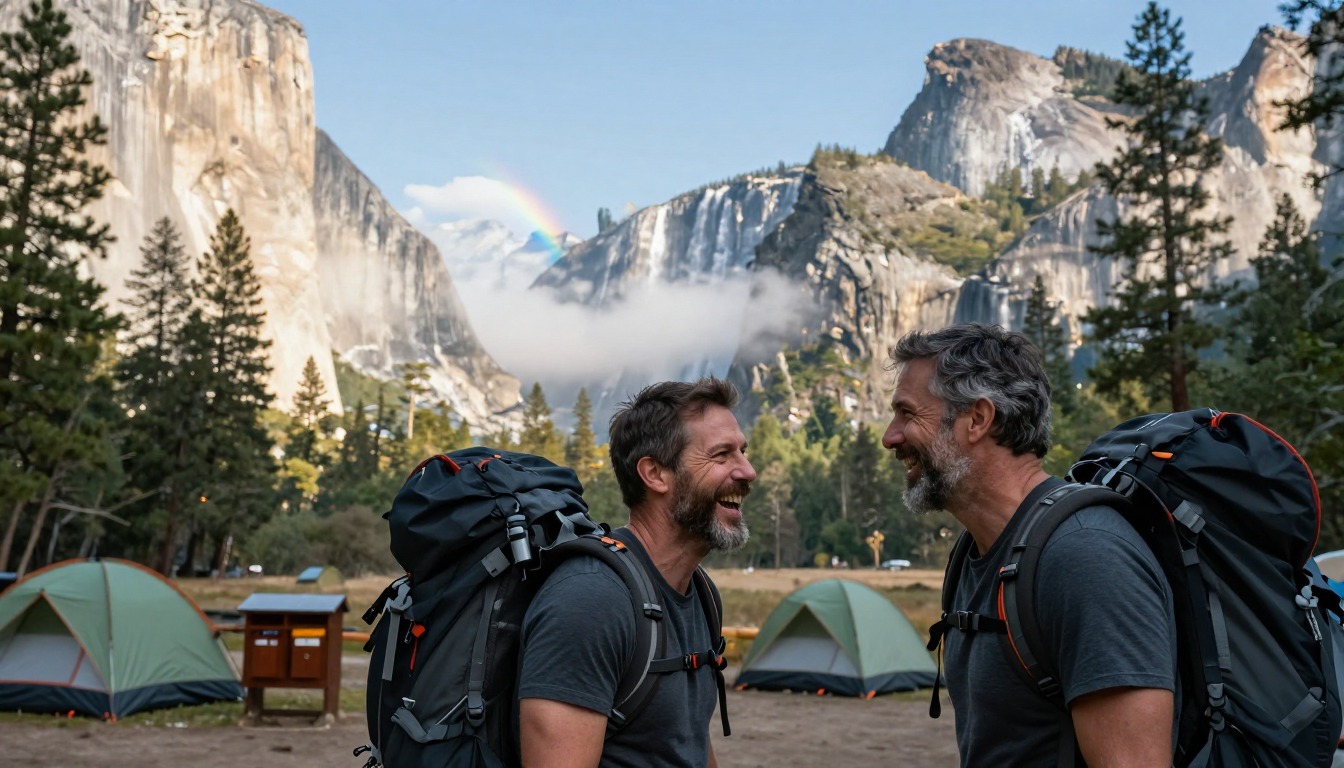 Illustrative — evokes the setting, not a specific property.
 For example: The Ahwahnee, Yosemite Valley Lodge, Curry Village tent cabins, Housekeeping Camp
Hikers who want a bed, a hot shower and a short drive to the Happy Isles trailhead.
Summer dates open on a rolling window and book out months ahead.
Yosemite Hospitality (Aramark)For example: Upper Pines, Lower Pines, North Pines (reservable); Camp 4 (walk-in / seasonal lottery)
Car campers and hikers who want to be steps from the trail network.
Among the hardest campgrounds in the park system to book.
Recreation.govFor example: Wilderness camp about 4-5 miles up, splitting the climb over two days
Backpackers doing Half Dome as an overnight, or starting the John Muir Trail.
An overnight permit that includes Half Dome skips the separate day-use cables lottery.
Yosemite Wilderness permit (Recreation.gov)Permits & rules
The Half Dome cables require a permit whenever they are up: day hikers enter a preseason lottery (March) plus a smaller daily lottery; overnight backpackers get Half Dome on their wilderness permit.
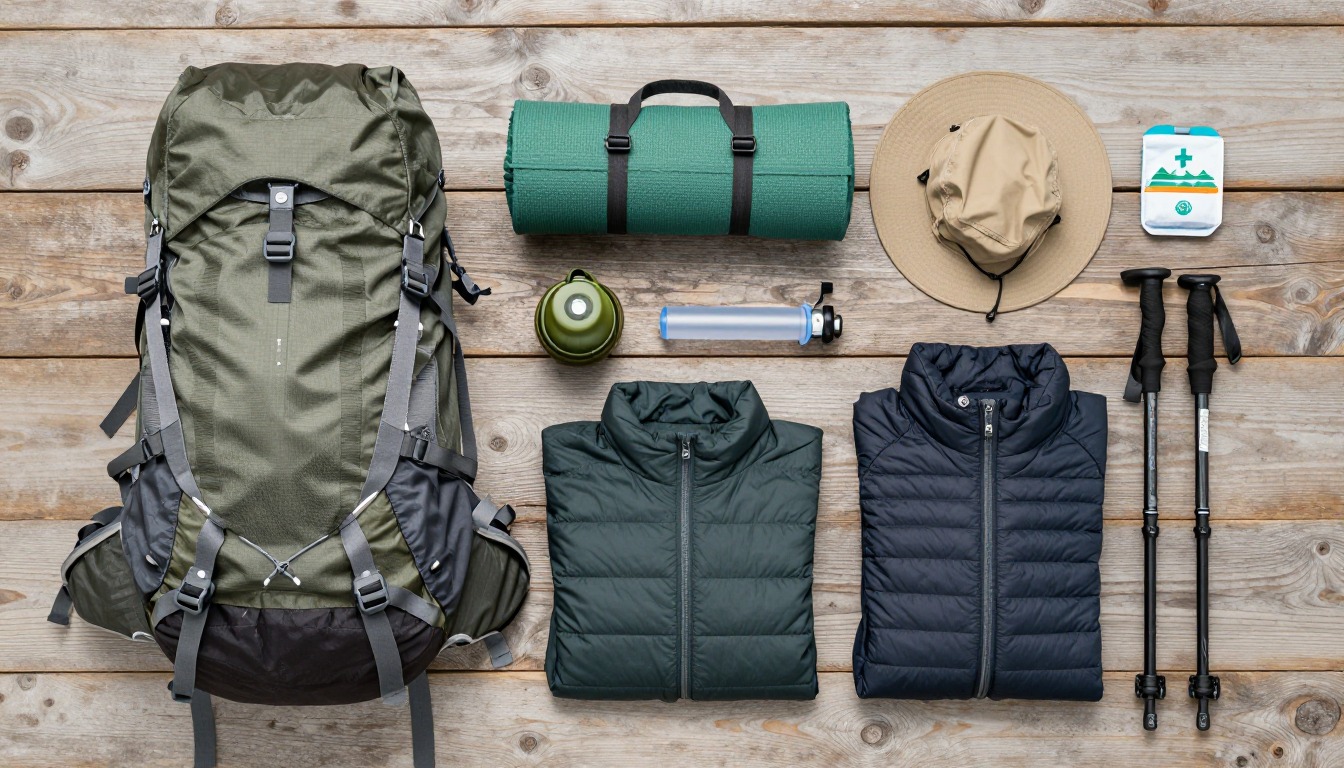
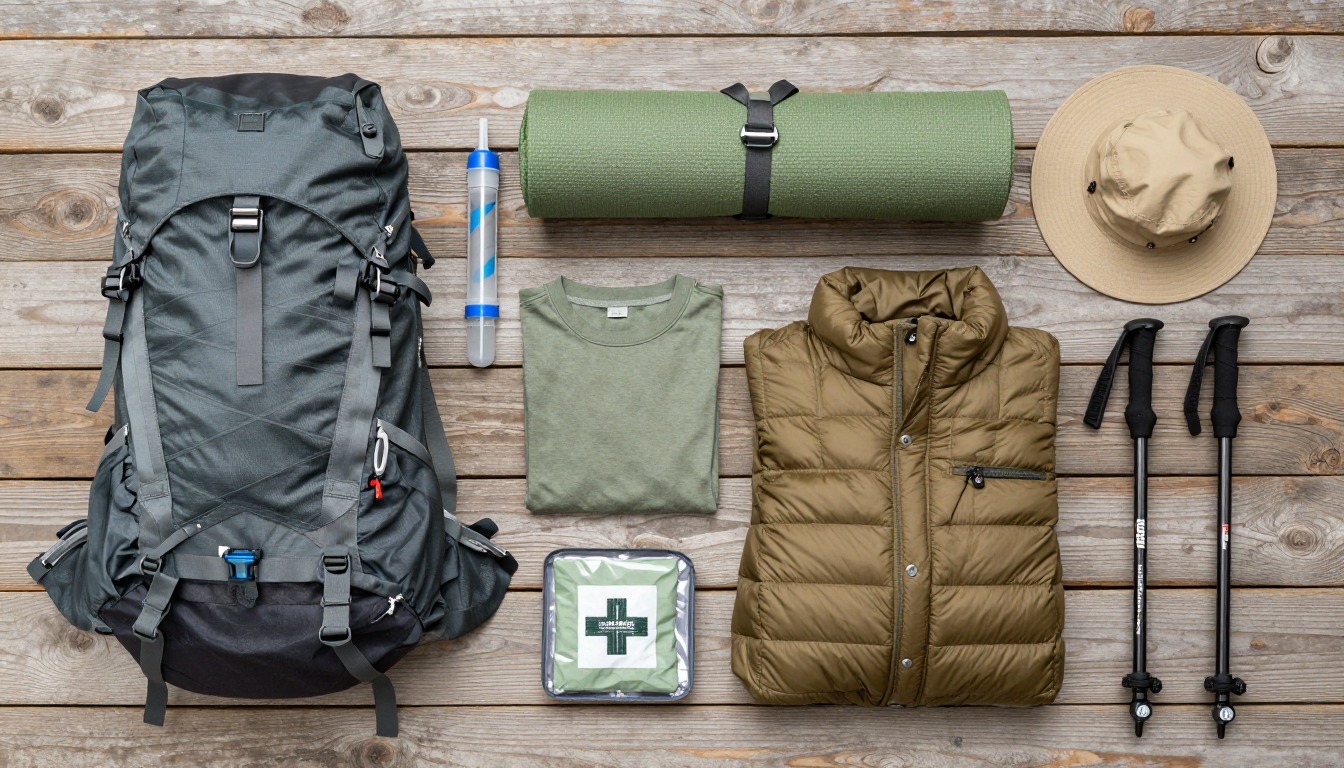
Gear you'll want for this trip
Matched to the terrain and conditions here. Real products — check current price on Amazon.


Common questions
Do I need a permit to hike Half Dome?
Yes. Because the final cable section is so exposed and popular, the National Park Service requires a separate permit just for the cables, issued through a preseason lottery in March and a small daily lottery during the season. If you're doing Half Dome as part of an overnight backpacking trip, the climb is instead included on your wilderness permit, so you don't need to enter the separate cable lottery.
Where should I stay the night before hiking Half Dome?
Most hikers base themselves in Yosemite Valley, either in one of the in-park lodges and cabins or at one of the Valley campgrounds, so they can start on the trail from Happy Isles at first light. If you'd rather break the hike into two days, an overnight at a backcountry wilderness camp along the route lets you split the mileage and reach the cables the next morning.
When's the best time of year to attempt Half Dome?
The cables are typically up from late May to mid-October, and that window is the realistic season for most hikers since the route isn't set up for a safe ascent outside it. Within that stretch, book your permit as early as the lottery allows, check the weather forecast closely, and start early enough to be off the exposed sections well before any afternoon storms build.
Complete gearsets for this trip
Full curated kits built for exactly this kind of hike — what to bring, why, and links to similar gear.
Lodging details are compiled from official parks, refuge associations and reservation systems and can change without notice. We publish no prices, availability or ratings — always confirm current information on the official site before booking or setting out. Product links are affiliate links: we may earn a commission at no extra cost to you; prices and availability are shown on Amazon. See our affiliate disclosure.