
Affiliate disclosure: this page contains affiliate links. Purchases made through them may earn us a commission at no extra cost to you. See our affiliate disclosure.
In plain English
Franconia Ridge is usually a day hike, but some people stretch it into an overnight. If you do, the forest has new rules about food. Where the wilderness starts, you must keep all food and anything with a scent in a hard plastic canister. Hanging a bag from a tree is no longer allowed there.
A canister is a rigid, bear-resistant container about the size of a small cooler. It is heavy for its size, and it takes space in your pack. The good news is that you can borrow one for free from the forest visitor centers in nearby towns.
The other thing to know is that the trail follows the edge of the wilderness. That means you can be on one side of the line or the other with a few steps. The forest suggests using a canister on both sides, because bears do not read maps.
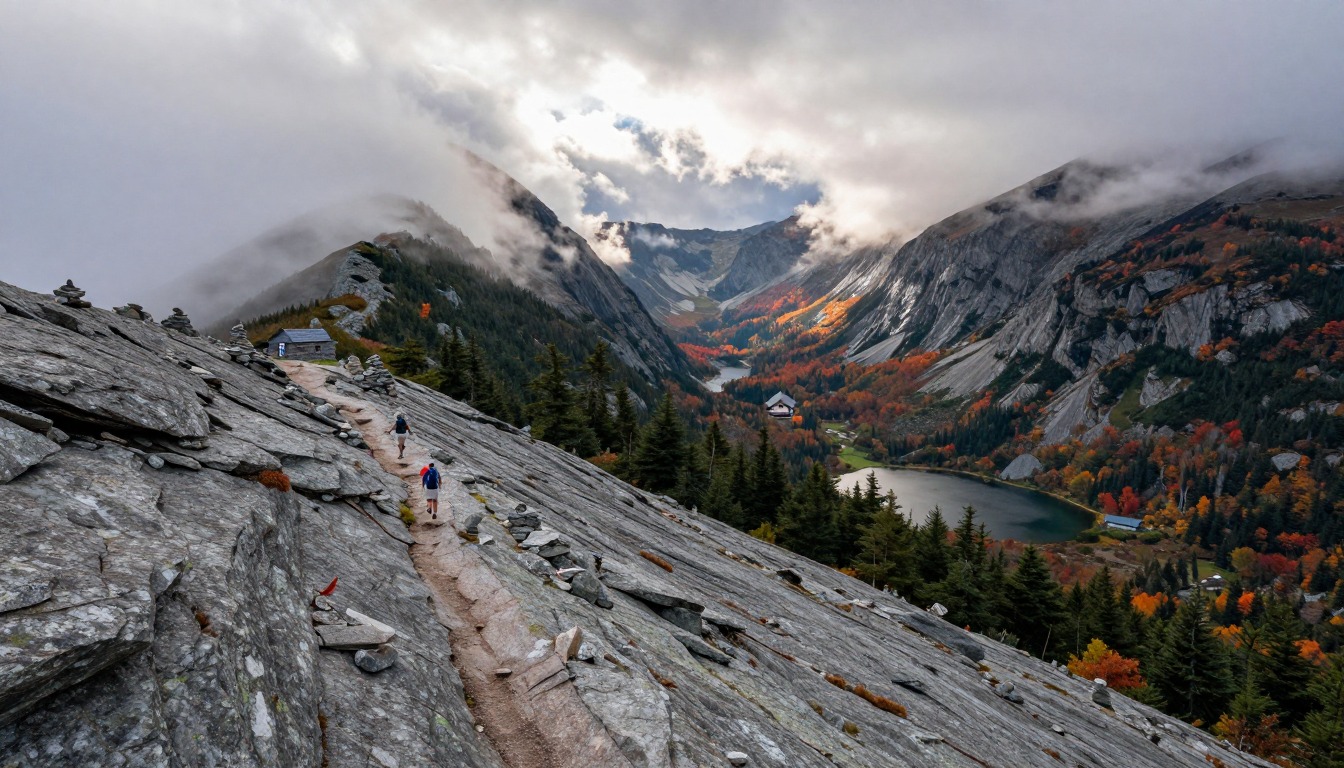
The Franconia Ridge Loop is one of the most iconic day hikes in the White Mountains: a climb up Falling Waters Trail to an exposed ridge along the Appalachian Trail over Little Haystack, Mount Lincoln, and Mount Lafayette, then a descent via the Old Bridle Path. Most hikers do it in a single day, but anyone splitting the trip has three real options: an AMC hut near the ridge, a designated backcountry tentsite, or a bed in one of the gateway towns at the foot of Franconia Notch.
Why hike here
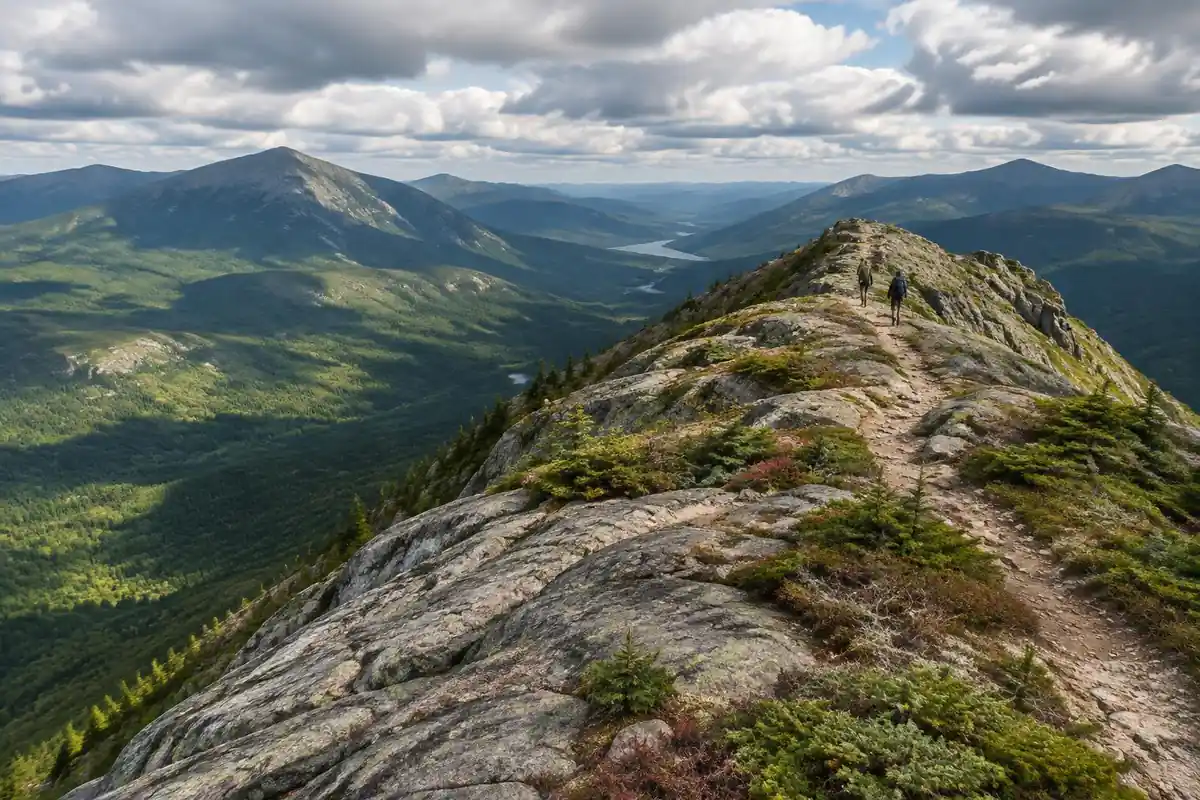
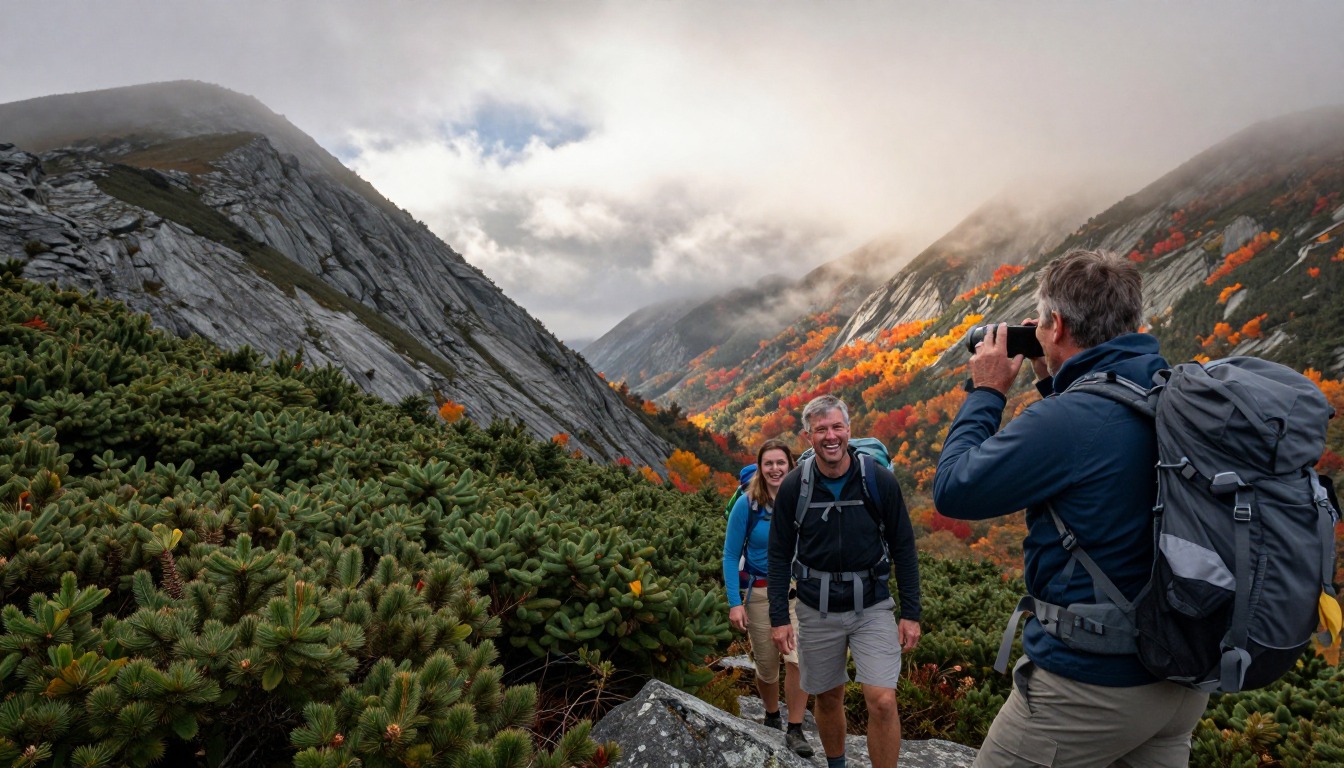
What makes this loop special is the ridge itself: nearly two miles above treeline, wide open in every direction, with Little Haystack, Mount Lincoln, and Mount Lafayette laid out ahead of you as the Appalachian Trail runs straight along the spine. Falling Waters Trail earns its name on the way up, a string of cascades and pools worth the sweat before the trees fall away. Once you're on top, the exposure is the whole point — clouds moving fast below you, the Pemigewasset area spreading out to one side, Franconia Notch to the other. The Old Bridle Path descent gives you the long view back at the ridge you just walked, which is a good way to end a big day.
Getting there
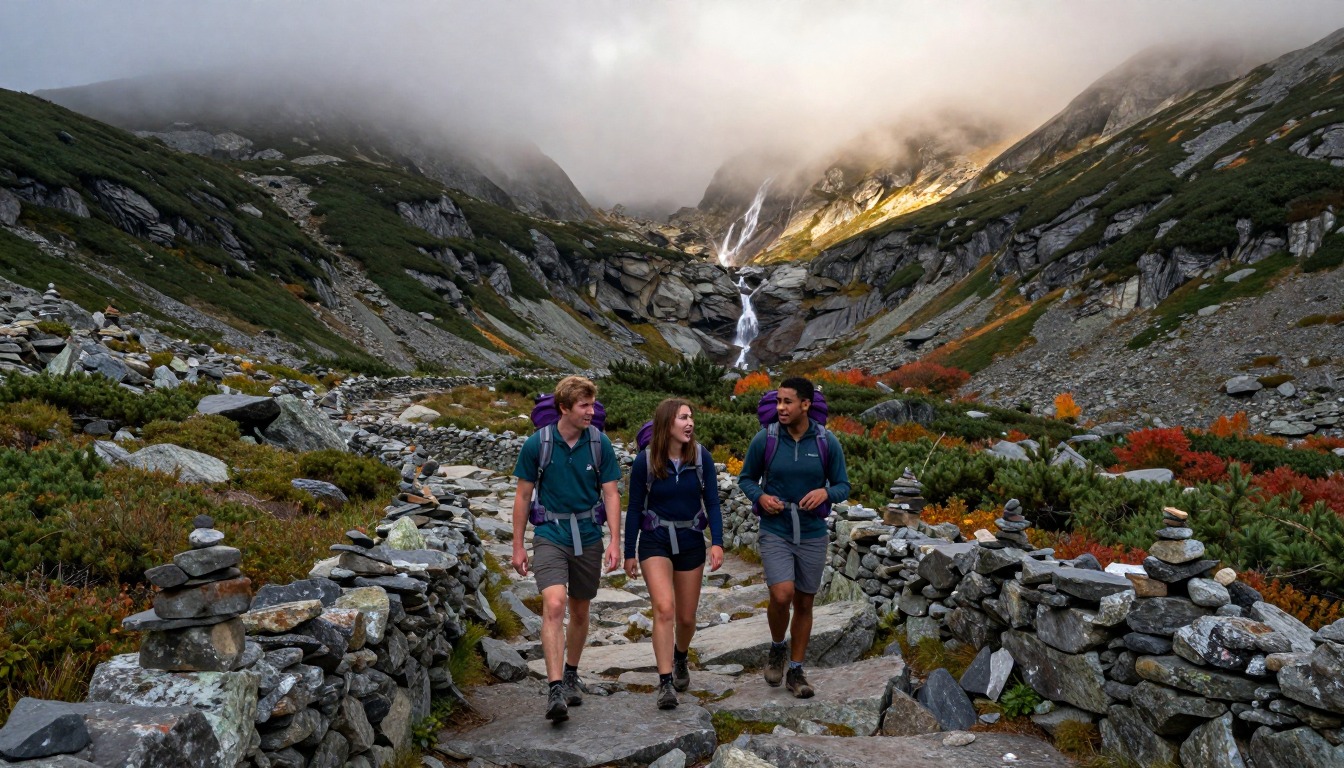
Franconia Notch sits in the White Mountain National Forest, a couple of hours' drive north from Boston on I-93. Most hikers fly into Boston's international airport, rent a car, and drive up, since there's no realistic way to reach the trailhead without one. The trailhead parking is right off I-93 in Franconia Notch. Lincoln and Franconia, the two gateway towns just outside the notch, are where you'll find gas, groceries, and lodging if you're not staying at a hut or a tentsite the night before or after the hike.
Where to stay
The realistic options, closest-to-the-trail first. Book through the official links — we don't list prices or availability because they change all the time.
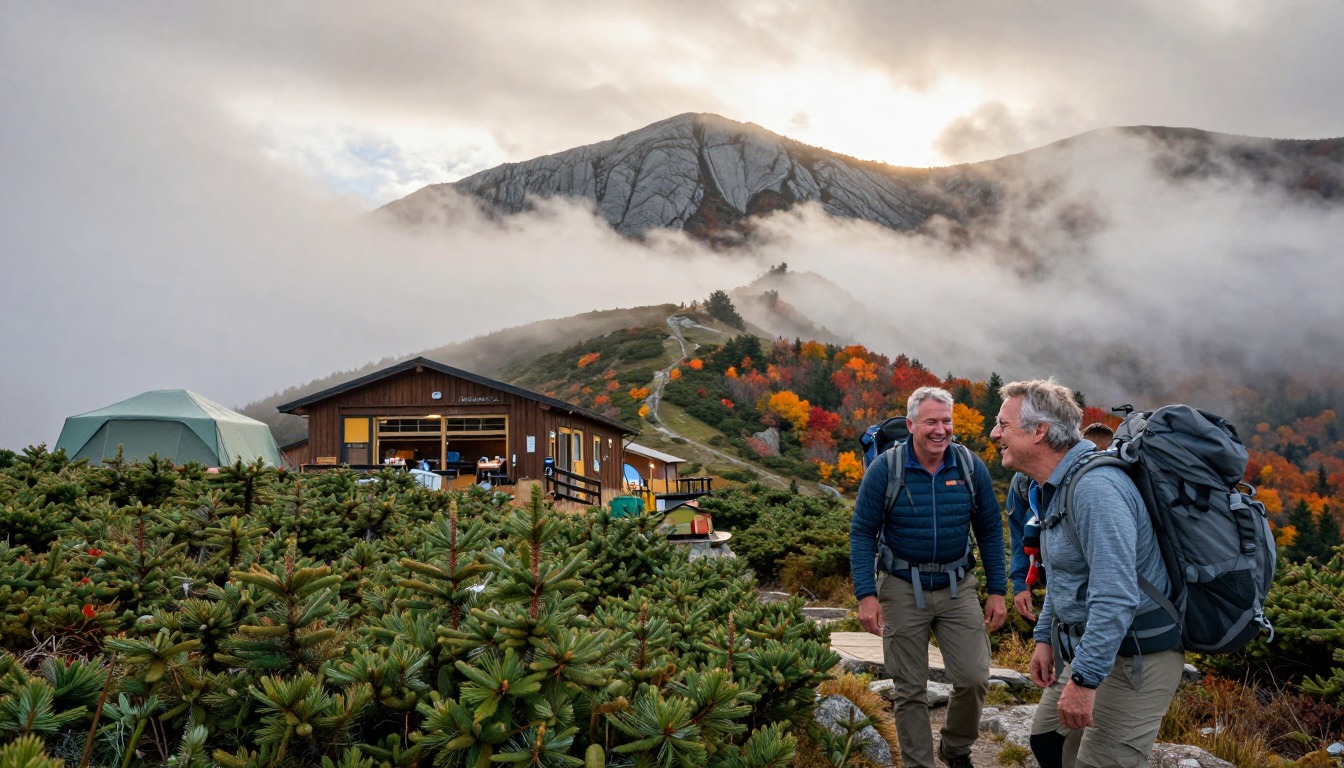
For example: AMC huts near the ridge for hikers extending the loop
Hikers turning the ridge into a hut-based overnight.
Booked ahead; popular in the summer season.
Appalachian Mountain ClubFor example: Forest Service tentsites in the Pemigewasset area for backpackers
Backpackers linking the ridge with a night out.
Camping rules vary by area and alpine zones are protected; in the Pemigewasset Wilderness bear canisters are required from May 1, 2026, and hanging food no longer meets the rule.
White Mountain National Forest (check current camping rules)For example: Motels, inns and rentals near Franconia Notch
Day hikers wanting a room near the trailhead.
A short drive to the Falling Waters / Old Bridle Path trailhead.
Nearby-town lodging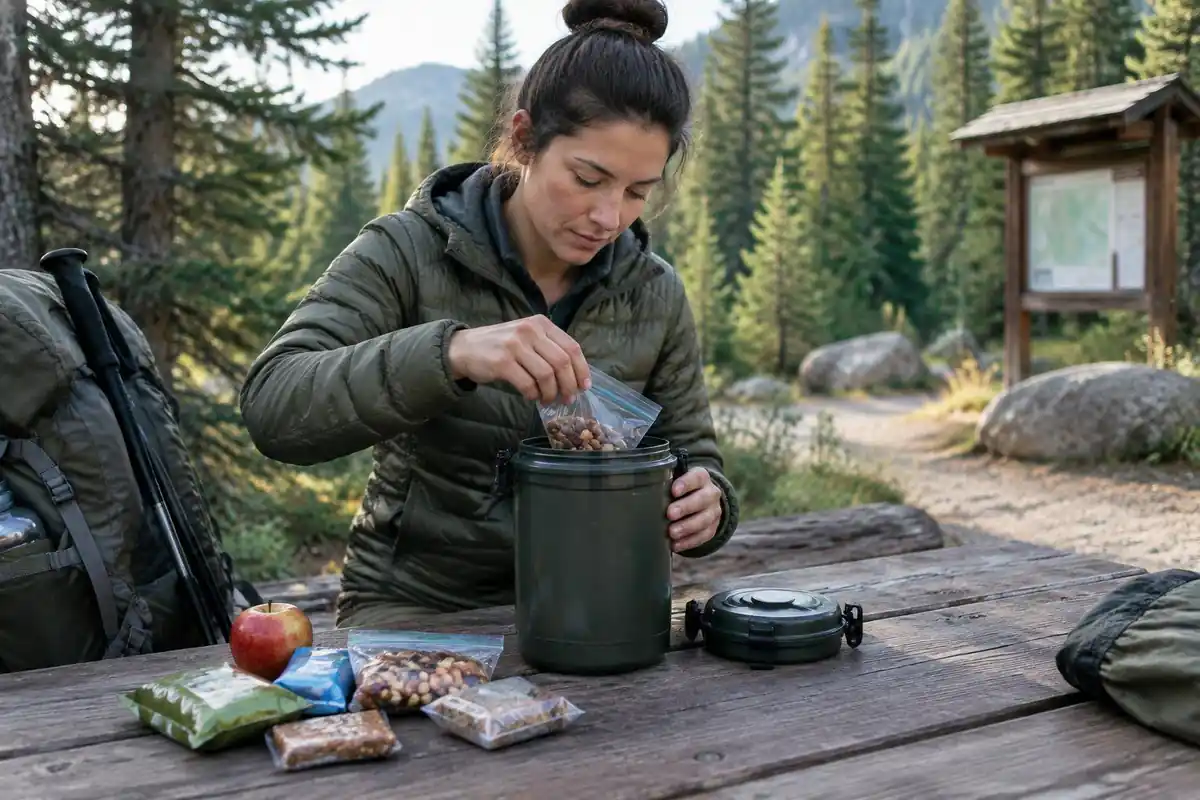
Permits & rules
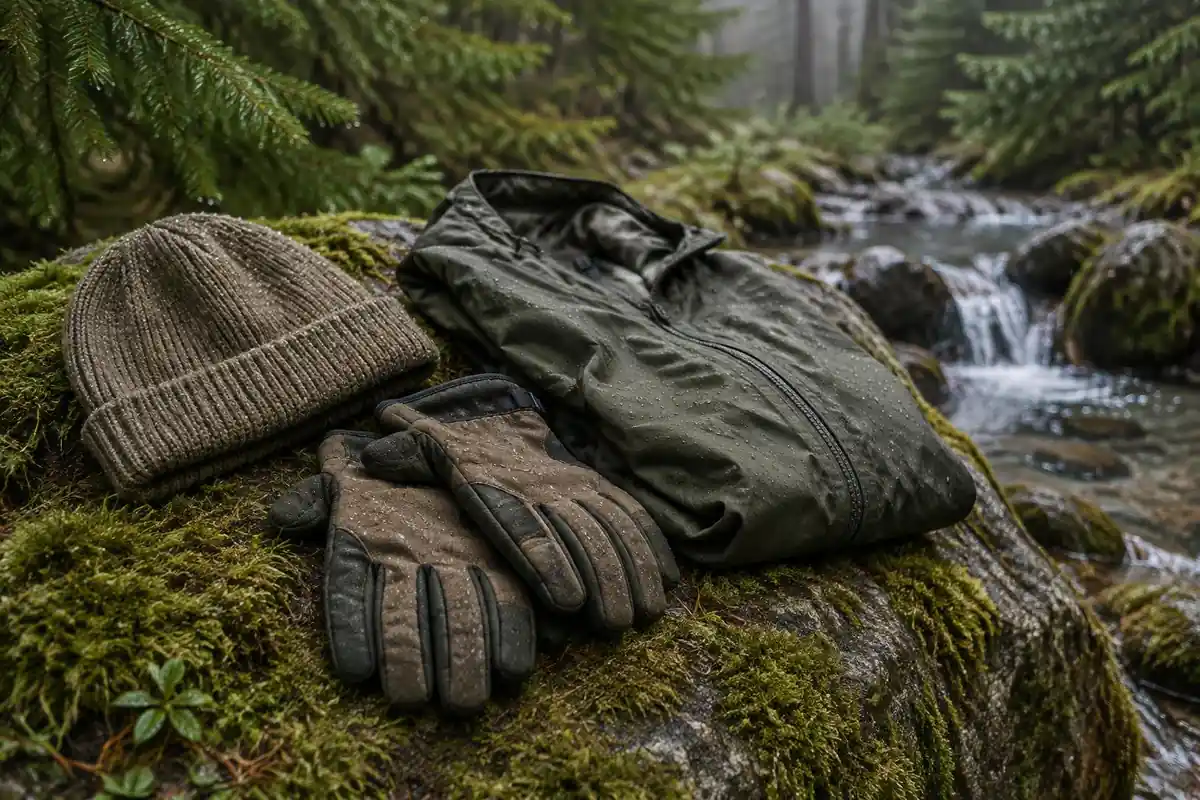
No permit is required for the day-hike loop. The ridge is fully exposed above treeline — check the summit forecast and carry wind and rain layers even on a clear morning.
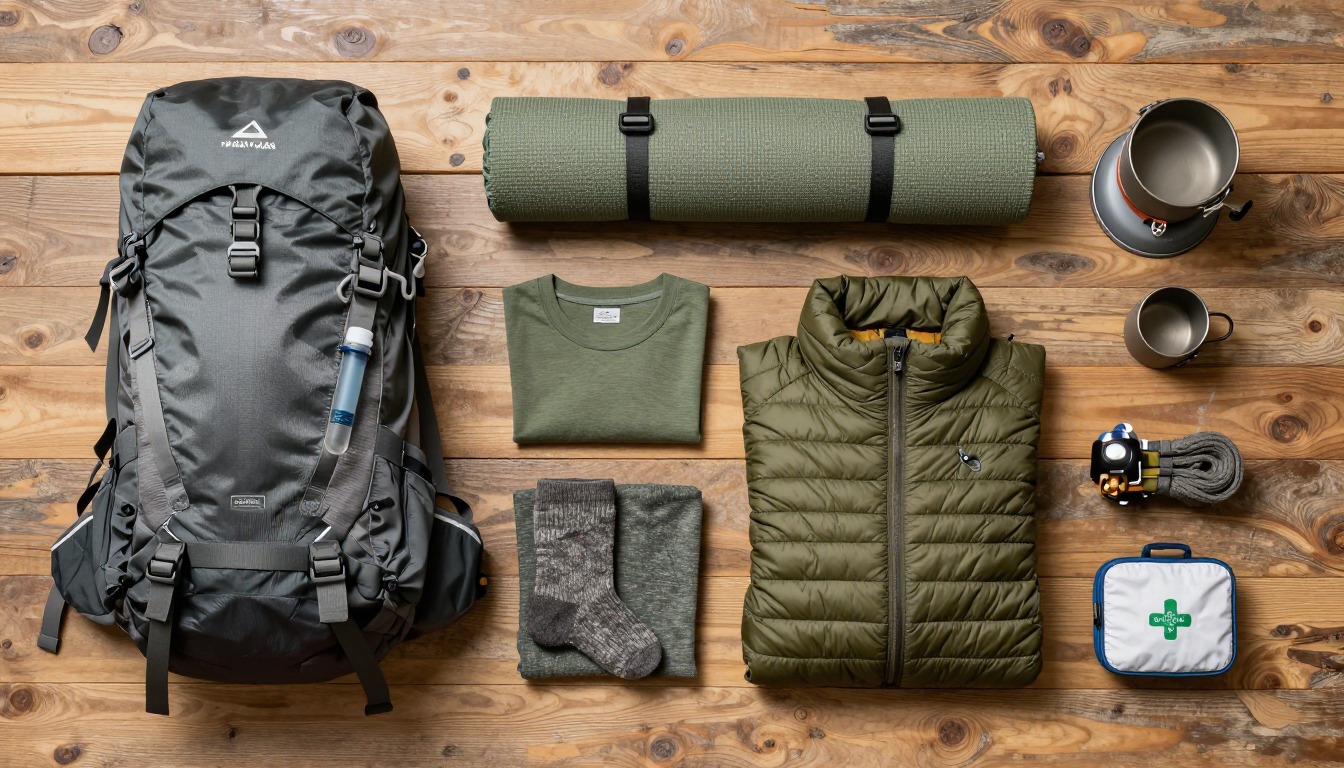
Gear you'll want for this trip
Matched to the terrain and conditions here. Real products — check current price on Amazon.


The new canister rule and why it exists
The Forest Service says that effective May 1, 2026, all overnight campers in the Pemigewasset Wilderness must store all food, food containers, scented items such as soap, lip balm and toothpaste, and refuse in a cylindrical, hard-sided, non-pliable canister certified by the Interagency Grizzly Bear Committee. Alternatives, including bear hangs, are no longer permitted there, with an exception for the bear-resistant food boxes at the Thirteen Falls Tent Site.1 Ursacks are not allowed either, because the forest says they are not scent proof and can be carried off or crushed.1
The stated reason is conflict. The forest says the wilderness has seen increased human-bear conflicts over the past five years, driven by a healthy bear population, a surge in visitor use and ineffective food storage, and that alternative storage methods proved less effective than canisters.1 Some guides describe camping in the area as limited to designated sites. That is not quite how the forest describes it. Its general backcountry rules prohibit camping and fires within 200 feet of certain trails and water bodies, within a quarter mile of backcountry facilities such as shelters, huts and trailheads, and in the alpine zone, rather than confining campers to designated sites everywhere.2
The trail on the border, and which sites are inside
The Appalachian Trail runs on the border of the wilderness. For a northbound hiker dispersed camping, the forest says the area to the right (south or east) is inside the wilderness and the area to the left (north or west) is not, and it encourages canisters on the non-wilderness side because the terrain is poor for legal bear hangs.1 A legal hang, as the forest describes it, is at least 12 feet above the ground and not less than 6 feet horizontally from any object.1
The forest also lists sites that are not technically in the wilderness, including Liberty Springs Tentsite, Galehead Hut, Garfield Ridge Shelter, Guyot Shelter, Zealand Falls Hut and Ethan Pond Shelter. For overnight stays at sites with bear boxes, use the bear box.1 Rules can change, so confirm which storage method applies to your exact site with the Pemigewasset Ranger District before you go.
What a canister does to the pack
A typical bear-resistant canister in another region measures about 8 by 12 inches and holds up to five days of food for one person, so for one night it is mostly empty volume, but it is rigid and cannot be squashed.3 The Interagency Grizzly Bear Committee notes that certification means a product met minimum standards for the effort a grizzly must spend to get at the contents, not that it is bear-proof.4 NPS says to keep a canister closed and locked on level ground 100 feet or more from camp, away from cliffs and water where a bear could knock it away.5
Pack it as dense, heavy gear: the Appalachian Mountain Club says food and cooking gear belong about two-thirds up the main compartment, centered and against the back.6 AMC has run huts in the White Mountain National Forest since 1888, and its eight huts are reachable only on foot, so a hut night is the alternative for hikers who do not want to carry camp gear.7
Common questions
Where do you sleep on the Franconia Ridge Loop?
There are three realistic options. Appalachian Mountain Club huts near the ridge — Greenleaf and Galehead — offer bunks booked in advance through the AMC. Backcountry hikers can camp in the Pemigewasset area, but since May 1, 2026 all overnight campers in the Pemigewasset Wilderness must store food, scented items and refuse in an IGBC-certified hard-sided canister, and bear hangs are no longer allowed there. The forest prohibits camping and fires within 200 feet of certain trails and water, within a quarter mile of huts, shelters and trailheads, and in the alpine zone. Otherwise, base yourself in Lincoln or Franconia and hike the loop as a long day trip.
Do I need a permit or reservation?
You don't need a permit to day-hike the loop, but if you want to stay overnight, plan ahead. AMC hut bunks fill up, especially in summer and fall, and are booked directly through the Appalachian Mountain Club. Camping and fires are restricted in parts of the White Mountain National Forest, managed by the US Forest Service, and the Pemigewasset canister rule applies to overnight campers there, so check current rules before you go.
When's the best time to hike Franconia Ridge?
June through October is the best window, once snow and ice have cleared from the ridge and before winter conditions return. Even then, the ridge is fully exposed above treeline and weather can change fast, so check the forecast closely, carry layers and rain gear, and be ready to turn back if thunderstorms or high wind move in.
Complete gearsets for this trip
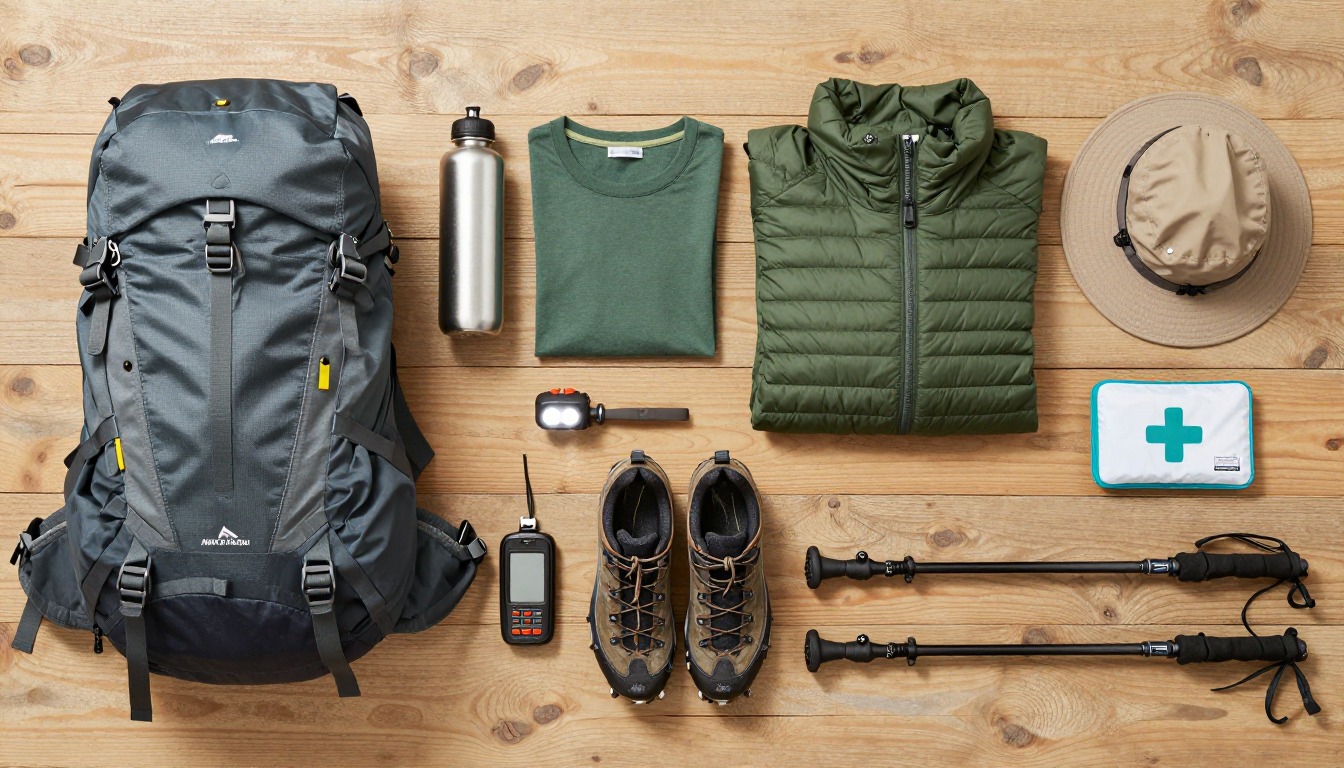
Full curated kits built for exactly this kind of hike — what to bring, why, and links to similar gear.
Lodging details are compiled from official parks, refuge associations and reservation systems and can change without notice. We publish no prices, availability or ratings — always confirm current information on the official site before booking or setting out. Product links and the accommodation map are affiliate links: we may earn a commission at no extra cost to you; product prices and availability are shown on Amazon, and accommodation prices on the booking site. See our affiliate disclosure.