
Best External Frame Backpack
Best External Frame Backpack, ranked from aggregated owner ratings and reviews, not first-hand testing. Real pros, cons, and who each pick is best for.

Our Top 3 Picks
Quick Comparison
| Product | Best for | Buy | |
|---|---|---|---|
| TIMBER RIDGE Aluminum External Frame Hiking Backpacks with Adjustable He | Top Overall Pick | See Amazon | View |
| EAGWON Foldable Aluminum Hunting Pack Frame | Best Value | See Amazon | View |
| TR Aluminum External Frame Backpack | Most Breathable | See Amazon | View |
| ZRSCHYG Aluminum External Frame Hiking/Hunting Backpack | Best Support | See Amazon | View |
| Aluminum External Frame Backpack | Also Great | See Amazon | View |
What should you look for in an external-frame backpack?
Look for a frame built from welded or riveted aluminum tubing, a hipbelt that attaches at the base of the frame rather than the pack bag, and enough external lash points to secure oddly shaped loads. These are the features that make an external frame worth choosing over the now-more-common internal frame.
Because external-frame packs are a smaller category today, model selection is narrower than for internal-frame packs. Kelty and ALPS Mountaineering both still manufacture traditional external-frame packs, and their designs follow the same basic aluminum-tube-and-pack-bag layout that's defined the category since the 1950s.
Aluminum tube frame vs hybrid designs
A traditional external frame uses a full aluminum tube ladder frame with the pack bag suspended from it by clevis pins or clips, keeping the bag and frame as separate, serviceable parts. Some hunting- and expedition-focused packs use a hybrid approach — a partially exposed or removable rigid frame combined with a closer-fitting pack body — aiming for external-frame load stability with more of an internal frame's balance on uneven ground.
- Traditional tube frames maximize ventilation and load-hauling stability for heavy, irregular gear
- Hybrid frame packs trade some ventilation for better off-trail balance
- Both designs keep the hipbelt attachment at the frame rather than the soft pack body, which is the core mechanical advantage of any external-style frame
Who should choose an external-frame pack?
Hunters hauling game meat, campers moving heavy or bulky irregular gear, and hikers who stick to maintained trails while carrying loads that don't pack down into a neat, evenly balanced shape are the best fit for an external-frame pack. The rigid frame holds its shape under an odd load in a way a soft internal-frame pack body can't match, and the gap between frame and back keeps hikers cooler on hot, low-elevation trails.
The trade-offs are real: external frames are bulkier, heavier empty, less stable on technical or off-trail terrain, and more prone to snagging on branches in tight brush. Hikers who spend most of their time scrambling, route-finding off-trail, or backpacking with a well-packed, evenly distributed load are usually better served by an internal-frame pack instead.
What features matter most on an external-frame pack?
Beyond the frame itself, the features that matter most are the number and placement of external lash points, how the hipbelt attaches to the frame's lower bar, and whether the pack bag detaches from the frame for cleaning or repair. Multiple lash points across the frame's width let a hiker distribute an irregular load — like a game quarter or a bundle of gear — evenly across the structure rather than concentrating weight on one strap.
A hipbelt bolted or clipped directly to the frame, rather than sewn only into the pack bag's fabric, transfers load more directly and holds up better under repeated heavy use. A pack bag that unclips or unlaces from the frame is easier to hose off after a muddy or bloody trip and easier to repair or replace independently of the frame itself, extending the working life of the whole pack.
How does empty weight compare to an internal-frame pack?
External-frame packs typically weigh more empty than comparable internal-frame packs, since a full aluminum tube frame plus a separately hung pack bag adds material that an internal-frame pack's embedded stays and frame sheet don't need. That weight penalty is a reasonable trade for hikers who need the frame's rigidity and airflow, but it works against anyone trying to keep total pack weight down for long-distance or fast-and-light trips.
Full Ranking, Reviewed

Best for External-Frame backpacks
- 2.9 lb empty
- Ventilated back panel
- Lasting and Reliable
- Ventilated back panel cuts sweat on long climbs
- Padded hip belt shifts load onto your hips, not your shoulders
- Colours and exact capacity options change often on Amazon — confirm the current variant on the listing before buying.
Verdict: This hiking pack pairs a breathable back with real hip-belt support, making it our overall pick for External-Frame Backpacks.

Best for External-Frame backpacks
- 4.4 lb empty
- Padded hip belt
- Supportive hip belt takes weight off the shoulders
- Folds down small when you do not need the space
- At 4.4 lb it is heavier than the lightest packs in its class before you load it.
Verdict: This hiking pack pairs real hip-belt support with a packable build, making it well worth a look for External-Frame Backpacks.

Best for External-Frame backpacks
- 5.6 lb empty
- Ventilated back panel
- Heavy-duty aluminum frame
- Breathable mesh back keeps air moving against your spine
- Padded hip belt shifts load onto your hips, not your shoulders
- Empty weight (5.6 lb) runs above ultralight rivals.
Verdict: This hiking pack pairs a breathable back with real hip-belt support, making it an easy shortlist pick for External-Frame Backpacks.

Best for External-Frame backpacks
- 3.8 lb empty
- Lightweight Construction
- Excellent Load-bearing
- Ergonomic Design
- At 3.8 lb it is heavier than the lightest packs in its class before you load it.
Verdict: This hiking pack keeps things refreshingly simple, making it an easy shortlist pick for External-Frame Backpacks.
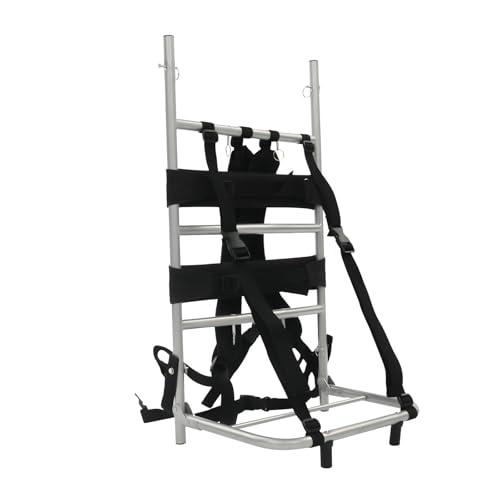
Best for External-Frame backpacks
- Ergonomic Adjustable Fit
- Folds down small when you do not need the space
- Foldable Compact Storage
- Check the size and colour options on the live listing, as availability shifts.
Verdict: Josbuynls’s hiking pack offers a packable build, making it a strong option for External-Frame Backpacks.
Frequently Asked Questions
Why are external-frame backpacks less common now?
Hikers shifted toward internal-frame packs starting in the 1970s and 1980s because their narrow, body-hugging profile balances better on off-trail and technical terrain. External frames remain in production but now serve a smaller, more specialized share of the market, mainly for heavy load-hauling.
Are external-frame packs good for hunting?
Yes, for hauling out game meat or other heavy, irregularly shaped loads, an external frame's rigid platform holds its shape better than a soft internal-frame pack body. That's why traditional external frames and related load-hauling frame packs remain popular in backcountry hunting.