
Affiliate disclosure: this page contains affiliate links. Purchases made through them may earn us a commission at no extra cost to you. See our affiliate disclosure.
In plain English
Most hiking trips in the United States end at a campground or a trailhead. Wadi Rum works differently. It is a desert protected area, and the people who know it best are the Bedouin families who live there. Many of them run the camps where visitors sleep, and they also guide the walks. The national tourism board describes Wadi Rum as home to nomadic Bedouin tribes and says you can arrange tours through your camp or through the visitor center.1
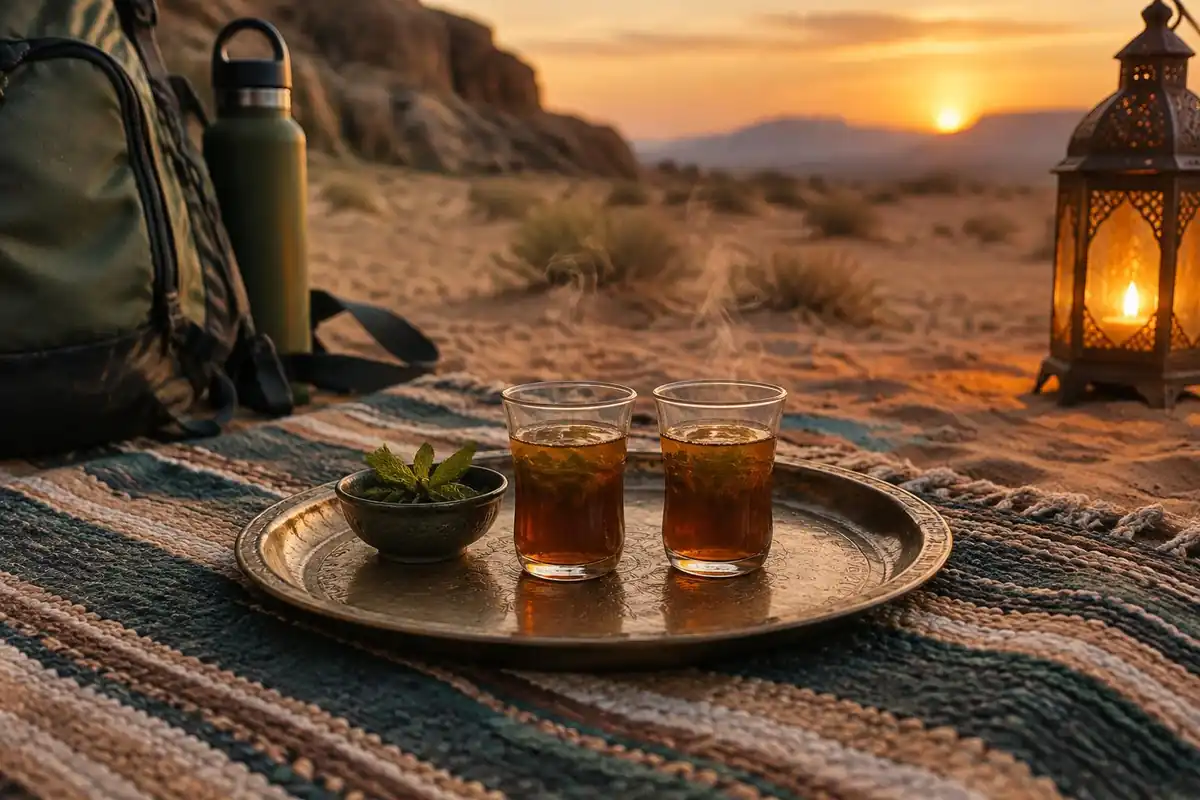
So the question is less "which campsite do I pick?" and more "which camp and guide do I trust?" A camp is like a small guesthouse made of tents. It usually gives you a bed, meals and a place to charge a phone. That changes what you put in your pack. You do not need to carry a tent, a stove or a sleeping pad the way you would on a US backcountry trip. You do need to carry your own water bottles, sun protection and a light layer, because desert nights can feel cold after a hot day.
At the Petra end of the trip you switch to ordinary lodging in a town. Hotels and guesthouses in Wadi Musa work like any small-town stay: you unpack, wash clothes and repack. The two very different halves of the trip, camp life and town life, are why a small, well-organized pack usually beats a big one here.
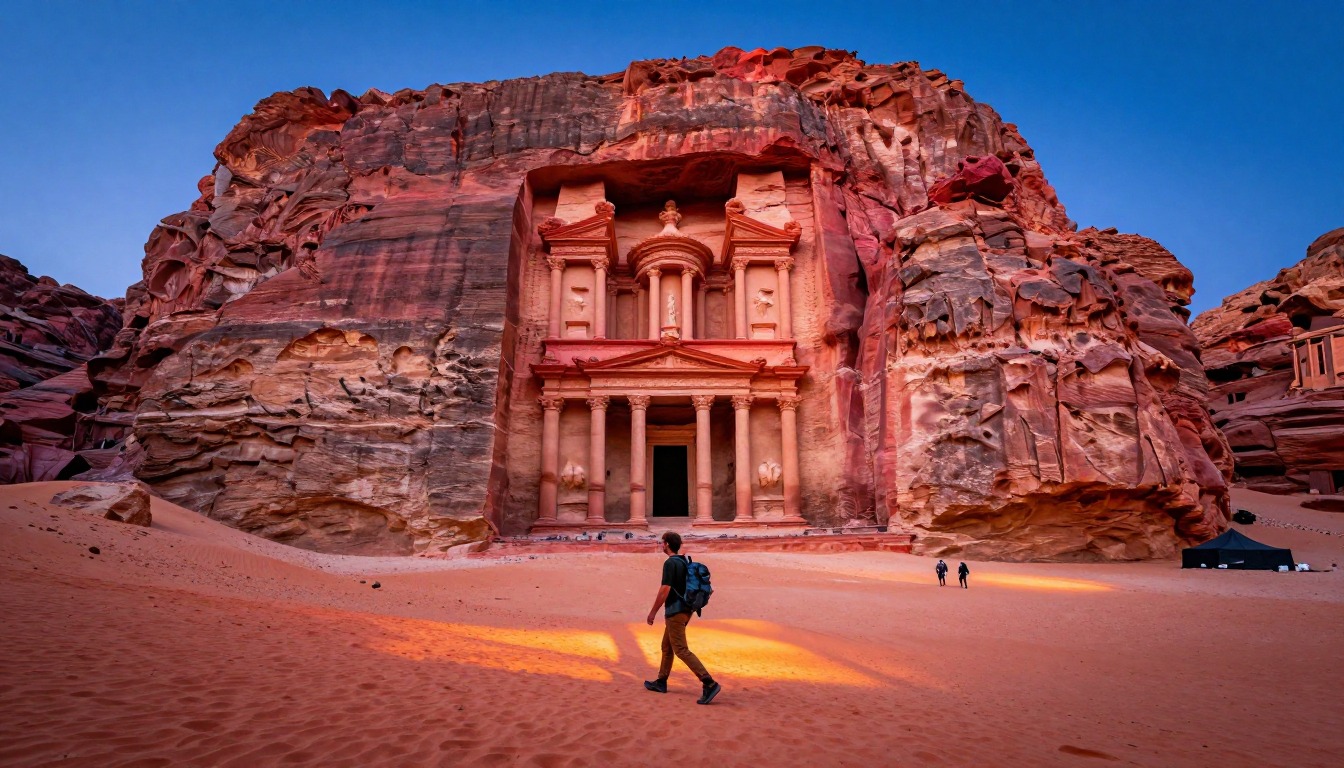
The Jordan Trail's approach to Petra begins in Wadi Rum, a desert of towering red sandstone massifs and wind-carved dunes in southern Jordan. Because the route crosses a remote protected area before reaching the ancient rock-carved city, hikers typically spend at least one night in a Bedouin-run desert camp rather than pushing straight through, with nearby towns filling in the rest of the trip.
Why hike here
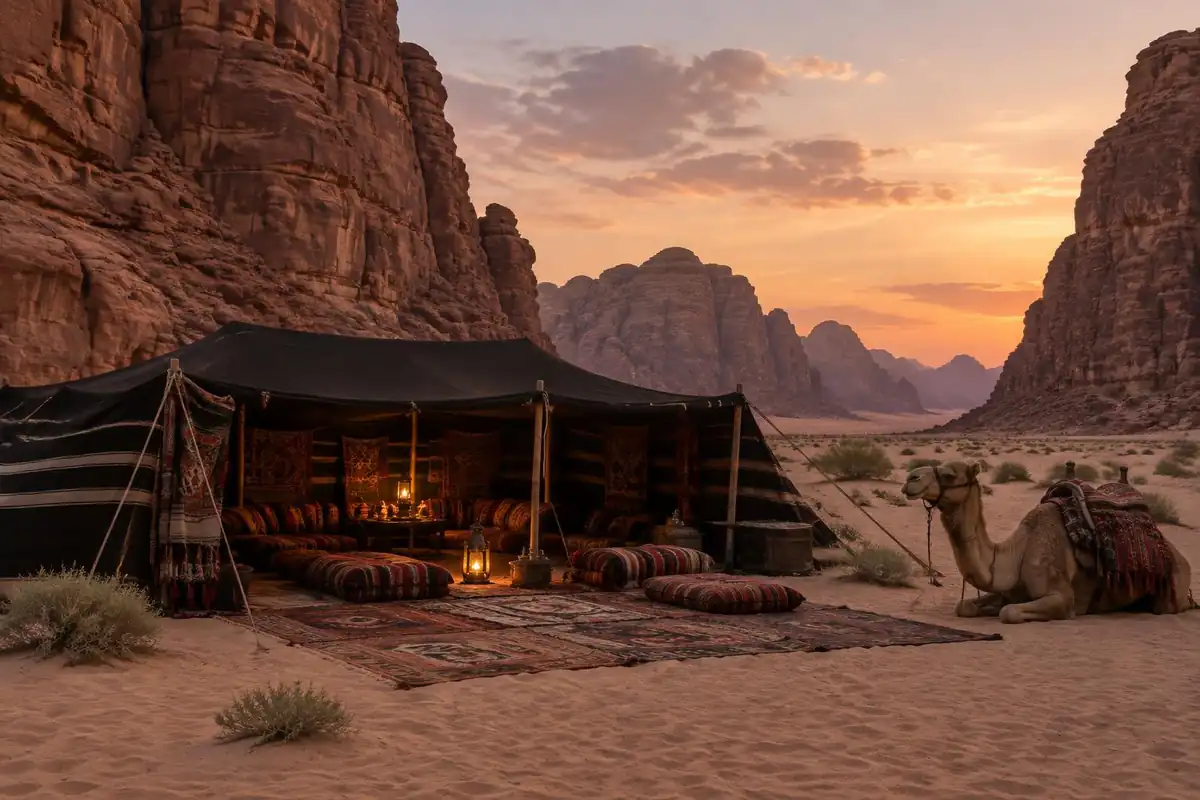
What makes this stretch of the Jordan Trail remarkable is the scale of the landscape: sandstone towers rising straight out of flat desert floor, their color shifting from ochre to deep red as the light moves through the day. Walking here means long stretches of open dune and gravel plain, broken by narrow canyons and the occasional stand of desert vegetation, with a Bedouin guide reading the terrain the way a sailor reads water. Camping out under a sky with almost no light pollution is part of the experience, and the near-total quiet of the desert at night is something few hikers forget. The route's payoff is the shift from open desert into the narrow approach toward Petra's rock-carved facades, a landscape change that feels earned rather than sudden.
Getting there
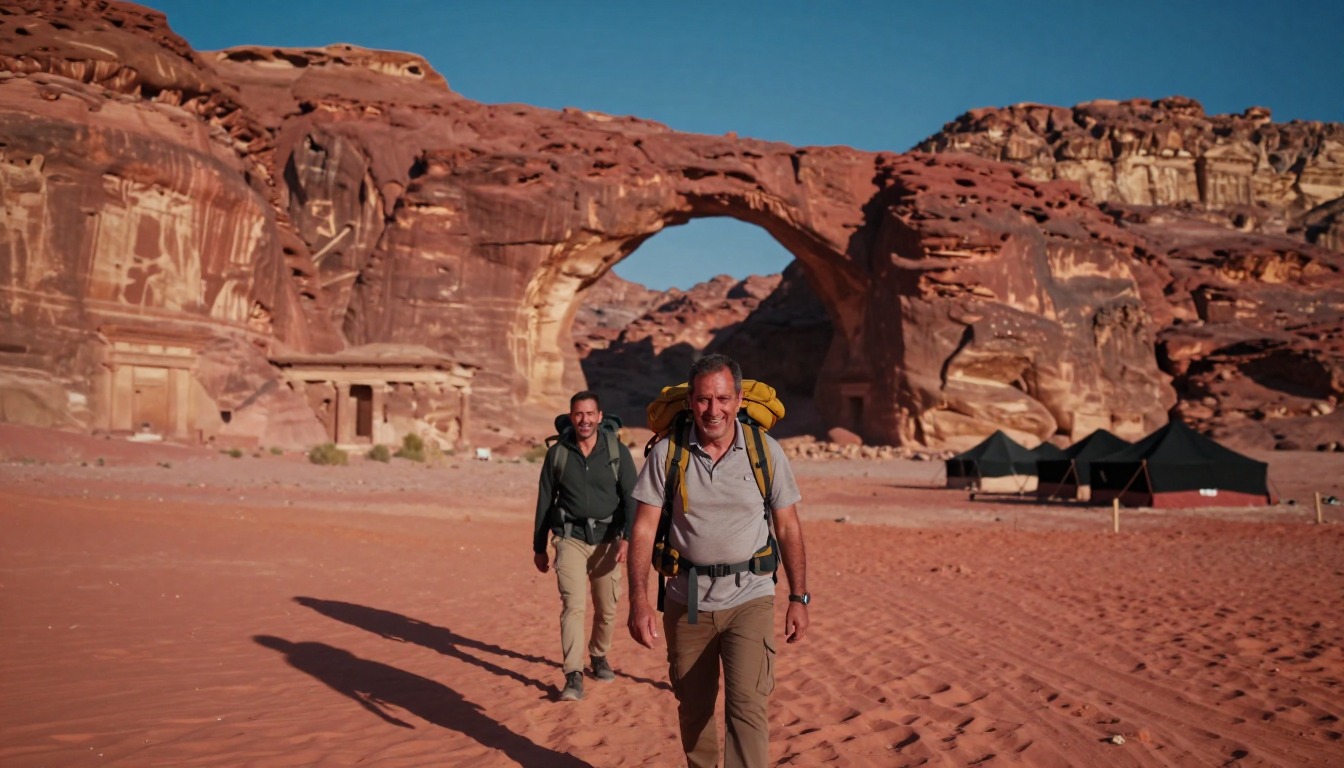
Most hikers fly into one of Jordan's international airports and connect onward by road, since this section of the Jordan Trail sits in the country's remote south. Aqaba, on the Red Sea coast, functions as the practical gateway for reaching Wadi Rum and arranging a guided desert trek, while Wadi Musa, the small town that sits beside Petra, is the usual base at the trail's far end for visiting the ancient site. Road transfers link the two, and most trekking arrangements handle transport between the desert and the trailhead as part of the guided trip.
Where to stay
The realistic options, closest-to-the-trail first. Book through the official links — we don't list prices or availability because they change all the time.
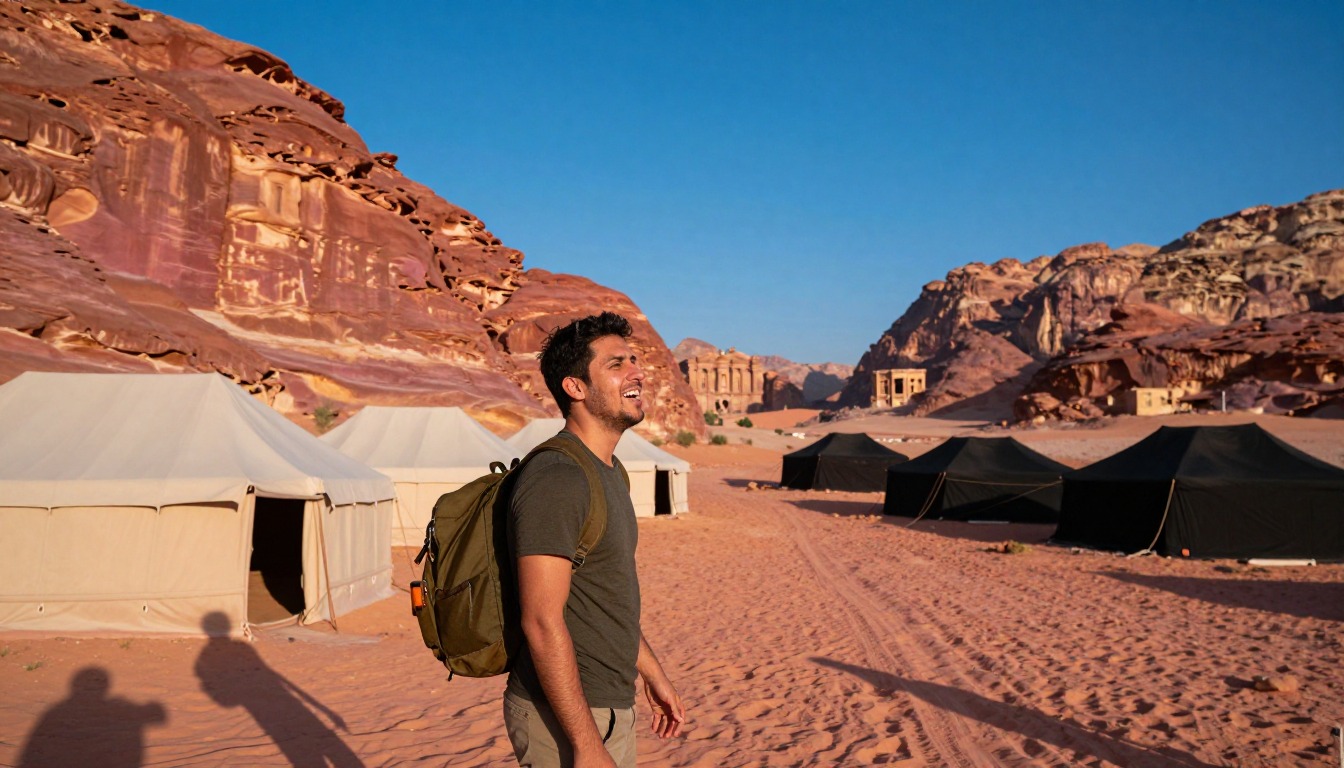
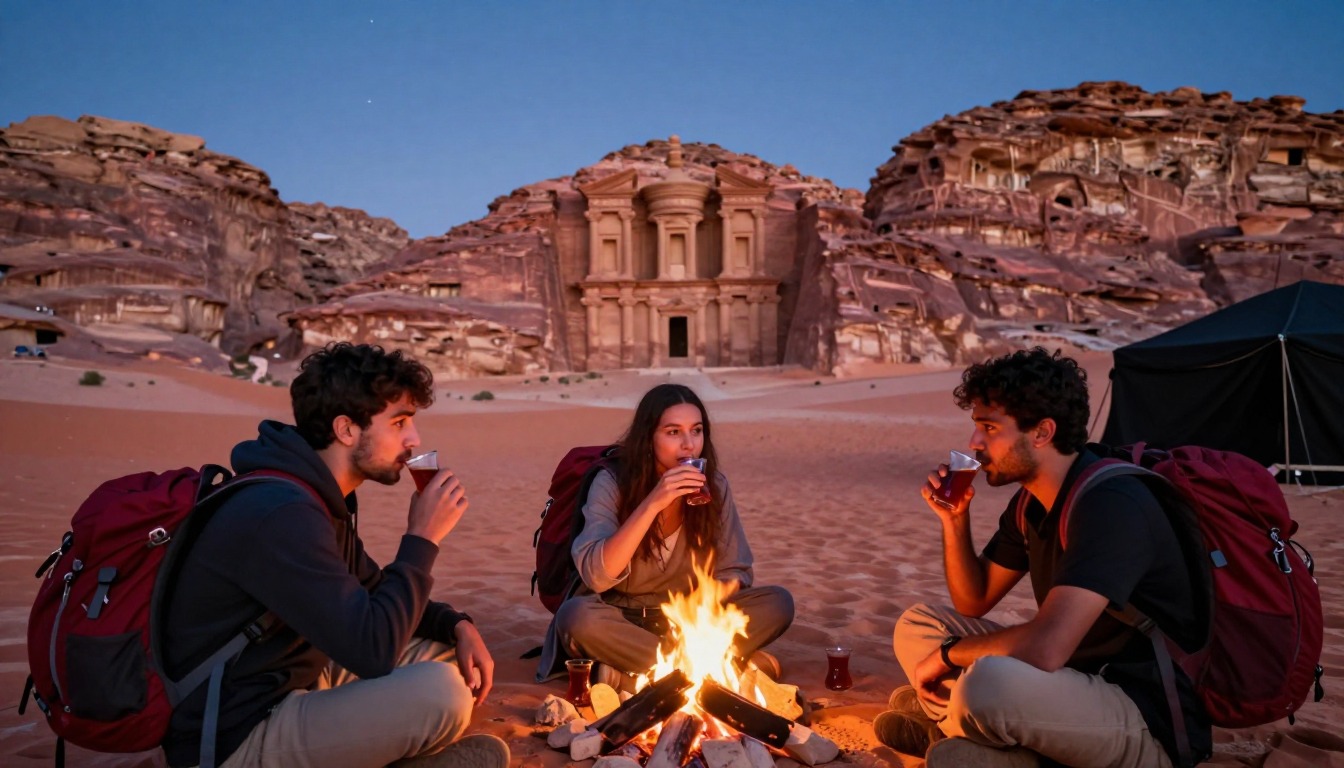
For example: Bedouin-run desert camps (tents and dome "bubble" tents) among the sandstone towers
Most visitors — you sleep in a desert camp, often as part of a guided trip.
Camps are run by local operators; many visitors arrange a local guide for trekking the desert.
Desert camps (book ahead directly with the camp)For example: Hotels and guesthouses in Wadi Musa, the town beside Petra
Everyone visiting Petra at the end of the trek.
Wadi Musa is the base for Petra; Aqaba is the base for Wadi Rum.
Nearby-town lodging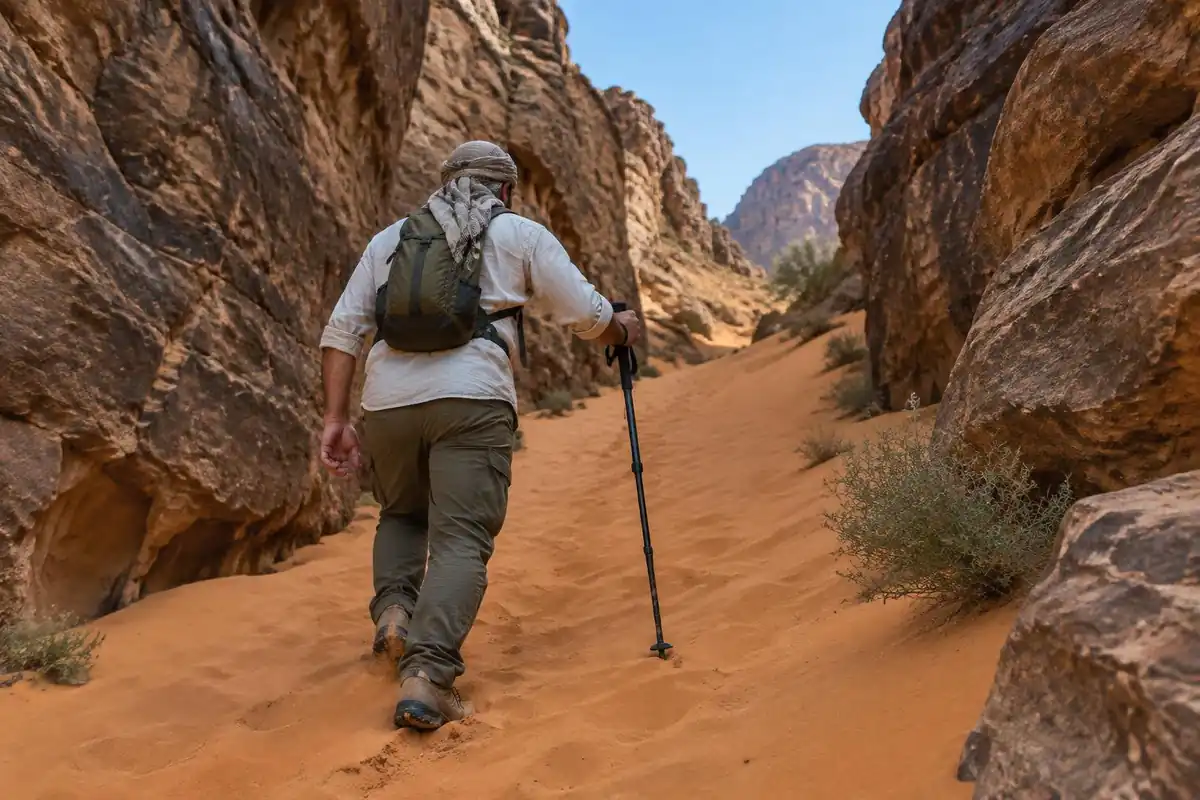
Permits & rules
Wadi Rum is a protected area, so check current entry and guide arrangements locally; camps in the desert are run by local operators, and many visitors arrange a local guide. This is remote desert — heat, sun and water are the real challenges, so travel in spring or fall, carry far more water than you expect, and don’t navigate the dunes alone.
Gear you'll want for this trip
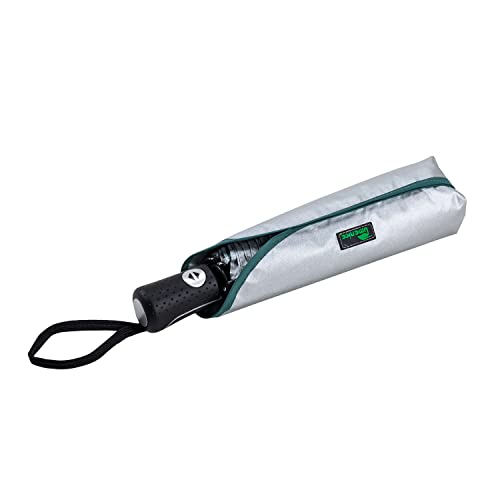
Matched to the terrain and conditions here. Real products — check current price on Amazon.


Camp-based lodging: what the guide and camp are actually handling
The Jordan Tourism Board's Wadi Rum page presents the area as a nature reserve where Bedouin communities live, and it says 4x4 tours are scheduled through your camp or the visitor center.1 That wording points to the practical reality: the camp is a service hub. In a typical arrangement the camp handles meals, a place to sleep and often the transport between stops, while a local guide handles route-finding across dunes and gravel plains where trails are not marked the way a US national park trail is.
This matters for gear. A US backpacker planning a wilderness night has to be self-sufficient, so a 45 to 65 liter pack is normal. A hiker who sleeps in a camp each night can often get by with a smaller pack, because shelter, cooking and much of the food are provided. What stays on your back is the stuff that protects you between camp and the next stop: water, a hat, sun protection, a headlamp and a light insulating layer. Ask your camp and guide what they supply so you do not double up on weight.
Booking is the other big difference. There is no national reservation system to check here in the way Recreation.gov works for many US wilderness permits. You book through the camp or an organizer, and rules, entry arrangements and closures can change. Confirm all of it with the named managers and your guide before you travel rather than relying on any single listing, including this page.
Heat, water and why the desert changes the pack
Desert hiking turns water into your heaviest and most important item. The National Park Service notes that hikers in heat can lose one to two quarts of water per hour, and that most heat-illness rescues involve people hiking between 10 a.m. and 4 p.m.2 The CDC likewise suggests scheduling outdoor activity for the coolest part of the day when heat risk is high.3 These are US sources describing US conditions, but the physiology is the same anywhere: sweat rates do not care about the map.
Water also weighs a lot. One liter has a mass of about one kilogram.4 For a sense of scale, Guadalupe Mountains National Park advises a gallon per person per day and notes that a three-day, two-night trip at that rate means about 24 pounds of water.5 In Wadi Rum, camps and guides generally decide where water is restocked, so the practical move is to ask how refills work and carry enough bottles or a hydration bladder to cover the gap between resupply points, plus a reserve.
Pack choice follows from that. A daypack in the 20 to 30 liter range with a hip belt and a mesh back panel is usually enough for a camp-to-camp walk, and the hip belt helps when carrying several liters. Choose light-colored, loose, long clothing and a brimmed hat, and plan the walking for early morning and late afternoon.
Two very different nights: desert camp and Wadi Musa
The second half of the trip is a town stay. Wadi Musa is the small town beside Petra, and Aqaba is the Red Sea gateway for Wadi Rum. Both are ordinary lodging markets, so the usual advice applies: choose a place you can reach on foot from where your transport drops you, and check what is included before you pack a laundry kit.
Two pieces of planning advice apply to any remote trip like this. First, do not go it alone in unfamiliar terrain; the National Park Service says it is safer to hike with a companion and to leave a trip plan with someone who is not on the trip.6 In the dunes a local guide fills the companion role. Second, treat every one of the details on this page, including any entry fee, as something to confirm with the protected-area managers and your camp, since arrangements can change and no single official page covers every camp.
Common questions
Where do hikers actually sleep on this route?
Most itineraries include at least one night in a Bedouin-run desert camp in Wadi Rum, staying in traditional tents or dome-style 'bubble' tents, often as part of a guided package. Outside the desert itself, hotels and guesthouses in Wadi Musa near Petra and in Aqaba fill out the rest of a typical trip.
Do you need a permit or guide to trek in Wadi Rum?
Wadi Rum is a nature reserve where Bedouin communities live, and trips are typically arranged through a camp or the visitor center with local Bedouin guides, who also run the area's camps. Entry arrangements, any fees and guide requirements can change, so confirm them with your camp and the protected-area managers. Booking through a guide covers both the trekking route and the overnight camp stay in one arrangement.
When's the best time to hike this section?
Spring and fall are generally the more comfortable windows, with milder daytime temperatures for desert walking. Summer in Wadi Rum gets very hot, and while winter days can be pleasant, desert nights turn cold. Whenever you go, sun, heat, and water management are the real challenges, so plan around shade and carry more water than you think you'll need.
Complete gearsets for this trip
Full curated kits built for exactly this kind of hike — what to bring, why, and links to similar gear.
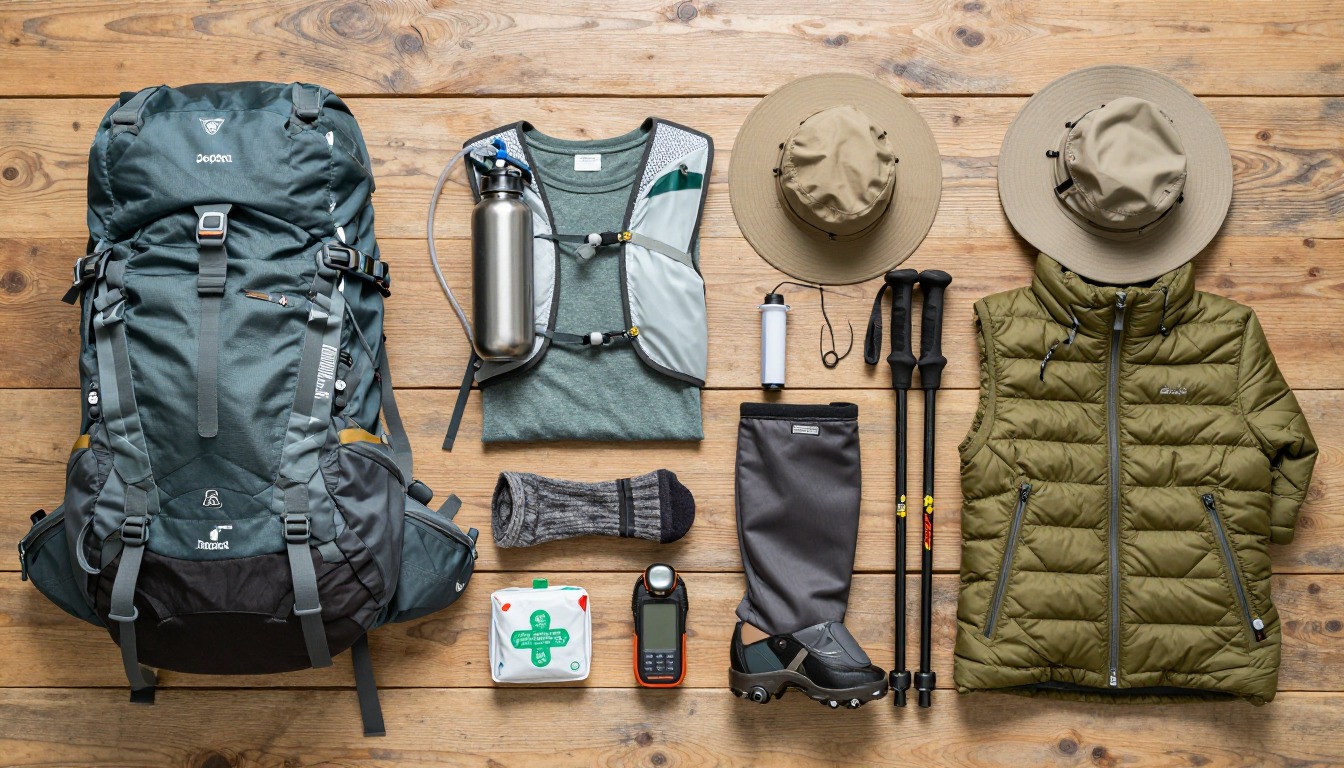
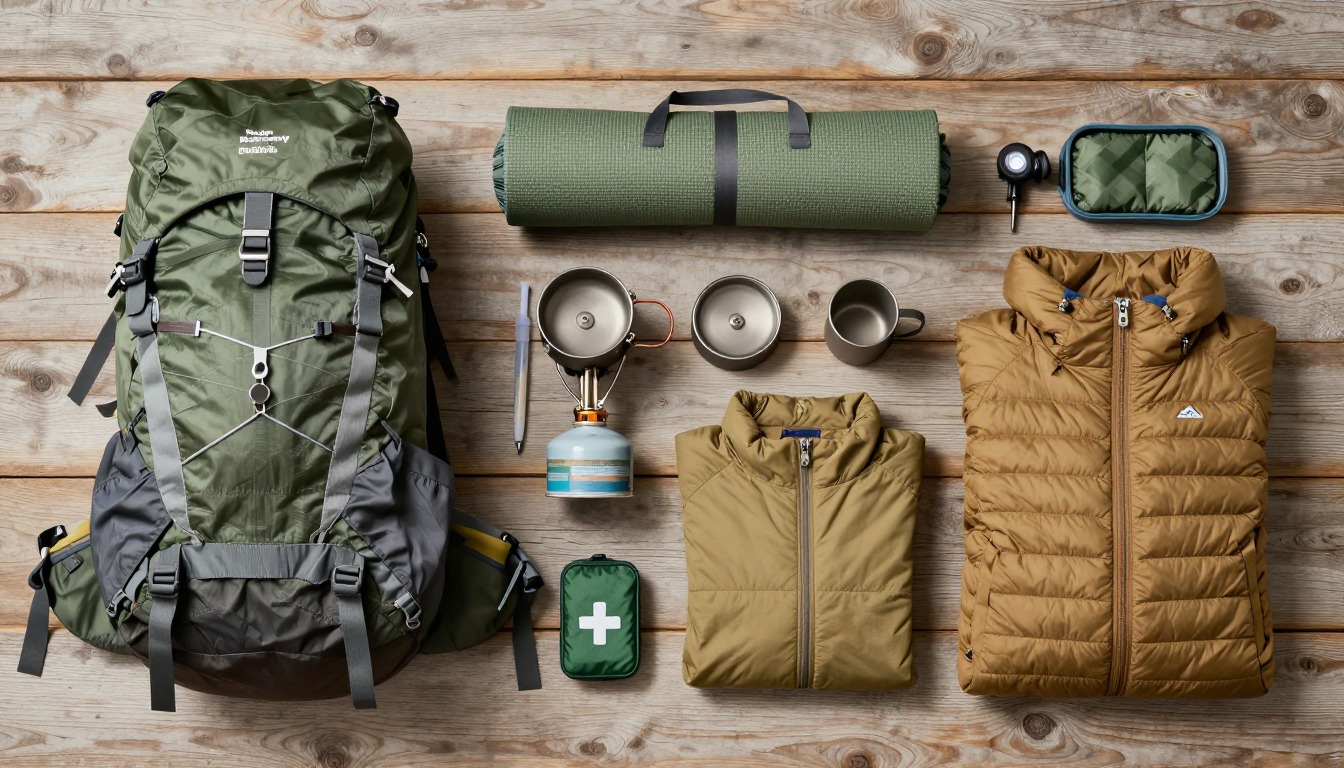
Lodging details are compiled from official parks, refuge associations and reservation systems and can change without notice. We publish no prices, availability or ratings — always confirm current information on the official site before booking or setting out. Product links and the accommodation map are affiliate links: we may earn a commission at no extra cost to you; product prices and availability are shown on Amazon, and accommodation prices on the booking site. See our affiliate disclosure.