
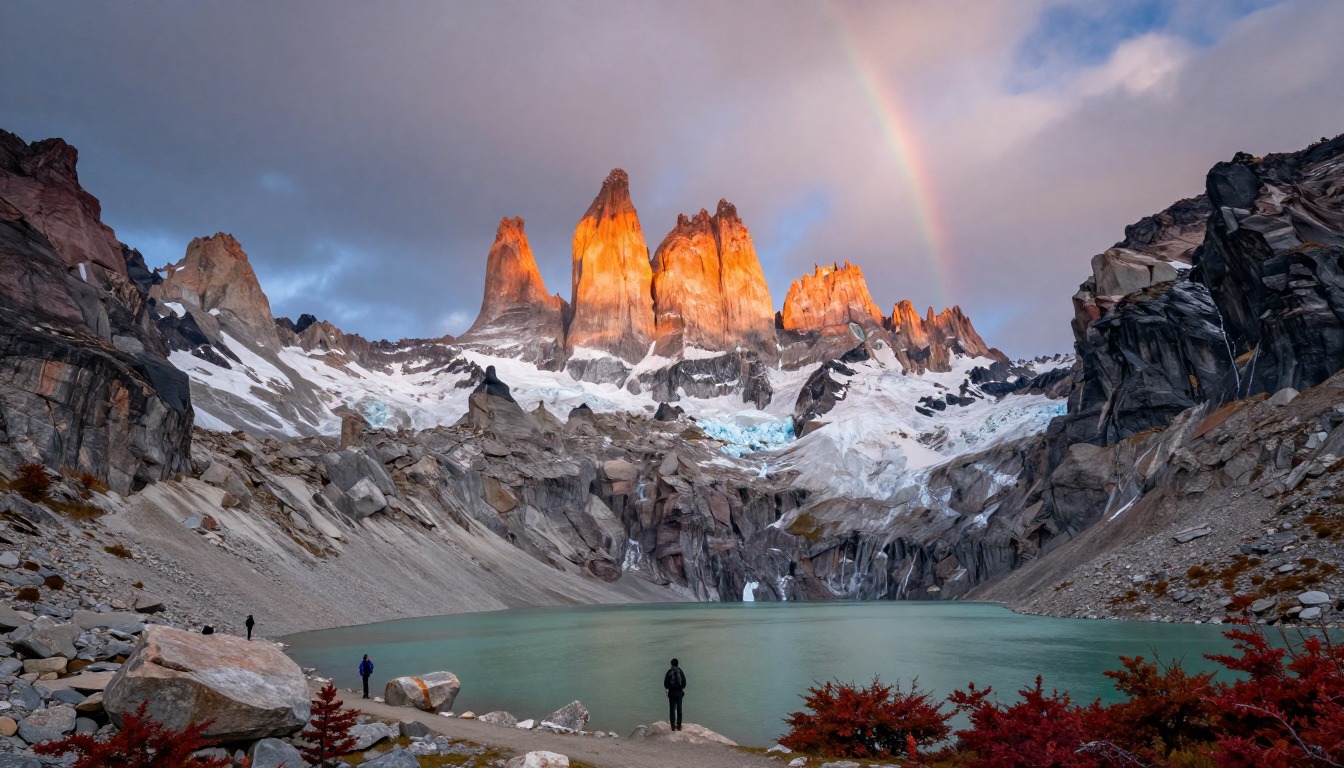
Illustrative artwork — an impression of Torres del Paine — W Trek, not a literal photograph.
The W Trek is a roughly 80-kilometer, four-to-five-day route through Torres del Paine National Park in Chilean Patagonia, tracing the base of the park's granite towers, its glaciers, and turquoise lakes. It's a fully booked, bed-based trek: every night along the way is either a refugio bunkroom with meals or a serviced campground beside one, and none of it is walk-up — you reserve before you go, not when you arrive.
Why hike here
What makes the W worth the planning is the compression: four or five days moves you past sheer granite towers, glaciers calving into lake water the color of milk and turquoise, and grasslands scoured flat by wind that can knock you sideways one hour and vanish the next. Patagonian light does strange things to that granite at dawn and dusk, and the scale of the place — towers, ice, water, wind — makes you feel small. It's not a solitary wilderness escape; the refugio system means you'll cross paths with other hikers most nights, trading trail notes over dinner. But the landscape does the heavy lifting. Few multi-day treks pack a bigger visual payoff per kilometer walked.
Getting there
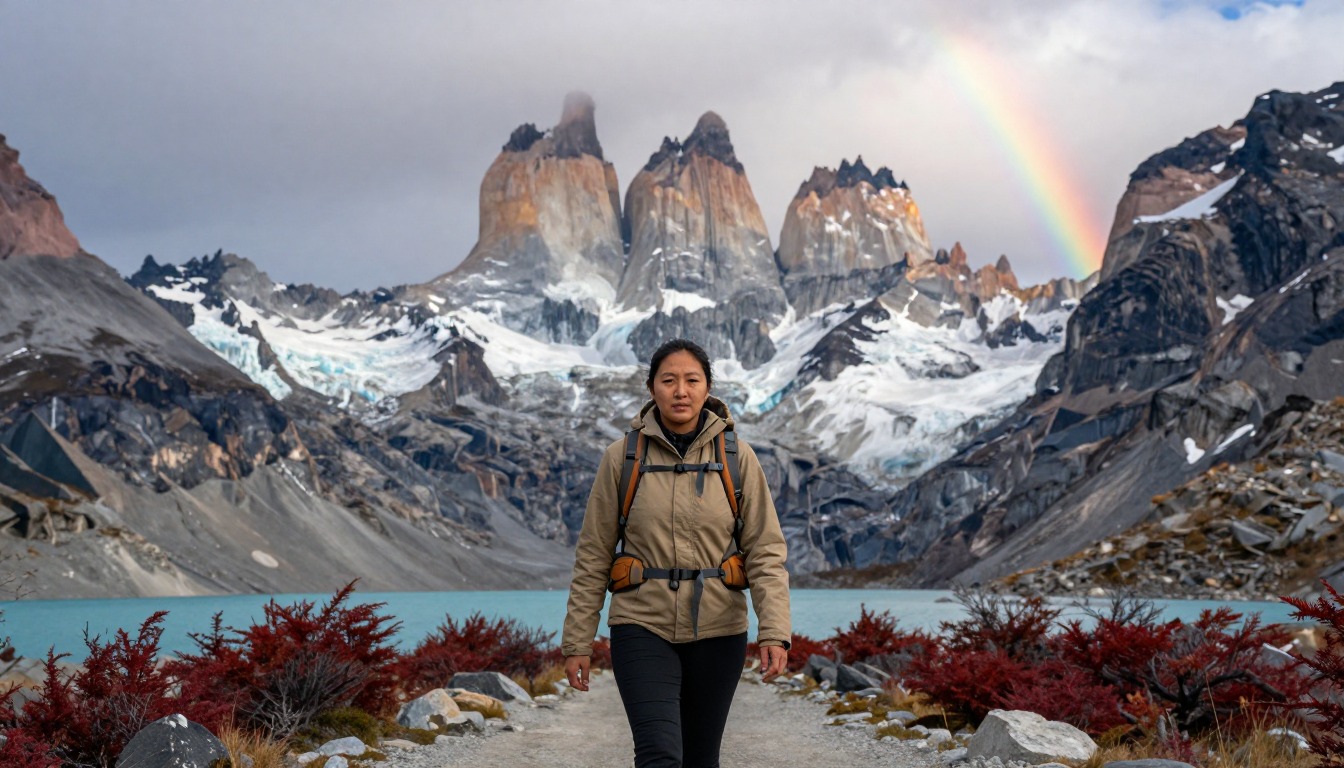
Puerto Natales is the launch point for the W: a small Patagonian town with the outfitters, gear shops, and bus and ferry connections you'll need before heading into the park. Most trekkers fly into southern Chile's regional airport at Punta Arenas, the main gateway to this part of Patagonia, then connect by bus or shared transfer to Puerto Natales — a few hours by road. From there, buses and transfer vans run to the park entrances where the W begins. Plan to spend at least one night in Puerto Natales on each end of the trek to confirm your reservations, restock food, and pick up last-minute gear.
Where to stay
The realistic options, closest-to-the-trail first. Book through the official links — we don't list prices or availability because they change all the time.
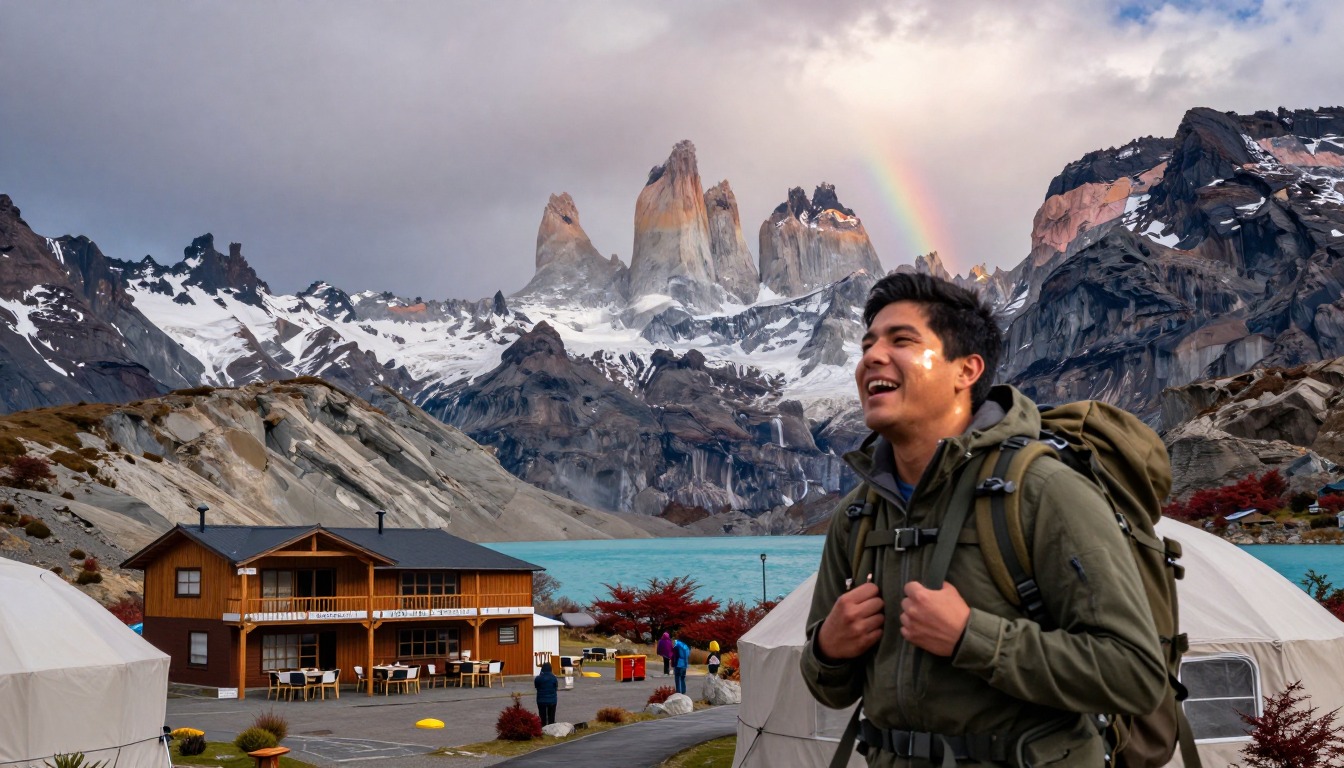 Illustrative — evokes the setting, not a specific property.
 For example: Refugios run by two concessionaires (Vertice and Las Torres/Fantástico Sur) at the classic W stops
Most trekkers — bunkrooms with meals, spaced a day apart along the W.
Beds are booked separately with each concessionaire and sell out for peak season.
Book direct with Vertice and Fantástico SurFor example: Concessionaire campgrounds beside the refugios, some with tents/gear for hire
Campers who want lower cost but still-serviced sites with meals available.
Even free CONAF campsites must be reserved in advance — nothing is walk-up.
Book with the relevant concessionaireFor example: Hotels, hostels and guesthouses in Puerto Natales, the launch town
Everyone before and after — gear shops and bus/ferry connections are here.
Most trekkers overnight in Puerto Natales either side of the W.
Search lodging in Puerto NatalesPermits & rules
Every night in the park — refugio, serviced or free CONAF site — must be reserved in advance; rangers check bookings. There are no walk-up beds or pitches.
Gear you'll want for this trip
Matched to the terrain and conditions here. Real products — check current price on Amazon.



Common questions
Do I need to book my accommodations in advance?
Yes — every night on the W, whether it's a refugio bunk, a serviced campground, or a free CONAF site, has to be booked ahead. Rangers check reservations along the trail, so there's no walk-up option. Because two separate concessionaires — Vertice and Las Torres/Fantástico Sur — run different sections, you'll need to plan your itinerary so each night's booking lines up with the last, rather than booking each independently.
What's the difference between a refugio and a campground on the W?
A refugio is an indoor bunkroom with meals included, run by one of the park's two concessionaires. A serviced campground sits beside many of the refugios, giving you the option to pitch your own tent rather than book a bunk, with some shared facilities on site. Both still require advance booking — there's no walk-up option for either, and no meaningful difference in how far ahead you should plan.
When's the best time to hike the W Trek?
The Patagonian summer, November through March, is the best season — longer daylight and milder (though still changeable) weather. Wind is a constant on the W regardless of month, and conditions can shift fast, so pack layers and a real rain shell whatever week you go. Because lodging books up for the whole season, decide your dates early and reserve refugios and campgrounds well before you travel.
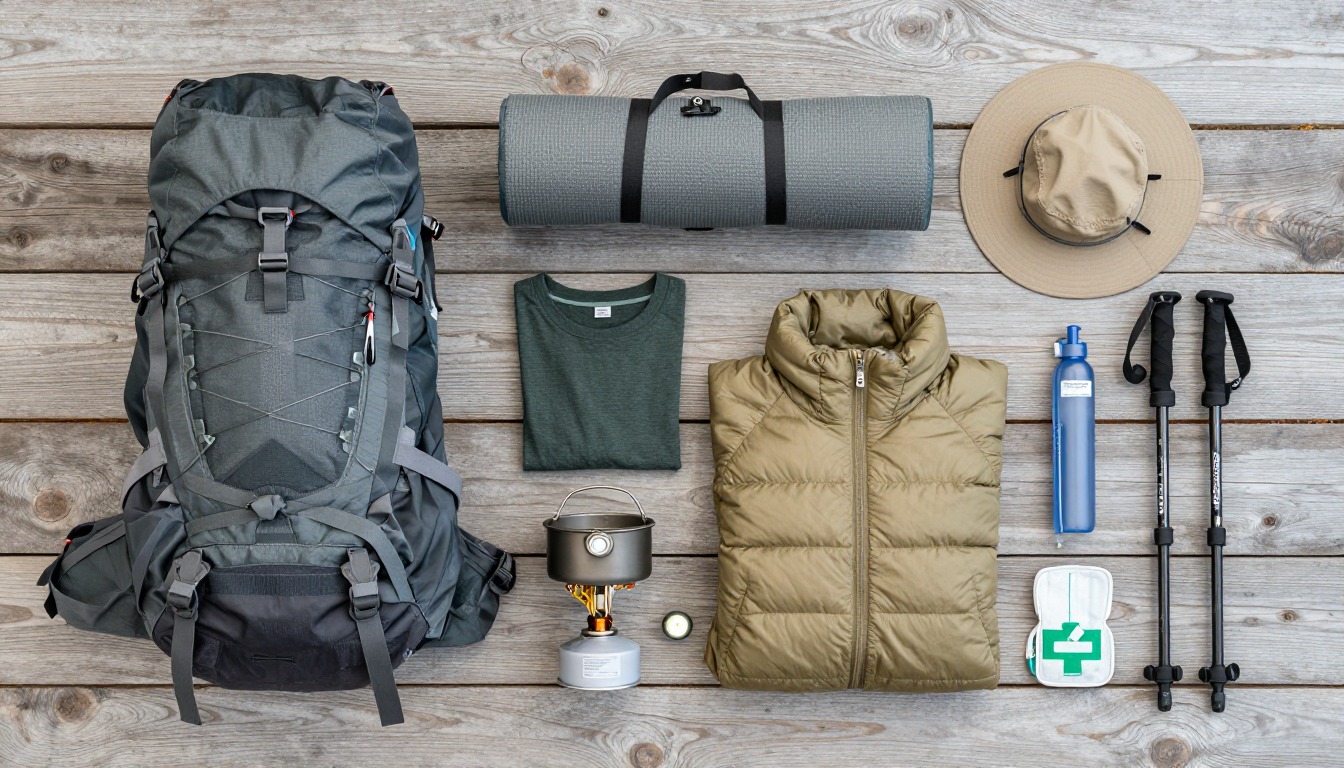
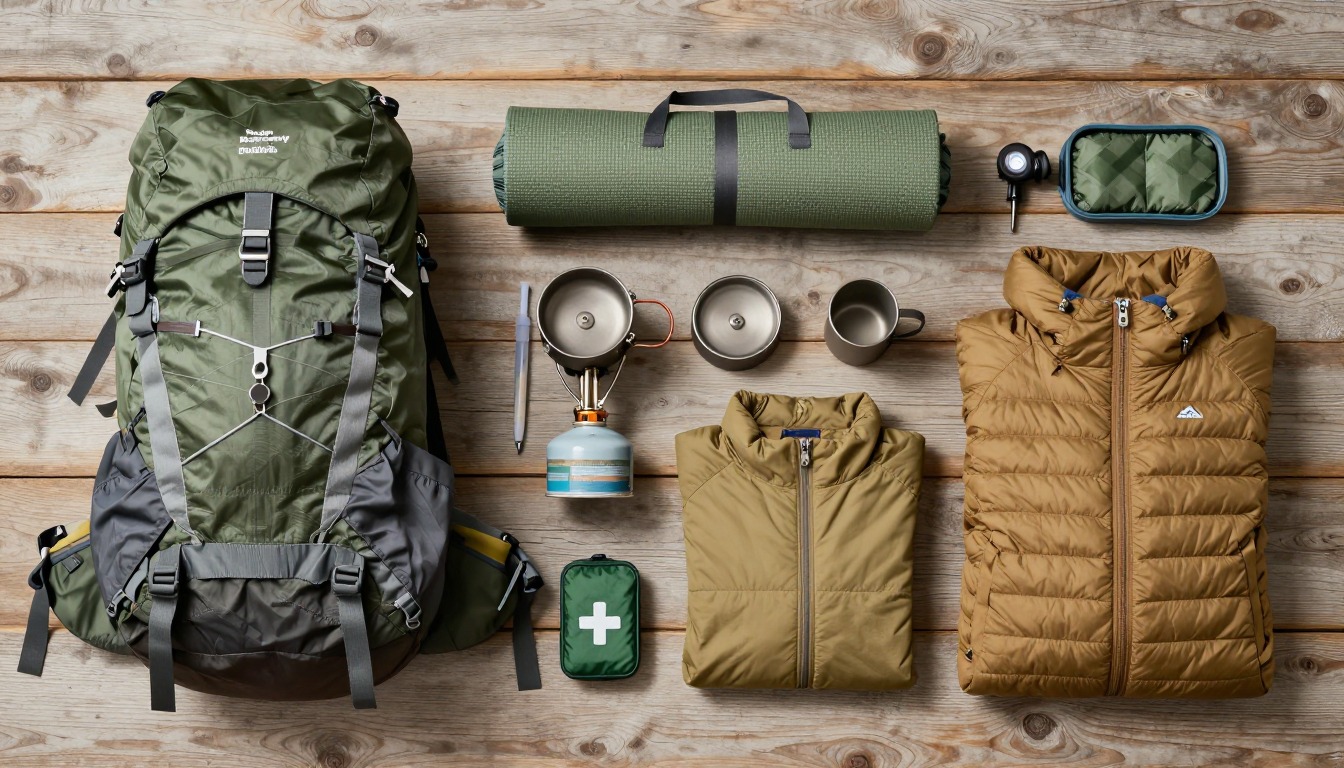
Complete gearsets for this trip
Full curated kits built for exactly this kind of hike — what to bring, why, and links to similar gear.
Lodging details are compiled from official parks, refuge associations and reservation systems and can change without notice. We publish no prices, availability or ratings — always confirm current information on the official site before booking or setting out. Product links are affiliate links: we may earn a commission at no extra cost to you; prices and availability are shown on Amazon. See our affiliate disclosure.