
Affiliate disclosure: this page contains affiliate links. Purchases made through them may earn us a commission at no extra cost to you. See our affiliate disclosure.
In plain English
The Milford Track is a walk where the sleeping plan is settled before you leave home. There are three huts along the route, you walk from one to the next in a single direction, and you cannot camp anywhere else. So the hut you sleep in on night one, two and three is decided by your booking, not by how far you feel like walking.1
The huts are simple but comfortable for a wilderness. They have bunks with mattresses, toilets and basic cooking facilities, and a Department of Conservation ranger is in residence. But they do not have showers, and they do not provide pots, plates or utensils, so you bring your own.1 You also cannot buy food along the way, so you carry all the meals you will need plus a little extra in case weather holds you up.1
The other thing to know is the weather. This part of New Zealand gets extreme rainfall, and the track can flood. The official advice is to be prepared for all conditions in any season, and it warns that track closures are possible and may affect your travel plans, so a spare day on each end is sensible.1
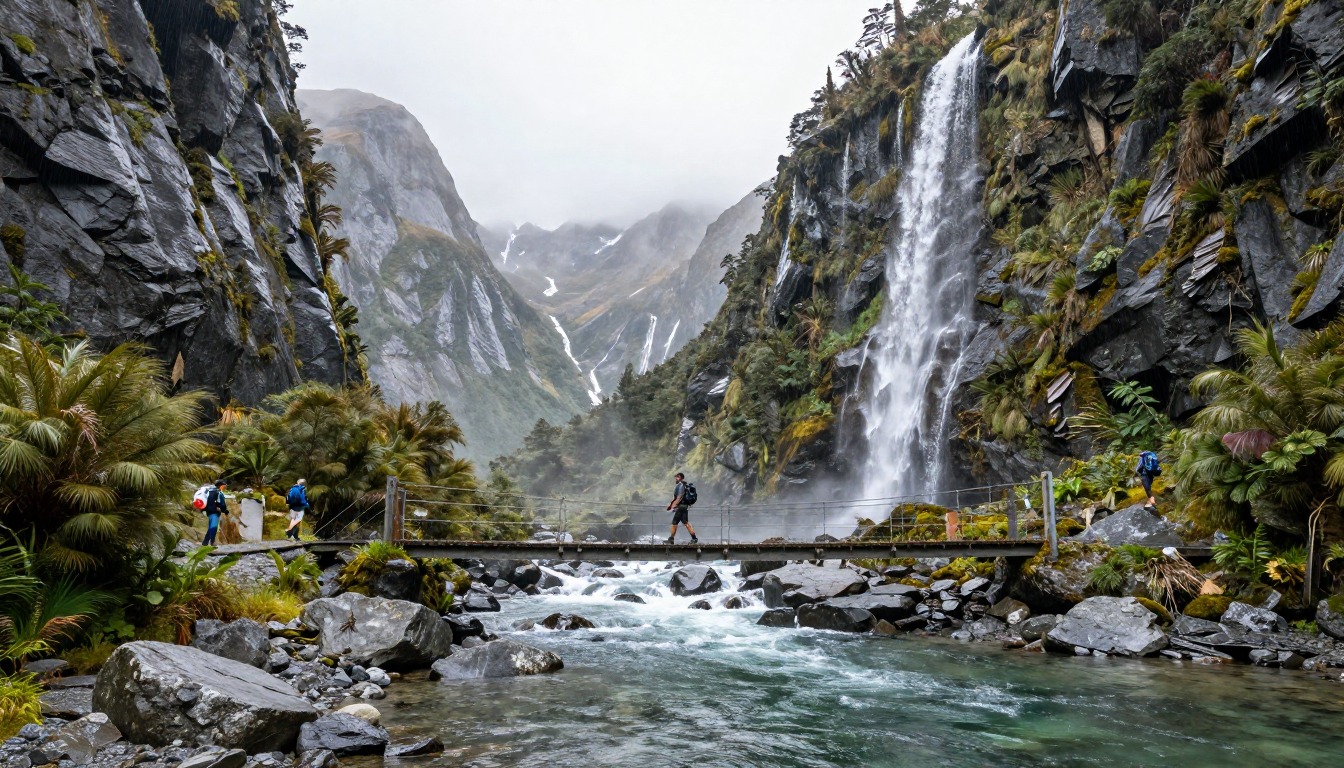
The Milford Track is a 53.5-kilometer, four-day walk through Fiordland National Park, crossing rainforest, hanging valleys, and a mountain pass on its way from Te Anau Downs to Milford Sound. It runs in one direction only, and because it's hut-based, where you sleep each night — Clinton, then Mintaro, then Dumpling — is locked in as soon as you book. Independent walkers stay in these Department of Conservation huts; there's no camping option on the track.
Why hike here
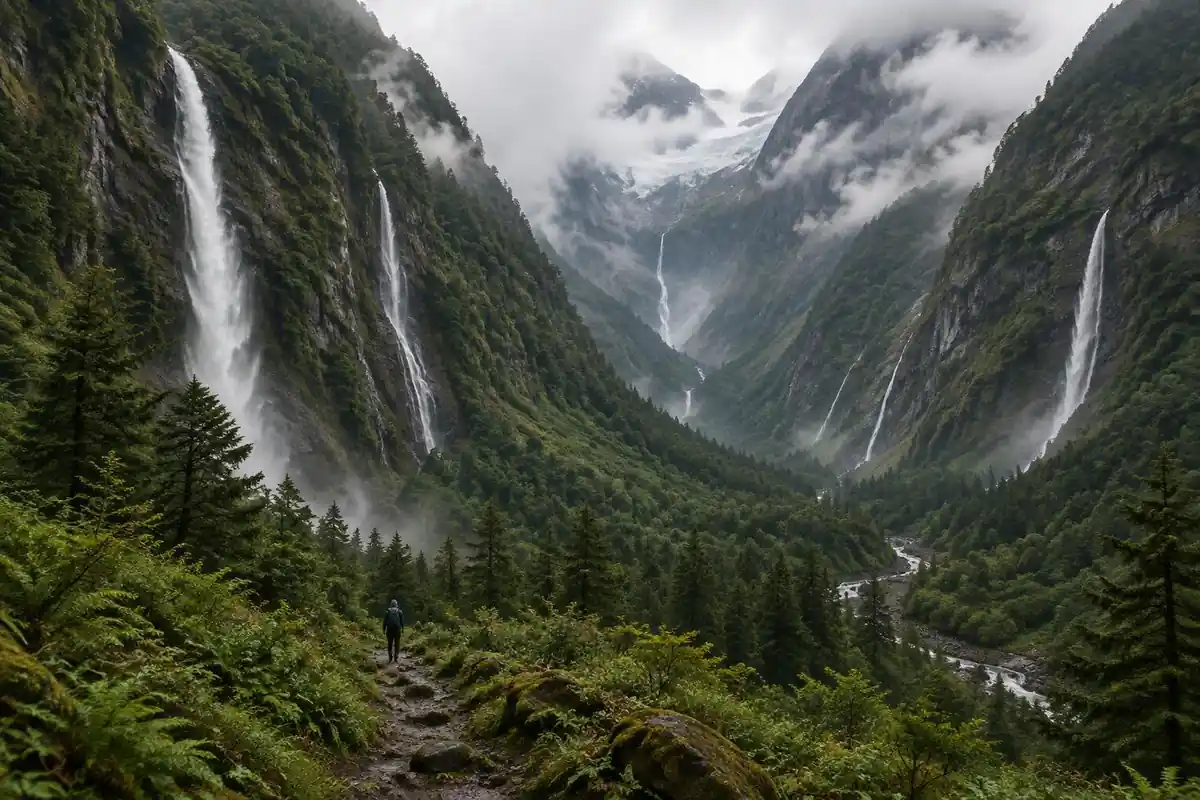
Few Great Walks pack this much variety into four days: dense podocarp rainforest at the start, valley floors below hanging valleys where waterfalls drop from the cliffs above, then an exposed climb over the mountain pass, where weather can turn in minutes. Fiordland's rainfall is part of the deal — this is one of the wettest places on Earth, and walking through mist and moss-draped trees is as much the experience as a clear pass crossing. Because the route runs one way only, the landscape keeps changing rather than repeating, and everyone on the track that week moves through it together, hut by hut. Pack for rain, expect sandflies the moment you stop moving, and the payoff is a stretch of Fiordland most visitors never reach on foot.

Getting there
Te Anau is the launch point for the Milford Track, and most hikers arrive there from Queenstown, the nearest hub with international and domestic flights, by road or shuttle. From Te Anau, the track itself starts with a boat trip to Te Anau Downs and finishes near Milford Sound, from where most walkers arrange transport back to Te Anau or on to Queenstown. Because the boat transfers and huts are tied to specific booked dates, it's worth building a buffer day into your travel plans on both ends in case of delayed flights or rough weather.

Where to stay
The realistic options, closest-to-the-trail first. Book through the official links — we don't list prices or availability because they change all the time.
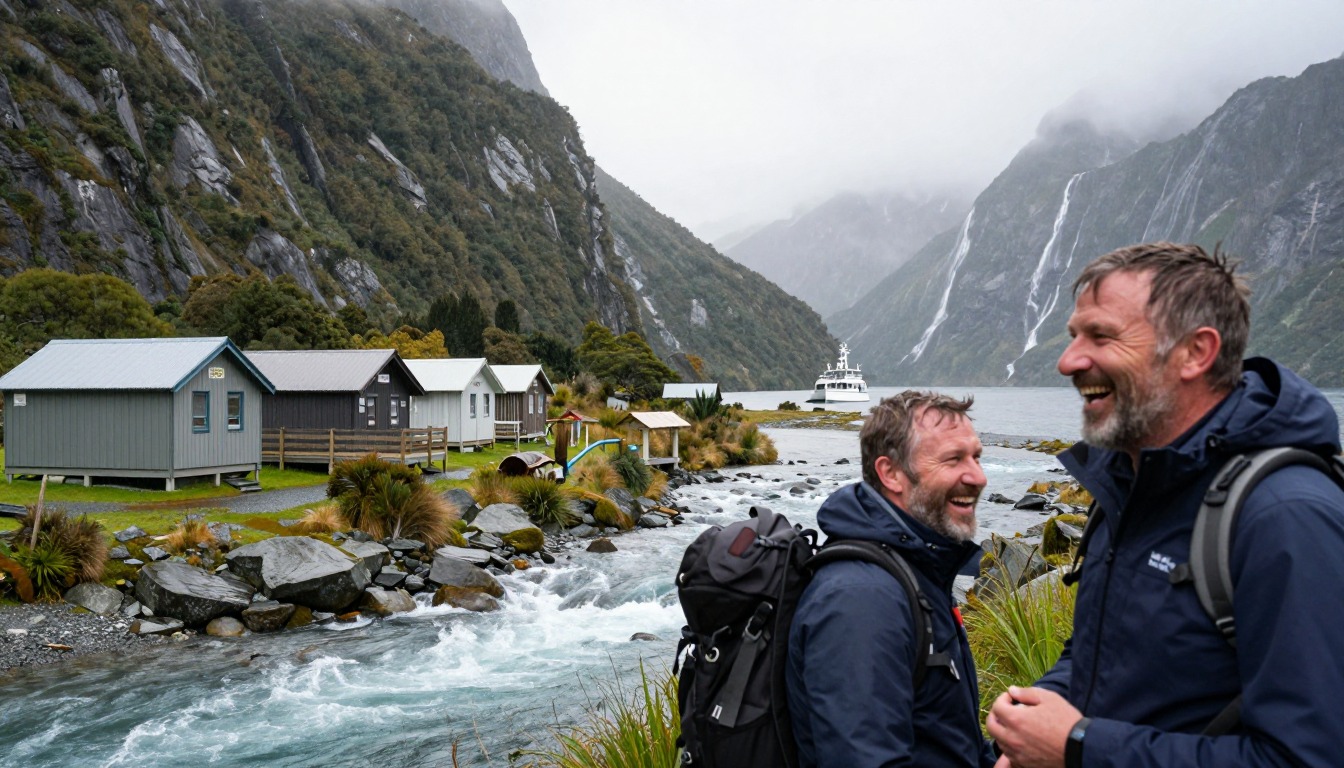
For example: Clinton, Mintaro and Dumpling Hut — bunks, mattresses, basic cooking facilities and toilets (bring your own stove and gas outside the Great Walks season)
Independent walkers in the Great Walk season (one-way, fixed itinerary).
Great Walk huts must be booked in advance; bookings open months ahead and sell out fast.
Department of Conservation booking systemFor example: Private lodges run by the licensed guided-walk operator, with catered meals
Walkers who prefer a guided trip with catered lodges instead of DOC huts.
Guided lodges are separate from DOC huts and booked through the operator.
Licensed guided-walk operatorFor example: Hotels, motels and holiday parks in Te Anau, the launch town for the track
Everyone the night before and after — the track starts by boat from Te Anau Downs.
You reach the trailhead by boat; base in Te Anau either side.
Search lodging in Te Anau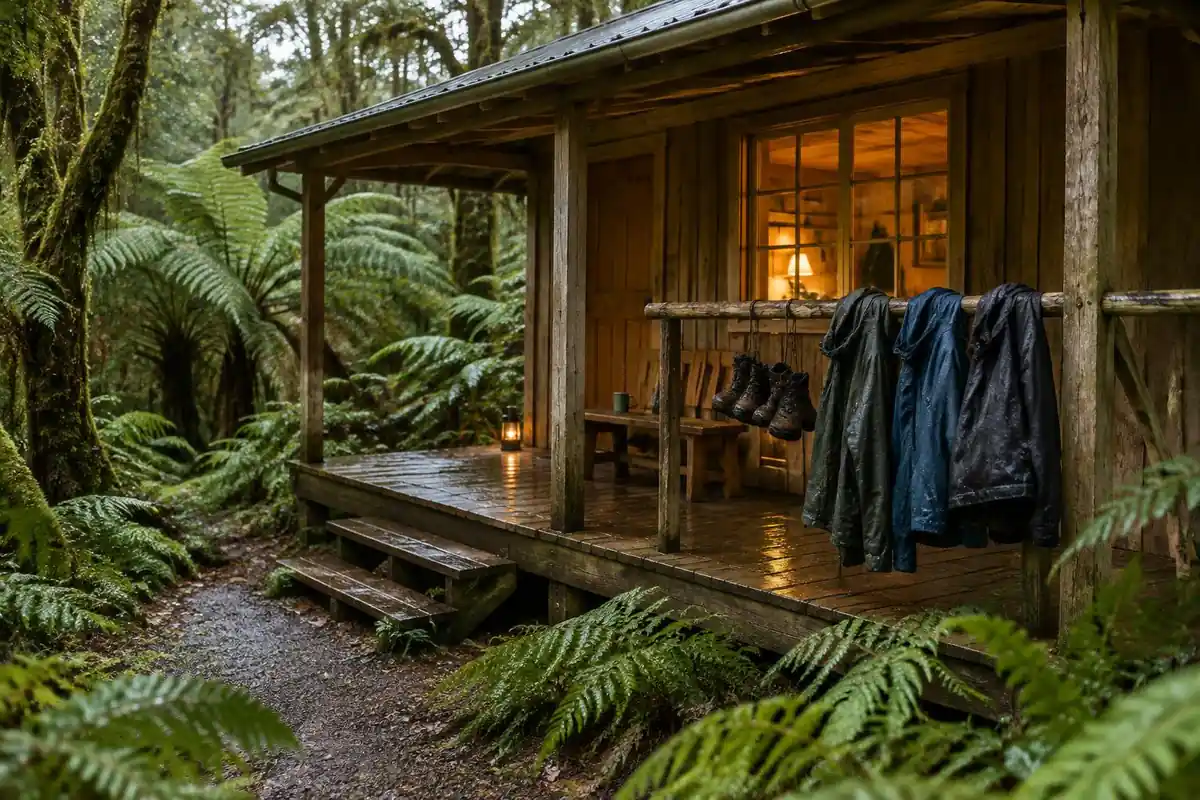
Permits & rules
The Milford is one-way and, in the Great Walk season, requires advance hut bookings for a fixed date and direction. No camping is allowed on the track. Outside the Great Walks season (1 May to 31 October) bookings are not required and bunks are first come, first served; there are no rangers at the huts and conditions are more serious.
Gear you'll want for this trip
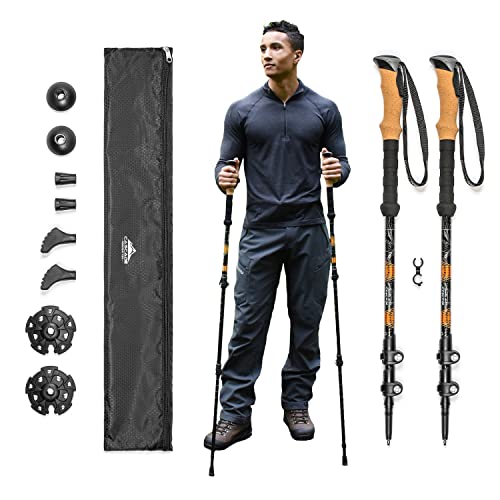
Matched to the terrain and conditions here. Real products — check current price on Amazon.



A fixed itinerary and what that means for booking
DOC's page states that the track can only be walked in one direction over three nights and four days, and that the three huts must be booked well in advance in the Great Walks season, with camping not permitted.1 The season it gives for 2026/27 runs from 1 November 2026 to 30 April 2027, with the last departure on 28 April 2027.1 If you walk without a valid booking in season, DOC says you may be charged a penalty or turned away if the hut is full.1
The booking also has to line up with transport. DOC says there is no vehicle or private access to either end of the track, that the start is a boat from Te Anau Downs and the finish a boat from Sandfly Point, and that transport must be booked in advance.1 That is why the page's advice to keep a buffer day on either side is well founded: a missed boat or a closure affects a chain of fixed bookings, not one.
What the huts provide, and what your pack has to
The official page lists bunks, mattresses, heating, toilets, basic cooking facilities, solar-powered lighting and cold running water at each hut, with a DOC ranger in residence, but no cooking utensils or showers.1 Its equipment list fills in the rest: a backpack of 40 to 60 liters for multi-day hiking, a waterproof pack liner, a 3 to 4 season sleeping bag, a drink bottle, your own eating and cooking utensils, and earplugs for communal bunkrooms.1 Tap water at the huts is described as not treated, so it needs boiling before use, and the CDC's guidance is a boil of at least 1 minute.1,2
Warmth is worth a note. The same page lists heating among hut facilities but also advises warm clothing to sleep in because hut bunkrooms do not have heating and can be cold.1 The CDC notes that hypothermia can develop even above 40 degrees Fahrenheit if you get chilled from rain or sweat, so a dry set of clothes kept only for the hut is not a luxury on a track this wet.3
Where the existing page and DOC differ
Some guides get details wrong. DOC gives 1 November as the 2026/27 season start, not late October.1 It lists basic cooking facilities, not gas cookers.1 It refers to a ranger in residence, not hut wardens.1 And a flat 'no walk-up' answer leaves out that, outside the Great Walks season, DOC says bookings are not required and bunks are first come, first served, paid for with backcountry hut tickets or a pass.1
That off-season option is not a loophole for casual walkers. DOC describes the track from May to October as cold and wet, with ice, snow and short daylight, facilities greatly reduced, and suitable only for fit, experienced and well-equipped people with alpine, river-crossing and navigation skills.1 For a first trip, the booked Great Walks season is the one the page is really describing.
Common questions
Do I need to book my huts before I go?
Yes — Milford Track huts are booked online through the Department of Conservation well ahead of the season, for a specific date and direction, and popular dates sell out fast. In the Great Walks season there is no walk-up option and camping is not allowed on the track, so your hut booking effectively sets your entire itinerary before you arrive in New Zealand. Outside the season bookings are not required and bunks are first come, first served, but the track is unmanaged and only suits experienced, well-equipped walkers.
What's the difference between the independent huts and the guided option?
Independent walkers carry their own food and gear and stay in Department of Conservation huts with bunks, mattresses, heating, toilets, and basic cooking facilities (bring your own cooking utensils; there are no showers). A separate licensed operator runs a guided version of the track with private, catered lodges instead of the DOC huts. Both follow the same one-way route over the same days, just with different levels of service.
When's the best time to hike the Milford Track?
The Great Walks season runs from 1 November to 30 April (1 November 2026 to 30 April 2027 for the coming season), when a DOC ranger is in residence at the huts and the boat transfers operate. Outside that window the track is far more exposed to snow and river hazards and requires a different level of experience. Even in season, Fiordland's rainfall is heavy and constant, so pack for wet conditions regardless of the forecast.
Complete gearsets for this trip
Full curated kits built for exactly this kind of hike — what to bring, why, and links to similar gear.


Lodging details are compiled from official parks, refuge associations and reservation systems and can change without notice. We publish no prices, availability or ratings — always confirm current information on the official site before booking or setting out. Product links and the accommodation map are affiliate links: we may earn a commission at no extra cost to you; product prices and availability are shown on Amazon, and accommodation prices on the booking site. See our affiliate disclosure.