
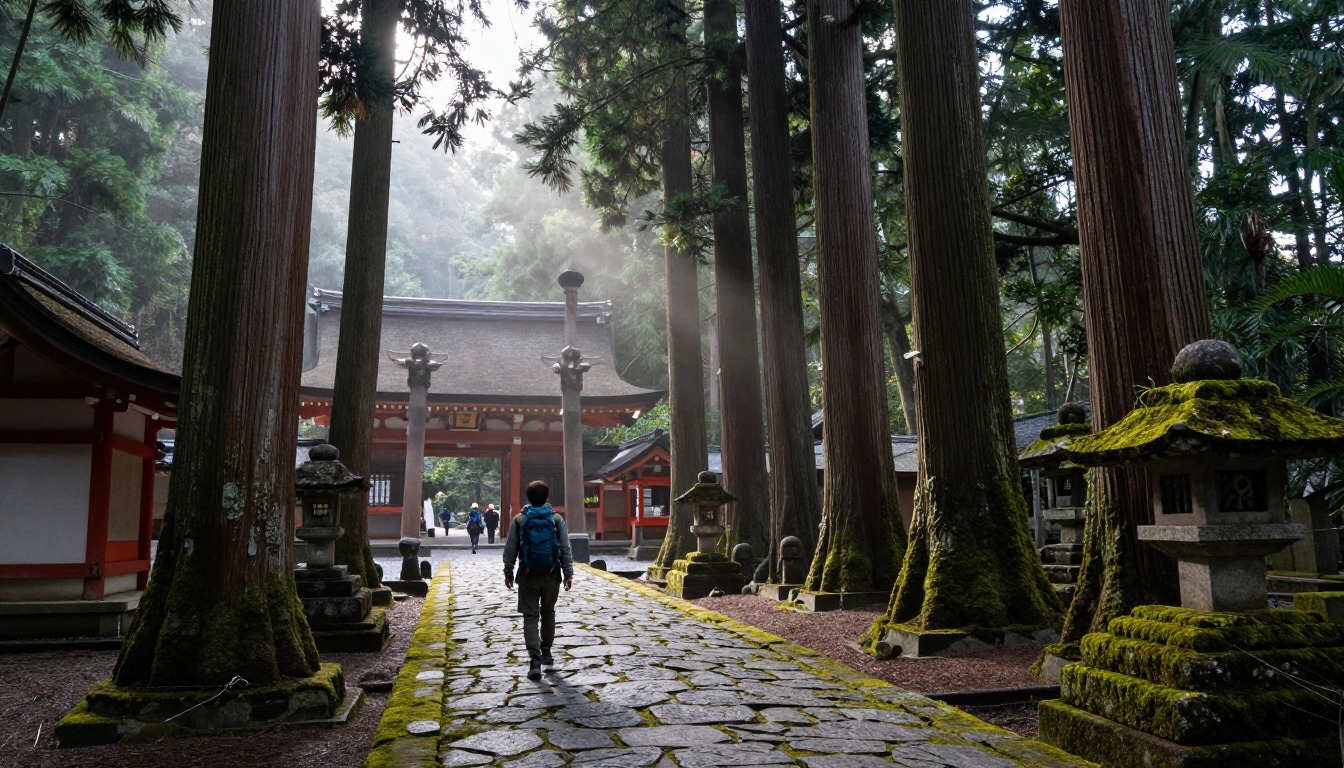
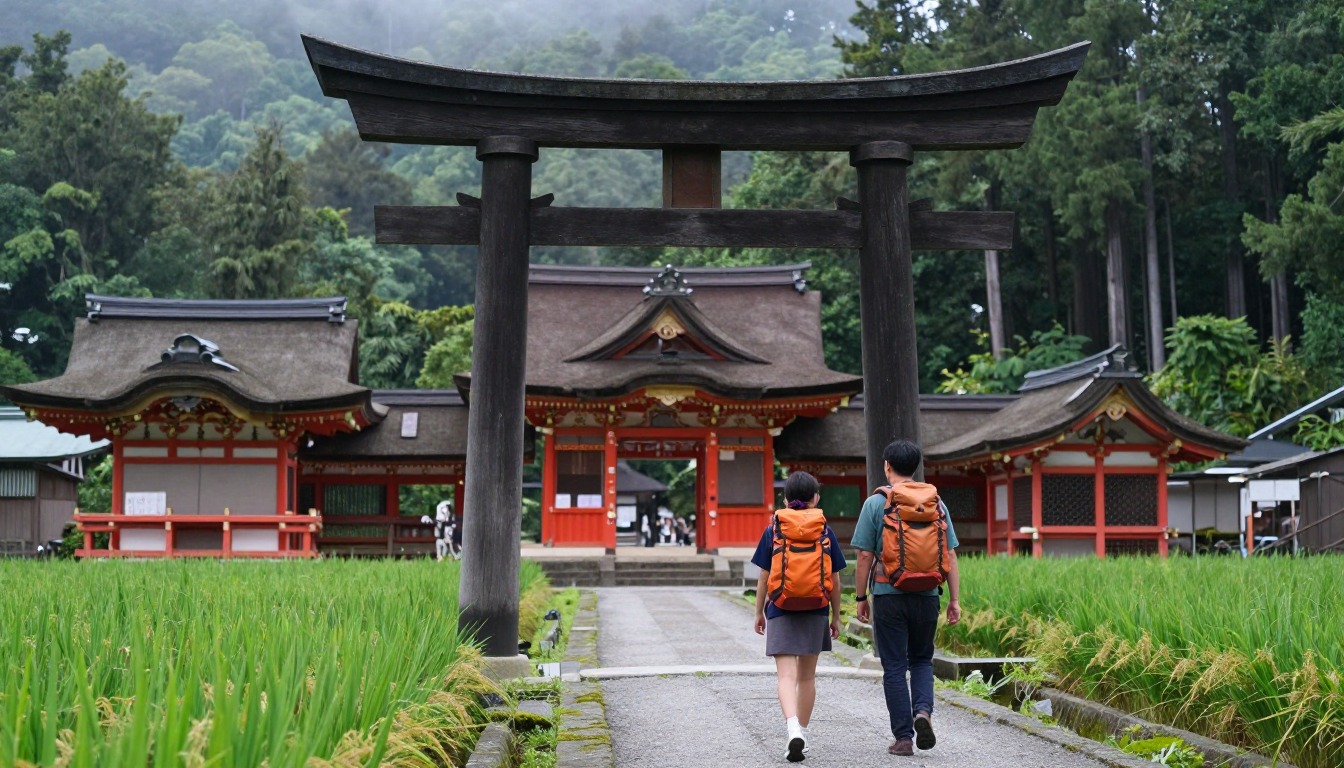
Illustrative artwork — an impression of Kumano Kodo — Nakahechi, not a literal photograph.
The Kumano Kodo's Nakahechi route is a UNESCO World Heritage pilgrimage trail across Japan's Kii Peninsula in Wakayama, threading mossy cedar forest and mountain villages between the three grand Kumano shrines. It's walked village to village over several days, and because the small mountain hamlets have only a handful of rooms between them, where you'll sleep each night is something to sort out before you set off, not along the way.
Why hike here
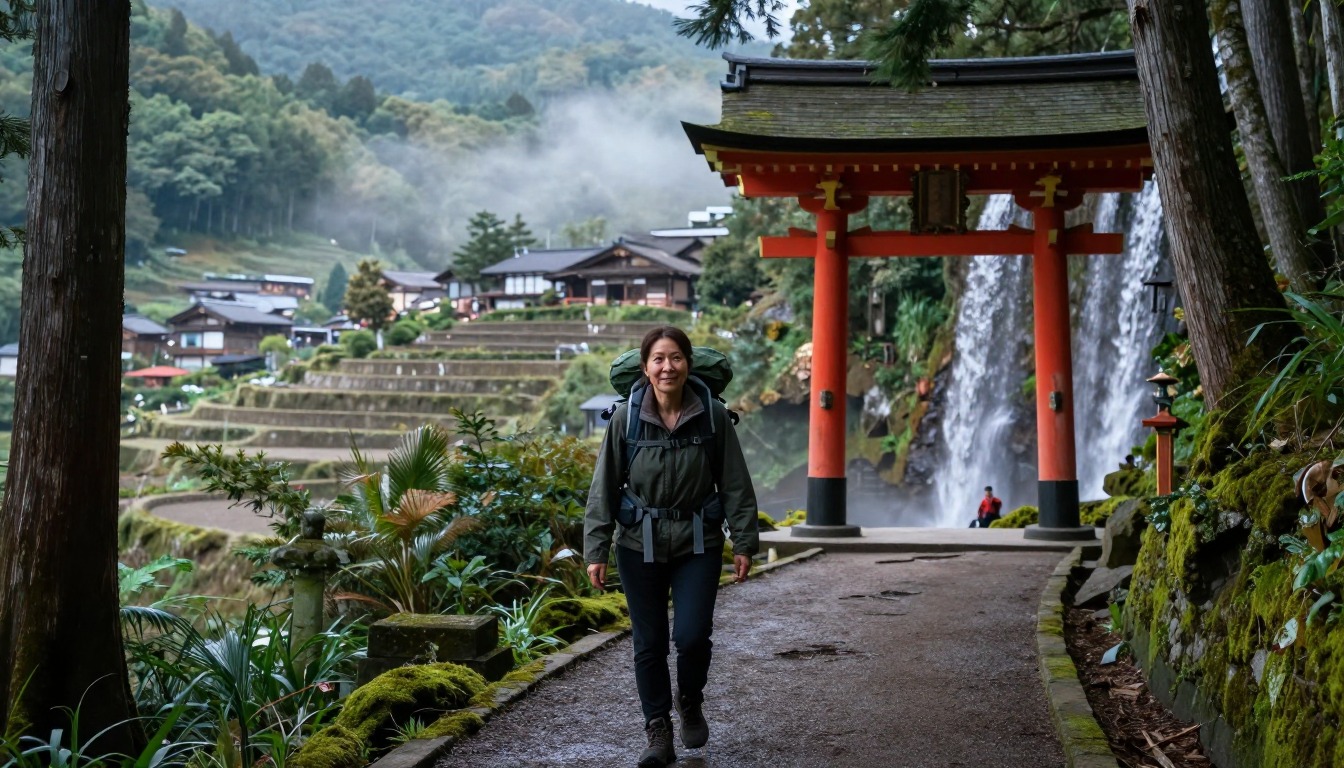
What stays with people on the Nakahechi isn't one dramatic viewpoint but the accumulation of small, quiet scenes: stone-paved sections of trail disappearing into cedar forest so old the trunks are wrapped in moss, a mountain village appearing at a bend in the path, a shrine gate waiting at the top of a climb. It's an ancient pilgrimage route, and walking it still feels like one — unhurried, half swallowed by forest quiet, broken up by hot-spring hamlets where the day's walking dissolves into a hot bath before the next morning's climb. Carrying a pilgrim stamp book and collecting the seal at each of the three grand shrines gives the walk a thread running through it, a reason to look forward to the next gate as much as the last one.
Getting there
Most travelers fly into Kansai International Airport near Osaka, then make their way south by train and bus to Tanabe, the gateway town on the Kii Peninsula's coast where many Nakahechi itineraries begin. From Tanabe, local buses run inland to the various trailheads along the route, and the same bus network links the trail's villages and the Kumano Hongu shrine area for anyone shortening or adjusting their walk. Because bus timetables on rural routes can be limited, it's worth checking connections before setting out each day.
Where to stay
The realistic options, closest-to-the-trail first. Book through the official links — we don't list prices or availability because they change all the time.
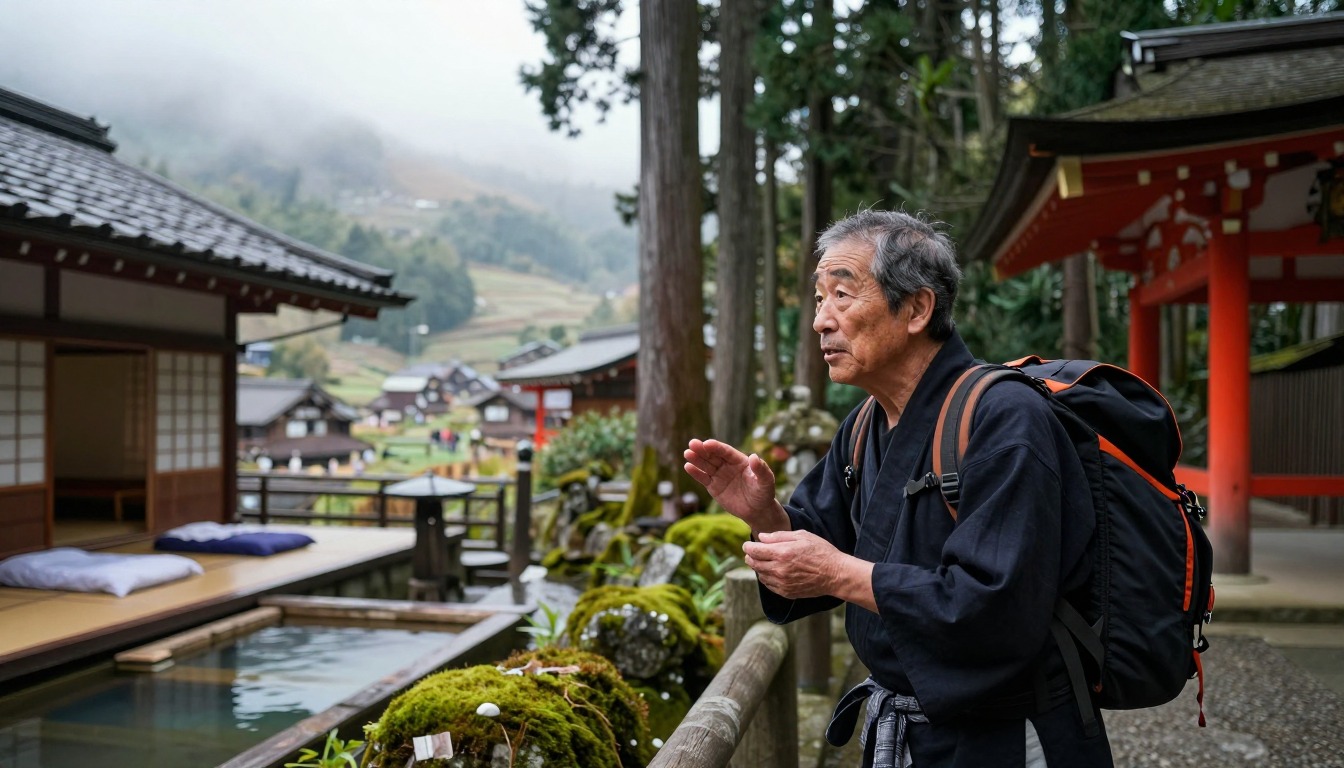 Illustrative — evokes the setting, not a specific property.
 For example: Family-run inns (ryokan, minshuku) and onsen lodging in the villages between the shrines
Most pilgrims — you walk village-to-village and sleep in traditional inns with meals.
Rooms are limited in small villages; reserve early, and luggage-transfer services can carry your bag.
Village inns (book well ahead)For example: Hotels and inns in Tanabe (the gateway) and around the Kumano Hongū shrine
Walkers at the start and around the central shrine.
Tanabe is the usual start; buses link the trailheads and shrines.
Nearby-town lodgingPermits & rules
No permit is needed. The Nakahechi is walked hut-free, inn-to-inn, so the key is booking the small village ryokan and minshuku well ahead — they fill fast and there are few beds. Carry the pilgrim stamp book if you want to collect the shrine seals.
Gear you'll want for this trip
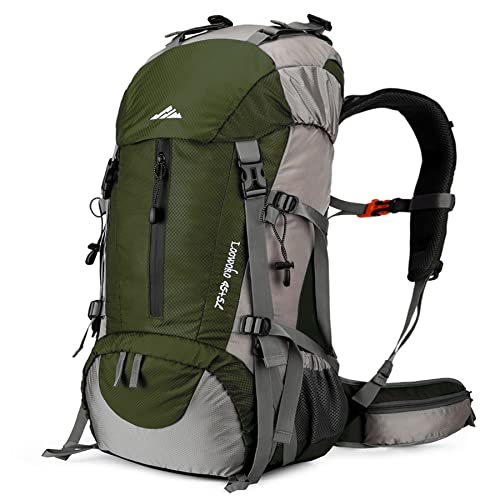
Matched to the terrain and conditions here. Real products — check current price on Amazon.


Common questions
What kind of accommodation is used along the Nakahechi route?
Traditional family-run inns — ryokan and minshuku — along with onsen lodging in the hot-spring hamlets, most with meals included. These are small, village-scale places rather than hotels, so rooms are limited; larger hotels and inns cluster in the gateway town of Tanabe and around the Kumano Hongu shrine area for those who want a bigger base.
Do I need to carry all my gear between villages?
Not necessarily — luggage-transfer services operate along the route and can move your main bag ahead to that night's lodging, so many hikers walk with just a day pack. It's worth arranging this before you start, since it changes how much you need to carry each day.
When is the best time to walk the Kumano Kodo?
Spring and autumn are considered the best seasons, with milder temperatures for the forested climbs and more comfortable conditions for multi-day walking. Whatever the season, book village lodging well ahead, since the small inns along the route have limited rooms and fill up.
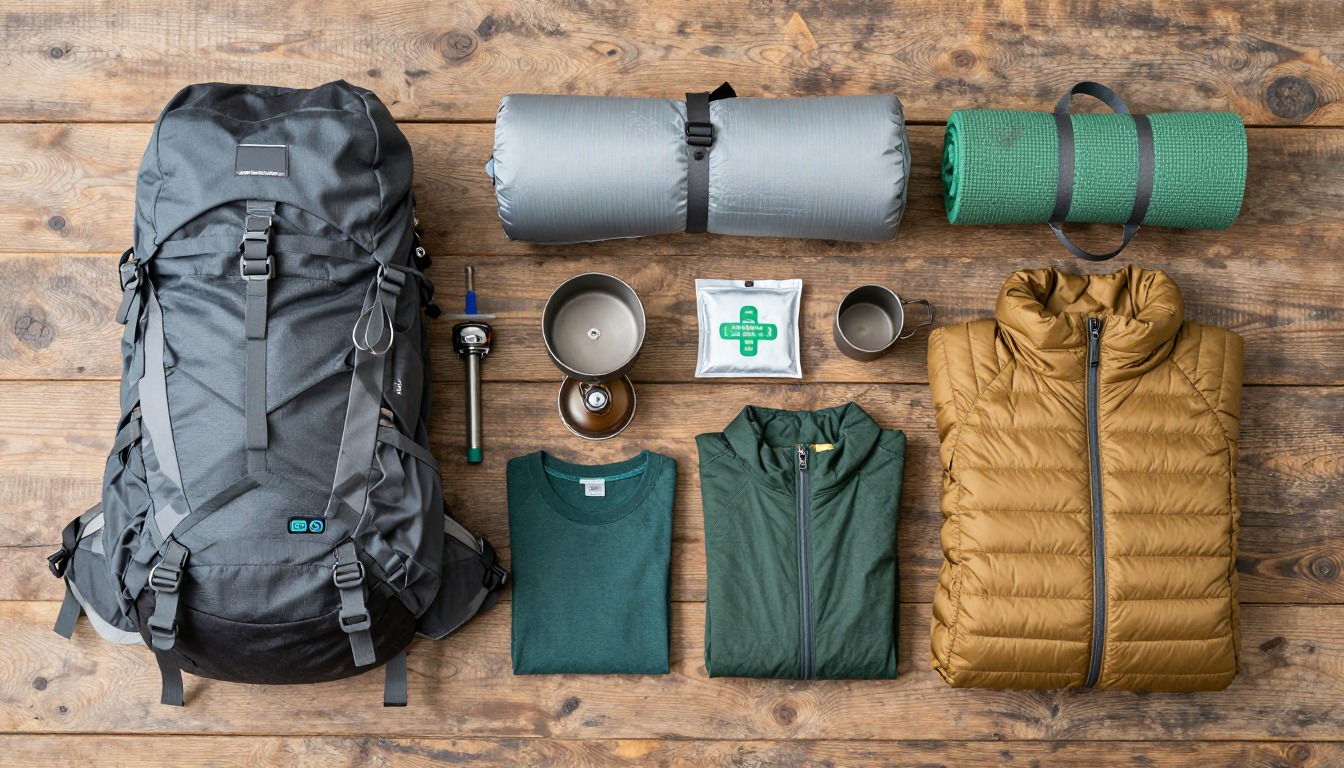
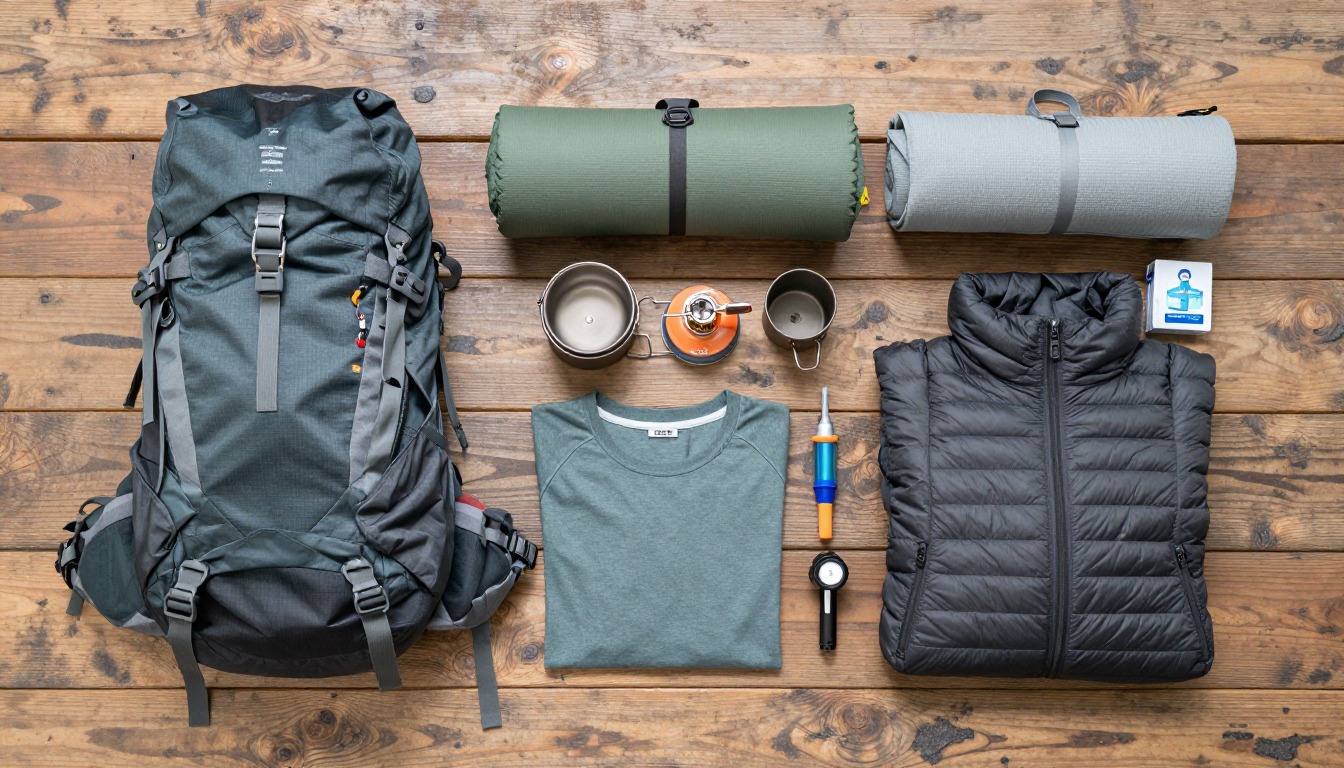
Complete gearsets for this trip
Full curated kits built for exactly this kind of hike — what to bring, why, and links to similar gear.
Lodging details are compiled from official parks, refuge associations and reservation systems and can change without notice. We publish no prices, availability or ratings — always confirm current information on the official site before booking or setting out. Product links are affiliate links: we may earn a commission at no extra cost to you; prices and availability are shown on Amazon. See our affiliate disclosure.