
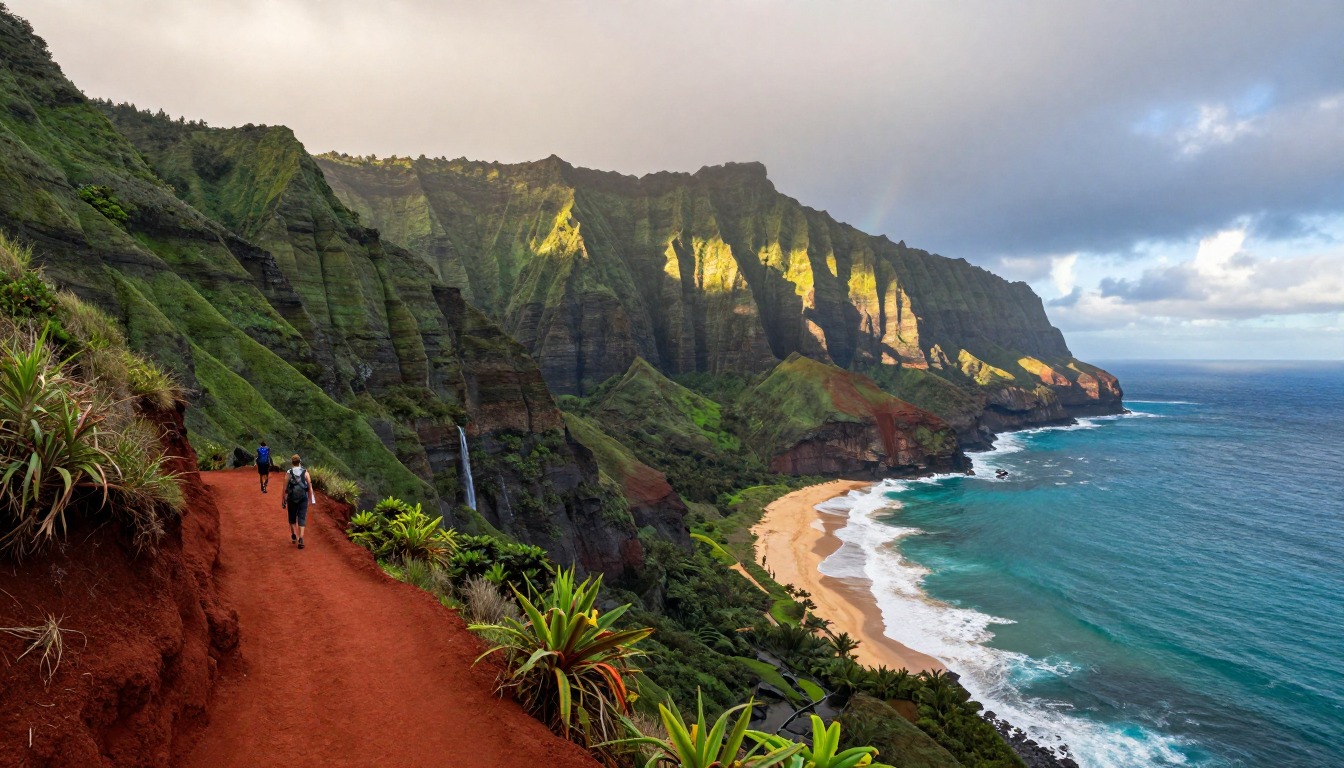
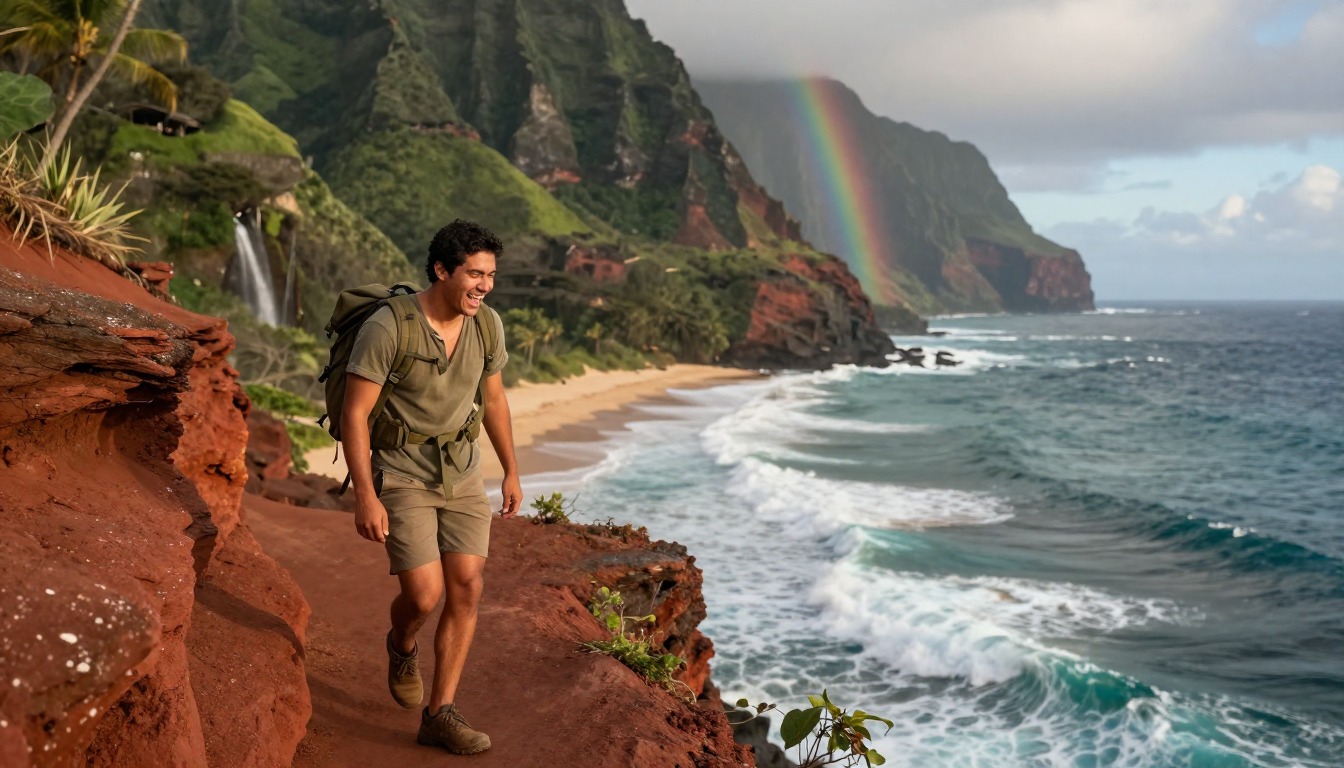
Illustrative artwork — an impression of Kalalau Trail — Nā Pali Coast, not a literal photograph.
The Kalalau Trail is an 11-mile route along Kauai's Nā Pali Coast, following sea cliffs and crossing streams to Kalalau Valley's beach, inside Nā Pali Coast State Wilderness Park under Hawaii's DLNR. There's no lodging on the trail itself — anyone going past the first two miles needs a Nā Pali Coast camping permit for designated sites at Hanakoa and Kalalau, so where you sleep on this hike is really a permit question, decided well before you reach the trailhead.
Why hike here
The draw here is the coastline itself: eleven miles of trail tracing dramatic sea cliffs, climbing and dropping along the contours of the Nā Pali Coast the entire way. Streams cross the path repeatedly, some barely a trickle and others running high enough after rain to stop hikers in their tracks, and that unpredictability is part of what makes the trail feel genuinely wild rather than manicured. The reward at the end is Kalalau Valley, a broad beach backed by cliffs with no road access from any direction — you either hike in or you don't see it. Even the first two miles, out to Hanakāpīʻai, deliver sweeping cliff-and-ocean views without the permit or the full stream-crossing commitment, which is why so many day hikers turn around right there.
Getting there
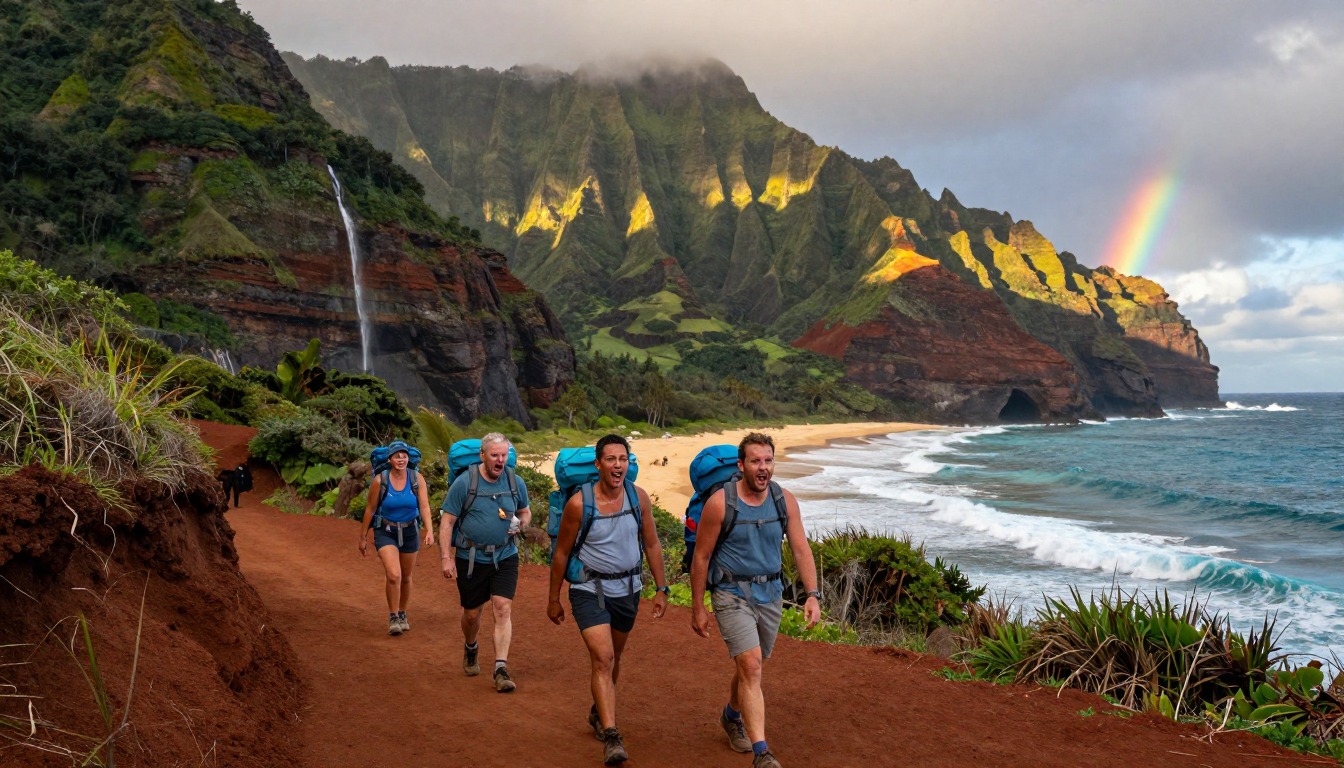
Most hikers fly into Līhuʻe on Kauai and base themselves on the North Shore, around Hanalei or Princeville, before driving out to the trailhead at Kēʻē Beach. That drive ends inside Hāʻena State Park, which requires its own entry reservation — covering parking or the shuttle — separate from any camping permit for the trail itself, so it's worth booking before you leave home rather than assuming you can show up and go. Plan the North Shore stay around whichever day you're actually hiking, since the trailhead reservation is tied to a specific date and time.
Where to stay
The realistic options, closest-to-the-trail first. Book through the official links — we don't list prices or availability because they change all the time.
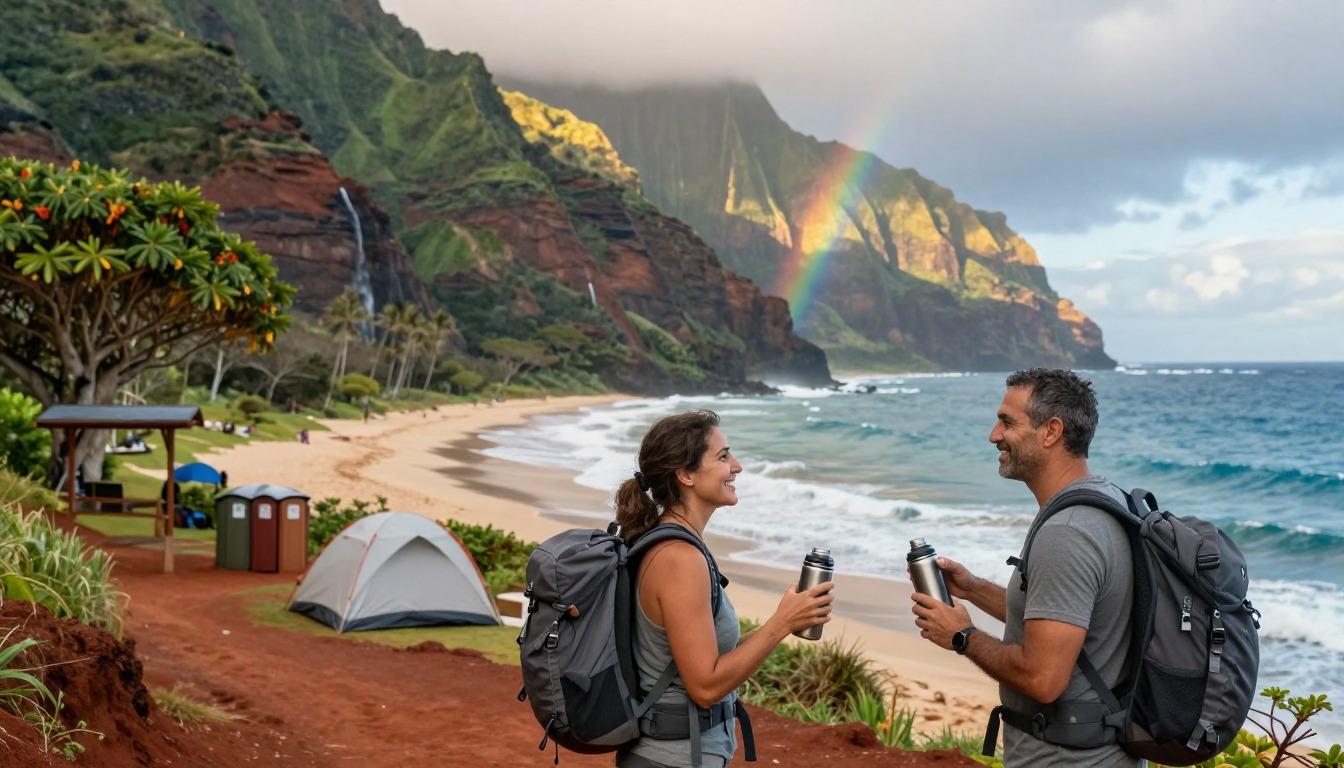 Illustrative — evokes the setting, not a specific property.
 For example: State-permit camping at Hanakoa and the Kalalau Valley beach at the trail’s end
Backpackers hiking the full coast — camping is the only way to stay out there.
Permits are strictly limited and sell out well ahead.
Hawaii State Parks camping permitFor example: A required parking/shuttle reservation to reach the trailhead at Kēʻē Beach
Everyone starting the trail — access to Hāʻena is capped.
Book the entry reservation separately from your camping permit.
Hāʻena State Park reservationsFor example: Hotels and rentals around Hanalei and Princeville
Day hikers to Hanakāpīʻai and anyone basing on the North Shore.
A base for the first-two-miles day hike if you don’t camp.
Nearby-town lodgingPermits & rules
Beyond the first two miles you must hold a Nā Pali Coast state camping permit, and reaching the trailhead requires a separate Hāʻena State Park entry reservation. Streams flash-flood fast — never cross a swollen river.
Gear you'll want for this trip
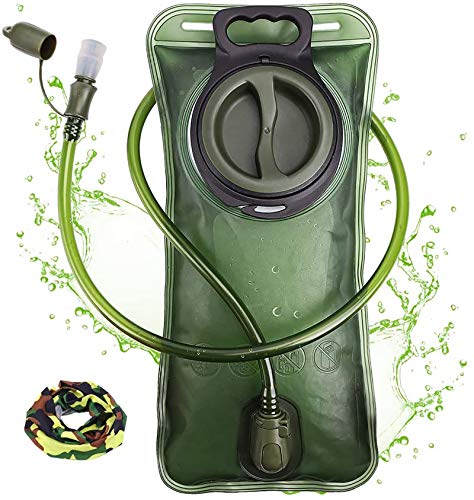
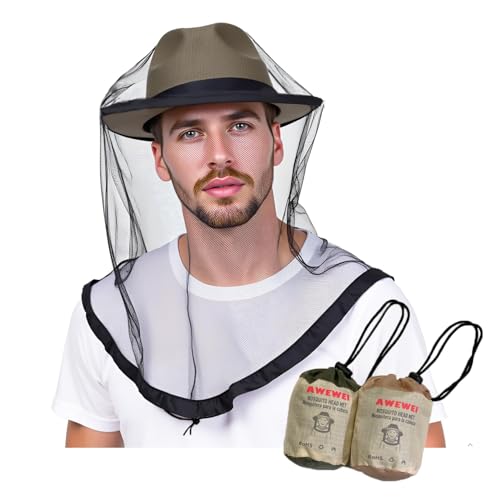
Matched to the terrain and conditions here. Real products — check current price on Amazon.

Common questions
Do I need a permit to hike the Kalalau Trail?
Only if going beyond the first two miles. The initial stretch to Hanakāpīʻai is open to day hikers with just the Hāʻena State Park entry reservation. Continuing past that point — including overnight stays at Hanakoa or the Kalalau Valley beach — requires a separate Nā Pali Coast State Wilderness Park camping permit, which should be arranged well in advance.
Where can I stay along the trail itself?
There's no lodging of any kind on the Kalalau Trail — no lodges, huts, or cabins. Overnight hikers camp at the designated sites at Hanakoa, partway along the trail, or at Kalalau Valley beach at the end, both covered by the same camping permit. Everything else is either day-hiking or basing yourself in a North Shore gateway town.
When is the safest time to hike, and what's the biggest danger?
Drier summer months generally offer the most stable conditions, but flash floods are a year-round risk on this trail — stream crossings can rise fast after rain, even when it's not raining where you are. Check current conditions before you go, be ready to wait out a crossing rather than force it, and never underestimate how quickly water levels can change.
Complete gearsets for this trip
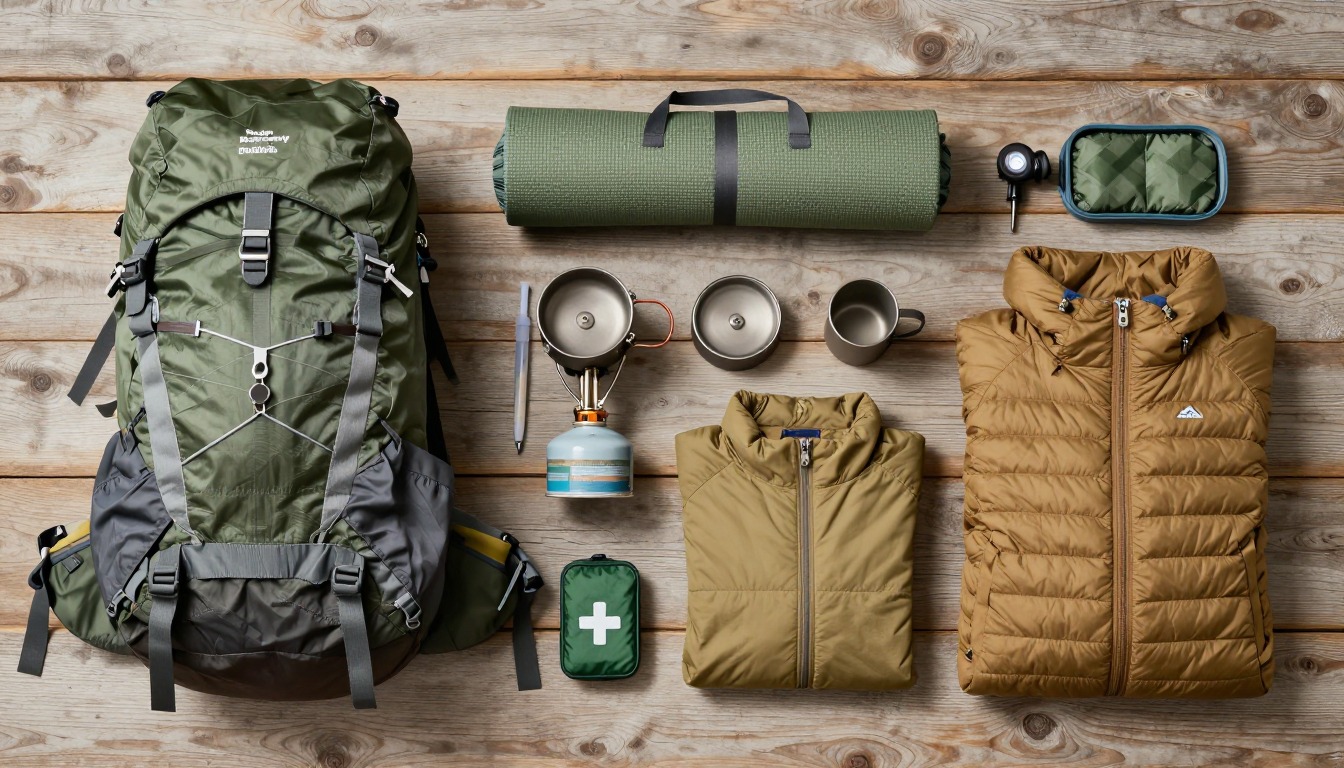
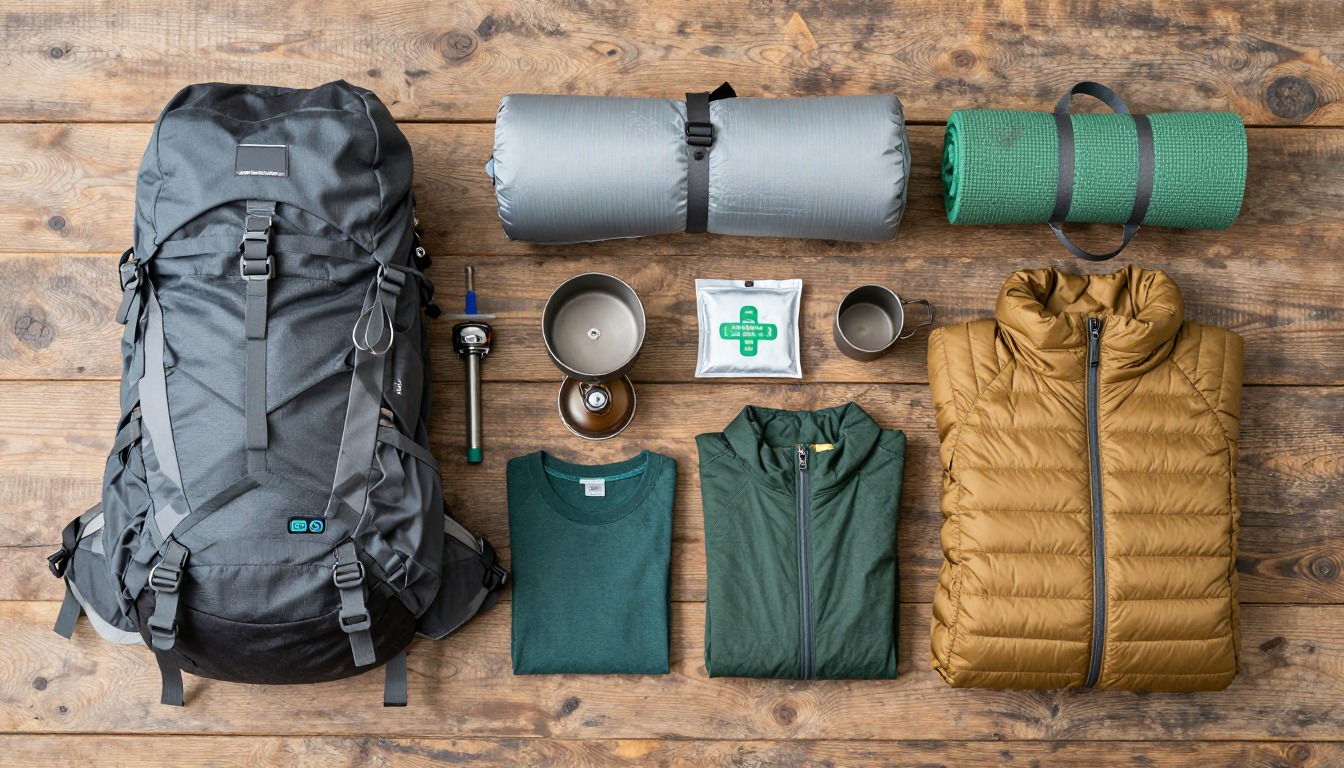
Full curated kits built for exactly this kind of hike — what to bring, why, and links to similar gear.
Lodging details are compiled from official parks, refuge associations and reservation systems and can change without notice. We publish no prices, availability or ratings — always confirm current information on the official site before booking or setting out. Product links are affiliate links: we may earn a commission at no extra cost to you; prices and availability are shown on Amazon. See our affiliate disclosure.