
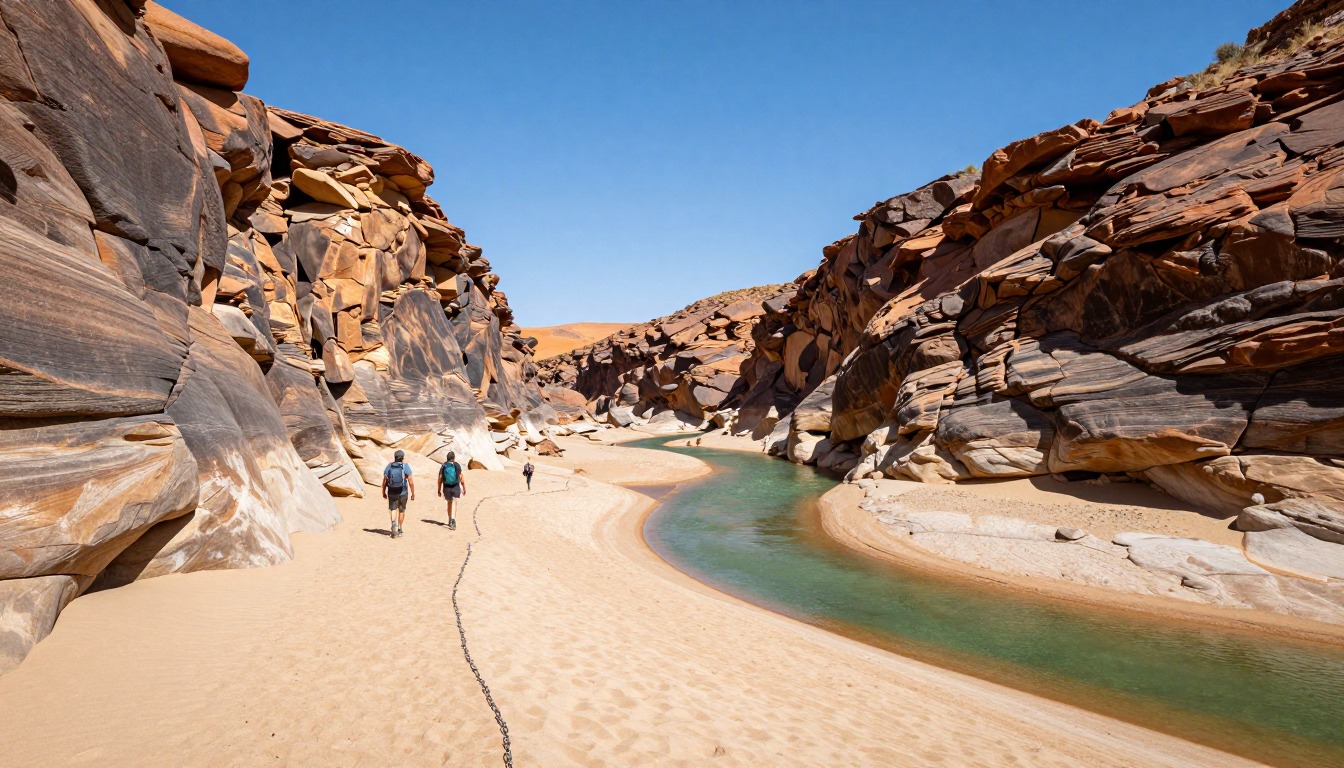
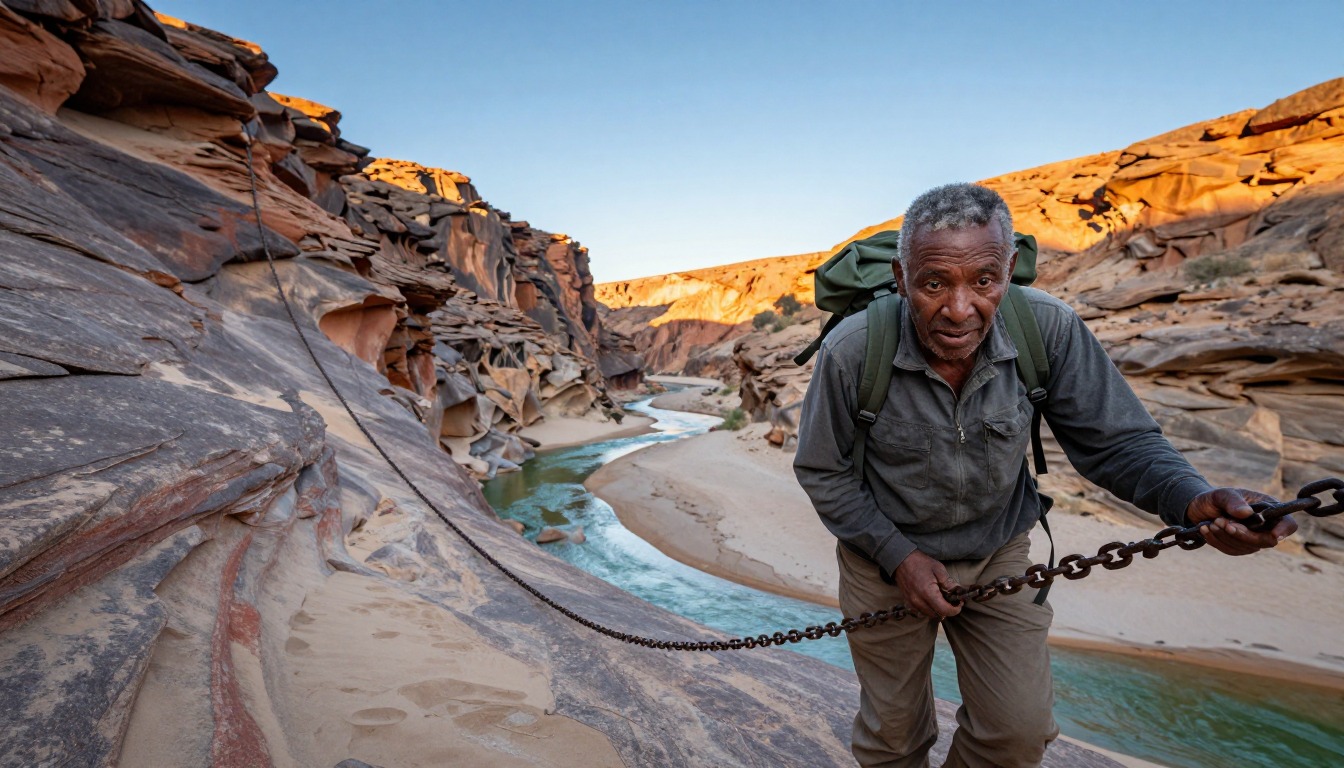
Illustrative artwork — an impression of Fish River Canyon Trail, not a literal photograph.
The Fish River Canyon Trail is a roughly five-day, self-sufficient wilderness trek down the floor of one of the world's largest canyons, in southern Namibia's Ai-Ais/Fish River Canyon area. There are no huts, no resupply, and no easy way out once you're on the canyon floor, so you carry everything and wild camp beside the river each night. The lodging picture is simple: a camp near the start, a hot-springs resort at the finish, and roughly five unsupported nights in between.
Why hike here
What makes this hike different is scale and solitude together: for days you walk along the floor of a canyon carved into ancient rock, walls rising far above, with numbers on the trail kept deliberately low so you rarely see another group. There's no fixed camp each night; you choose a spot on the riverbed, pitch, and follow the water on in the morning. The trek ends at Ai-Ais, where a natural hot-springs resort waits at the bottom of the descent, turning days of heat and effort into one of the more satisfying finish lines in canyon hiking anywhere. It's raw, remote, self-reliant hiking, not a resort trek with scenery attached.
Getting there
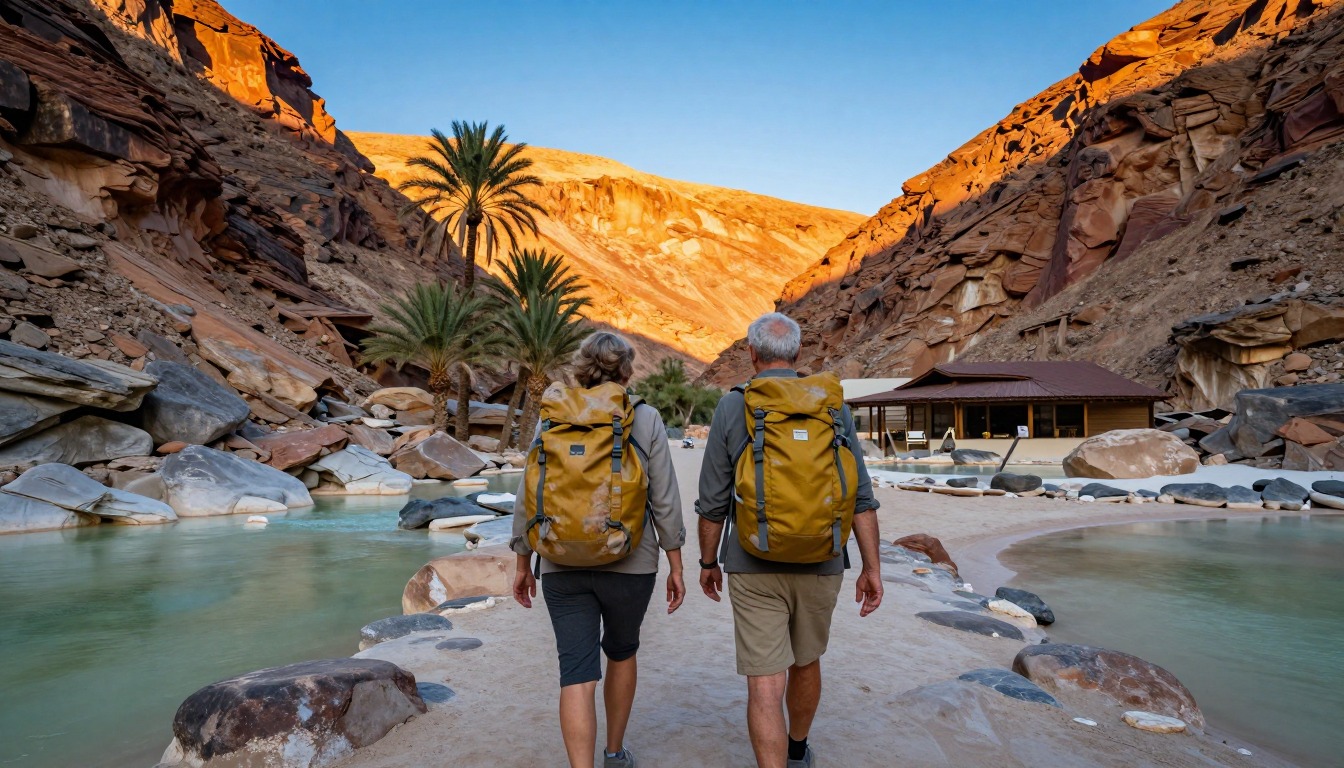
There's no shortcut to the Fish River Canyon. It sits in Namibia's far south, a long drive from both Windhoek and the closer town of Keetmanshoop. Most hikers fly into Namibia's main international airport near Windhoek, then self-drive or arrange a shuttle south, a trip that takes the better part of a day on good but long roads. Build that travel time into your plans on both ends, since the start and end points are hours apart by road and onward transport needs to be arranged in advance.
Where to stay
The realistic options, closest-to-the-trail first. Book through the official links — we don't list prices or availability because they change all the time.
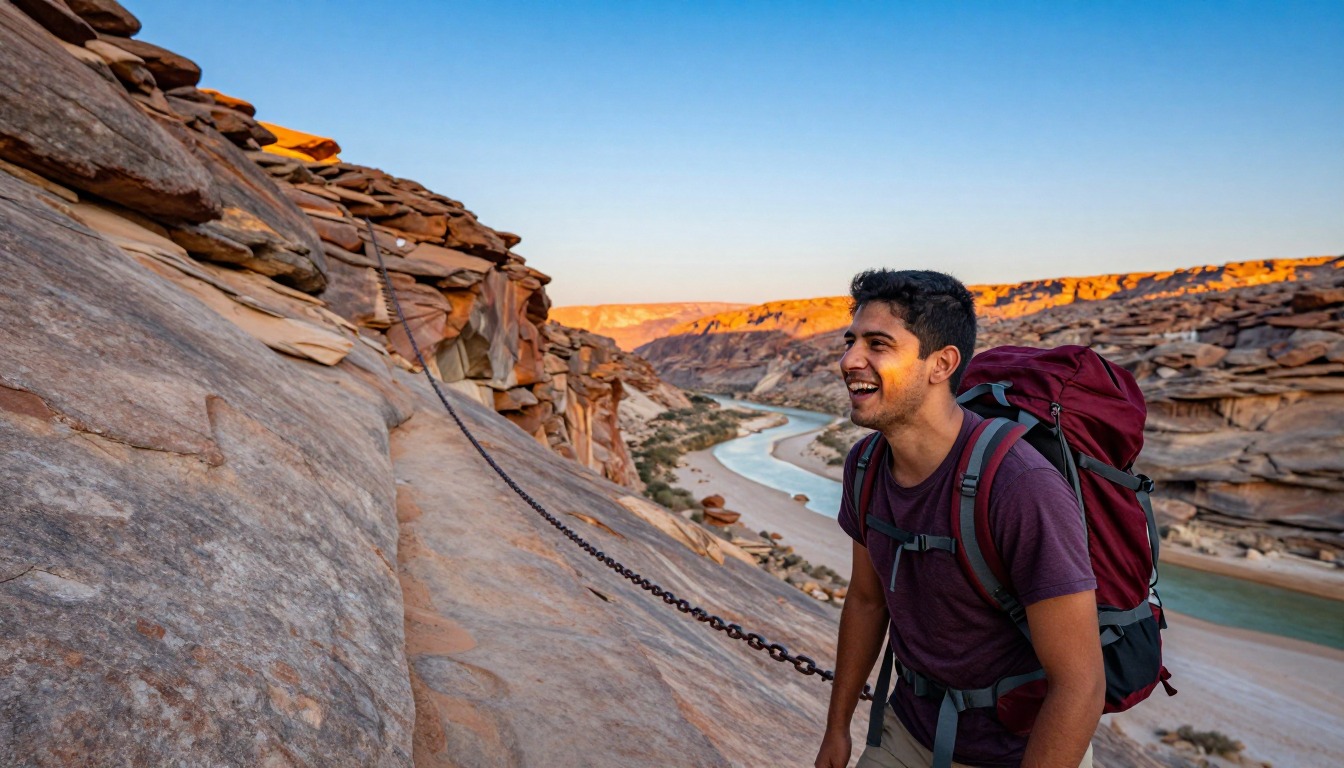 Illustrative — evokes the setting, not a specific property.
 For example: Self-sufficient wild camping along the canyon floor — there are no facilities on the trail
Every hiker — the trail is a committing, unsupported wilderness route.
A permit, a group, and a doctor’s medical certificate are required to start.
Trail permit (Namibia Wildlife Resorts)For example: Camp/lodging at Hobas near the start and the Ai-Ais hot-springs resort at the finish
Hikers the night before and after the trek.
Hobas is the start point; Ai-Ais and its hot springs mark the end.
Namibia Wildlife ResortsPermits & rules
The multi-day Fish River Canyon Trail requires a permit, a minimum group size and a recent doctor’s medical certificate, and only opens in the cooler months. It is fully self-sufficient — you carry everything and there is no exit until the end, so be honestly fit and prepared.
Gear you'll want for this trip
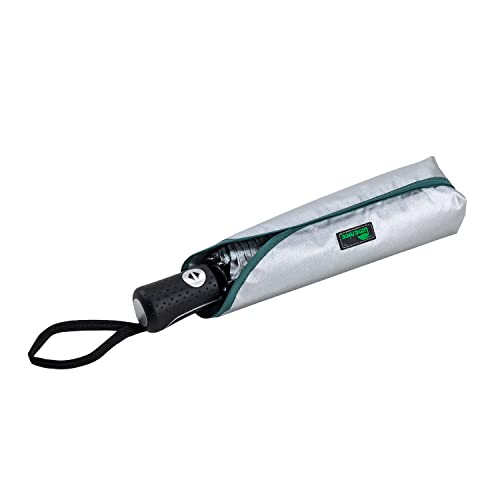
Matched to the terrain and conditions here. Real products — check current price on Amazon.


Common questions
Do I need a permit to hike the Fish River Canyon Trail?
Yes. The trail is managed by Namibia Wildlife Resorts, and hikers need a permit, must go in a group of at least the required minimum size, and must carry a recent doctor's medical certificate confirming they're fit for a multi-day unsupported trek. These rules exist because the canyon floor has no facilities and no quick way out once you've started down.
Where do you actually sleep on the trail?
You wild camp on the riverbed each night through the roughly five-day descent; there are no huts or shelters along the route itself. Hikers typically base near Hobas before starting, and the trek finishes at the Ai-Ais hot-springs resort, so the only fixed lodging sits at either end, with unsupported camping filling the days between.
When can you hike the canyon?
The trail only opens during the cooler months, roughly May through September, when daytime heat on the exposed canyon floor is more manageable. It's closed the rest of the year. Even in season, expect hot days, cold nights, and no easy exit if weather, water levels, or your own fitness turn against you partway through.
Complete gearsets for this trip
Full curated kits built for exactly this kind of hike — what to bring, why, and links to similar gear.
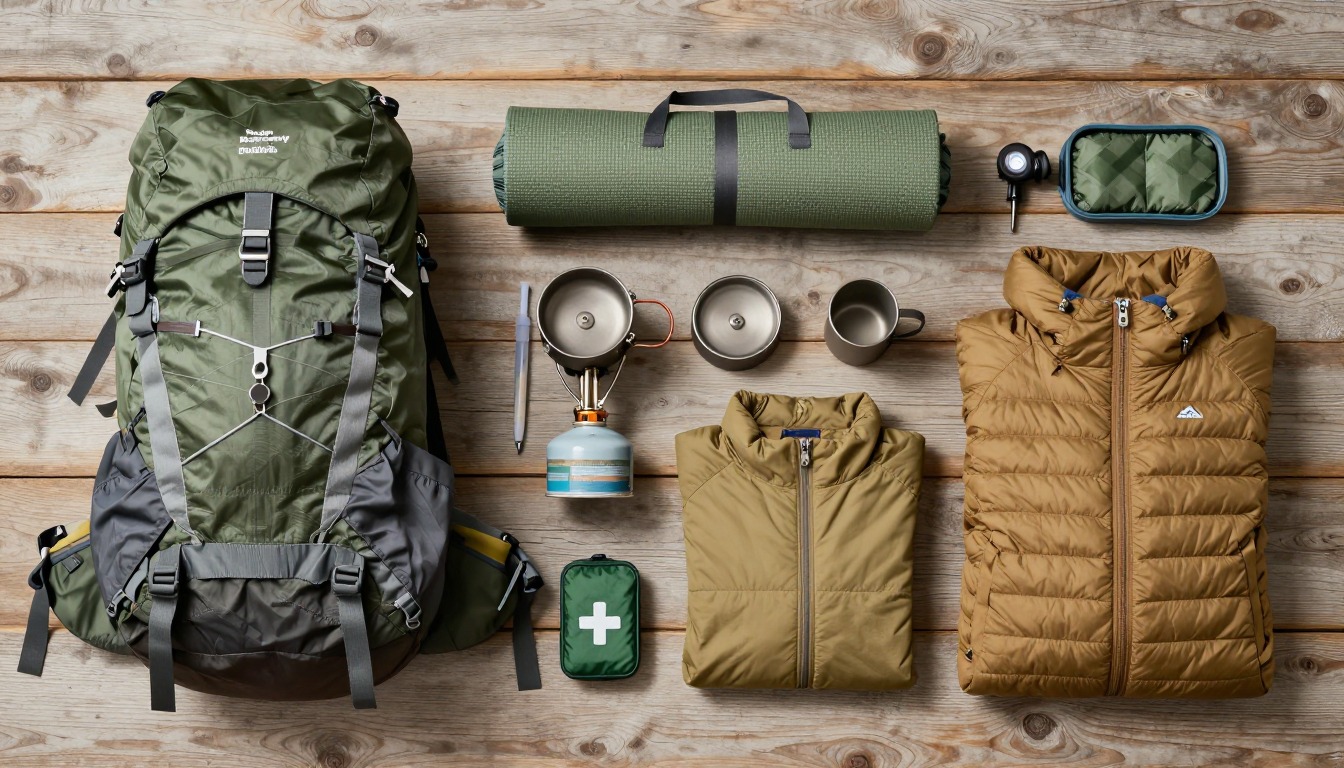
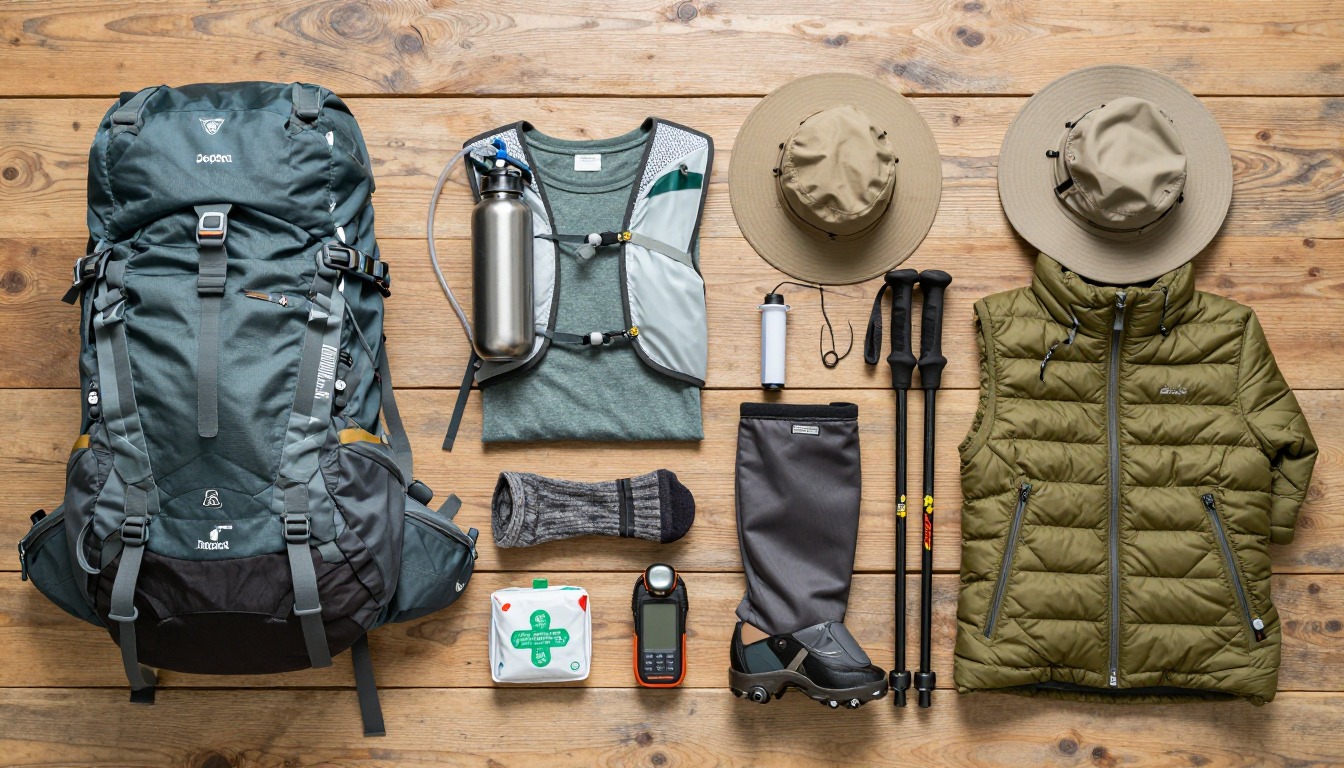
Lodging details are compiled from official parks, refuge associations and reservation systems and can change without notice. We publish no prices, availability or ratings — always confirm current information on the official site before booking or setting out. Product links are affiliate links: we may earn a commission at no extra cost to you; prices and availability are shown on Amazon. See our affiliate disclosure.